Do You Need Contrast? How It Changes Imaging Accuracy, Comfort, and Risk

Key Takeaways
- Contrast can improve the visibility of specific structures and make some scans more diagnostically useful.
- Not every scan needs contrast; the decision depends on the body part, the clinical question, and the type of imaging test.
- Most contrast studies are well tolerated, but allergies, kidney function, and pregnancy status may affect planning.
- Patients are usually asked about medications, asthma, kidney disease, prior reactions, and metal implants before imaging.
- Good preparation and clear communication with the imaging team can reduce anxiety and help the exam go smoothly.
Medically reviewed by the Acıbadem clinical team — June 13, 2026
Contrast agents can make certain scans clearer by highlighting blood vessels, organs, inflammation, or abnormal tissue. This guide explains when contrast is useful, what it feels like, who may need extra precautions, and how to prepare with confidence.
Overview
In medical imaging, contrast is a substance used to help certain parts of the body stand out more clearly on a scan. It can be especially useful when a doctor needs to look closely at blood vessels, inflammation, tumors, bowel structures, or the way an organ is working rather than simply how it looks.
For many patients, the first question is not whether a scan is needed, but whether contrast will actually improve the answer. That decision depends on the reason for the exam, the imaging method being used, and the level of detail required. A simple image may be enough in some situations; in others, contrast can change a vague picture into one that is much more informative.
There are different types of contrast agents for different studies. CT scans commonly use iodine-based contrast, while MRI may use gadolinium-based contrast. Some imaging tests also use oral contrast or ultrasound contrast, and each type has its own role, preparation, and safety considerations.
When contrast adds value
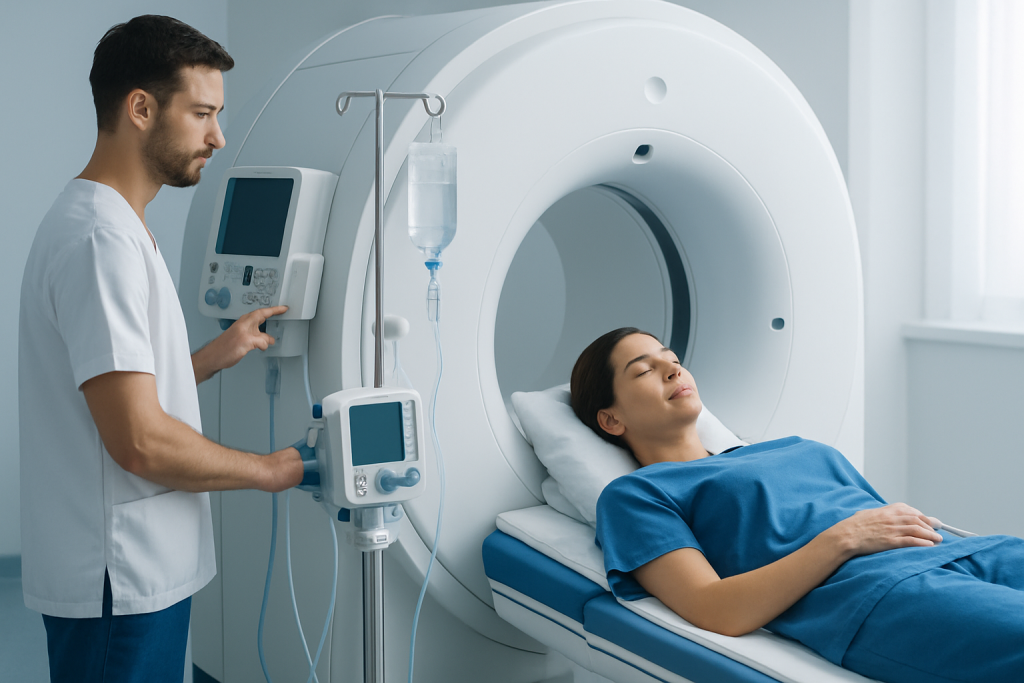
Contrast is most helpful when the medical team needs to distinguish one type of tissue from another or assess how blood and fluid move through the body. It can make a lesion easier to detect, show whether an area is inflamed, help define the boundaries of a mass, or reveal narrowed or blocked vessels.
In practical terms, contrast may be recommended for questions such as whether pain is caused by infection, whether a lump looks suspicious, whether a vessel has a clot, or whether an organ has an area of reduced blood supply. In some cases, the scan could still be useful without contrast, but the added detail from contrast may improve confidence in the result.
That does not mean contrast is always needed. If the clinical question is straightforward, or if a patient has a reason to avoid contrast, the imaging team may choose another technique. The goal is not to use the most complex option, but the one most likely to provide useful information safely.
Symptoms and situations that may lead to a contrast scan

Patients are often sent for contrast imaging because a symptom needs a closer look. Common examples include unexplained abdominal pain, persistent headaches with concerning features, chest symptoms that raise concern for a blood clot, unusual swelling, or a newly discovered mass that needs characterization.
Contrast studies are also used in follow-up care. A doctor may want to see whether an infection is improving, whether a known tumor has changed, whether surgery healed as expected, or whether a blood vessel repair remains open. For international patients, these decisions often come at a stressful moment, especially when time is limited and the scan may guide treatment before travel home.
The symptom itself does not automatically mean contrast is required. Instead, the ordering clinician considers how much detail is needed to answer the specific question. This is why two people with similar symptoms may receive different imaging plans.
Causes & Risk Factors: what makes contrast more or less suitable
The main factors that influence contrast use are not “causes” in the usual sense, but rather patient and exam characteristics. Kidney function is one of the most important considerations, particularly for CT contrast and some MRI contrast agents, because the body must clear these substances after the scan.
A previous contrast reaction also matters. A person who has had hives, breathing symptoms, severe nausea, fainting, or another concerning response before may need a different plan. Asthma, multiple allergies, dehydration, pregnancy, and certain heart or thyroid conditions can also influence how the team prepares.
Other practical issues matter too. The type of scan, the body part being studied, the expected diagnostic yield, and whether a patient can hold still or follow breathing instructions all affect the plan. For some patients, the safest option may be a non-contrast scan, a different modality, or additional precautions before contrast is given.
Diagnosis: how doctors decide whether contrast is needed
The decision usually starts with the clinical question. A doctor reviews symptoms, physical findings, prior imaging, and laboratory results, then asks which scan will best answer the question. If the answer requires more tissue detail, more vascular detail, or clearer distinction between normal and abnormal areas, contrast may be recommended.
Before the scan, patients are typically asked about allergies, previous imaging reactions, kidney disease, diabetes medications if relevant, pregnancy, breastfeeding, and implanted devices. In some situations, blood tests for kidney function are requested beforehand. This screening step is not a formality; it is part of tailoring the exam to the individual.
During the appointment, the radiology team also checks that the requested study matches the actual question. In well-organized imaging centers, this review can prevent unnecessary contrast exposure and reduce the chance of an incomplete or poorly targeted exam. For patients traveling from abroad, it can also help make the visit efficient, especially when appointments, reports, and follow-up are tightly scheduled.
Treatment Options: what contrast imaging feels like and what happens after
Contrast is not a treatment in the usual sense, but it is a tool that supports diagnosis and treatment planning. The experience depends on the type of contrast and the scan being performed. CT contrast is often given through a vein and may cause a brief warm feeling or a metallic taste. MRI contrast is also usually given intravenously, and most patients feel little beyond the needle itself.
Oral contrast, when used, may have a different experience. Some formulas are taken as a drink before the scan and help outline the stomach or intestines. Ultrasound contrast, used in selected cases, may be given in a way that is different from CT or MRI contrast and is typically discussed in advance by the imaging team.
After the exam, many patients can return to normal activities right away. Drinking fluids may be encouraged in some cases, unless a doctor has advised otherwise. If a patient receives contrast and later develops symptoms such as rash, itching, swelling, breathing trouble, dizziness, or reduced urination, medical advice should be sought promptly. Most people do not have serious problems, but it is important to know what to watch for and whom to contact.
In some cases, contrast imaging helps the doctor decide whether medication, biopsy, surgery, or follow-up scanning is needed. For international patients, a clear report and next-step plan can be especially valuable when care must continue with another physician after returning home. Acibadem Health Point’s multidisciplinary specialists and JCI-accredited hospitals diagnose and treat this condition for international patients, with imaging decisions coordinated as part of broader care.
Prevention & Self-care
Patients cannot control every aspect of contrast safety, but they can help the process go smoothly. Bringing a list of medications, previous scan reports, known allergies, and recent blood test results can save time and reduce confusion. It is also helpful to mention any past reaction to contrast, even if it seemed mild or happened years ago.
Hydration may be recommended before or after the exam, depending on the test and the patient’s health situation. However, people with kidney disease, heart failure, or fluid restrictions should follow the instructions given by their own clinician rather than assume that more fluid is always better. Clear, individualized guidance matters more than generic advice.
Practical comfort measures can help too. Patients may want to ask how long the scan will take, whether they need to avoid food beforehand, and whether a family member may stay nearby during the appointment. For anxious travelers, knowing where to go, how to read the appointment instructions, and who will explain the results can make the experience feel more manageable.
- Tell the team about prior contrast reactions, asthma, kidney disease, and pregnancy.
- Bring a current medication list and any relevant lab results.
- Ask whether you need to fast, drink fluids, or stop any medicines beforehand.
- Follow the imaging center’s instructions closely, especially if you are traveling.
When to See a Doctor
A doctor should be consulted before any contrast study if there is a history of previous contrast reaction, known kidney problems, pregnancy, or a complex medical condition that may affect the choice of scan. Even when imaging has already been ordered, these details can change the safest and most useful approach.
After a contrast exam, urgent medical attention is appropriate if breathing becomes difficult, the face or throat swells, widespread hives appear, or severe dizziness develops. Less urgent but still important concerns include persistent vomiting, worsening rash, or changes in urine output after the scan. These symptoms do not necessarily mean a major problem, but they should not be ignored.
Patients should also return to their doctor if the scan results are unclear or if symptoms continue despite a normal report. Imaging is one piece of the picture, not the whole diagnosis. A thoughtful follow-up discussion can help connect the scan findings with the patient’s symptoms and next steps.
Frequently asked questions
Do all CT or MRI scans need contrast?
No. Many scans are done without contrast, especially when the answer can be reached with less preparation or lower risk. The choice depends on the body part being studied and the clinical question.
Is contrast the same for CT and MRI?
No. CT usually uses iodine-based contrast, while MRI commonly uses gadolinium-based contrast. These agents are different and have different safety considerations.
Will I feel the contrast going in?
Some people feel a brief warm sensation, a flushed feeling, or a metallic taste, especially with IV CT contrast. Others notice very little. Most sensations are short-lived.
Can I eat and drink before a contrast scan?
It depends on the test and the instructions from the imaging center. Some exams require fasting, while others do not. Patients should follow the specific guidance they receive.
What if I had a reaction to contrast before?
That history should be shared before the appointment, even if the reaction was minor. The imaging team may choose a different agent, add precautions, or recommend another type of scan.
Is contrast safe during pregnancy or breastfeeding?
These situations need individual review. The doctor and radiology team will balance the benefit of the scan against any potential risk and may suggest alternatives when appropriate.
How quickly will I get my results?
Timing varies by center and by the complexity of the exam. Patients traveling internationally should ask in advance how the report will be delivered and whether a follow-up review is planned.
References
World Health Organization
American College of Radiology
Radiological Society of North America
National Institute of Diabetes and Digestive and Kidney Diseases
U.S. Food and Drug Administration
Frequently asked questions
Do all CT or MRI scans need contrast?
No. Many scans are done without contrast, especially when the answer can be reached with less preparation or lower risk. The choice depends on the body part being studied and the clinical question.
Is contrast the same for CT and MRI?
No. CT usually uses iodine-based contrast, while MRI commonly uses gadolinium-based contrast. These agents are different and have different safety considerations.
Will I feel the contrast going in?
Some people feel a brief warm sensation, a flushed feeling, or a metallic taste, especially with IV CT contrast. Others notice very little. Most sensations are short-lived.
Can I eat and drink before a contrast scan?
It depends on the test and the instructions from the imaging center. Some exams require fasting, while others do not. Patients should follow the specific guidance they receive.
What if I had a reaction to contrast before?
That history should be shared before the appointment, even if the reaction was minor. The imaging team may choose a different agent, add precautions, or recommend another type of scan.
Is contrast safe during pregnancy or breastfeeding?
These situations need individual review. The doctor and radiology team will balance the benefit of the scan against any potential risk and may suggest alternatives when appropriate.
How quickly will I get my results?
Timing varies by center and by the complexity of the exam. Patients traveling internationally should ask in advance how the report will be delivered and whether a follow-up review is planned.
References
- World Health Organization
- American College of Radiology
- Radiological Society of North America
- National Institute of Diabetes and Digestive and Kidney Diseases
- U.S. Food and Drug Administration
This article is for general information only and is not a substitute for professional medical advice. Please consult a qualified doctor about your individual situation.