

Foot Pain On The Ball

Key Takeaways
- Pain under the front part of the foot is often linked to pressure on the metatarsal area.
- Common causes include overuse, footwear issues, bunions, Morton’s neuroma, stress injury, and arthritis.
- A proper diagnosis matters because different conditions can feel similar but need different treatment plans.
- Supportive shoes, activity changes, padding, and physical therapy often help many people.
- Medical evaluation is important if pain is severe, persistent, one-sided after injury, or associated with swelling, numbness, or difficulty bearing weight.
Foot pain on the ball of the foot is a common complaint that can make standing, walking, and exercise uncomfortable. It often has a mechanical cause and usually improves when the underlying pressure, alignment, or inflammation is addressed.
Overview
Foot pain on the ball of the foot refers to discomfort in the padded area just behind the toes, where the metatarsal bones take much of the body’s weight. People often notice it most when walking barefoot, climbing stairs, standing for long periods, or wearing shoes with little support.
This type of pain is commonly described as burning, aching, bruised, or as if a pebble is trapped under the foot. In many cases, the issue is linked to how pressure is distributed across the forefoot rather than to a single injury. That is why the same symptom can come from several different conditions, from simple overload to nerve irritation or a small stress fracture.
For international patients, foot pain can be especially frustrating when travel plans, airport walking, or sightseeing make symptoms harder to ignore. The good news is that many causes are treatable once the source is identified with a careful orthopedic assessment.
Symptoms
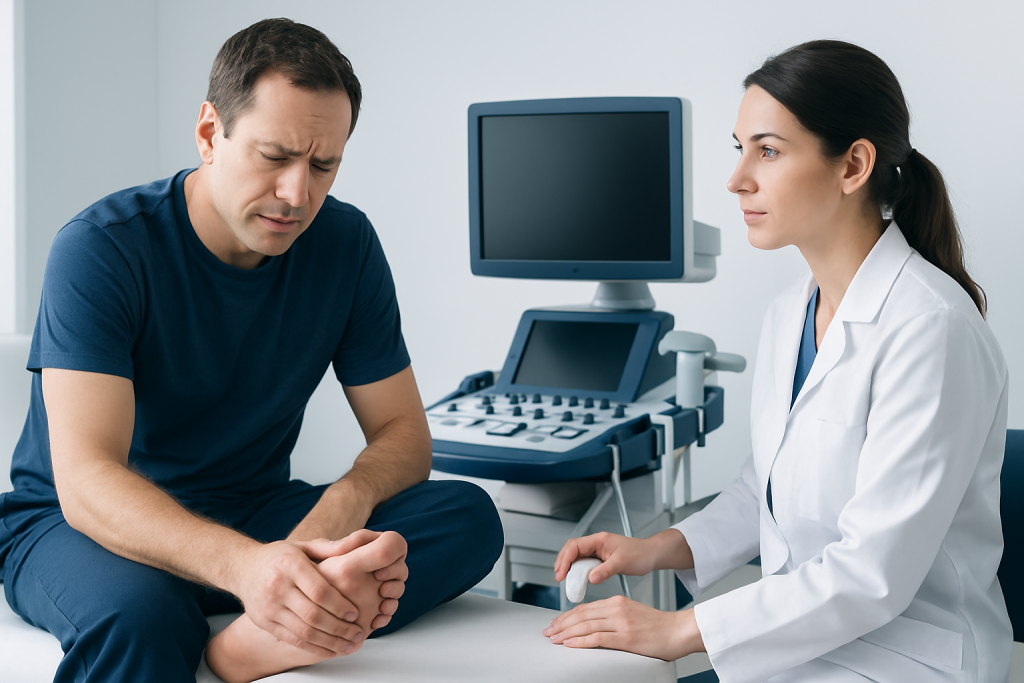
The exact feeling can vary, but pain in the ball of the foot often becomes worse during weight-bearing activities. Some people feel it only after long walks, while others notice it every time they step forward or push off with the toes.
Common symptoms include:
- A dull ache or sharp pain beneath one or more toes
- Burning, tingling, or numbness in the forefoot
- A sensation of walking on a pebble or folded sock
- Pain that worsens in thin, hard-soled, or high-heeled shoes
- Calluses or thickened skin under the forefoot
Symptoms may appear gradually, especially after changes in activity, footwear, or body weight. Pain that starts suddenly after a twist, fall, or increase in exercise deserves closer attention because it may point to a more specific injury.
Causes & Risk Factors
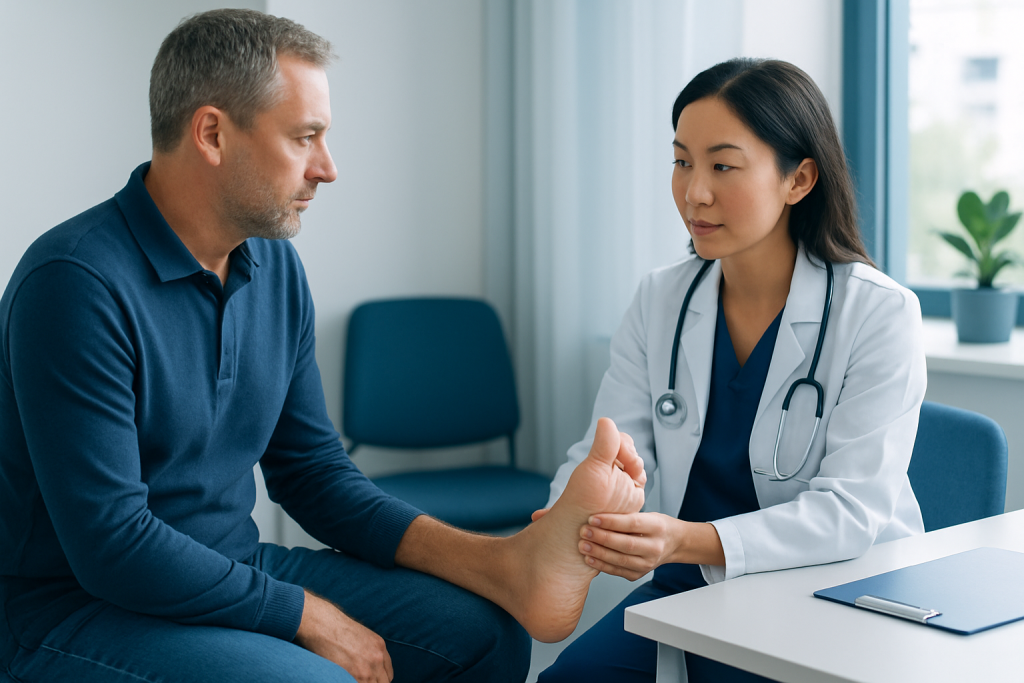
There is no single cause of ball-of-foot pain. Often, several small factors combine: repeated pressure, the shape of the foot, tight calf muscles, or shoes that concentrate force on the forefoot. Over time, these stresses can irritate joints, soft tissue, and nerves.
Possible causes include metatarsalgia, Morton’s neuroma, hammertoes, bunions, plantar plate injury, arthritis, sesamoiditis, and stress fractures. Less commonly, inflammatory conditions or nerve-related problems can contribute. In some people, a simple callus or wart can also create the feeling of deep pain because every step presses directly on the same spot.
Risk factors may include wearing high heels or narrow shoes, running or jumping sports, being on one’s feet for long hours, age-related thinning of the fat pad under the forefoot, foot shape differences such as a long second toe, and conditions that alter walking mechanics. Extra body weight can also increase pressure across the front of the foot.
Diagnosis
Diagnosis starts with a detailed history and a physical examination. A clinician will usually ask where the pain is located, when it began, what activities make it worse, what shoes are worn, and whether there has been an injury or recent change in exercise.
The exam may include checking foot alignment, toe motion, tenderness points, skin changes, nerve sensation, and how the person walks. The doctor may also gently press different areas of the forefoot to see whether the pain seems to come from a joint, bone, nerve, or soft tissue structure.
Imaging is sometimes useful when a fracture, arthritis, or other structural problem is suspected. X-rays can show alignment and bone changes, while ultrasound or MRI may help assess soft tissue, plantar plate injury, or a stress injury that does not appear clearly on an X-ray early on. The goal is to match the treatment to the actual cause, not just to the symptom of pain.
Treatment Options
Treatment depends on the underlying diagnosis, but the first step is often reducing pressure on the painful area. Many people improve with roomier shoes, cushioned insoles, metatarsal pads, or temporary activity modification. These measures do not just mask pain; they help redistribute force so irritated tissues can settle.
If inflammation or overload is part of the problem, a doctor may recommend rest from high-impact activity, ice, supportive taping, or physical therapy. Stretching tight calf muscles and strengthening the foot and ankle can improve biomechanics in people whose forefoot is absorbing too much load. For some conditions, a brace, walking boot, or temporary immobilization may be needed.
When pain is related to a specific condition such as Morton’s neuroma, arthritis, or a stress fracture, targeted treatment may be needed. This can include custom orthotics, anti-inflammatory medicines when appropriate, or sometimes procedures and surgery if conservative care is not enough. A treatment plan should always be individualized, especially for patients who must continue walking extensively during travel or work.
Prevention & Self-care
Prevention focuses on reducing repeated strain and making each step easier on the forefoot. Shoes with a wide toe box, low heels, and good cushioning are usually better choices than narrow or rigid footwear. For people who stand or walk for long periods, rotating shoes and using supportive insoles can make a noticeable difference.
Helpful self-care habits include:
- Limiting high-impact activity during flare-ups
- Using ice for short periods if the area feels irritated
- Choosing shoes that do not squeeze the toes
- Avoiding worn-out footwear with thin soles
- Gradually increasing exercise rather than making sudden jumps in mileage or intensity
Travelers may find it useful to plan ahead with supportive walking shoes, blister-free socks, and enough rest breaks during sightseeing or airport transfers. If foot pain tends to recur, keeping a simple record of when it happens and which shoes were worn can help a doctor identify the pattern more quickly.
When to See a Doctor
Medical evaluation is advisable if foot pain on the ball lasts more than a short time, keeps returning, or interferes with normal walking. It is also important to seek care if there is visible swelling, bruising, numbness, a change in toe shape, or pain that feels much worse in one specific spot.
Prompt assessment is especially important after an injury, if weight-bearing becomes difficult, or if pain is accompanied by redness and warmth. These features can suggest a fracture, joint injury, infection, or another condition that should not be managed only with rest at home.
For patients traveling from another country, it is often practical to get evaluated before symptoms worsen, rather than trying to guess the cause while away from home. Acibadem Health Point’s multidisciplinary specialists and JCI-accredited hospitals diagnose and treat foot and forefoot conditions for international patients, with care plans that can also support follow-up after the trip.
Living With Ball-of-Foot Pain
Even when the cause is not dangerous, persistent forefoot pain can change how a person walks, which may lead to discomfort in the ankle, knee, hip, or lower back. That is one reason early attention matters: treating the foot often helps the whole kinetic chain move more comfortably.
Recovery is usually easier when the problem is identified before compensation patterns develop. A patient who has been limping for weeks may need not only Knee Pain Relief: Causes and Treatment" class="ahp-ilk">pain relief but also a plan to restore normal walking mechanics and reintroduce activity in a steady way.
Most people do best with a practical, step-by-step approach: confirm the cause, reduce pressure, choose better footwear, and build back activity gradually. This kind of care is especially valuable for international patients who need clear guidance they can continue after returning home.
Frequently asked questions
What is the most common cause of pain on the ball of the foot?
One common cause is metatarsalgia, which means pain in the metatarsal area from excess pressure or overuse. However, similar pain can also come from a neuroma, stress fracture, arthritis, or a foot alignment problem, so the cause should be confirmed by a clinician.
Can shoes really cause ball-of-foot pain?
Yes. Narrow, rigid, or high-heeled shoes can shift pressure onto the forefoot and irritate soft tissues and joints. Supportive shoes with cushioning and enough toe room often reduce symptoms.
Is ball-of-foot pain always serious?
Not always, but it should not be ignored if it persists or keeps returning. Many cases improve with conservative care, yet ongoing pain can signal a stress injury, nerve irritation, or another problem that needs treatment.
What can help at home?
Rest from aggravating activity, supportive footwear, and padding or insoles often help reduce pressure. Ice may soothe irritation, but home care should be paired with medical advice if symptoms are severe or do not improve.
When is imaging needed?
Imaging is considered when the exam suggests a fracture, arthritis, soft tissue injury, or another structural issue. X-rays are often the first step, while ultrasound or MRI may be used if more detail is needed.
Can ball-of-foot pain come back after treatment?
It can if the underlying pressure or mechanics are not addressed. A good footwear strategy, gradual return to activity, and follow-up care can lower the chance of recurrence.
References
- American Academy of Orthopaedic Surgeons
- Mayo Clinic
- Cleveland Clinic
- NHS
- Merck Manual Professional Edition
This article is for general information only and is not a substitute for professional medical advice. Please consult a qualified doctor about your individual situation.
More from the Health Library



Related Specialists

Prof. Dr. Ahmet Alanay
Orthopedic Surgery & Traumatology
Dr. Sinan Aksu
Orthopedic Surgery & Traumatology
Dr. Sirri Baştürk
Orthopedic Surgery & Traumatology
Prof. Dr. Korhan Özkan
Orthopedic Surgery & Traumatology