Eye Twitching Causes

Key Takeaways
- Most eye twitching is linked to everyday factors such as stress, tiredness, caffeine, and eye strain.
- Dry eyes, allergies, and irritation from contact lenses or screens can make twitching more noticeable.
- Persistent or severe twitching may point to an eyelid disorder or a nerve-related condition and should be evaluated.
- Simple self-care steps, including rest, hydration, and limiting irritants, often help reduce symptoms.
- Medical review is important if twitching affects other parts of the face, lasts for weeks, or changes vision.
Eye twitching is usually a brief, harmless eyelid spasm that often settles on its own. Understanding the common triggers can help a person reduce episodes and recognize when the symptom needs medical attention.
Overview
Eye twitching, also called eyelid twitching, is a small involuntary movement of the upper or lower eyelid. For most people, it feels more odd than painful and comes and goes without causing lasting problems.
In everyday life, the symptom often appears during busy periods, after long screen use, or when sleep has been poor. In many cases, the eyelid is reacting to a temporary trigger rather than signaling a serious disease.
Still, not all twitching is the same. Some episodes are brief and occasional, while others are frequent enough to affect reading, driving, or comfort during work and travel. Understanding the possible causes helps a person choose the right response and know when it is time to ask a doctor for advice.
Symptoms
The most common symptom is a fine fluttering or pulsing sensation in one eyelid. It may happen a few times in a day or continue on and off for several days before fading.
Many people notice that twitching becomes more active during concentration, after coffee, or when they are overtired. It usually does not close the eye completely and often remains visible only as a small movement around the lid.
- Brief eyelid fluttering
- Twitching that comes and goes
- Greater frequency during stress or fatigue
- Eye discomfort from dryness or irritation
Sometimes the eye itself feels tired, gritty, or watery at the same time. Those associated symptoms can give clues about the cause and help a clinician decide whether the issue is related to the surface of the eye or to the muscles around it.
Causes & Risk Factors

Several everyday factors can trigger eye twitching. Stress is one of the most common, especially when it is paired with poor sleep, dehydration, or long hours of concentration.
Eye strain also plays a large role. Extended screen time, reading in dim light, or needing an updated glasses prescription can all make the eyelid muscles more reactive. Caffeine and other stimulants may add to the problem in some people.
Local eye irritation is another frequent source. Dry eyes, allergies, smoke, wind, and contact lens discomfort can all make the eyelids twitch more often. In international travel, changes in air conditioning, long flights, and disrupted sleep can intensify these triggers.
Less commonly, persistent twitching may be linked to conditions such as benign essential blepharospasm, hemifacial spasm, or irritation affecting the facial nerve. These causes are less typical but become more relevant when twitching is frequent, forceful, or spreading beyond one eyelid.
Risk is generally higher in people who have:
- High stress or anxiety
- Sleep deprivation
- Heavy screen use
- Dry eye symptoms
- Allergies or ongoing eye irritation
- High caffeine intake
Diagnosis
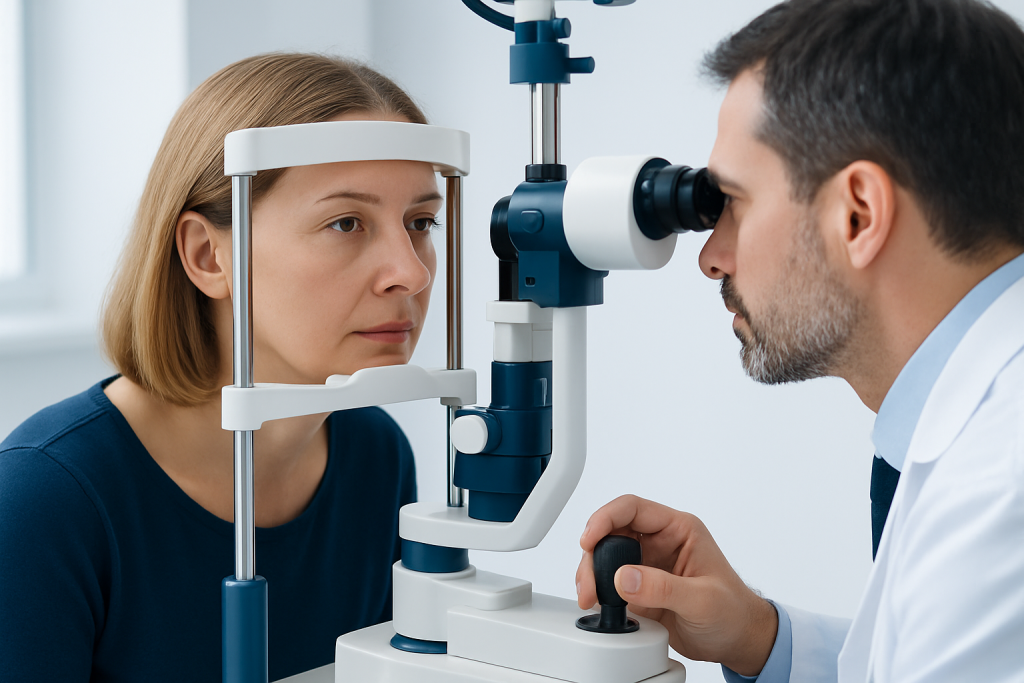
Most cases of eye twitching are diagnosed through a simple conversation and eye examination. A doctor will ask when the twitching started, how often it happens, whether it affects one or both eyes, and whether there are related symptoms such as pain, redness, blurred vision, or facial spasms.
The exam often focuses on the eyelids, the surface of the eye, and the surrounding facial muscles. If the clinician suspects dry eye, allergy, or another eye-surface problem, they may recommend tests or a closer look with specialized equipment.
When twitching is persistent or unusual, additional evaluation may be needed to rule out neurological causes. This is not because serious conditions are common, but because a careful assessment helps match treatment to the real source of the symptom.
Treatment Options
Treatment depends on the cause. If the twitching is related to stress, fatigue, or screen strain, the first step is often adjusting daily habits rather than starting medication.
For dry eyes or irritation, doctors may suggest lubricating eye drops, managing allergies, or improving contact lens use. If an outdated eyeglass prescription is contributing, updating it can reduce eye strain and lessen twitching.
When the twitching is part of a more persistent eyelid movement disorder, treatment may be more specialized. Options can include targeted therapies from an eye specialist or neurologist, depending on the diagnosis and how much the symptom affects daily life.
Common treatment approaches may include:
- Rest and improved sleep routines
- Reducing caffeine or other stimulants
- Artificial tears for dry eyes
- Allergy management
- Screen breaks and vision correction
- Specialist treatment for chronic eyelid spasms
Prevention & Self-care
Many people can reduce eye twitching by making a few steady changes. The goal is not perfection, but lowering the small stresses that repeatedly irritate the eyelid.
Good sleep, regular hydration, and planned breaks from screens are simple but meaningful steps. For people traveling for work or treatment, these habits can be especially helpful during time-zone changes and long days spent in airports, hotels, or clinics.
It can also help to notice patterns. A person who tracks when twitching starts may identify a trigger such as extra caffeine, long reading sessions, or dry indoor air. That information is often useful during a medical visit.
- Sleep consistently and avoid extreme fatigue
- Take regular breaks from digital screens
- Use lubricating drops if advised by a clinician
- Limit excess caffeine
- Protect eyes from wind, smoke, and allergens
- Keep contact lenses clean and use them as directed
When to See a Doctor
Medical advice is sensible if eye twitching lasts for more than a few weeks, happens very often, or becomes strong enough to interfere with reading, driving, or work. A person should also be checked if twitching spreads to other parts of the face or is paired with eyelid drooping, redness, swelling, pain, or changes in vision.
It is especially important to seek evaluation if one eye closes completely during episodes, if both eyes are affected in a persistent way, or if the symptom begins after a new medicine or major health change. These details can guide the doctor toward the correct cause.
For international patients, it may be helpful to plan care with a clinic that can coordinate eye examinations, imaging if needed, and follow-up after the return home. Acibadem Health Point’s multidisciplinary specialists and JCI-accredited hospitals diagnose and treat eye-related conditions for international patients with coordinated care pathways.
Living With Eye Twitching During Travel or Busy Work Periods
Eye twitching often appears when daily routines are least stable, such as during deadlines, family stress, or long-distance travel. In those situations, it helps to focus on the basics: sleep, hydration, reduced screen intensity, and a calmer pace when possible.
If the person is already abroad for care or visiting family, a practical approach is to keep a short symptom record. Noting sleep quality, caffeine intake, screen exposure, and eye dryness can make a follow-up visit much more productive, whether the next appointment is in person or arranged from another country.
Most importantly, eye twitching should be treated as a symptom to observe, not a reason for panic. In many cases it settles when the trigger is addressed, and when it does not, a clinician can help determine the next step.
Frequently asked questions
Is eye twitching usually serious?
Most eye twitching is not serious and is related to temporary triggers such as stress, fatigue, or eye strain. It often improves when the underlying cause is addressed. A doctor should assess twitching that persists, spreads, or affects vision.
Can stress cause eye twitching?
Yes, stress is one of the most common causes. It often acts together with poor sleep, caffeine, and screen fatigue. Reducing stress may help the twitching become less frequent.
Does dry eye cause eyelid twitching?
Dry eye can irritate the surface of the eye and make eyelid twitching more likely. People may also notice burning, grittiness, watering, or sensitivity to light. Lubricating drops and an eye exam may help if dryness is suspected.
When should someone worry about eye twitching?
Concern is higher if the twitching lasts for weeks, becomes forceful, or spreads to the face. It is also important to get checked if there is pain, redness, swelling, drooping, or blurred vision. These signs suggest the need for a professional evaluation.
Can too much screen time trigger eye twitching?
Yes, long screen sessions can contribute by causing eye strain and reducing blinking. Taking regular breaks, adjusting screen brightness, and correcting vision problems may help. If symptoms continue, an eye specialist can look for another cause.
What tests might a doctor do for eye twitching?
A doctor usually starts with a history and eye examination. If needed, they may assess dry eye, allergies, eyelid function, or nerve-related causes. More testing is only considered when the pattern suggests something beyond a common eyelid twitch.
References
- American Academy of Ophthalmology
- National Eye Institute
- Mayo Clinic
- Cleveland Clinic
- NHS
This article is for general information only and is not a substitute for professional medical advice. Please consult a qualified doctor about your individual situation.