Artificial Tears For Eye Twitching

Key Takeaways
- Eye twitching is commonly linked to stress, fatigue, caffeine, screen strain, or dry eyes.
- Artificial tears may help when twitching is driven by surface irritation and dryness.
- Persistent, one-sided, painful, or vision-changing twitching deserves medical evaluation.
- Lubricating drops are one part of care; sleep, hydration, and screen breaks also matter.
- An eye doctor can look for dry eye disease, eyelid irritation, or neurologic causes if needed.
Eye twitching is often brief and harmless, but it can be frustrating when it keeps returning. If dry eyes are part of the picture, artificial tears may ease irritation and help the eyelid relax, while a doctor can check for other causes if symptoms persist.
Overview
Eye twitching is usually an involuntary, small muscle movement in the eyelid. It often comes and goes on its own, and many people notice it during busy weeks, after poor sleep, or after long hours on digital screens. When the eye surface is dry or irritated, the twitching may feel more noticeable because the eyelid is working over a stressed surface.
Artificial tears can be helpful when dryness is part of the trigger. These lubricating drops do not “stop” every type of twitching, but they may reduce friction, soothe irritation, and make the eyelid less reactive. For many people, that is enough to settle the symptom, especially when paired with rest and better eye habits.
Because twitching can have several causes, it helps to think of artificial tears as one supportive tool rather than a complete answer. If the twitching is frequent, lasts for weeks, or involves more than a minor eyelid flutter, an eye specialist should assess whether dry eye disease, blepharospasm, or another condition is present.
Symptoms
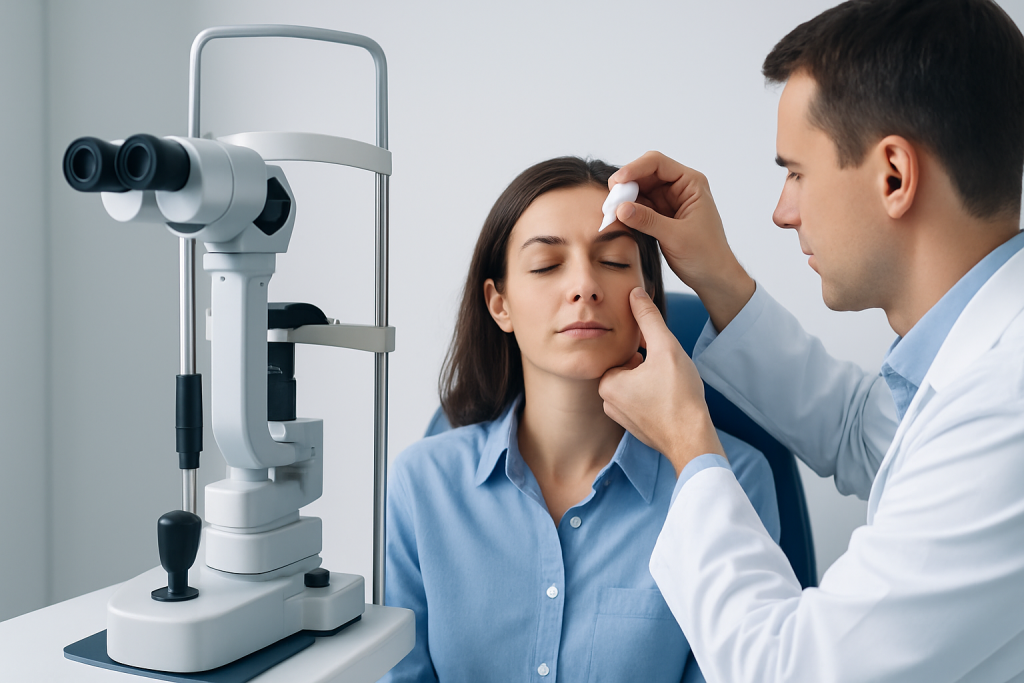
Most eye twitching feels like a brief fluttering or pulsing of the upper or lower eyelid. It may happen for seconds or minutes and then disappear, or it may recur throughout the day. Many people notice it more when they are tired, concentrating, or under stress.
When dryness is involved, there may be other clues besides twitching. The eyes may feel gritty, stinging, burning, watery, or unusually tired. Contact lenses may feel less comfortable, and reading or screen use may make the eyelids feel heavier or more irritated.
- Small, repetitive eyelid movements
- Eye irritation or a scratchy feeling
- Watery eyes in response to dryness
- Increased symptoms during screen use or in windy, dry environments
It is important to note that a few benign twitches are common. The concern rises when the movements become persistent, affect both eyes strongly, cause the eyelid to close forcefully, or are accompanied by facial weakness, drooping, pain, or vision changes.
Causes & Risk Factors

Eye twitching often has more than one trigger. The most common contributors include lack of sleep, stress, caffeine, eye strain, dry eyes, and irritation from contact lenses or environmental conditions. In some people, the twitching is simply a short-lived response to a period of overwork or poor eye lubrication.
Dry eye disease is especially relevant when someone asks about artificial tears for eye twitching. If the tear film is unstable, the surface of the eye becomes more exposed and sensitive. That irritation can make the eyelid muscles react more often, and lubricating drops may reduce that cycle.
Less commonly, twitching may be associated with eyelid inflammation, certain medications, neurologic conditions, or a muscle disorder such as benign essential blepharospasm. Risk can be higher in people who spend long hours on screens, live in dry climates, travel frequently, or have reduced blink rate during focused work.
Diagnosis
In many cases, diagnosis begins with a conversation and a simple eye examination. The doctor will ask when the twitching started, how long it lasts, whether it affects one or both eyes, and whether dryness, stress, caffeine, or sleep changes seem to play a role. This history often points toward the cause.
An eye exam may include checking the eyelids, tear film, corneal surface, and blinking pattern. If dry eye is suspected, the specialist may look for signs of surface irritation or poor tear quality. If the twitching appears unusual, persistent, or associated with other neurologic symptoms, further evaluation may be recommended.
For international patients planning care abroad, it can help to gather a symptom timeline, current medication list, and any prior eye records before the appointment. That makes the visit more efficient and gives the specialist a clearer picture of whether the symptom is simple dryness or something that needs a broader workup.
Treatment Options
Treatment depends on the cause. When dryness is contributing, artificial tears are often the first supportive step. They help replenish the tear film and can reduce the surface irritation that may be setting off the twitch. Preservative-free drops are often preferred for frequent use, especially in people with sensitive eyes or chronic dry eye.
Other practical measures may be just as important. Taking screen breaks, blinking more fully, improving sleep, reducing excess caffeine, and using a humidifier can all lower the chance of twitching episodes. If eyelid inflammation is present, warm compresses and lid hygiene may be recommended by an eye doctor.
When symptoms point to a different diagnosis, treatment changes accordingly. Some patients with blepharospasm or severe involuntary eyelid closure may need targeted therapies such as specialist-guided injections or other procedures. A qualified eye specialist will decide what is appropriate based on the pattern and severity of the twitching.
- Lubricating eye drops for dryness-related irritation
- Preservative-free formulations for frequent use
- Sleep, hydration, and screen-time adjustments
- Warm compresses or lid care when advised
- Specialist treatment if the twitching is persistent or severe
Prevention & Self-care
Self-care works best when it targets the everyday habits that make the eyelids tense or the eye surface dry. Regular sleep, steady hydration, and realistic screen breaks can make a noticeable difference. Many people also find that simply becoming more aware of blinking—especially during computer work—reduces symptoms.
Artificial tears may be used when dryness is part of the routine pattern, particularly before long flights, during winter heating, or in air-conditioned rooms. Choosing the right type is important, though, and people who use drops often should ask an eye doctor whether preservative-free options are more suitable for them.
For people traveling internationally for treatment, planning ahead is useful. Packing prescribed or recommended eye drops in hand luggage, keeping a written list of symptoms, and scheduling follow-up before leaving can support a smoother recovery and a better understanding of how the eyes respond over time.
When to See a Doctor
Medical advice is sensible if eye twitching lasts longer than a couple of weeks, keeps returning, or interferes with daily life. A doctor should also be seen sooner if the eye feels painful, red, or light-sensitive, or if the eyelid closes forcefully and repeatedly.
Prompt assessment is especially important if twitching is accompanied by drooping, facial weakness, double vision, a change in vision, or twitching elsewhere in the face. These symptoms do not always mean a serious problem, but they deserve a proper evaluation rather than self-treatment alone.
Acibadem Health Point’s multidisciplinary specialists and JCI-accredited hospitals diagnose and treat eye-related conditions for international patients, including cases where dry eye and eyelid symptoms overlap. A qualified eye doctor can determine whether artificial tears are enough or whether another approach is needed.
Frequently asked questions
Can artificial tears stop eye twitching completely?
They may help if dry eyes or surface irritation are contributing, but they do not treat every cause of eye twitching. If stress, fatigue, caffeine, or a neurologic condition is driving the symptom, other steps may be needed as well.
Which artificial tears are best for twitching caused by dry eyes?
Preservative-free lubricating drops are often a good option for frequent use, especially if the eyes are sensitive or dry eye is ongoing. An eye doctor can suggest a type that fits the person’s symptoms and contact lens use, if relevant.
How often can artificial tears be used?
That depends on the specific product and the person’s eye condition. If drops are needed often, it is wise to ask a doctor or pharmacist which formulation is appropriate, since some products are better suited to repeated use than others.
When is eye twitching not considered normal?
A brief twitch is usually harmless, but twitching that lasts for weeks, causes the eyelid to shut forcefully, or comes with pain, drooping, or vision changes should be checked. It is also worth evaluating if both sides of the face seem involved.
Does stress really make eye twitching worse?
Yes, stress and fatigue are common triggers. Improving sleep, reducing caffeine, and taking screen breaks can sometimes help the twitching settle more quickly.
Should contact lens wearers use artificial tears for twitching?
They may be helpful if the twitching is linked to dryness or lens discomfort. A doctor should confirm that the lenses fit properly and that there is no corneal irritation or other eye problem.
References
- American Academy of Ophthalmology
- National Eye Institute
- Mayo Clinic
- Cleveland Clinic
- World Health Organization
This article is for general information only and is not a substitute for professional medical advice. Please consult a qualified doctor about your individual situation.