Lasik or PRK? How Eye Surgeons Choose Between Faster Recovery and More Corneal Caution

Key Takeaways
- LASIK usually offers faster visual recovery, while PRK often suits eyes that need a more cornea-conservative approach.
- The best procedure depends on corneal thickness, prescription, eye dryness, corneal shape, and overall eye health.
- Both procedures aim to reduce dependence on glasses or contact lenses, but neither guarantees perfect vision for everyone.
- Recovery instructions matter: protecting the eye, using prescribed drops as directed, and attending follow-up visits support healing.
- A thorough preoperative exam is essential because not every patient is an ideal candidate for either procedure.
Medically reviewed by the Acıbadem clinical team — June 13, 2026
LASIK and PRK are both established laser vision correction procedures, but they differ in how the eye surface is prepared and how healing unfolds. Eye surgeons weigh corneal shape, thickness, lifestyle, and healing patterns to help each person choose the safer, more suitable option.
Overview
When people ask about Lasik or PRK, they are usually asking a practical question with a personal side: Which procedure will let them see clearly with the least disruption to daily life, and which one is gentler on the cornea? The answer depends less on a single “better” technique and more on how the eye is built, how it heals, and what the patient needs from life after surgery.
LASIK and PRK are both forms of laser refractive surgery. Each reshapes the cornea, the clear front window of the eye, so light focuses more accurately on the retina. In simple terms, they can reduce nearsightedness, farsightedness, and astigmatism, although not everyone is an appropriate candidate. The decision is made after careful measurements, a review of eye health, and a discussion about healing time, comfort, and long-term expectations.
For international patients, the choice may also be shaped by travel plans and follow-up logistics. Someone who is only in town for a short stay may value a smoother early recovery, while another may prioritize corneal preservation if the eye anatomy makes one procedure more suitable. A good surgeon explains the trade-offs clearly instead of treating the two procedures as interchangeable.
Symptoms
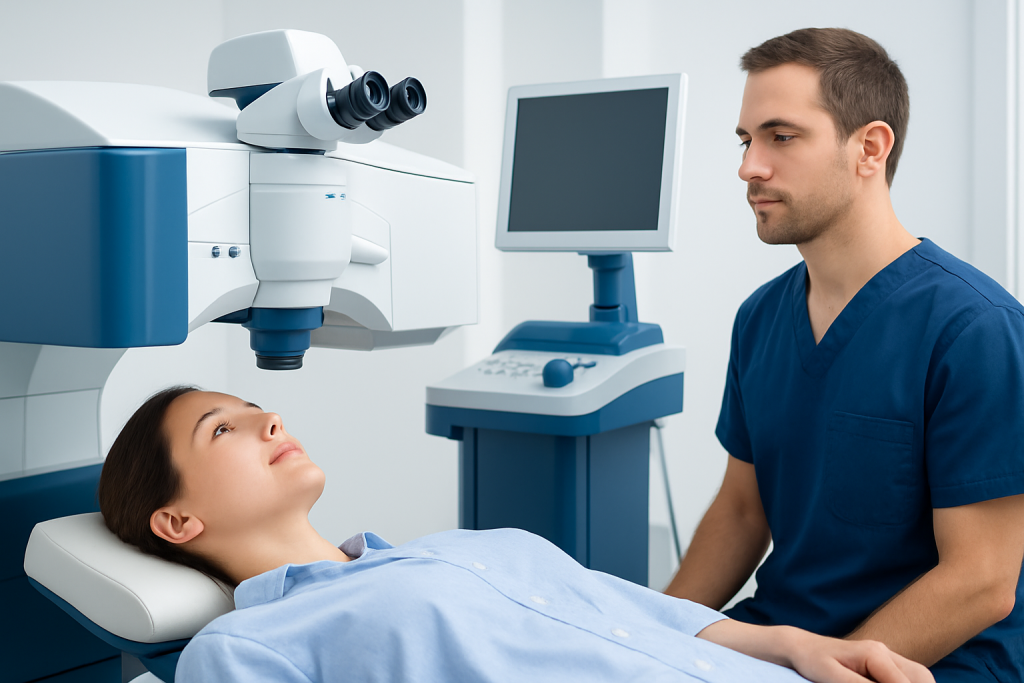
LASIK and PRK are not performed because of symptoms caused by the surgery itself; they are performed to correct vision problems that a person already has. The most common reason for evaluation is blurred distance vision, difficulty reading road signs, eye strain, or dependence on glasses or contact lenses for everyday tasks.
People often notice that their current correction is no longer ideal for work, sports, driving, or travel. Some patients also seek an option that may reduce the hassle of contacts, especially if they experience dryness, irritation, or recurring discomfort with lenses. These concerns help guide the conversation, but they do not by themselves determine which procedure is safest.
Surgeons also look for features that may influence whether LASIK or PRK is better suited to the eye. For example, someone may have a strong prescription but a cornea that is too thin for LASIK, or a dry-eye tendency that deserves special attention before any laser procedure. The “symptoms” of the planning stage are often more about lifestyle and visual needs than about pain or illness.
Causes & Risk Factors

The need for refractive surgery is usually related to the eye’s natural focusing system. When the cornea or the length of the eyeball causes light to land in the wrong place, the result is nearsightedness, farsightedness, or astigmatism. LASIK and PRK do not cure a disease; they change the cornea’s shape so light is better focused.
Several factors influence which procedure an eye surgeon recommends. Corneal thickness is important because LASIK requires creating a flap and removing some tissue beneath it, while PRK reshapes the surface without making a flap. Corneal shape, eye dryness, pupil size, prescription strength, and the presence of subtle corneal irregularity can all affect the plan.
Other considerations include age, stable vision over time, and overall eye health. Patients with certain corneal conditions, significant dry eye, uncontrolled eye disease, or unstable prescriptions may need to delay surgery or choose a different approach. A careful review of medical history matters as much as the laser technology itself.
- Corneal thickness: thinner corneas may favor PRK in some cases.
- Dry eye tendency: may influence recovery expectations and procedure choice.
- Occupation or hobbies: contact sports or higher eye-trauma risk can matter.
- Prescription stability: changing vision can affect timing.
- Corneal shape and topography: helps detect irregularities before surgery.
Diagnosis
Choosing between LASIK and PRK starts with a detailed preoperative evaluation rather than a quick yes-or-no screening. Surgeons measure the prescription, corneal thickness, corneal curvature, pupil size, tear-film quality, and the overall health of the front and back of the eye. These tests help determine whether the eyes are suitable for laser correction and which method is safer.
Eye topography and tomography can reveal subtle changes in corneal shape that are not visible during a routine exam. Tear testing may be used if dryness is suspected, because the eye surface needs to heal well after either procedure. The surgeon may also ask about contact lens use, past eye injuries, autoimmune disease, medications, and expectations about near and distance vision.
For patients traveling from another country, planning also includes practical details: how long to stay after surgery, when the first follow-up should happen, and whether future monitoring can be shared with a local eye doctor at home. Good preparation reduces stress and makes the postoperative period much more predictable.
Treatment Options
LASIK and PRK both use an excimer laser to reshape the cornea, but they reach the treatment area in different ways. In LASIK, the surgeon creates a thin corneal flap, lifts it, reshapes the underlying tissue, and then places the flap back in position. In PRK, the outer surface cells are gently removed so the laser can work directly on the corneal surface, and the skin-like layer then grows back during healing.
Because LASIK involves a flap, patients often experience clearer vision sooner and less surface discomfort in the early days. PRK, by contrast, usually has a slower and more uncomfortable first recovery period, but it avoids a flap and may be preferred when corneal thickness, anatomy, or lifestyle considerations make that advantage important. Both procedures are designed to be precise, but they are not identical in healing or risk profile.
Surgeons may recommend one over the other based on the full picture rather than one measurement alone. For some people, a flapless procedure is reassuring because it preserves more corneal tissue or avoids flap-related concerns. For others, faster return to work, driving, or international travel may make LASIK the more practical choice if the eyes are otherwise a good match.
Common points patients discuss with their surgeon include:
- How quickly they need to return to work, family care, or travel
- Whether the cornea is thick enough for LASIK
- Whether dry eye symptoms are already present
- Whether the job or sport raises eye-injury concerns
- How comfortable they feel with a slower surface-healing process
In both procedures, the surgeon’s judgment is central. The best outcome comes from matching the technique to the eye, not from choosing the most familiar name or the fastest recovery alone.
Prevention & Self-care
People cannot prevent nearsightedness or astigmatism with surgery-specific self-care, but they can support the best possible outcome by preparing well and following instructions closely. Before surgery, patients are often asked to stop wearing contact lenses for a period of time so the cornea can return to its natural shape. This helps measurements become more accurate.
After surgery, the eye surface needs calm, protected healing. Lubricating drops, antibiotic drops, or anti-inflammatory drops may be prescribed, and they should be used exactly as directed by the surgeon. Rubbing the eyes, exposing them to dusty environments, or skipping follow-up visits can interfere with healing and should be avoided.
Other practical steps matter too, especially for people returning home after treatment. Sunglasses help protect light-sensitive eyes outdoors, and planning a few quieter days after the procedure can make recovery smoother. Patients should arrange help for transportation, because driving is usually not appropriate immediately after surgery until the surgeon confirms vision is safe and stable enough.
- Follow preoperative instructions about contact lenses and medications.
- Use prescribed eye drops on schedule.
- Avoid rubbing or pressing on the eyes.
- Protect the eyes from wind, dust, and bright light.
- Attend all recommended postoperative checks, even if vision feels fine.
When to See a Doctor
A surgeon or eye specialist should evaluate anyone considering LASIK or PRK, even if glasses or contacts currently seem to work well. A consultation is especially important when a person wants a more permanent correction but also has dry eyes, a high prescription, a history of eye injury, or concerns about corneal thickness. The safest procedure is chosen after testing, not guessed from symptoms alone.
After surgery, the care team should be contacted promptly if pain becomes significant, vision worsens instead of improving, or redness, discharge, or light sensitivity increases rather than settling. These signs do not always mean something serious is happening, but they deserve timely review. Follow-up visits are part of the treatment, not an optional extra.
International patients should think ahead about who will handle the early postoperative checks once they return home. In some cases, the operating team can coordinate with a local eye doctor to make follow-up smoother. Acibadem Health Point’s multidisciplinary specialists and JCI-accredited hospitals diagnose and treat refractive surgery candidates for international patients with this kind of continuity in mind.
Frequently asked questions
What is the main difference between LASIK and PRK?
The main difference is how the surgeon reaches the cornea. LASIK creates a flap, while PRK works on the surface without a flap. That difference affects early comfort, recovery time, and which eyes are best suited for each procedure.
Which one heals faster, LASIK or PRK?
LASIK usually has a faster early recovery and quicker visual improvement. PRK typically takes longer because the surface layer must regenerate, but it may be recommended when a flapless approach is preferable.
Is PRK safer than LASIK?
Neither procedure is automatically safer for every person. PRK can be the better fit when corneal thickness, corneal shape, or lifestyle factors make avoiding a flap more sensible, while LASIK may be very appropriate for other eyes. Safety depends on matching the procedure to the individual patient.
Can someone with dry eye have LASIK or PRK?
Possibly, but dry eye needs careful evaluation first. Both procedures can temporarily affect the eye surface, so surgeons often assess tear quality and may treat dryness before recommending surgery. The best option depends on the severity of the dryness and the overall eye exam.
How long should a patient stay after surgery if traveling from abroad?
That depends on the procedure and the surgeon’s follow-up plan. Patients should allow time for immediate postoperative checks and should not assume they can fly out the next day without guidance. The operating team can advise on a safe timeline based on healing and travel needs.
Will LASIK or PRK eliminate the need for glasses forever?
These procedures can reduce dependence on glasses or contact lenses, but they do not guarantee perfect vision for life. Vision can still change with age, and some people may need reading glasses or future enhancement planning. A surgeon can explain what level of independence is realistic for each patient.
References
- American Academy of Ophthalmology
- National Eye Institute
- American Society of Cataract and Refractive Surgery
- World Health Organization
This article is for general information only and is not a substitute for professional medical advice. Please consult a qualified doctor about your individual situation.