Epiploic Appendagitis

Key Takeaways
- Epiploic appendagitis is inflammation of small fat-filled pouches along the colon.
- It often causes sudden, well-localized abdominal pain without major systemic illness.
- CT imaging is commonly used to distinguish it from appendicitis, diverticulitis, and other urgent conditions.
- Most cases improve with conservative care such as pain control and rest.
- If pain is severe, persistent, or accompanied by fever or vomiting, medical evaluation is important.
Epiploic appendagitis is an uncommon but usually self-limited cause of localized abdominal pain that can feel alarming because it may resemble appendicitis or diverticulitis. A clear diagnosis, often made with imaging, helps patients avoid unnecessary treatment and move toward recovery with appropriate medical guidance.
Overview
Epiploic appendagitis is a condition that many people have never heard of until a sudden, one-sided abdominal pain sends them to urgent care or the emergency department. The pain can be sharp and very focused, which is why it is often mistaken for appendicitis, diverticulitis, gallbladder disease, or another abdominal problem that sounds more dangerous than it turns out to be.
The condition involves small fat-filled pouches, called epiploic appendages, that sit along the outer surface of the colon. If one of these pouches twists or its blood supply becomes reduced, it can become inflamed. Although the pain can be striking, epiploic appendagitis is usually not a surgical emergency and often resolves with conservative treatment.
For people traveling from another country for evaluation, the main value of getting the diagnosis right is clarity. Once imaging confirms epiploic appendagitis, patients can usually avoid unnecessary procedures and focus on safe symptom relief and follow-up planning.
Symptoms
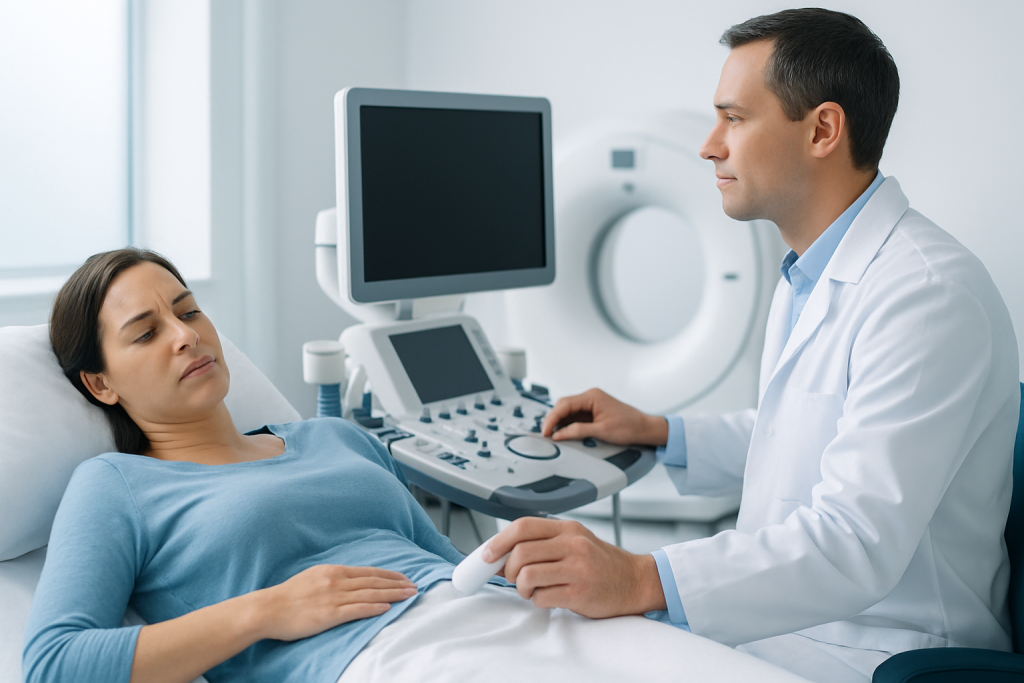
The hallmark of epiploic appendagitis is localized abdominal pain that begins relatively suddenly. The discomfort is often constant, may worsen with movement, and is commonly felt in the lower left abdomen, although it can occur elsewhere depending on which part of the colon is involved.
Unlike many infections or inflammatory abdominal conditions, epiploic appendagitis usually does not cause a high fever or major digestive upset. Some people feel mildly bloated or tender in the painful area, but they may still be able to eat and go about limited daily activities. This mismatch between noticeable pain and otherwise stable general health is one reason the condition can be confusing.
Common features may include:
- Sharp or aching pain that stays in one spot
- Localized tenderness when the area is pressed
- Pain that may increase with coughing, walking, or twisting
- Little or no nausea, vomiting, diarrhea, or high fever
Because symptoms overlap with several abdominal emergencies, it is not safe to assume the cause without medical evaluation, especially if the pain is new or severe.
Causes & Risk Factors

Epiploic appendages are small fat pouches attached to the colon. When one of these pouches twists or its small blood vessels become blocked, the tissue can become inflamed. This process is called epiploic appendagitis.
In many cases, the exact trigger is not identified. Some factors may make it more likely, including body habitus with more abdominal fat, sudden physical movement, strenuous exercise, or situations that increase pressure in the abdomen. The condition appears more often in adults than in children.
It is helpful to think of epiploic appendagitis as a mechanical and vascular problem rather than an infection. That distinction matters because it helps explain why antibiotics are not always needed and why the illness typically settles with time and supportive care.
Diagnosis
Diagnosis starts with a careful history and physical examination. A clinician considers where the pain is located, how it began, and whether there are signs that point more strongly to appendicitis, diverticulitis, urinary stones, or another cause of abdominal pain.
Blood tests may be done, but they can be nonspecific and may even look fairly normal. That is one reason imaging plays such an important role. A computed tomography, or CT, scan is often the most useful test because it can show the characteristic inflamed fat lesion near the colon and help rule out other urgent conditions.
Depending on the situation, the medical team may also order urine tests, pregnancy testing when appropriate, or other studies to exclude alternative diagnoses. For international patients, bringing prior records, medication lists, and any earlier scans can make comparison easier and may reduce the need for repeated testing.
Treatment Options
Most cases of epiploic appendagitis are treated without surgery. The usual approach focuses on relieving pain, reducing strain on the abdomen, and allowing the inflammation to resolve naturally over time.
Conservative treatment may include rest, hydration, and pain relief recommended by a doctor. In some cases, anti-inflammatory medicines are used if appropriate for the individual. Because the condition is not typically caused by infection, antibiotics are not routinely needed unless another diagnosis is also being considered.
Surgery is rarely necessary. It may be discussed only if the diagnosis is uncertain, symptoms do not improve as expected, or another abdominal problem is found. For patients who are far from home, a clear diagnosis can be reassuring because it often means the recovery plan is straightforward and can continue safely with local or home-country follow-up.
Prevention & Self-care
There is no guaranteed way to prevent epiploic appendagitis, largely because the exact trigger is not always known. Even so, patients can support recovery by avoiding activities that clearly worsen pain and by following the clinician’s advice about rest and gradual return to normal movement.
Simple self-care steps may help during recovery:
- Rest when the pain is active and resume activity gradually
- Drink enough fluids unless a doctor advises otherwise
- Use prescribed or recommended pain relief as directed
- Watch for changes in symptoms rather than pushing through worsening pain
People who have had one episode do not always develop another, but it is sensible to seek medical review if similar pain returns. Because abdominal pain can have many causes, repeating symptoms should not be assumed to be the same condition without assessment.
When to See a Doctor
Medical evaluation is important whenever abdominal pain is sudden, severe, or unexplained. Even when epiploic appendagitis is the final diagnosis, the early symptom pattern can overlap with conditions that do need urgent care.
A doctor should be contacted promptly if pain is accompanied by fever, repeated vomiting, a hard or swollen abdomen, inability to pass stool or gas, fainting, or worsening symptoms. These features can suggest a different problem that deserves immediate attention.
For patients who are already traveling for care, it is reasonable to seek evaluation before boarding a long flight or resuming a demanding itinerary if the pain is still active. Acibadem Health Point’s multidisciplinary specialists and JCI-accredited hospitals diagnose and treat this condition for international patients, helping coordinate assessment, imaging, and follow-up in a way that is medically grounded and practical.
Living with the Diagnosis
Once epiploic appendagitis has been identified, many people feel relieved to know that the condition is usually temporary and does not require invasive treatment. That said, recovery still benefits from a calm, structured plan, especially if the person is managing symptoms while away from home or while balancing travel arrangements.
Patients are often advised to observe how the pain changes over the next several days, take medications only as directed, and keep a record of any new symptoms. If follow-up imaging or a review visit is recommended, it should not be skipped simply because the pain has improved. A final check can confirm that recovery is progressing as expected and that no other issue is present.
When abdominal pain has disrupted work, family plans, or international travel, a clear diagnosis can make the next steps much easier to organize. The goal is not only pain relief, but also confidence that the underlying cause has been properly understood.
Frequently asked questions
Is epiploic appendagitis dangerous?
It is usually not dangerous and often improves with conservative treatment. The main concern is that it can look like a more serious condition at first, so medical evaluation is important to confirm the diagnosis.
Can epiploic appendagitis go away on its own?
Yes, many cases settle on their own over time. A doctor may still recommend pain relief, rest, and observation so recovery stays comfortable and safe.
Does epiploic appendagitis require antibiotics?
Not usually. Because it is typically caused by inflammation related to blood supply or twisting rather than infection, antibiotics are not routinely needed unless another diagnosis is suspected.
How is epiploic appendagitis different from appendicitis or diverticulitis?
All three can cause localized abdominal pain, but the cause and treatment are different. Imaging, especially CT, is often used to tell them apart and guide the right care.
Can epiploic appendagitis come back?
Recurrence is possible, but it does not happen to everyone. If similar pain returns, it should be checked again rather than assumed to be the same condition.
When can someone return to normal activities?
That depends on how quickly symptoms improve and what the doctor advises. Most people return gradually once pain settles, but activity should not be rushed if it clearly worsens symptoms.
References
- National Institute of Diabetes and Digestive and Kidney Diseases
- Radiological Society of North America
- Merck Manual Professional Edition
- Cleveland Clinic
- Mayo Clinic
This article is for general information only and is not a substitute for professional medical advice. Please consult a qualified doctor about your individual situation.