Ecg And Cardiogram

Key Takeaways
- ECG and electrocardiogram usually refer to the same heart tracing test.
- The test can help detect rhythm problems, signs of reduced blood flow, and some structural or electrical heart issues.
- An ECG is painless, non-invasive, and often completed in just a few minutes.
- A normal ECG does not always rule out a heart condition, especially if symptoms come and go.
- Results are interpreted alongside symptoms, examination findings, and sometimes additional tests.
An ECG, also called an electrocardiogram, is a quick test that records the heart’s electrical activity and helps doctors assess rhythm, rate, and certain heart problems. When people say “cardiogram,” they are often referring to the same test, though the term can be used more broadly in everyday language.
Overview
An ECG is one of the most familiar tools in heart care because it offers a fast look at how the heart is functioning at that moment. By placing small stickers, called electrodes, on the skin, clinicians can record the electrical signals that coordinate each heartbeat. The resulting tracing helps reveal whether the heart is beating normally, too fast, too slow, or in an unusual pattern.
People often hear the terms “ECG” and “cardiogram” used interchangeably. In everyday conversation, both usually point to the same test: an electrocardiogram. For patients, the main value lies in what the tracing can suggest about the heart’s rhythm and whether more evaluation is needed.
For international patients deciding whether to travel for care, an ECG is also a practical starting point. It is widely available, quick to perform, and often part of a larger assessment when symptoms such as chest discomfort, palpitations, fainting, or shortness of breath need clarification.
Symptoms That Often Lead to an ECG
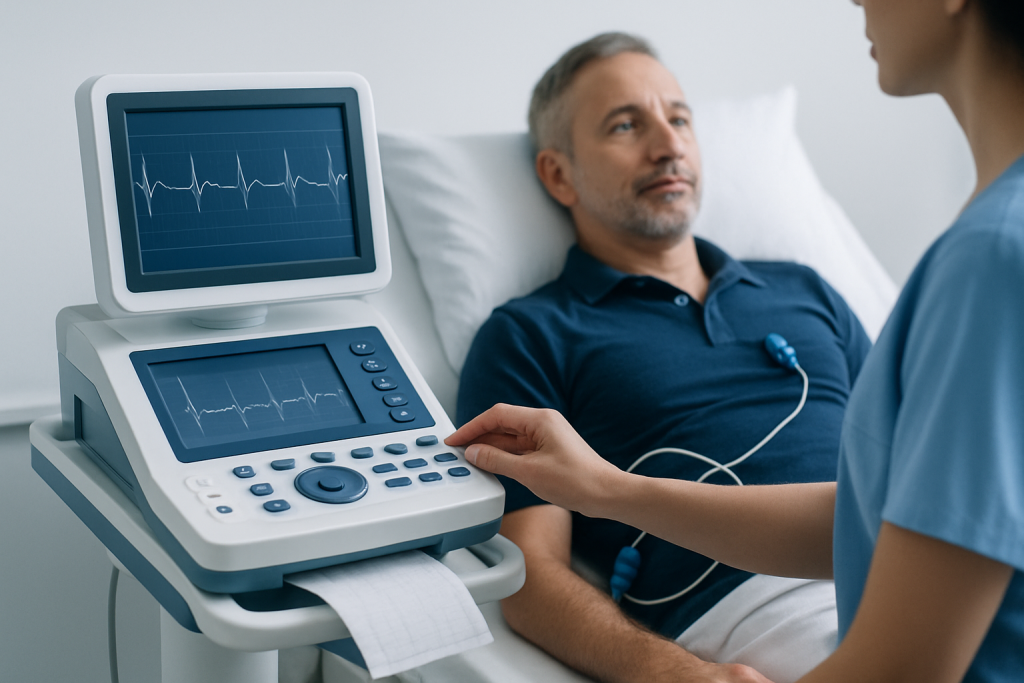
An ECG may be recommended when a person reports symptoms that could involve the heart. Some symptoms are brief and obvious, while others appear only with exertion, stress, or at night. The test does not diagnose every cause of chest or breathing symptoms, but it can help guide the next step.
Common reasons for an ECG include:
- Chest pain, pressure, tightness, or discomfort
- Palpitations or a feeling that the heart is racing, fluttering, or skipping beats
- Shortness of breath without a clear explanation
- Dizziness, light-headedness, or fainting
- Unusual fatigue, especially if it appears with activity
- Monitoring after a known heart condition or a recent cardiac event
In some situations, the ECG may be done even when the person feels well. Doctors may want a baseline tracing before surgery, before starting certain medicines, or during a routine assessment in someone with higher cardiovascular risk.
Causes & Risk Factors

An ECG does not have causes in the way a disease does, but the test is used to look for conditions that affect the heart’s electrical activity or blood supply. These include rhythm disturbances, signs of strain on the heart, and patterns that may suggest reduced blood flow to the heart muscle.
Factors that may increase the chance of needing an ECG or of finding an abnormal result include high blood pressure, diabetes, high cholesterol, smoking, a family history of heart disease, and older age. Some non-cardiac issues can also influence the tracing, such as electrolyte imbalance, fever, anxiety, dehydration, thyroid problems, or certain medications.
It is important to remember that an abnormal ECG does not always mean a serious heart problem. Likewise, a normal ECG does not always exclude a heart condition, especially if symptoms are intermittent. Doctors interpret the tracing in the context of the full clinical picture.
Diagnosis: What an ECG Can and Cannot Show
During the test, electrodes are placed on the chest, arms, and legs in a standard pattern. The machine records the heart’s electrical signals and prints or displays a waveform. A clinician then reviews the tracing for rate, rhythm, intervals between beats, and patterns that may point to a specific issue.
An ECG can help detect atrial fibrillation, other arrhythmias, signs of previous heart injury, conduction problems, and changes that may suggest current strain or reduced oxygen supply. It may also show evidence of enlarged chambers or effects of long-standing blood pressure problems, although it is not a definitive test for every structural issue.
What the ECG cannot do is see the heart directly. It does not by itself show blocked arteries, valve function, pumping strength, or the exact cause of every symptom. When needed, doctors may add echocardiography, blood tests, Cardiology Stress Testing" class="ahp-ilk">stress testing, ambulatory monitoring, or imaging studies to build a more complete diagnosis.
Treatment Options
An ECG is a diagnostic test, not a treatment. The treatment depends on what the tracing shows and on the person’s symptoms, history, and risk profile. In many cases, the ECG simply helps a doctor decide whether reassurance, observation, medication adjustment, or further testing is the right path.
If the ECG suggests an arrhythmia, treatment may involve medicines, lifestyle changes, or procedures such as cardioversion, ablation, or device therapy in selected cases. If the tracing points toward possible reduced blood flow, the next steps may include urgent assessment, blood tests, and imaging or coronary evaluation. If the test is normal, the doctor may still search for other causes of the symptoms.
For patients traveling from another country, having ECG results explained clearly can be especially helpful. A good care plan includes not only the test itself, but also what it means in practical terms, whether more investigations are needed, and how follow-up can be organized after returning home.
Prevention & Self-care
There is no need to “prepare” for a future ECG in a medical sense, but keeping the heart healthier can lower the likelihood of problems that later show up on one. Self-care often focuses on well-established cardiovascular habits rather than on the test itself.
Helpful measures include:
- Following a heart-healthy diet
- Staying physically active in a way that suits age and medical status
- Not smoking and avoiding secondhand smoke
- Managing blood pressure, blood sugar, and cholesterol
- Keeping follow-up appointments and taking prescribed medicines as directed
- Noting when symptoms happen, what they feel like, and how long they last
If symptoms are intermittent, a symptom diary can be useful. Writing down what the person was doing, whether there was stress or exertion, and whether there were associated symptoms such as dizziness or chest discomfort can help the clinician decide whether a standard ECG is enough or whether longer monitoring would be more informative.
When to See a Doctor
Medical advice should be sought when symptoms are new, recurring, unexplained, or getting worse. An ECG is often one of the first tests ordered because it is simple and can provide immediate clues about heart rhythm and electrical activity.
Urgent evaluation is especially important for chest pain or pressure, fainting, severe shortness of breath, or a sustained racing heartbeat, particularly if these symptoms occur during rest or are accompanied by sweating, nausea, or a feeling of severe weakness. Even when symptoms improve on their own, they should not be ignored if they are unusual for the person.
For people considering evaluation abroad, clear planning matters. Bringing prior medical records, medication lists, and previous ECGs can make interpretation more accurate. Acibadem Health Point’s multidisciplinary specialists and JCI-accredited hospitals diagnose and treat heart conditions for international patients, helping connect testing with appropriate follow-up care.
Frequently asked questions
Are ECG and cardiogram the same thing?
In everyday use, yes. People often say “cardiogram” when they mean an electrocardiogram, or ECG. A doctor may use either term, but the test itself records the heart’s electrical activity.
Is an ECG painful?
No. The test is non-invasive and usually painless, although removing the electrodes may feel slightly sticky or cool. It does not use needles or electricity sent into the body.
How long does an ECG take?
The recording itself is usually completed in a few minutes, although preparation and review may take a little longer. The exact time can vary depending on the setting and whether additional measurements are needed.
Can an ECG detect a heart attack?
An ECG can show patterns that suggest a heart attack or reduced blood flow, but it is only one part of the assessment. Doctors usually interpret it together with symptoms, examination findings, and blood tests such as cardiac enzymes.
What if my ECG is normal but I still have symptoms?
That can happen, especially if symptoms come and go. A normal ECG does not always rule out a heart problem, so the doctor may recommend repeat testing, longer monitoring, or another type of evaluation.
Do I need to prepare for an ECG?
Usually very little preparation is needed. It is helpful to wear clothing that can be removed easily from the chest area and to bring a list of medicines, since some treatments can affect the tracing.
References
- American Heart Association
- Mayo Clinic
- National Heart, Lung, and Blood Institute
- NHS
This article is for general information only and is not a substitute for professional medical advice. Please consult a qualified doctor about your individual situation.