Cardioversion

Key Takeaways
- Cardioversion is used to reset certain abnormal heart rhythms, not every type of arrhythmia.
- It may be performed with medicines or with a brief, controlled electrical shock under sedation.
- Doctors check for blood clot risk before cardioversion, especially in atrial fibrillation.
- Recovery is usually short, but follow-up and rhythm monitoring are important after the procedure.
- Long-term treatment may still be needed to reduce the chance of the rhythm returning.
Cardioversion is a planned medical treatment used to help restore a normal heart rhythm in certain arrhythmias, most often atrial fibrillation or atrial flutter. It may be done with medication or a controlled electrical shock, and the right approach depends on the person’s condition, symptoms, and clot risk.
Overview
Cardioversion is a treatment that helps the heart return to a normal rhythm when an abnormal rhythm is causing symptoms or increasing health risk. It is most often discussed in relation to atrial fibrillation and atrial flutter, but the approach is only suitable for certain rhythm problems. For patients, the main question is not simply whether the heart is beating fast or irregularly, but whether restoring a steadier rhythm will improve safety, comfort, and day-to-day function.
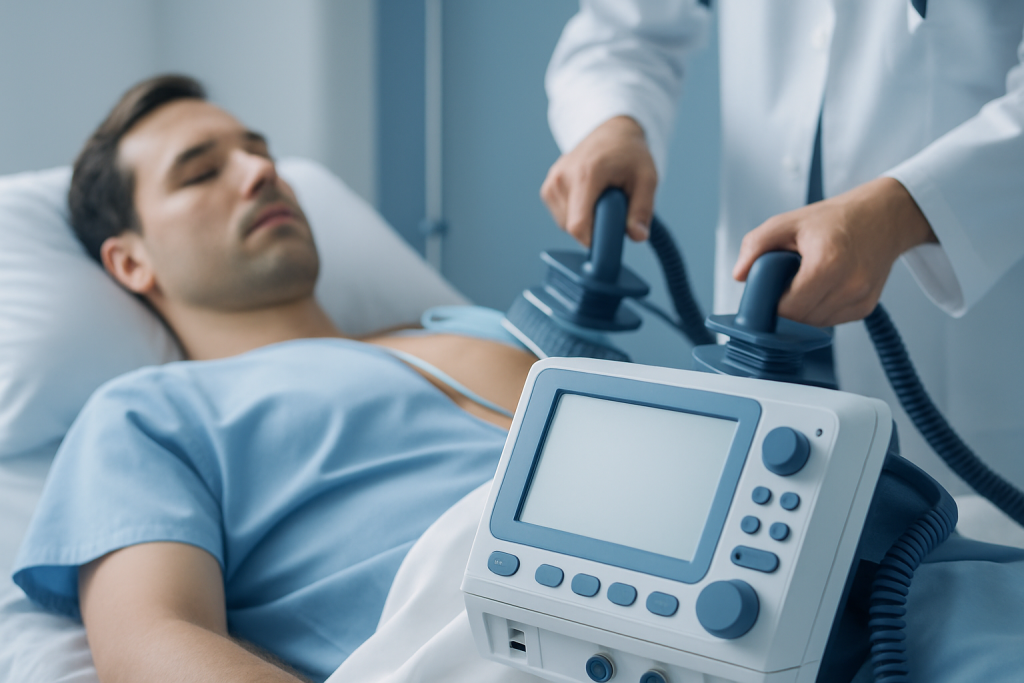
There are two main forms. In electrical cardioversion, a carefully timed shock is delivered through pads on the chest while the person is asleep or sedated. In pharmacological cardioversion, medicines are used to guide the heart back to a regular rhythm. Both are planned medical treatments, and both are done with monitoring so the heart can be watched closely before, during, and after the procedure.
For international patients, cardioversion is often part of a wider care plan rather than a stand-alone event. The evaluation may begin before travel with a review of prior ECGs, medications, and clot-prevention history, so the team can decide whether the rhythm should be reset immediately, after further testing, or with a different strategy altogether.
Symptoms
The symptoms that lead to cardioversion are usually the symptoms of the underlying arrhythmia. Some people notice a racing heartbeat, a fluttering sensation in the chest, shortness of breath, chest discomfort, fatigue, reduced exercise tolerance, dizziness, or an uneasy sense that the pulse feels uneven. Others feel surprisingly little, especially when the rhythm problem has developed gradually.
Because symptoms can overlap with many other heart and non-heart conditions, cardioversion is not decided on symptoms alone. A doctor considers how the person is functioning, how long the rhythm has been present, whether the heart is stable, and whether there are signs that the arrhythmia may be causing strain on the heart muscle or increasing the chance of complications.
Some rhythm disturbances need urgent care rather than a planned cardioversion visit. Warning signs such as fainting, severe chest pain, marked breathlessness, confusion, or a very unstable pulse need immediate medical assessment. A cautious, step-by-step evaluation helps ensure that cardioversion is used at the right time and for the right reason.
Causes & Risk Factors

Cardioversion is used when an arrhythmia is thought to be reversible or controllable enough that restoring normal rhythm may be beneficial. Atrial fibrillation and atrial flutter are common reasons, and the underlying triggers can include heart valve disease, high blood pressure, coronary artery disease, thyroid imbalance, sleep apnea, alcohol overuse, infection, and sometimes no clear cause at all.
Risk factors for needing cardioversion are closely tied to the causes of the rhythm disorder. Age, previous episodes of arrhythmia, structural heart disease, enlarged heart chambers, and metabolic problems can all make irregular rhythm more likely to persist or recur. Some people are advised to consider cardioversion because a fast or irregular rhythm is interfering with heart pumping function or daily activity.
Clot risk is a major part of the decision-making process, especially in atrial fibrillation. When the upper chambers of the heart do not contract in an organized way, blood can pool and form clots. If the rhythm is reset without proper precautions, a clot could move into the bloodstream. For that reason, the timing of the procedure and the use of blood-thinning medication may matter as much as the rhythm itself.
Diagnosis
Before cardioversion, the care team confirms the exact type of arrhythmia. An electrocardiogram, or ECG, often shows the rhythm clearly, while longer monitoring such as a Holter monitor or event recorder may be used if symptoms come and go. The doctor also reviews the person’s history, medications, and any previous episodes of irregular heartbeat.
Blood tests are often part of the workup because thyroid problems, electrolyte imbalances, anemia, or kidney issues can influence rhythm control and treatment planning. An echocardiogram may be ordered to look at heart structure and pumping strength. If atrial fibrillation has been present for more than a short period, imaging such as a transesophageal echocardiogram may be used to check for clots before electrical cardioversion.
For patients arriving from another country, it can be helpful to travel with recent ECGs, discharge summaries, medication lists, and any records of prior blood thinner use. Those details help the cardiology team decide whether cardioversion is appropriate, whether more preparation is needed, or whether a different rhythm strategy would be safer.
Treatment Options
The choice between electrical and medication-based cardioversion depends on the arrhythmia, the duration of the episode, symptoms, heart function, and clot risk. Electrical cardioversion is often chosen when a prompt and reliable return to normal rhythm is needed. It is done in a monitored setting, usually with sedation, and the shock itself is very brief. The goal is to reset the electrical activity of the heart so it can resume a more organized beat.
Pharmacological cardioversion uses antiarrhythmic medicines to attempt the same outcome without a shock. This may be suitable in selected cases, but it can work more slowly and is not appropriate for every person. Doctors choose medications carefully because some antiarrhythmic drugs are not safe in certain heart conditions, and all medicines can have side effects or interact with existing treatments.
Preparation often includes a decision about blood thinners, especially if atrial fibrillation has lasted long enough that clot risk must be addressed. After cardioversion, the rhythm is monitored and the care plan may include medication changes, follow-up ECGs, or further treatment to reduce the chance of recurrence. In some cases, additional procedures such as catheter ablation are discussed later if the arrhythmia keeps returning.
What patients usually experience is a controlled, supervised hospital visit rather than a long procedure. The setting is designed for safety and comfort, with continuous monitoring of heart rate, oxygen level, blood pressure, and recovery from sedation. For international patients, the treatment plan often needs to balance medical readiness with travel timing, so discharge instructions, medication supply, and follow-up arrangements are planned in advance.
Prevention & Self-care
Not every arrhythmia can be prevented, but some steps can reduce the chance of episodes or improve long-term rhythm control. Good blood pressure management, treatment of thyroid disease, review of stimulant use, moderation of alcohol, and attention to sleep apnea can all support a healthier heart rhythm. Regular follow-up is especially important for people who have already had cardioversion once, because recurrence is possible.
Self-care after cardioversion is usually straightforward, but it should be individualized. Patients are commonly advised to rest after sedation, avoid driving until fully alert, take prescribed medications exactly as directed, and watch for symptoms such as palpitations, dizziness, or shortness of breath. If blood thinners are prescribed, consistency matters, and patients should not stop them without medical advice.
Traveling home after treatment may require extra planning. It is sensible to arrange a companion, allow time before a flight or long journey, and keep discharge paperwork and medication instructions easy to access. A local doctor or cardiologist should be informed about the procedure so follow-up can continue smoothly after returning home.
When to See a Doctor
A doctor should evaluate any new, persistent, or recurrent irregular heartbeat, especially if it is accompanied by breathlessness, chest discomfort, fainting, unusual fatigue, or reduced ability to carry out normal activities. Cardioversion is not the right answer for every heartbeat problem, but it may be a useful option when symptoms are significant or the rhythm is not settling on its own.
Urgent medical care is needed if palpitations occur with severe chest pain, severe shortness of breath, stroke-like symptoms, or collapse. These symptoms can point to a serious rhythm disturbance or another heart-related emergency. Even when symptoms are mild, prompt assessment is worthwhile because early treatment decisions are often safer and simpler than delayed ones.
Patients who are considering cardioversion in another country should look for a cardiology team that can evaluate the rhythm thoroughly, explain clot-prevention steps clearly, and organize follow-up before travel. Acibadem Health Point’s multidisciplinary specialists and JCI-accredited hospitals diagnose and treat cardioversion-related rhythm disorders for international patients, with care planned around both treatment and recovery.
Recovery and Follow-up
Recovery after cardioversion is usually short, but follow-up is an essential part of the process. Some people feel tired for the rest of the day because of sedation, while others notice their pulse return to a steadier pattern quite quickly. The care team typically checks the rhythm after the procedure and may adjust medicines based on the heart’s response.
Follow-up visits help answer the important question that comes after the initial success: what will keep the rhythm stable? That may involve rhythm-control medicine, rate-control medicine, blood thinners, treatment of the underlying trigger, or discussion of longer-term options if the arrhythmia comes back. A person’s individual pattern often determines the next step more than the procedure itself.
For patients who have traveled abroad, follow-up planning should happen before departure. A clear summary of the procedure, test results, medication list, and warning signs to watch for makes it easier for a local physician to continue care. This continuity is especially valuable because cardioversion is one part of a longer rhythm-management plan, not always the final step.
Living With the Possibility of Recurrence
It is helpful for patients to know that cardioversion can work well and still not be the end of rhythm management. Some arrhythmias tend to return because the heart’s electrical system remains vulnerable. That does not mean the treatment failed; it means the underlying condition may need ongoing attention.
Keeping track of symptoms, heart rate readings if recommended, medication schedules, and triggers can give doctors a clearer picture of what is happening between visits. Many patients find that understanding the pattern of their rhythm problem makes the whole experience less stressful and helps them take a more active role in care.
Whether the plan includes medicines, monitoring, or another procedure later on, the goal is the same: to reduce symptoms, lower risk, and support daily life. A patient-centered approach, especially one that considers travel, recovery, and follow-up across borders, often makes the treatment journey easier to navigate.
Frequently asked questions
Is cardioversion the same as defibrillation?
No. Cardioversion is a planned, synchronized treatment used for certain abnormal rhythms, while defibrillation is an emergency shock used for life-threatening rhythms such as ventricular fibrillation. Cardioversion is done in a controlled setting, often with sedation.
Does cardioversion hurt?
Electrical cardioversion is usually performed while the person is asleep or heavily sedated, so discomfort during the shock is not expected. Some people feel tired or mildly sore afterward, but recovery is often quick. Medication-based cardioversion does not involve a shock, but the medicines can still have side effects.
How long does cardioversion take?
The actual procedure is usually brief, but the total visit may take several hours because of preparation, monitoring, and recovery from sedation. Additional time may be needed if tests or clot-prevention steps are required first.
Can a normal rhythm come back after cardioversion?
Yes, recurrence can happen, especially if the underlying cause of the arrhythmia is still present. Doctors may recommend medicines, lifestyle changes, or other treatments to help keep the rhythm steady for longer.
Why is blood thinner treatment sometimes needed before cardioversion?
In atrial fibrillation and some other rhythms, blood can pool and form clots in the heart. Blood thinners and timing rules help reduce the chance that a clot could move after the rhythm is restored.
Can someone travel after cardioversion?
Often yes, but timing should be discussed with the doctor first. It is important to feel fully recovered from sedation, have a clear medication plan, and know when follow-up is due before making travel arrangements.
References
- American Heart Association
- National Heart, Lung, and Blood Institute
- European Society of Cardiology
- Mayo Clinic
- National Health Service
This article is for general information only and is not a substitute for professional medical advice. Please consult a qualified doctor about your individual situation.