Double Vision

Key Takeaways
- Double vision can come from the eyes, the eye muscles, the nerves that move the eyes, or the brain.
- It may be binocular, meaning it appears only when both eyes are open, or monocular, meaning it remains in one eye.
- Common causes include dry eye, refractive errors, cataracts, thyroid eye disease, nerve palsies, stroke, and head injury.
- Diagnosis usually includes an eye exam, vision testing, and sometimes imaging or blood tests.
- Treatment depends on the cause and may include glasses, eye drops, prism lenses, medication, surgery, or treatment of an underlying condition.
- Sudden double vision, especially with headache, weakness, drooping eyelid, or speech changes, should be assessed promptly.
Double vision, also called diplopia, can make one object appear as two and may be temporary or a sign of an underlying eye, nerve, or muscle problem. A careful medical evaluation helps identify the cause and guide the right treatment, especially when symptoms begin suddenly or affect only one eye.
Overview
Double vision can be unsettling because the world suddenly looks split, blurred, or offset. Some people notice it only at certain distances or directions of gaze, while others see two images all the time. The pattern matters, because it often gives the clinician an important clue about whether the cause is in the eye itself, the eye muscles, the nerves that control eye movement, or a broader neurological condition.
In practical terms, double vision is not a diagnosis on its own. It is a symptom with many possible explanations, ranging from simple, correctable eye problems to conditions that need urgent assessment. For international patients, this usually means the first step is not choosing a treatment immediately, but making sure the source of the symptom is identified carefully before travel plans, follow-up care, or any procedure is arranged.
Clinicians commonly separate double vision into two broad types: binocular diplopia, which disappears when either eye is covered, and monocular diplopia, which remains even when one eye is closed. That distinction helps narrow the likely cause and shapes the next steps in evaluation.
Symptoms
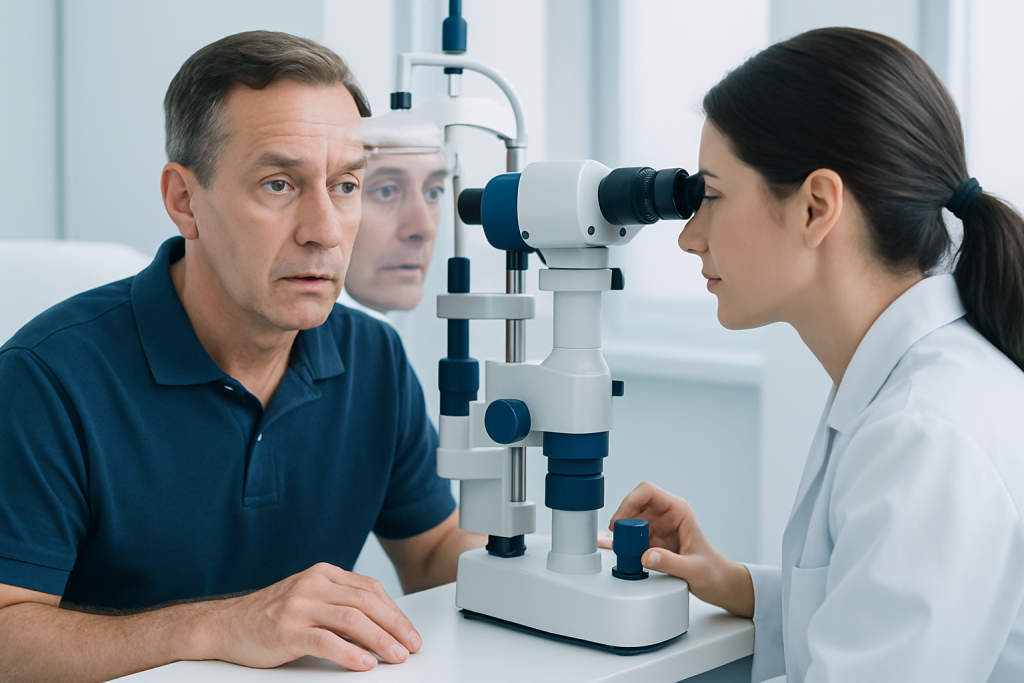
People describe double vision in different ways. Some see two images side by side, while others notice one image above the other or slightly tilted. The symptom may be constant or come and go, and it may worsen with fatigue, reading, driving at night, or looking in a particular direction.
Double vision can also bring along other clues. These may include eye strain, headache, dizziness, difficulty judging distance, nausea, or trouble keeping one eye open. If the double vision is caused by an eye misalignment, the person may also notice that objects seem to shift position when looking from one direction to another.
Symptoms that suggest the need for urgent medical attention include sudden onset, severe headache, drooping eyelid, pain around the eye, facial numbness, weakness, imbalance, confusion, or speech changes. Those features do not mean a serious condition is certain, but they do mean the evaluation should not be delayed.
Causes & Risk Factors

The causes of double vision depend on whether the problem affects one eye or both. Monocular double vision is often related to the eye surface or the optics of the eye, such as dry eye, astigmatism, cataracts, or problems with the cornea or lens. In these cases, the images may still be doubled even when the other eye is covered.
Binocular double vision usually points to a misalignment of the eyes. That misalignment can arise from weakened or restricted eye muscles, inflammation, thyroid eye disease, nerve palsies, myasthenia gravis, diabetes-related nerve involvement, stroke, head trauma, or conditions affecting the brainstem or cranial nerves. Sometimes the cause is temporary; in other cases, it reflects a longer-term disorder that needs targeted treatment.
Several factors can raise the likelihood of double vision. These include older age, diabetes, thyroid disease, recent head injury, a history of stroke, autoimmune disease, vascular risk factors such as high blood pressure, and prolonged eye strain or dry eye. Certain medications and alcohol can also blur visual control and make an underlying issue more noticeable.
Diagnosis
The first part of diagnosis is usually a detailed conversation about how the symptom looks and when it started. A clinician may ask whether the double vision disappears when one eye is closed, whether it changes with gaze direction, and whether it began after illness, trauma, travel, or new medication use. These details often matter as much as the eye examination itself.
An eye specialist may check visual acuity, refraction, eye alignment, pupil responses, eye movements, and the front and back structures of the eye. Depending on the findings, additional testing may be needed. These can include blood tests for diabetes, thyroid disease, inflammation, or autoimmune causes, as well as imaging such as CT or MRI when a nerve, muscle, or brain-related cause is suspected.
For someone arriving from another country, clinicians also try to build a clear timeline that can be shared across providers. That may include prior scan reports, glasses prescriptions, medication lists, and any previous diagnoses so that treatment can continue smoothly after returning home. A well-organized record often shortens the path from symptom to targeted care.
Treatment Options
Treatment depends on the underlying cause rather than the symptom alone. When double vision is caused by dry eye, changing glasses, or a corneal surface problem, treatment may involve lubricating drops, updated lenses, or other eye-specific care. If cataracts are the driver, cataract surgery may improve vision and reduce the doubling.
When the eyes are misaligned, options can include prism glasses, temporary patching of one eye for comfort, eye exercises in selected cases, or treatment of the condition that is affecting the eye muscles or nerves. Some nerve palsies improve with time, while others need ongoing monitoring. In autoimmune or thyroid-related disease, medical treatment of the underlying disorder is often central.
For more serious causes, such as stroke, inflammation, infection, or a compressive lesion, treatment is directed at the root problem and may involve neurology, endocrinology, or neurosurgery input. In selected patients, surgery on the eye muscles may be considered if alignment does not recover adequately. If international care is being considered, a multidisciplinary team can help coordinate diagnostic testing, treatment planning, and follow-up in a way that is practical before and after travel. Acibadem Health Point’s multidisciplinary specialists and JCI-accredited hospitals diagnose and treat this condition for international patients.
Prevention & Self-care
Not every cause of double vision can be prevented, but some steps can lower risk or reduce strain. Good control of diabetes, blood pressure, and thyroid disease supports eye and nerve health. Wearing prescribed glasses, protecting the eyes from injury, and seeking early care for persistent dry eye may also help prevent some cases.
Until the cause is known, simple safety measures matter. People should avoid driving or operating machinery if they are seeing double, since depth perception and reaction time can be affected. Covering one eye temporarily may reduce discomfort in some situations, but that should be discussed with a clinician if the symptom is persistent, because it is only a short-term comfort measure rather than a solution.
- Keep a list of symptoms, including when they started and what makes them better or worse.
- Bring prior eye tests, imaging, and medication records to appointments.
- Use prescribed eye drops or glasses as directed.
- Manage chronic conditions such as diabetes and thyroid disease consistently.
- Rest the eyes when fatigue seems to make the symptom worse.
For travelers, it is also wise to plan follow-up before leaving the treatment center. Knowing which findings need repeat imaging, which symptoms should prompt review, and how records will be shared can make recovery feel much more manageable once the person is back home.
When to See a Doctor
Any new double vision deserves medical evaluation, because even a mild symptom can occasionally point to an important underlying issue. An appointment with an eye doctor or doctor experienced in neuro-ophthalmic symptoms is especially appropriate if the symptom persists, recurs, or interferes with daily activities.
Prompt assessment is more important when the double vision begins suddenly, follows an injury, or appears with headache, eye pain, drooping eyelid, facial weakness, numbness, imbalance, or speech difficulty. These associated symptoms do not automatically indicate a medical emergency, but they do justify same-day evaluation or urgent care.
People who already have a known condition such as diabetes, thyroid disease, myasthenia gravis, or a history of stroke should mention that history early, because it can help the clinician interpret the symptom faster. Clear communication about onset, previous episodes, and any recent travel or treatment makes the next step more efficient and safer.
Living With the Symptom While the Cause Is Being Clarified
Until the diagnosis is settled, the goal is to stay safe, reduce strain, and avoid activities that depend on clear depth perception. Many people find that the symptom is more noticeable when they are tired, reading for a long time, or looking at screens, so regular breaks can help with comfort while they are waiting for evaluation.
Emotional reassurance matters as well. Double vision can make ordinary tasks feel uncertain, but in many cases the cause is treatable or improves with time. A careful stepwise assessment is usually the best way to avoid both unnecessary worry and unnecessary treatment.
When care is being arranged across borders, patients often do best with a written plan that explains the diagnosis, the expected timeline, and the follow-up schedule. That kind of clarity makes it easier to continue care with local doctors after returning home and helps the person feel more in control during recovery.
Frequently asked questions
What is the difference between monocular and binocular double vision?
Monocular double vision stays present when one eye is closed, and it usually points to a problem within that eye. Binocular double vision goes away when either eye is covered and often reflects eye misalignment or a nerve or muscle issue.
Can double vision go away on its own?
Yes, some causes improve without long-term treatment, especially temporary eye strain, dry eye, or certain nerve palsies. However, because the causes are varied, a medical assessment is still important to make sure a more serious problem is not missed.
Is double vision always caused by an eye problem?
No. While many cases start in the eye, the symptom can also be related to the eye muscles, cranial nerves, thyroid disease, autoimmune conditions, stroke, or head injury. That is why doctors often evaluate both the eyes and the nervous system.
Should someone with double vision avoid driving?
Yes, driving should be avoided until the cause is known and the symptom is controlled. Double vision can affect depth perception and judgment, which may make driving unsafe.
What tests are commonly used to find the cause of double vision?
Doctors often begin with a detailed eye exam and a careful history of the symptom. Depending on the findings, they may order blood tests, prism or alignment measurements, or imaging such as CT or MRI.
When is double vision an emergency?
It should be treated urgently if it starts suddenly or comes with severe headache, eye pain, drooping eyelid, weakness, numbness, confusion, or speech changes. Those features need prompt medical assessment, even if they later turn out to have a less serious explanation.
References
- American Academy of Ophthalmology
- National Eye Institute
- Mayo Clinic
- World Health Organization
- NHS
This article is for general information only and is not a substitute for professional medical advice. Please consult a qualified doctor about your individual situation.