

Dental Dam

Key Takeaways
- A dental dam is a protective barrier that separates the treated tooth from the rest of the mouth.
- It is commonly used during procedures such as root canal treatment and some restorative treatments.
- By keeping the area dry, it can improve bonding, visibility, and procedure control.
- Most patients tolerate a dental dam well, and the dental team can adjust the fit for comfort.
- Patients should let the dentist know about latex sensitivity, nasal breathing difficulty, or anxiety before treatment.
A dental dam is a thin barrier used in dentistry to isolate one or more teeth during treatment. It helps keep the area dry, improves visibility, and can support more precise and safer dental procedures.
Overview
A dental dam is a thin sheet, usually made of latex or a latex-free material, that a dentist places around one or more teeth to isolate them from the rest of the mouth. The opening around the target tooth helps create a clean, controlled working field so the dental team can focus on the procedure without saliva, moisture, or soft tissue getting in the way.
For patients, the device may look unusual at first, but its purpose is practical rather than intimidating. It is used to support accuracy, reduce contamination, and make certain procedures more efficient. In many cases, it is especially helpful when a dentist needs very dry conditions, such as during root canal treatment or some bonding procedures.
International patients who plan dental care abroad often ask about tools like the dental dam because they want to understand what will happen during treatment. That question is a good one: knowing why the barrier is used, how it feels, and what to expect can make the appointment feel more predictable and comfortable.
When dentists use a dental dam
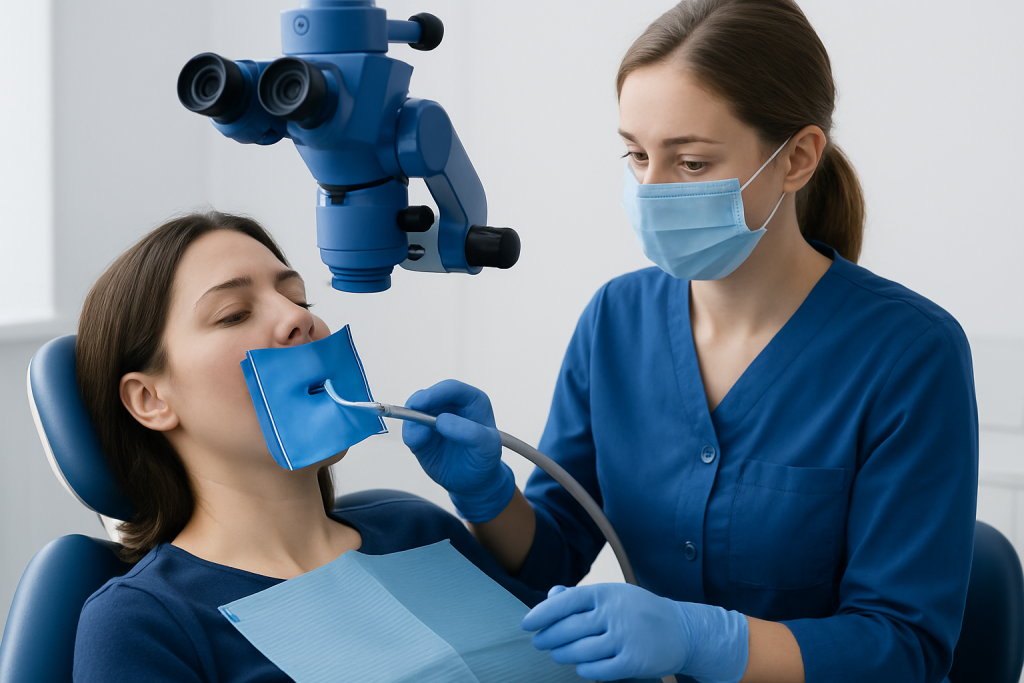
Dental dams are most often associated with treatments that benefit from isolation of the tooth. Root canal treatment is one of the best-known examples, because the dentist needs clear access to the inside of the tooth and must keep the area as dry and clean as possible. They may also be used in certain fillings, crown preparations, and other restorative procedures when moisture control matters.
Not every dental procedure requires a dental dam. The dentist decides based on the type of treatment, the tooth involved, the amount of saliva control needed, and the patient’s comfort. In some cases, the barrier is used because it helps protect the patient’s tongue, cheeks, and throat from instruments, debris, or cleaning materials.
Beyond technical benefits, a dental dam can reduce the need for the patient to keep swallowing or holding the mouth open in a way that may be tiring. Because the field is isolated, the dentist can often work more steadily and with fewer interruptions, which can matter during longer or more detailed procedures.
What patients may notice during the procedure
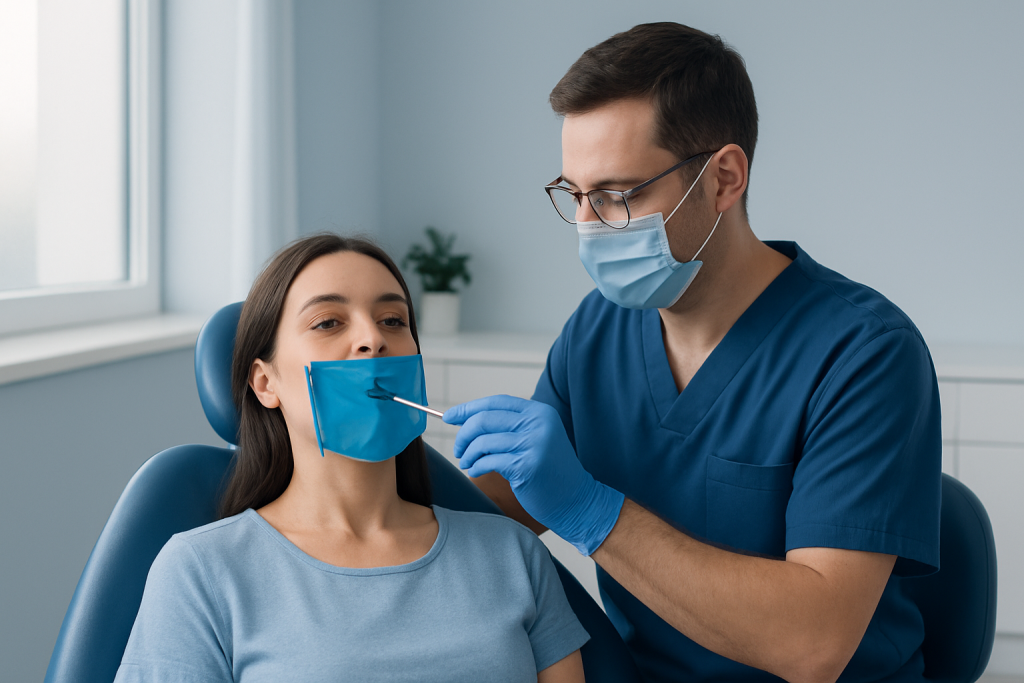
Once the dental dam is placed, the patient usually feels a sheet resting across the mouth with the treated tooth exposed through a small opening. The dentist may secure it with a frame or clamp to keep it in position. Breathing typically continues through the nose, while the mouth feels more contained than usual.
Some patients need a short adjustment period to get used to the sensation. The feeling is often described as unfamiliar rather than painful. If the dam is too tight, if air passages feel restricted, or if the patient is anxious, the dental team can often modify the setup or pause to reassess comfort.
Good communication makes a real difference. Patients should mention any history of latex allergy, strong gag reflex, nasal congestion, panic with enclosed spaces, or jaw discomfort before the appointment begins. This allows the dentist to choose the most suitable material and approach.
Why a dental dam can improve treatment quality
Many dental procedures depend on a dry, stable environment. Saliva and blood can interfere with adhesive materials, visibility, and the dentist’s ability to work precisely. By isolating the tooth, a dental dam helps reduce those challenges and supports the quality of the finished treatment.
It also helps the dental team see the tooth more clearly. Better visibility can make it easier to clean canals, shape cavities, place filling material, and manage fine details in small working spaces. In this way, the dam is not just a protective sheet; it is part of the accuracy of the treatment itself.
Patients who are traveling for dental care may appreciate this added structure because it supports efficient, organized treatment. When appointments are carefully planned and the working field is controlled, the team can often move through the procedure in a more deliberate and focused way.
Safety, comfort, and possible limitations
For most people, a dental dam is safe and well tolerated. Latex-free versions are available for patients with sensitivity or allergy concerns. The dental team should always ask about medical history and previous reactions before using any material in the mouth.
There are a few situations where a dentist may need to adapt the plan. For example, if a patient cannot breathe comfortably through the nose, has limited mouth opening, or cannot tolerate the sensation of the clamp or sheet, the dentist may use an alternative isolation method. The goal is to keep treatment safe without forcing a one-size-fits-all approach.
A dental dam may also be less practical for certain teeth or procedures. In those moments, experienced dental teams use other methods to maintain cleanliness and visibility. Patients should feel reassured that the absence of a dam does not automatically mean lower-quality care; it simply means the dentist has chosen the best option for that specific situation.
How to prepare and care for yourself around the appointment
Preparation is usually straightforward. Patients can help by sharing a complete medical and dental history, including allergies, medications, jaw problems, and any difficulty breathing through the nose. If the procedure is being done during a dental trip abroad, it is sensible to ask the clinic in advance whether a dental dam will be used and whether latex-free materials are available.
On the day of treatment, wearing comfortable clothing, arriving with enough time to settle in, and asking questions before the procedure begins can reduce stress. For anxious patients, it can help to agree on a stop signal with the dental team so that they can pause if discomfort develops.
After treatment, there is usually no special aftercare related to the dental dam itself. The patient should follow the dentist’s instructions for the procedure that was performed, whether that is avoiding certain foods, protecting a temporary restoration, or returning for follow-up. If the mouth feels sore from the clamp or stretched from being open, that discomfort is usually temporary and can be discussed with the dentist.
When to see a dentist
A dental dam is not something patients need to request for routine use, but it is reasonable to ask about it if they are scheduled for root canal treatment, complex fillings, or another procedure where dryness and precision are important. Understanding why it is being used can make the experience less stressful and more collaborative.
Patients should also speak up if they have symptoms that could affect the procedure, such as swelling, severe tooth pain, fever, facial pain, or trouble opening the mouth. These symptoms may indicate a condition that needs assessment before treatment proceeds. If there is a history of latex allergy, this should be mentioned clearly before any appointment.
For people planning dental care in another country, choosing a clinic that explains tools and steps in plain language can make a meaningful difference. At Acibadem Health Point, multidisciplinary specialists and JCI-accredited hospitals diagnose and treat dental conditions for international patients with coordinated, patient-centered care.
A practical tool with a simple purpose
The dental dam is a small part of dentistry that can have a big effect on how smoothly treatment goes. By creating a cleaner and more controlled space, it helps the dentist work with greater precision and may support better results in selected procedures.
For patients, the most helpful mindset is often curiosity rather than worry. Asking what the device does, how long it will stay in place, and whether any alternatives are available can make the appointment feel clearer. A good dental team will welcome those questions and tailor the approach to the individual patient whenever possible.
In short, the dental dam is less about making treatment feel clinical and more about making it work well. When used thoughtfully, it can support comfort, safety, and quality at the same time.
Frequently asked questions
What is a dental dam used for in dentistry?
A dental dam is used to isolate one or more teeth during treatment. It helps keep the area dry, improves visibility, and can protect the patient’s mouth from debris or materials used during the procedure.
Does a dental dam hurt?
Most patients do not find a dental dam painful, although it can feel unusual at first. If the clamp or sheet causes discomfort, the dentist can often adjust the fit or pause to improve comfort.
Is latex used in all dental dams?
No. Some dental dams are latex-free, which is important for patients with latex sensitivity or allergy. Patients should always tell the dental team about any allergies before treatment begins.
Will I be able to breathe normally with a dental dam?
Most people breathe through the nose during treatment and feel fine. If a patient has nasal congestion, anxiety, or any breathing difficulty, they should let the dentist know so adjustments can be considered.
Is a dental dam always necessary for a filling or root canal?
Not always, but it is often helpful when a dry, controlled field is important. The dentist decides based on the procedure, the tooth, and the patient’s needs.
What should I tell my dentist before using a dental dam?
Patients should mention latex allergy, breathing difficulty, strong gag reflex, jaw pain, and any previous trouble tolerating dental procedures. Sharing these details helps the dentist choose the safest and most comfortable option.
References
- American Dental Association
- NHS
- Cleveland Clinic
- Mayo Clinic
This article is for general information only and is not a substitute for professional medical advice. Please consult a qualified doctor about your individual situation.
More from the Health Library



Related Specialists

Dr. R.şirin Atlığ
Physical Therapy and Rehabilitation
Dr. Kutluhan Demirarslan
Inpatient Clinic Physicians Clinical Service
Dr. İrfan Şafak Barlas
Urology
Dr. Emre Şentürk
Anesthesiology