Mini Dental Implants vs. Standard Implants: Which Problem Each One Solves

Key Takeaways
- Mini dental implants are usually narrower and are often used to stabilize dentures or replace small teeth in selected cases.
- Standard dental implants are generally the preferred option for replacing one tooth, several teeth, or supporting longer-term fixed restorations.
- Bone volume, bite forces, gum health, and overall oral condition help determine which implant type is appropriate.
- Both options require careful planning, good oral hygiene, and regular dental follow-up to protect the result.
- A dentist or oral surgeon can explain whether a patient is a better candidate for a mini implant, a standard implant, or another tooth replacement method.
Medically reviewed by the Acıbadem clinical team — June 13, 2026
Dental Implants" class="ahp-ilk">Mini dental implants and standard implants can both help restore chewing, comfort, and confidence, but they are designed to solve different dental problems. The right choice depends on bone support, the number of teeth being replaced, and the patient’s long-term goals.
Overview
When people compare mini dental implants and standard implants, they are usually trying to answer a practical question: which one solves the problem in front of them? That problem may be a loose lower denture, a single missing tooth, several missing teeth, or a jaw that needs more support before a restoration can be placed.
Both options use a small post placed in the jaw to create a stable foundation for a replacement tooth or denture. The difference is mainly in size, design, and the type of dental situation each one is meant to address. Mini implants are narrower and often used in cases where space or bone support is limited, while standard implants are built for broader applications and usually offer more versatility for fixed tooth replacement.
For patients considering treatment in another country, the decision is not only technical but also logistical. The number of visits, the healing time, and whether a temporary restoration can be used during travel all matter. A good dental team should explain not just what can be placed, but what will be practical to maintain after the patient returns home.
Symptoms and situations that lead people to ask about implants
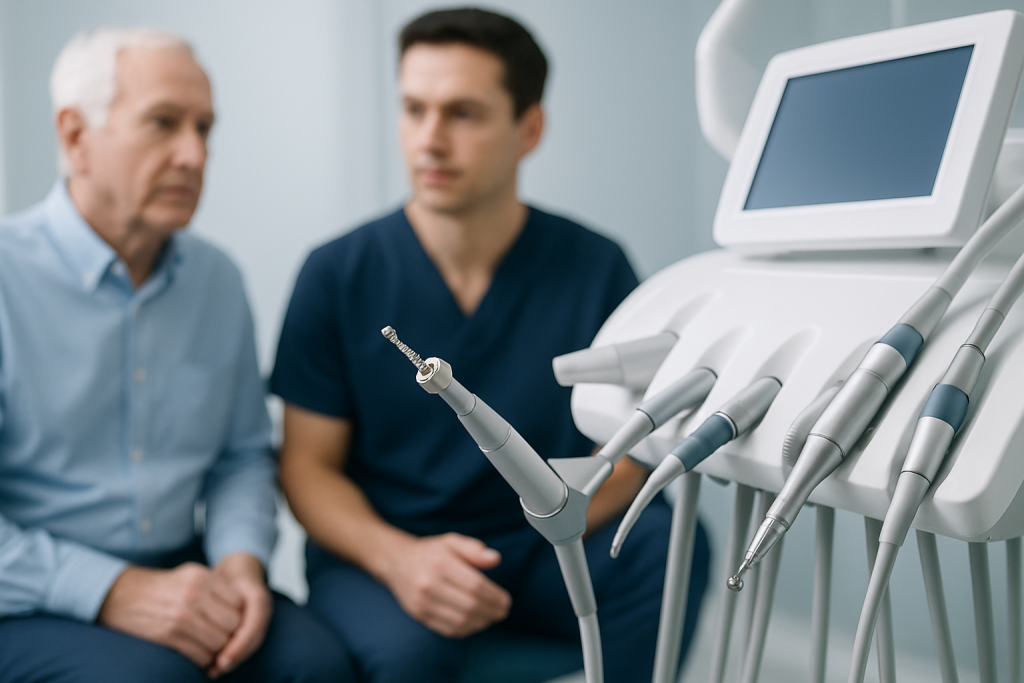
People rarely begin with the words “mini implant” or “standard implant.” They usually begin with a discomfort, such as a denture that shifts during eating, a gap that changes the bite, or a tooth that cannot be saved. The implant discussion starts when a dentist believes a fixed or anchored replacement may restore function better than a removable option alone.
Common situations include missing a single tooth, missing multiple teeth in one area, or a full lower denture that feels unstable. Mini implants are often discussed when a patient wants more denture stability without a larger surgical procedure. Standard implants are more often considered when the goal is to replace teeth individually or create a stronger foundation for bridges or full-arch restorations.
- Loose lower denture
- One missing tooth with healthy neighboring teeth
- Several missing teeth in a row
- Difficulty chewing certain foods
- Self-consciousness about a visible gap
Symptoms also include frustration rather than pain. Some patients notice repeated denture adhesives, sore spots, or a need to avoid harder foods. Those everyday problems can be a useful sign that a dental evaluation is overdue.
Causes and risk factors

The main reason one implant type is chosen over another is not the patient’s preference alone. Jawbone width, bone density, gum health, tooth position, bite strength, and the amount of space available between teeth all influence the decision. Mini implants need less space, which can be helpful in narrow areas, but they are not suitable for every load-bearing situation.
Standard implants are often recommended because they are designed to handle greater chewing forces and support a wider range of restorations. They may be more appropriate when a patient has enough bone volume or can receive a bone graft if needed. In contrast, mini implants may be selected when the jaw is slimmer, the restoration is smaller, or the treatment goal is denture stabilization rather than full tooth replacement.
Several factors can affect candidacy for either option:
- Smoking or tobacco use
- Uncontrolled diabetes or other conditions that affect healing
- Periodontal disease or poor gum health
- Grinding or clenching of the teeth
- Insufficient oral hygiene
- Prior bone loss after tooth extraction
These are not automatic reasons to avoid treatment, but they do call for careful planning. The safest approach is always an individualized assessment rather than a one-size-fits-all recommendation.
How diagnosis and treatment planning work
Implant planning usually begins with a dental exam, X-rays, and often a three-dimensional scan. These tools help the clinician measure bone height and width, identify nearby structures, and decide whether a mini implant or a standard implant is technically feasible. The final choice depends on more than measurements alone; it also depends on how the implant will be used.
For example, a patient with a loose lower denture may be a good candidate for mini implants if the main goal is retention. A patient missing a molar, however, usually needs a sturdier solution because back teeth absorb heavy chewing forces. In that setting, a standard implant is more likely to be recommended if anatomy allows.
Dental teams also consider timing. Some patients can receive an implant soon after a tooth is removed, while others need time for the socket to heal or for bone and gum conditions to improve first. International patients should ask how many visits are needed, whether imaging can be done in advance, and what follow-up care will be required after they go home.
Treatment options: mini dental implants vs. standard implants
Mini dental implants are smaller in diameter and are commonly used to stabilize removable dentures, especially lower dentures. They may also be used in selected spaces where a standard implant would not fit. Because the procedure can be less extensive in certain cases, mini implants are sometimes appealing for patients who want a simpler path to better retention.
Standard dental implants are the more versatile and durable foundation for many tooth replacement plans. They can support single crowns, bridges, and some full-arch restorations. In many cases, they are the preferred choice when the missing tooth area must withstand stronger bite forces or when the long-term treatment goal is a fixed, non-removable restoration.
The differences are easier to understand when grouped by the problem each one solves:
- Mini implants: denture stabilization, narrow spaces, smaller restorations, selected cases with limited bone width
- Standard implants: single-tooth replacement, multiple-tooth replacement, stronger support for bridges or full-arch work, broader long-term applications
Neither option is universally “better.” A mini implant may be the right answer for a patient who mainly wants a denture to stop moving. A standard implant may be the better answer when the goal is to replace a tooth in a way that feels and functions more like the original.
Recovery, maintenance, and practical self-care
Healing after implant treatment depends on the type of implant, the extent of the procedure, and whether additional steps such as bone grafting were needed. Some mini implant procedures are less involved, but they still require care during the early healing period. Standard implant placement may take longer to fully integrate with the bone before the final crown or bridge is attached.
In both cases, the goal is the same: let the implant settle safely and protect the surrounding gum tissue. Patients are usually advised to follow a soft-food approach at first, keep the area clean, and avoid disturbing the surgical site. If a removable denture is used during healing, the dentist may adjust it so it does not press on the implants.
Long-term care is not complicated, but it must be consistent. Good home care and regular dental visits help prevent inflammation around the implant and allow the dentist to check the bite, gum condition, and restoration stability.
- Brush carefully around the implant area
- Clean between teeth or around implant-supported parts as instructed
- Avoid smoking, especially during healing
- Report looseness, pain, swelling, or bleeding promptly
- Keep routine dental follow-up appointments, even after returning to another country
Patients traveling for treatment should also plan for realistic follow-up. They may need a local dentist at home for routine maintenance or a coordinated follow-up schedule with the treating team.
When to see a dentist or oral surgeon
A dental consultation is appropriate when a missing tooth, unstable denture, or chewing difficulty is affecting daily life. It is also wise to seek an evaluation before old problems become more difficult to treat, since bone loss and gum disease can narrow the choices over time.
Patients should ask for an implant assessment if they are considering a long-term replacement rather than another temporary repair. That is especially important if they have already been told they do not have enough bone, because a second opinion may clarify whether a mini implant, a standard implant with bone grafting, or another approach is the best fit.
Urgent review is not usually needed for routine implant planning, but prompt care is important if there is new swelling, persistent pain, a loose restoration, signs of infection, or bleeding that does not settle. Early attention often makes treatment simpler and more predictable.
For international patients, it can help to choose a clinic that can review scans, explain the treatment sequence clearly, and coordinate care across visits. Acibadem Health Point’s multidisciplinary specialists and JCI-accredited hospitals diagnose and treat dental implant needs for international patients with coordinated planning and follow-up support.
Choosing the right option
The choice between mini dental implants and standard implants is best made by matching the implant to the problem. If the aim is to stabilize a denture in a narrow jaw or a limited space, a mini implant may be useful. If the aim is to replace a tooth with a strong, long-lasting foundation, a standard implant is often the more appropriate tool.
Patients do not need to know every technical detail before the consultation. What matters most is explaining the functional concern clearly: Is the denture moving? Is a back tooth missing? Is the patient hoping for something fixed or removable? A careful dentist can then translate those goals into a safe treatment plan.
Because implant dentistry is highly individualized, the smartest next step is a proper exam with imaging and a discussion of expectations, healing, and aftercare. That conversation is where the best match usually becomes clear.
Frequently asked questions
What is the main difference between mini dental implants and standard implants?
The main difference is size and the type of job each implant is designed to do. Mini implants are narrower and are often used for denture stabilization or selected smaller spaces, while standard implants are used more broadly for single teeth, multiple teeth, and fixed restorations.
Are mini dental implants always easier than standard implants?
Not always. Some mini implant procedures are less extensive, but suitability depends on the jaw, the bite, and the type of replacement being planned. A simpler procedure is not necessarily the best long-term choice for every patient.
Can a mini implant replace a single tooth?
In some selected cases, yes, but it is not the most common solution. Standard implants are usually preferred for single-tooth replacement because they are built to handle chewing forces and support a crown more predictably.
How long do dental implants last?
Implant longevity depends on oral hygiene, gum health, bite forces, and regular dental care. Both mini and standard implants can function well for many years when they are placed for the right reason and properly maintained.
Do dental implants hurt?
Implant placement is usually done with local anesthesia or other comfort measures, so the procedure is typically manageable. Some soreness during recovery is expected, but it should gradually improve; worsening pain should be checked by a dentist.
What if there is not enough bone for a standard implant?
That does not automatically mean implants are impossible. In some cases, a mini implant may be considered, and in others, bone grafting or a different restoration plan may make standard implant treatment possible.
References
- American Academy of Implant Dentistry
- American Dental Association
- Mayo Clinic
- British Dental Association
This article is for general information only and is not a substitute for professional medical advice. Please consult a qualified doctor about your individual situation.