Cataract Surgery Abroad: When Premium Lens Choices Are Worth the Extra Cost

Key Takeaways
- Cataract surgery replaces the clouded natural lens with an artificial intraocular lens (IOL).
- Premium lenses may reduce dependence on glasses for some people, but they are not the best choice for everyone.
- Lifestyle, eye health, and the amount of astigmatism all influence whether an upgraded lens is worth the cost.
- A careful preoperative exam is essential, especially when traveling abroad for surgery.
- Recovery and follow-up plans should be arranged before travel so healing is monitored safely.
- Questions about night vision, near tasks, and prior eye conditions should guide the final lens decision.
Medically reviewed by the Acıbadem clinical team — June 13, 2026
Cataract surgery can restore clearer vision, but the lens choice matters just as much as the procedure itself. For patients considering treatment abroad, understanding when premium lens options may match daily needs can make the decision more confident and practical.
Overview
Cataracts happen when the eye’s natural lens becomes cloudy, making vision look dim, blurred, or washed out. Surgery treats the problem by removing that cloudy lens and replacing it with an artificial intraocular lens, or IOL. For many people, the procedure improves day-to-day vision in a lasting way.
What often surprises patients is that cataract surgery is not only about removing the cataract. It is also a chance to choose a lens that may better fit how the person reads, drives, works, or travels. Standard lenses restore clarity well, while premium lenses are designed to do more than that in selected cases.
For international patients, this choice can be especially important. Someone traveling for surgery may want to minimize dependence on glasses after returning home, but the best lens still depends on eye measurements, comfort with possible visual trade-offs, and the realities of follow-up care after the trip.
Symptoms and How Cataracts Affect Daily Life
Cataracts usually develop slowly, so the change may be easy to overlook at first. People often notice that street signs seem harder to read, bright lights feel uncomfortable, or colors no longer look as vivid as they once did. Some describe vision as if they are looking through a fogged window.
Common experiences include more glare at night, halos around lights, frequent prescription changes, and trouble seeing fine print. These changes can affect driving, sewing, computer work, cooking, or recognizing faces in a crowd. When the lens clouding becomes disruptive, surgery is usually considered.
Not every cataract affects each person in the same way. Someone who spends much of the day reading may feel the impact differently from someone who drives at night or uses a computer for long hours. That difference is one reason lens selection should be tied to a real-life discussion, not just a standard package choice.
Causes & Risk Factors

Cataracts are most commonly linked to aging, but several other factors can contribute. Long-term ultraviolet exposure, smoking, diabetes, eye injury, steroid use, and certain inherited conditions may increase the likelihood of cataract formation. In some people, previous eye surgery or inflammation also plays a role.
Lens choice after cataract removal is influenced not only by the cataract itself, but also by the rest of the eye. Astigmatism, dry eye, retinal disease, glaucoma, and prior corneal surgery can all affect which IOL is likely to provide the most useful vision. A premium lens may sound appealing, yet it is not automatically the best match if the eye has other conditions that limit visual quality.
International patients should pay special attention to these factors before making travel plans. A detailed eye examination helps clarify whether the eye is a strong candidate for a premium lens or whether a simpler lens may offer a more reliable outcome. That consultation is the best place to weigh expectations against anatomy and overall eye health.
Diagnosis and Pre-Surgery Evaluation
Before cataract surgery, the ophthalmology team performs measurements that guide lens selection. These usually include a vision exam, corneal measurements, eye pressure checks, and a look at the retina and optic nerve. Biometric testing helps determine the power of the lens needed to focus vision as accurately as possible.
When premium lenses are being considered, the evaluation often becomes more detailed. The team may ask about work habits, hobbies, nighttime driving, reading needs, and tolerance for wearing glasses. They may also review any conditions that could reduce the benefit of a premium lens, such as irregular astigmatism, macular disease, or significant dry eye.
For patients traveling abroad, this stage is important because it reduces surprises. A good surgical plan should be clear before the trip is finalized, including how soon surgery will happen, how long the stay may be needed, and what follow-up will be arranged once the patient returns home. If the preoperative assessment is rushed, the chance of a disappointing lens choice rises.
Treatment Options
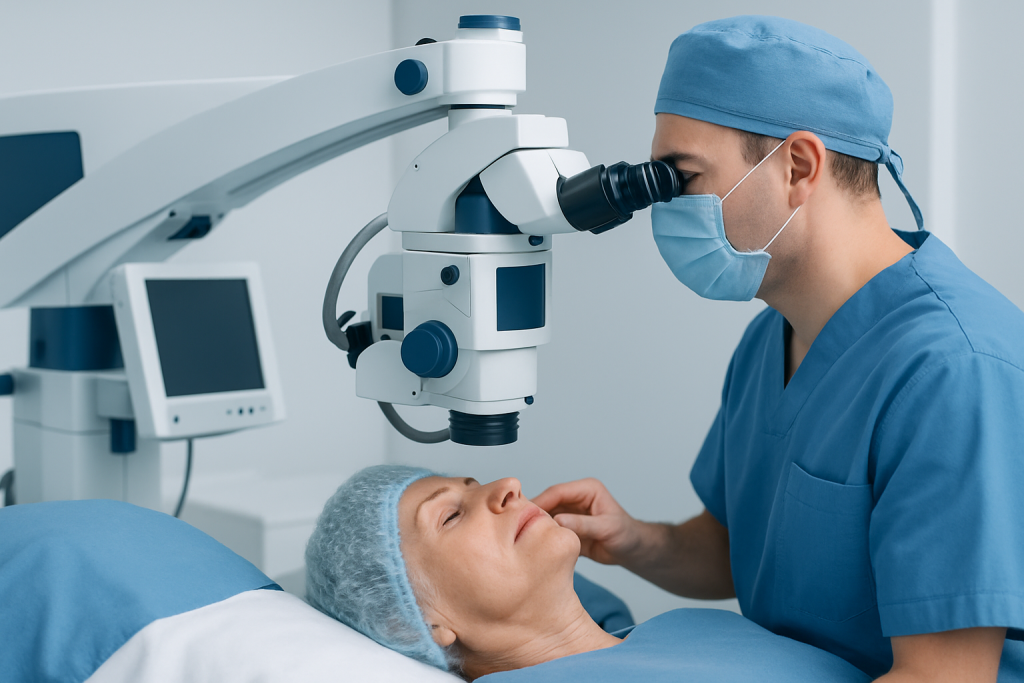
Cataract surgery itself is the same basic operation regardless of lens type: the cloudy lens is removed and the new lens is placed inside the eye. The main difference lies in what kind of lens is chosen. Standard monofocal lenses typically give clear vision at one distance, most often far vision, and glasses are still commonly needed for reading or other close tasks.
Premium lens options are designed to expand the range of usable vision. Multifocal and extended depth-of-focus lenses may reduce reliance on glasses for both distance and near tasks, while toric lenses are designed to correct astigmatism. Some patients benefit from combining lens types, depending on the shape and needs of the eyes.
Whether a premium lens is worth the extra cost depends on the person, not the label. A frequent traveler who wants greater convenience may value reduced glasses dependence. A person who spends many hours reading tiny print may also appreciate a broader range of focus. On the other hand, someone with eye disease, a preference for the sharpest possible contrast, or a low tolerance for visual side effects may do better with a standard monofocal lens.
Possible trade-offs should be discussed openly. Some premium lenses can cause halos, glare, or reduced contrast in certain lighting conditions. Those effects are not dangerous, but they matter, especially for people who drive at night or expect vision to feel exactly the same as before. The best decision comes from balancing convenience, visual quality, and the eye’s overall health.
When Premium Lenses Tend to Be Worth Considering
Premium lenses tend to be most attractive when the person has clear goals and healthy eyes. Someone who wants to cut down on glasses for both near and distance tasks, has astigmatism that can be corrected, and does not have major retinal or corneal disease may be a reasonable candidate. For these patients, the extra cost may translate into more everyday convenience.
They may also be worth considering for international patients who want to reduce dependence on eyewear during travel, work, or active lifestyles. A toric lens can be especially helpful if astigmatism is a major reason vision remains blurry after standard cataract surgery. Multifocal or extended depth-of-focus lenses may be appealing when the goal is broader focus range rather than one single sharp distance.
That said, premium does not always mean better. In eyes with other medical issues, the benefit may be limited, and in some cases the possible side effects outweigh the convenience. A thoughtful surgeon will explain not only what the lens can do, but also what it may not do, so expectations stay realistic.
Prevention & Self-Care
Cataracts cannot always be prevented, especially when age is the main factor, but healthy habits can support overall eye health. Wearing sunglasses outdoors, avoiding smoking, managing diabetes, and keeping regular eye exams are sensible steps. These measures do not reverse an existing cataract, yet they can help protect vision over time.
After surgery, self-care matters as much as the lens choice. Patients are usually advised to protect the eye as directed, use prescribed drops correctly, avoid rubbing the eye, and follow restrictions on swimming, heavy lifting, or dusty environments until cleared by the surgeon. Recovery is often straightforward, but it should still be treated carefully.
For people having surgery abroad, planning ahead is especially useful. It helps to arrange the return trip only after the surgical team has outlined the expected recovery timeline and follow-up schedule. Keeping copies of operative notes and lens details is also wise, since future eye doctors may need that information years later.
When to See a Doctor
A doctor should be consulted when blurred vision begins to interfere with daily life, when night driving becomes uncomfortable, or when frequent prescription changes no longer help much. Cataract surgery is usually considered when symptoms—not just the appearance of the cataract—start affecting function and quality of life.
Prompt medical review is also important if vision changes happen suddenly, if there is eye pain, flashes of light, many new floaters, or a curtain-like shadow in the vision. Those symptoms are not typical of ordinary cataracts and deserve timely evaluation. A careful eye exam can distinguish cataracts from other eye conditions that may need different treatment.
International patients planning surgery abroad should seek a consultation early enough to compare lens options, understand their suitability, and ask about follow-up after returning home. If a second opinion would help, it can be useful before travel is booked. Acibadem Health Point’s multidisciplinary specialists and JCI-accredited hospitals can diagnose and treat cataracts for international patients, with planning that supports both surgery and recovery.
Recovery Expectations and Follow-Up
Most people notice improving vision within days, though the eye may continue settling for several weeks. It is normal for vision to fluctuate a little during early healing. The surgical team may schedule follow-up visits to check the eye’s pressure, healing, and the clarity of the new lens position.
Even when surgery is successful, some patients still need glasses for specific tasks. That is not a sign of failure; it simply reflects the natural limits of each lens type and each eye’s anatomy. The goal is the most useful vision possible, not a promise that glasses will never be needed again.
For patients who return to another country soon after surgery, having a clear handover plan is essential. The team should explain warning signs, drop instructions, and when local eye care should be sought. A well-organized follow-up plan makes premium lens decisions more reassuring because the patient knows what to expect after leaving the operating center.
Frequently asked questions
What makes a cataract lens “premium”?
Premium lenses are designed to do more than replace the cloudy natural lens. Some aim to reduce dependence on glasses, while others correct astigmatism or extend the range of focus. The best option depends on eye measurements and the person’s daily needs.
Are premium lenses always better than standard lenses?
Not always. Premium lenses can be very helpful for some patients, but they may not suit eyes with other problems or people who prioritize the sharpest contrast in all lighting conditions. A standard monofocal lens is often the more dependable choice in complex eyes.
Can a premium lens eliminate the need for glasses completely?
It may reduce glasses use, but it cannot guarantee a completely glasses-free life. Near tasks, fine print, or certain lighting conditions may still require eyewear. The outcome depends on the lens type and the health of the eye.
Is cataract surgery abroad safe if premium lenses are chosen?
Cataract surgery can be safe abroad when the center provides a thorough evaluation, clear communication, and planned follow-up. The lens decision should be based on medical suitability, not only on convenience or package options. Patients should confirm how postoperative care will be handled after they return home.
What should an international patient ask before choosing a premium lens?
It helps to ask how the lens may affect night vision, reading, and driving; whether astigmatism needs correction; and whether any eye conditions reduce the likely benefit. It is also wise to ask how long recovery will take and what follow-up will be needed after travel.
Do premium lenses hurt more or require a different operation?
No, the surgery itself is generally the same. The difference is in the lens implanted inside the eye. The experience, recovery steps, and aftercare are usually similar, though the exact plan depends on the surgeon and the eye’s condition.
References
- American Academy of Ophthalmology
- National Eye Institute
- World Health Organization
- NHS
- Mayo Clinic
This article is for general information only and is not a substitute for professional medical advice. Please consult a qualified doctor about your individual situation.