Eye Surgery After Age 40: Which Changes Matter Most for Candidacy?

Key Takeaways
- Age alone does not determine whether someone is a good candidate for eye surgery.
- Dry eye, presbyopia, cataracts, glaucoma, and retinal health can all influence surgical planning.
- A detailed eye exam is more important than the number on a birth certificate.
- Some procedures are designed to correct age-related vision changes, while others may need to be delayed or modified.
- A careful discussion of goals, lifestyle, and medical history helps match the right procedure to the right patient.
Medically reviewed by the Acıbadem clinical team — June 13, 2026
After age 40, many people notice changes in vision, tear production, and focusing ability, but these do not automatically rule out eye surgery. The key is understanding which changes affect candidacy, which procedures may still be suitable, and what evaluation helps a surgeon plan safely.
Why the years after 40 matter for eye surgery
Turning 40 does not close the door on eye surgery. In many cases, it is the stage of life when people start to think more seriously about whether their vision problems are caused by refractive error, lens aging, cataracts, or the eye surface itself. Those differences matter because each one changes how a surgeon evaluates risk, benefits, and the likely result.
Some people in their 40s are interested in LASIK or similar vision-correction procedures. Others are noticing that reading has become harder, or that night driving feels less comfortable than it used to. A surgeon will not look at age in isolation; the real question is whether the eye is healthy enough, stable enough, and predictable enough for the specific operation being considered.
For international patients, this evaluation often becomes part of a broader decision-making process. A person may be traveling with limited time, trying to coordinate preoperative testing, surgery, and follow-up in one trip. That makes it even more important to understand which age-related changes are minor adjustments and which may require a different procedure or a longer recovery plan.
The changes that matter most for candidacy
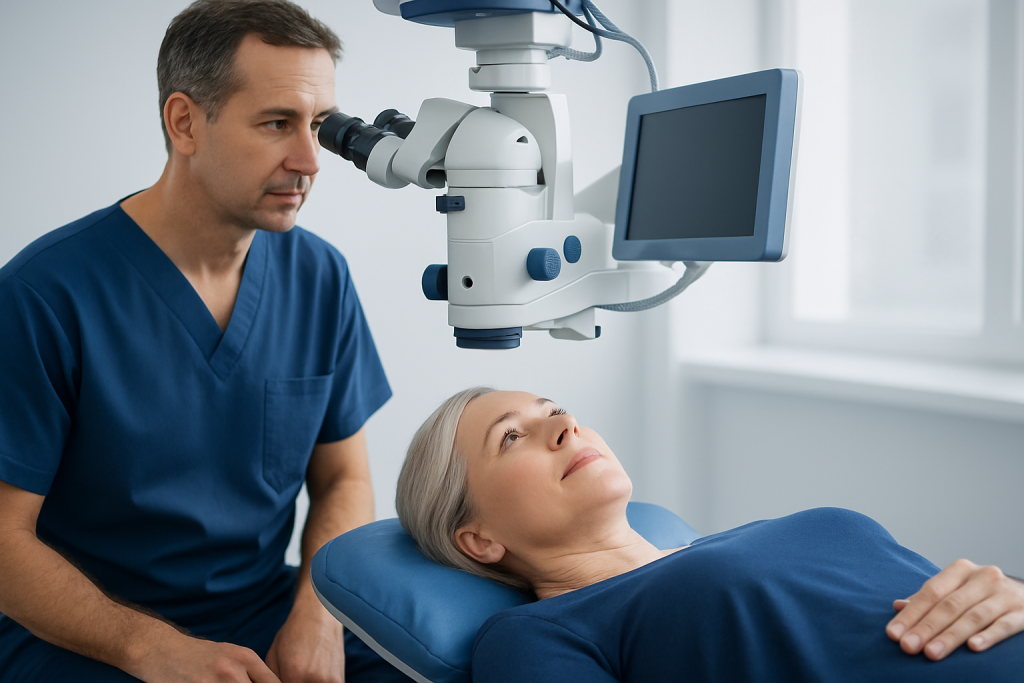
Several common changes after 40 can affect whether eye surgery is appropriate, and each one influences planning in a different way. Presbyopia, the gradual loss of near focusing ability, is one of the most familiar. It does not prevent surgery, but it may shape expectations, because a procedure that sharpens distance vision may not eliminate the need for reading glasses.
Dry eye is another frequent issue. Surgery can temporarily worsen dryness, and if the eye surface is already irritated or unstable, measurements used for planning may be less accurate. That is why surgeons often treat dryness first or improve the ocular surface before repeating tests.
Cataracts, early lens clouding, become more likely with age and may become the main reason for surgery rather than a barrier to it. Likewise, changes in the cornea, eyelids, retina, or optic nerve can influence candidacy. A surgeon may also look closely at past contact lens use, prior eye trauma, autoimmune conditions, diabetes, and any history of eye inflammation.
- Presbyopia: affects near vision and surgical goals.
- Dry eye: can change comfort and measurement accuracy.
- Cataracts: may shift the discussion toward lens-based surgery.
- Corneal shape or thickness changes: may limit refractive surgery options.
- Retinal or optic nerve disease: can affect expected visual outcome.
Symptoms and signs that should be discussed before surgery

People often come to a consultation focused on one complaint, such as blurry distance vision or the need for stronger glasses. But a broader symptom history can reveal whether the eyes are changing in a way that matters for surgery. For example, frequent tearing may actually be a sign of dry eye, not too much moisture. Glare, halos, and reduced contrast can point to cataracts or corneal irregularity.
It is also useful to mention symptoms that may seem unrelated to vision surgery. Headaches from eye strain, fluctuating vision during the day, difficulty adapting to dim light, or the feeling that one eye sees differently from the other can all influence the plan. If a patient has a history of eye rubbing, allergy, contact lens intolerance, or a previous laser procedure, that history becomes part of the surgical map.
For patients traveling from another country, writing these symptoms down before the consultation can be helpful. A short, organized summary of what feels different now compared with a few years ago can speed up the evaluation and make remote preoperative planning more efficient.
Causes and risk factors behind age-related eye changes
Age-related eye changes are usually gradual and multifactorial. The natural lens slowly becomes less flexible, which contributes to presbyopia and eventually cataract formation. Tear film quality may decline, making the ocular surface less stable and more sensitive after surgery. The cornea can also become less predictable if there has been long-term contact lens wear, subtle scarring, or prior procedures.
Medical conditions can add to the picture. Diabetes, autoimmune disease, thyroid eye disease, and chronic inflammatory disorders may affect healing or tear production. Medications such as antihistamines, some antidepressants, and drugs with drying effects can make the ocular surface less comfortable. Smoking, poor sleep, and heavy screen use do not automatically rule out surgery, but they may worsen dryness or visual fatigue.
Family history matters too. A relative with glaucoma, retinal detachment, or early cataracts may prompt closer screening, especially if the patient already has age-related vision changes. None of these factors means surgery cannot be considered; they simply help the surgeon identify what needs attention before a procedure is chosen.
How candidacy is actually determined
Eye Dry Eyes, and Stable Prescriptions Matter" class="ahp-ilk">surgery candidacy is usually based on a layered exam rather than a single test. The surgeon will review visual acuity, refraction, corneal measurements, tear film quality, pupil size, lens clarity, eye pressure, and the health of the retina and optic nerve. If the person is considering refractive surgery, corneal thickness and shape are especially important. If cataract surgery is being discussed, lens changes and overall eye health become central.
Measurements may need to be repeated if the eye surface is dry or unstable. Sometimes a patient is told to treat dryness first, stop wearing contact lenses for a period, or return for another visit once the cornea has settled. This is not a setback; it is part of making the result more reliable.
In some cases, imaging or additional testing is needed before a final recommendation. That may include corneal topography, optical coherence tomography, visual field testing, or specialized lens measurements. For patients who plan to return home shortly after surgery, the team may also discuss how follow-up will work across countries and whether certain post-op checks should happen locally.
Treatment options and how age shapes the choice
After 40, the right procedure depends less on age itself and more on which age-related change is dominant. LASIK, PRK, and other refractive procedures may still be suitable for patients with healthy corneas, stable prescriptions, and realistic expectations. However, a person with significant dry eye, thin corneas, or early lens clouding may be better served by a different approach.
Cataract surgery often becomes more relevant in the later decades after 40, especially when lens clouding is affecting daily tasks. During cataract surgery, the cloudy lens is removed and replaced with an artificial lens. For some patients, this also creates an opportunity to reduce dependence on glasses, although the exact result depends on the type of lens selected and the health of the rest of the eye.
Not every case requires an operation right away. Some patients benefit from medical management first, such as lubricating drops, allergy treatment, or contact lens changes. Others may need monitoring until the eye findings are stable enough to support a more predictable result. The best option is the one that matches anatomy, lifestyle, and visual goals without forcing the eyes into a procedure they are not ready for.
Prevention, preparation, and self-care before and after surgery
While no one can prevent aging in the eye, patients can improve the chances of a smooth surgical experience by preparing carefully. Good control of dry eye, diabetes, blood pressure, and autoimmune disease can support healing. Stopping contact lenses for the recommended period before testing helps measurements become more accurate. Patients should also bring a full medication list, including over-the-counter eye drops and supplements.
After surgery, self-care usually centers on protecting the eye, using prescribed drops as directed, and avoiding rubbing or heavy strain during the early healing period. Resting the eyes, limiting exposure to dust or smoke, and following the surgeon’s activity guidance all help recovery. For someone returning to another country, it is wise to receive a clear written plan that explains warning signs, drop schedules, and the timing of any local follow-up.
Practical preparation can make a meaningful difference. Arranging help for the first day or two, planning transportation, and confirming how to reach the surgical team if questions arise can reduce stress. A calm recovery plan is especially helpful for international patients balancing travel, hotel stays, and the need for dependable post-operative checks.
When to see an eye doctor before considering surgery
An eye surgery consultation is appropriate when vision changes begin affecting daily life, especially if glasses no longer feel like a complete solution. It is also important to seek evaluation if one eye seems much worse than the other, if glare or halos are worsening, or if reading and night driving are becoming difficult. These changes may reflect presbyopia, cataract, dryness, or another condition that should be assessed rather than guessed at.
Prompt evaluation is especially important if there is sudden vision loss, flashes of light, new floaters, eye pain, or redness. Those symptoms are not typical age-related changes and should be checked quickly. Even when surgery is not immediately needed, an exam can identify issues early and help preserve visual quality over time.
Acibadem Health Point supports international patients with multidisciplinary specialists and JCI-accredited hospitals that diagnose and treat eye conditions with careful, individualized planning. For people exploring surgery after 40, a thorough consultation is the safest first step toward the most suitable decision.
Frequently asked questions
Does turning 40 mean someone is too old for eye surgery?
No. Age 40 by itself does not make someone ineligible for eye surgery. The deciding factors are the health of the cornea, lens, retina, and tear film, along with the type of procedure being considered.
Why do dry eyes matter so much after 40?
Dry eye can make vision fluctuate and can affect the accuracy of preoperative measurements. It may also become more uncomfortable after surgery, so surgeons often want the surface of the eye improved first.
Can presbyopia be corrected with surgery?
Some surgical approaches may reduce dependence on reading glasses, but presbyopia is a natural age-related change and results vary. The surgeon will discuss what improvement is realistic for that person’s eyes and lifestyle.
What if cataracts are starting but vision is still okay?
Early cataracts may simply be monitored until they begin interfering with daily activities. If they are already affecting vision or making other procedures less suitable, cataract surgery may become the preferred option.
Should contact lens wearers expect a different evaluation?
Yes. Long-term contact lens use can temporarily change corneal measurements, so patients are often asked to stop lenses for a period before testing. That helps the surgeon plan more accurately.
What is the most important question to ask at a consultation?
A helpful question is, 'Which eye changes are most important in my case, and how do they affect my options?' That keeps the discussion focused on anatomy, safety, and realistic results rather than age alone.
References
- American Academy of Ophthalmology
- National Eye Institute
- World Health Organization
- NHS
- Mayo Clinic
This article is for general information only and is not a substitute for professional medical advice. Please consult a qualified doctor about your individual situation.