Cataract Surgery With Premium Lenses: Who Benefits Most and Who Does Not

Key Takeaways
- Premium lenses can address cataracts and, in selected patients, reduce reliance on glasses.
- The best candidates are often people with healthy retinas, corneas, and realistic expectations.
- Some people do better with standard monofocal lenses because of astigmatism, retinal disease, or complex eye conditions.
- A detailed preoperative eye exam is essential before choosing a lens type.
- Discuss daily activities, night-driving needs, and follow-up plans before deciding on surgery.
Cataract surgery can restore clear vision, and premium lenses may reduce dependence on glasses for some people. The best lens choice depends on eye health, visual goals, and realistic expectations about night vision and trade-offs.
Overview
Cataract surgery replaces the eye’s clouded natural lens with an artificial one, called an intraocular lens or IOL. For many people, the main goal is simply to see clearly again. For others, the question becomes more specific: should the replacement lens be a standard lens, or a premium option designed to broaden vision at more than one distance?
Premium lenses are not a single product. The term usually includes toric lenses for astigmatism, multifocal or trifocal lenses that aim to reduce dependence on reading glasses, and extended depth-of-focus lenses that try to create a smoother range of focus. Each design has benefits, but each also brings trade-offs that should be understood before surgery.
In real life, the best choice often depends less on the cataract itself and more on how the person uses vision every day. Someone who drives long distances at night, reads constantly, or already has other eye conditions may need a different approach than someone who wants more freedom from glasses for routine daily tasks.
Symptoms and Vision Changes That Lead to Surgery
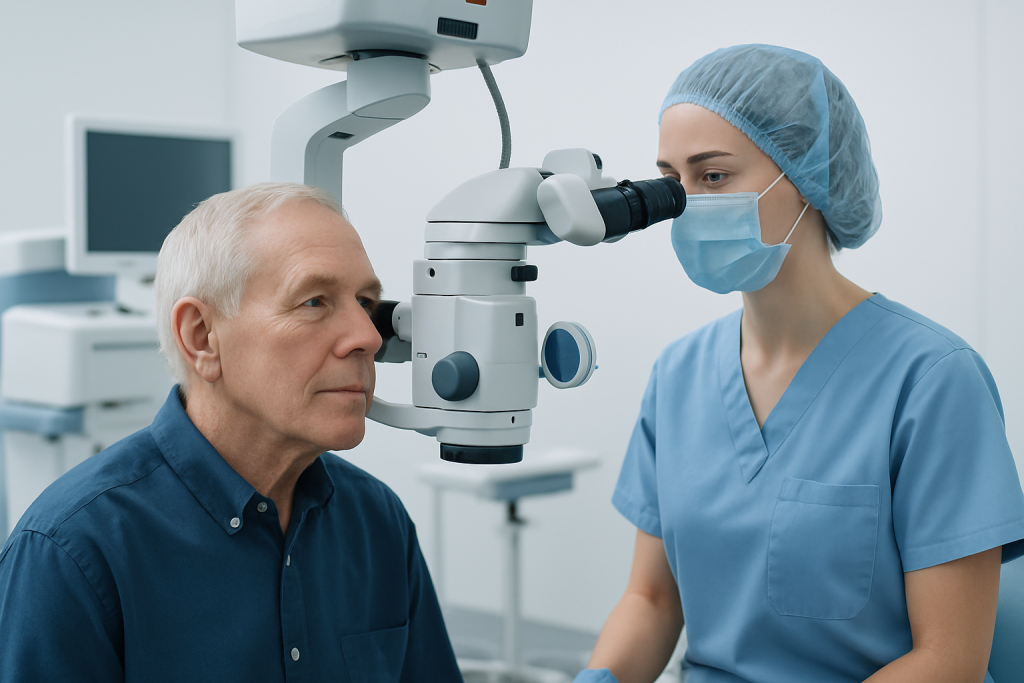
Cataracts usually develop gradually. People may notice blurred vision, faded colors, glare around lights, or trouble seeing in dim settings. A common clue is that glasses prescriptions change often but still do not restore the clarity they once provided.
As the clouding progresses, daily activities can become harder. Reading small print, recognizing faces, driving at night, and moving safely in uneven lighting may all feel more difficult. Some people also describe a film-like effect over their vision or sensitivity to sunlight.
The presence of cataract symptoms does not automatically mean a premium lens is the right answer. It means the eye should be evaluated carefully so the surgeon can determine whether the blur comes only from the cataract or whether another eye condition is also limiting vision.
- Blurred or cloudy vision
- Glare and halos around lights
- Difficulty reading or using screens
- Frequent changes in eyeglass prescription
- Poor night vision
Causes and Risk Factors That Affect Lens Choice
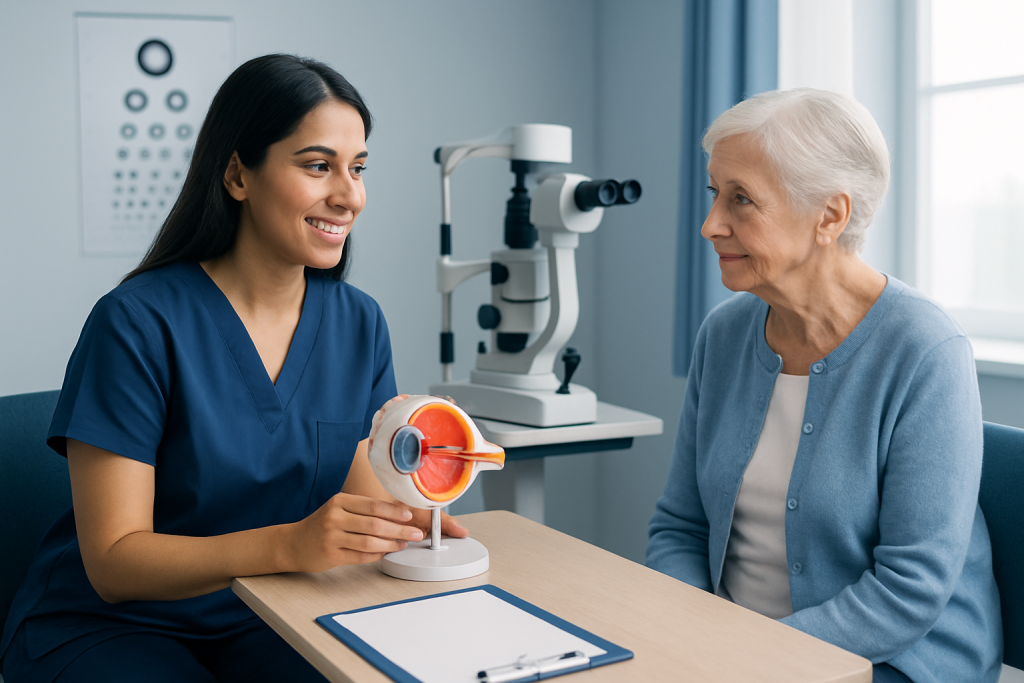
Cataracts are most often related to aging, but they can also be associated with diabetes, smoking, eye injuries, long-term steroid use, prior eye surgery, or exposure to ultraviolet light. These factors may influence how advanced the cataract becomes and how much benefit surgery can provide.
When it comes to premium lenses, the more important issue is not the cause of the cataract alone but the overall condition of the eye. The cornea, retina, macula, optic nerve, and tear film all affect whether a premium lens will perform well. Even a lens that is technically successful can feel disappointing if another eye problem limits the quality of vision.
People considering care from another country should also think about continuity. Premium-lens cataract surgery is not only an operation; it is a process that includes measurements, surgery, early healing, and follow-up. International patients benefit most when they can plan enough time for preoperative testing and post-op checks before traveling home.
Who Benefits Most From Premium Lenses
Premium lenses tend to suit people who have straightforward cataracts and healthy eyes otherwise. Good candidates often want less dependence on glasses for reading, computer work, hobbies, or general daily activities, and they understand that no lens can guarantee perfect vision at every distance under every lighting condition.
Toric lenses can be especially helpful for people with meaningful astigmatism, since they can sharpen vision by correcting that uneven curvature. Multifocal and extended depth-of-focus lenses may appeal to people who are comfortable with a possible adjustment period and accept that some night halos or reduced contrast can occur, especially early on.
In practical terms, the strongest candidates usually share a few features:
- Healthy macula and retina
- No major corneal irregularity
- Stable eye measurements
- Realistic expectations about spectacle independence
- Willingness to adapt during the healing period
For these patients, a premium lens can be part of a thoughtful strategy rather than a luxury add-on. The right lens is the one that fits the eye, the lifestyle, and the person’s tolerance for trade-offs.
Who May Not Benefit or May Need a Different Approach
Not everyone is a good candidate for premium lenses. People with advanced macular degeneration, diabetic retinal disease, significant glaucoma damage, corneal scarring, irregular astigmatism, or other conditions that distort vision may not get the best results from a multifocal or extended depth-of-focus lens. In these settings, a simpler monofocal lens can sometimes provide a clearer and more dependable outcome.
People who spend many hours driving at night, work in very low-light conditions, or are highly sensitive to glare may also prefer to avoid some premium designs. Multifocal lenses, in particular, can split incoming light in a way that may affect contrast and produce halos. That does not mean they are poor lenses; it means they are not ideal for every visual lifestyle.
There are also people whose expectations are understandably too high. If a person wants to be completely free of glasses, never notice glare, and see equally well at all distances without compromise, no premium lens can promise that result. In those situations, a more conservative lens plan may actually lead to better satisfaction.
Diagnosis and Preoperative Planning
Choosing the right lens begins long before the day of surgery. The evaluation usually includes a careful eye examination, corneal measurements, pupil assessment, retinal review, and a discussion about daily visual needs. These measurements help estimate lens power and identify features that could affect the final result.
The surgeon may ask about reading habits, screen use, driving, hobbies, and whether the person prefers sharp distance vision or more flexibility across distances. This conversation matters because premium lenses are not chosen only on the basis of exam numbers; they are selected around real-world priorities.
In international-patient care, preoperative planning may involve reviewing records ahead of travel, coordinating scans and consultations on arrival, and setting aside time for a postoperative check before the return journey. A clear schedule helps reduce stress and supports safer decision-making.
Treatment Options and How the Lens Types Differ
Standard monofocal lenses are designed to provide clear vision at one main distance, usually far away, while glasses are used for reading or close work. They remain a trusted choice because they are simple, predictable, and often a good fit for people with other eye conditions.
Toric lenses are used when astigmatism needs correction. They do not create multifocal vision, but they can reduce blur caused by the uneven shape of the cornea. For many people, this can make a major difference in visual clarity and may reduce the need for astigmatism-correcting glasses.
Multifocal, trifocal, and extended depth-of-focus lenses are designed to broaden the range of focus. They may reduce reliance on glasses for reading and mid-range tasks, but they may also create halos, glare, or a small loss in contrast. A patient who is comfortable accepting those trade-offs may be pleased; someone who is not may be happier with a monofocal or toric lens.
The surgery itself is usually brief and performed under local anesthesia with sedation in many settings. After surgery, healing instructions commonly include eye drops, protecting the eye, avoiding rubbing, and attending follow-up visits so the surgical team can confirm that recovery is progressing well.
Prevention, Self-care, and Setting Expectations
It is not possible to prevent all cataracts, but eye health habits still matter. Protecting the eyes from ultraviolet light, not smoking, managing diabetes well, and having regular eye examinations can all support overall vision care. These steps do not replace surgery when it is needed, but they can help preserve eye health over time.
After cataract surgery, self-care is straightforward but important. People should use prescribed drops as directed, avoid eye pressure or rubbing, and contact the care team if they notice increasing pain, worsening redness, or a sudden drop in vision. Mild irritation or temporary fluctuation in vision can happen during healing, but symptoms should always be discussed if they seem unusual.
Just as important is expectation-setting. Premium lenses may reduce dependence on glasses, but many people still need glasses for certain tasks, such as fine print, prolonged reading, or specific lighting situations. A successful result is usually one that feels useful, comfortable, and aligned with daily life rather than perfectly invisible.
When to See a Doctor
An eye specialist should evaluate anyone whose vision is interfering with driving, reading, work, or safety. A cataract consultation is especially useful when vision changes are no longer corrected well by updated glasses or contact lenses.
A prompt review is also important if there is a history of retinal disease, glaucoma, diabetes-related eye changes, prior refractive surgery, or significant astigmatism. These factors do not automatically rule out premium lenses, but they make planning more nuanced and the conversation more important.
For people traveling for care, it is wise to arrange surgery only after a full preoperative assessment and a clear postoperative follow-up plan. Acibadem Health Point notes that its multidisciplinary specialists and JCI-accredited hospitals diagnose and treat cataracts for international patients, including those considering premium lens options.
After surgery, medical advice should be sought urgently for severe pain, sudden vision loss, increasing redness, or discharge. These symptoms are not typical of normal healing and should always be checked by a doctor.
Frequently asked questions
What is the main advantage of a premium lens in cataract surgery?
The main advantage is the possibility of reducing dependence on glasses after surgery. Some premium lenses can also correct astigmatism or provide vision across more than one distance. The benefit depends on the person’s eye health and the specific lens chosen.
Who is usually a good candidate for premium lenses?
People with healthy retinas, clear corneas, stable eye measurements, and a desire to reduce glasses use are often good candidates. They should also be comfortable with the idea that premium lenses can involve trade-offs such as halos or a short adjustment period. A detailed eye exam is essential before deciding.
Can premium lenses completely eliminate the need for glasses?
Sometimes they reduce glasses dependence a great deal, but they do not guarantee total freedom from spectacles. Many people still use glasses for some reading, detailed work, or certain lighting conditions. A surgeon should explain what is realistic for the individual eye.
Why might someone choose a standard lens instead?
A standard monofocal lens may be better for people with retinal disease, corneal irregularity, glaucoma damage, or a strong preference for crisp contrast and night vision. It is also a sensible choice when expectations are cautious and predictable vision is the priority. In some eyes, simpler is better.
Do premium lenses have side effects?
They can cause halos, glare, or reduced contrast in some people, particularly early after surgery or in low light. Many patients adapt over time, but not everyone does. The possibility of these effects should be part of the decision before surgery.
How long does recovery take after cataract surgery?
Many people notice improvement fairly soon, but healing continues over several weeks. Follow-up visits help the surgeon check the eye’s recovery and make any needed adjustments in the care plan. The timeline can vary depending on the eye’s condition and the type of lens used.
References
- American Academy of Ophthalmology
- National Eye Institute
- World Health Organization
- Mayo Clinic
- NHS
This article is for general information only and is not a substitute for professional medical advice. Please consult a qualified doctor about your individual situation.