Black Widow Spider Bite: Symptoms and Treatment

Key Takeaways
- Black widow bites may be painless at first, then symptoms can develop over several hours.
- Pain, muscle cramps, sweating, nausea, and restlessness are common warning signs.
- Children, older adults, pregnant people, and those with medical conditions may need closer evaluation.
- Diagnosis is usually based on the bite history and symptoms, since the spider is not always seen.
- Treatment focuses on pain relief, symptom control, wound care, and observation when needed.
Medically reviewed by the Acıbadem clinical team — August 19, 2026
A black widow spider bite can cause symptoms ranging from local pain to muscle cramping and whole-body discomfort. Most people recover well with prompt medical assessment and supportive care.
Overview
A black widow spider bite is a venomous bite that can lead to a set of symptoms known as latrodectism. The spider itself is small and often prefers quiet, undisturbed places such as woodpiles, sheds, garages, garden debris, or outdoor storage areas.
Many people never see the spider that bit them, so the story often begins with an unexpected bite or a sharp pinprick followed by increasing discomfort. What makes this bite important is not just the skin mark, but the way the venom can affect muscles, the nervous system, and overall comfort.
For most people, the condition is manageable with medical evaluation and supportive treatment. In an international-patient setting, that usually means confirming the diagnosis, watching for changes in symptoms, and building a plan that fits the person’s travel schedule, recovery needs, and access to follow-up care back home.
Symptoms

The first clue may be a local sting, burning sensation, or mild swelling at the bite site. In some cases, the skin changes are small and easy to miss, while the deeper symptoms become more noticeable over the next several hours.
Typical symptoms can include:
- Increasing pain around the bite area
- Muscle cramps or tightening, often in the abdomen, back, thighs, or shoulders
- Sweating, chills, or a flushed appearance
- Nausea, vomiting, or abdominal discomfort
- Headache, weakness, or restlessness
- Elevated blood pressure or a fast heart rate
Children may show irritability, crying, abdominal pain, or muscle stiffness rather than clearly describing what feels wrong. If symptoms spread beyond the bite site or begin to interfere with walking, breathing, or normal movement, medical assessment is advisable.
Causes & Risk Factors
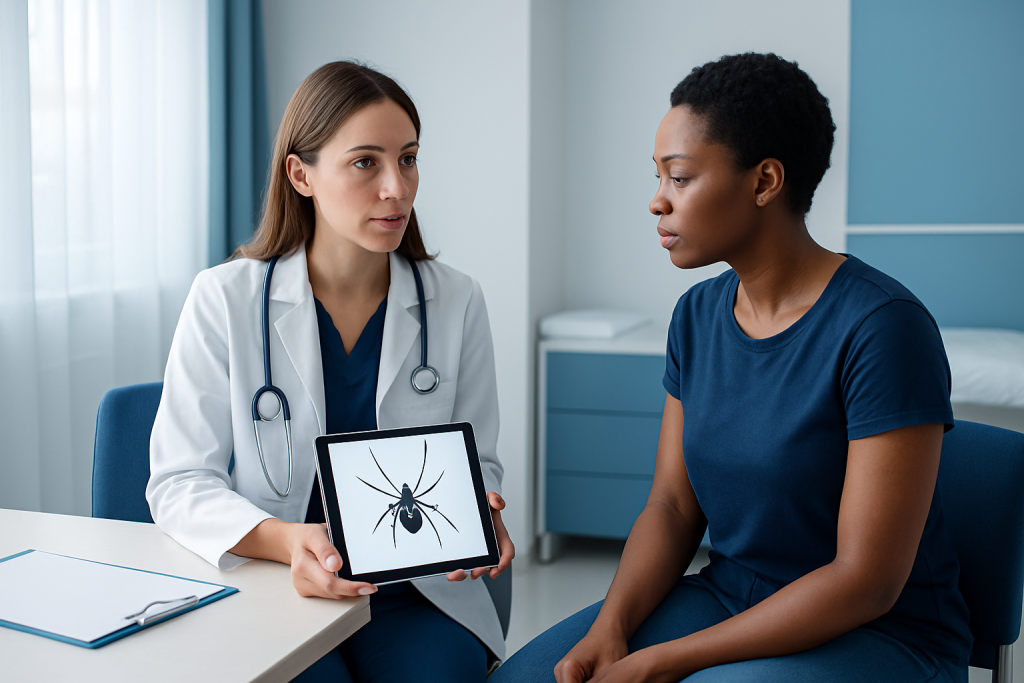
Black widow spider bites happen when a spider feels trapped, disturbed, or pressed against the skin. The bites are usually accidental, such as when a hand goes into a pile of stored items, a shoe is put on without checking, or clothing is handled after sitting outdoors.
People may be more likely to encounter black widows in warm climates, cluttered storage spaces, undisturbed outdoor areas, or places where spiders can hide without being noticed. Activities such as cleaning garages, moving wood, gardening, and working around garden tools or construction materials can increase exposure.
While anyone can be bitten, the impact can be more significant in young children, older adults, and people with heart or breathing conditions. Those with reduced ability to travel quickly for care may also benefit from earlier evaluation, since the pattern of symptoms can change over time.
Diagnosis
Diagnosis is usually made from the person’s symptoms, the history of a possible spider encounter, and the appearance of the bite area. If the spider was seen or captured safely, it may help confirm the type, but treatment decisions are often made without that information.
A clinician will typically ask about when the bite occurred, how the symptoms have changed, and whether there are muscle cramps, chest discomfort, breathing symptoms, or signs of an allergic reaction. A physical examination helps identify whether the symptoms fit a spider envenomation pattern or another problem such as infection, a skin reaction, or an insect bite.
Tests are not always needed. If symptoms are severe or there are concerns about dehydration, significant pain, or other medical issues, blood tests or other evaluation may be used to guide care and rule out complications.
Treatment Options
Treatment depends on the intensity of symptoms and the person’s overall health. Many cases improve with pain control, rest, observation, and treatment of muscle cramping and nausea as needed. A clinician may also clean the bite site and advise on basic wound care.
Supportive care often includes keeping the person comfortable, watching for worsening symptoms, and managing pain with medicines chosen by a healthcare professional. In more significant cases, hospital observation may be appropriate, especially if there are strong muscle spasms, severe pain, or concerns about blood pressure and heart rate changes.
Antivenom is available in some settings and may be considered for select patients with severe symptoms. The decision is individualized because the potential benefit must be weighed against the person’s clinical picture and the medical team’s judgment. For travelers receiving care away from home, clear discharge instructions and a follow-up plan are especially important before returning to flights or long-distance travel.
Prevention & Self-care
Preventing bites is often a matter of reducing surprise encounters. Gloves, closed shoes, and careful checking of stored items can make a practical difference when cleaning garages, moving boxes, or handling firewood.
Helpful precautions include:
- Shake out shoes, clothing, and gloves before using them
- Keep storage areas tidy and reduce clutter where spiders can hide
- Use caution around woodpiles, sheds, and outdoor equipment
- Wear long sleeves and gloves during yardwork or cleanup
- Seal cracks and reduce entry points around buildings when possible
If a bite is suspected, it is best to clean the area with soap and water, keep the person calm, and seek medical advice if symptoms increase. Avoid cutting the skin, trying to suck out venom, or using tight tourniquets, as these measures are not helpful and may cause harm.
When to See a Doctor
Medical evaluation is recommended if pain becomes intense, symptoms spread beyond the bite site, or muscle cramping, sweating, nausea, or weakness develops. Care is especially important for children, pregnant people, older adults, and anyone with heart or breathing concerns.
Emergency care is appropriate if the person has trouble breathing, severe chest or abdominal pain, fainting, confusion, or a rapidly worsening condition. A clinician can determine whether the symptoms are consistent with black widow envenomation or whether another diagnosis needs to be considered.
For international patients, it can be useful to seek a center that can provide diagnosis, symptom relief, and clear follow-up instructions in one care pathway. Acibadem Health Point’s multidisciplinary specialists and JCI-accredited hospitals diagnose and treat this condition for international patients.
Recovery and Follow-up
Recovery is often gradual, with the most noticeable discomfort easing first and lingering soreness or fatigue settling over time. Some people feel better within a day or two, while others need a longer period of rest and symptom monitoring.
After the acute visit, follow-up may focus on pain control, hydration, wound observation, and checking that no new symptoms are developing. If travel is involved, the care team may also discuss when it is reasonable to fly, drive long distances, or return to physically demanding work.
Most people recover without lasting problems when symptoms are recognized and managed early. The main goal is simple: make sure the bite is truly a black widow bite, treat the symptoms safely, and avoid missing any condition that behaves differently.
Frequently asked questions
How can a black widow spider bite be recognized?
The bite may start as a small puncture or burning sensation, then pain can increase over several hours. Muscle cramps, sweating, nausea, and abdominal discomfort are common clues that the reaction is more than a simple skin bite.
Is a black widow spider bite always serious?
Not every bite leads to severe illness, but the symptoms can become significant and should not be ignored. People who develop spreading pain, cramping, or whole-body symptoms should be evaluated by a clinician.
What should be done first after a suspected bite?
The area should be washed gently with soap and water, and the person should rest and avoid unnecessary movement. If symptoms are increasing, medical advice should be sought promptly rather than waiting to see if they disappear.
Can a black widow bite be treated at home?
Mild cases may improve with home care after a medical assessment, but self-diagnosis can be unreliable. Because the symptoms can progress, it is safer to obtain medical guidance, especially if the person is a child or has other health conditions.
Do all black widow bites need antivenom?
No, antivenom is generally reserved for selected severe cases. Many people recover with supportive treatment, pain control, and observation under a clinician's care.
How long does recovery usually take?
Recovery varies depending on symptom severity and the person's overall health. Some people improve quickly, while others need several days of rest and follow-up to feel fully back to normal.
References
- Centers for Disease Control and Prevention
- Mayo Clinic
- Merck Manual Consumer Version
- American Association of Poison Control Centers
- World Health Organization
This article is for general information only and is not a substitute for professional medical advice. Please consult a qualified doctor about your individual situation.
Persistent digestive symptoms? Get evaluated in Turkey
JCI-accredited · board-certified surgeons · reply within 24h
Add us as a Preferred Source to see more of our trusted health content across Google Search, AI Overviews and Discover.