Brown Recluse Spider Bite

Key Takeaways
- Many suspected spider bites are caused by other skin problems, so correct identification matters.
- A brown recluse bite often starts with mild pain, then may develop redness, blistering, or a skin wound over time.
- Most bites are treated with wound care, pain relief, and observation rather than surgery.
- Worsening pain, fever, spreading redness, or a darkening wound should be checked by a doctor.
- Simple first aid includes cleaning the area, using a cool compress, and avoiding home remedies that can irritate the skin.
A brown recluse spider bite can range from a mild, local skin reaction to a more serious wound that needs medical attention. Early recognition, careful first aid, and prompt evaluation help reduce complications and support healing.
Overview
A brown recluse spider bite is a concern because the venom can irritate the skin and, in some cases, lead to tissue damage. The bite is usually not dramatic at the start, and that delayed pattern is one reason it can be confusing for patients and even for travelers who are far from home when symptoms begin.
Brown recluse spiders are found in specific regions and are not the cause of most “spider bites” people notice. Many skin reactions that are blamed on spiders actually come from insect bites, skin infections, allergic reactions, or other medical conditions. For that reason, a careful clinical assessment is often more useful than trying to identify the culprit from appearance alone.
Most people who are bitten recover with supportive care and close monitoring. The main goal is to keep the skin clean, limit inflammation, watch for warning signs, and seek medical review if the wound changes in a concerning way.
Symptoms
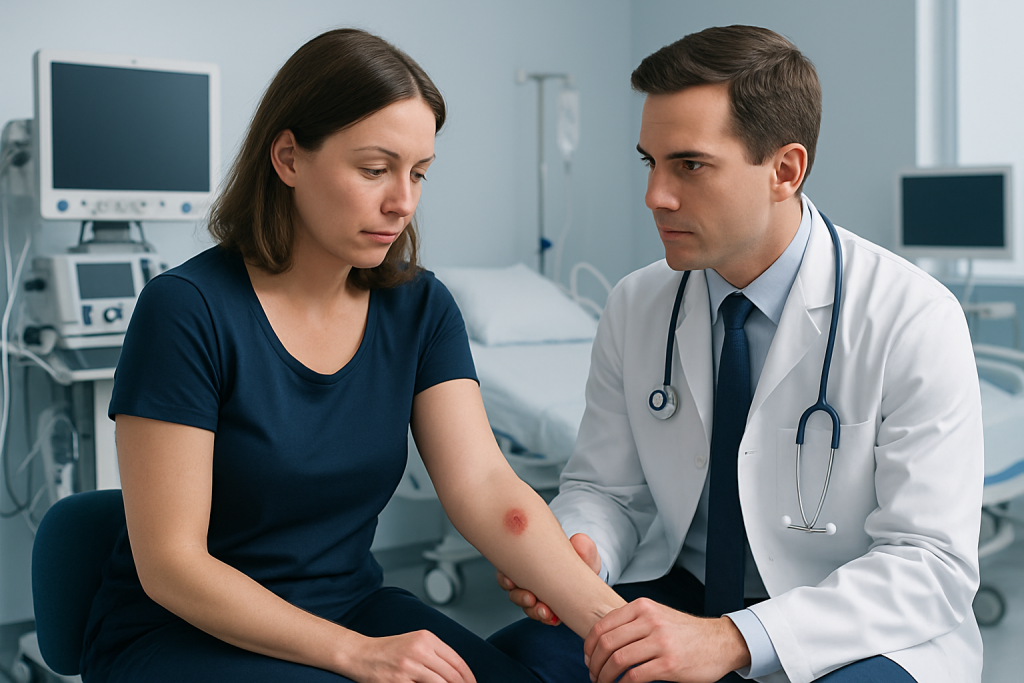
Symptoms may begin with little more than a mild sting or no clear pain at all. Over the next several hours, the area can become red, swollen, itchy, or tender. In some cases, the skin around the bite becomes pale at the center with a red ring around it, a pattern that can look quite striking even before the wound worsens.
As the reaction evolves, blisters may form and the center of the lesion can darken. Some bites remain small and heal without major skin loss, while others develop an open sore or scabbed area that takes time to recover. Pain may increase as inflammation builds, and some people also feel unwell with fatigue, headache, or nausea.
- Localized burning, itching, or pain
- Redness and swelling
- Blistering or a pale center with surrounding redness
- Skin breakdown, ulceration, or a dark scab
- Occasionally fever, chills, or general discomfort
It is helpful to remember that symptoms can vary widely. A wound that worsens quickly, spreads beyond the bite area, or becomes markedly painful deserves medical assessment rather than waiting for it to “settle on its own.”
Causes & Risk Factors
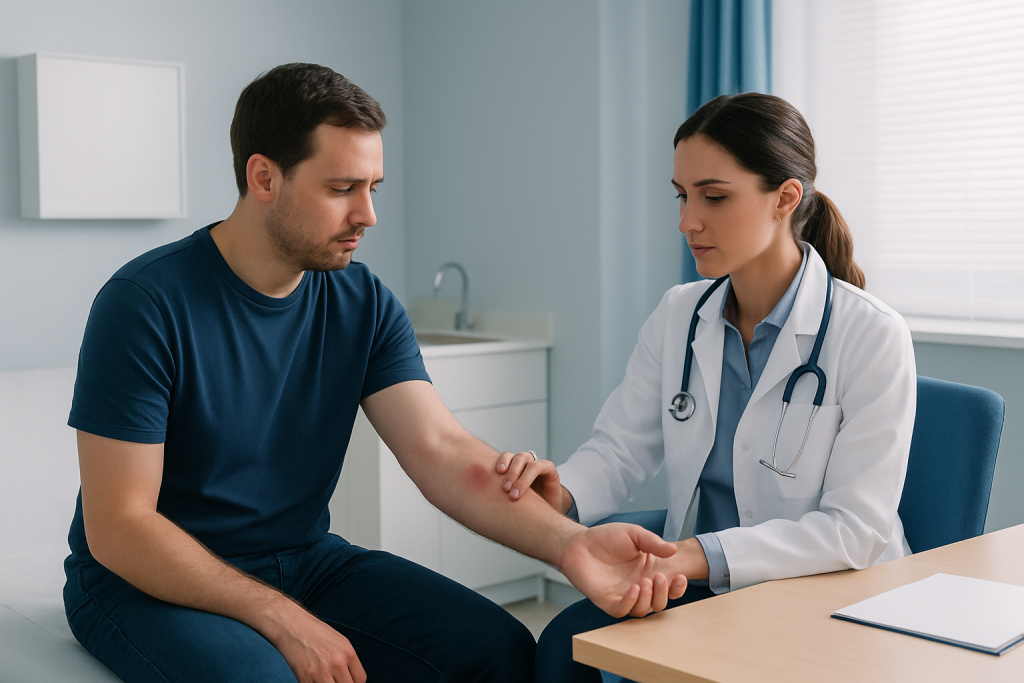
The cause is venom from the brown recluse spider, which can trigger local tissue injury and inflammation. The spider itself is shy and typically bites only when pressed against the skin, such as in clothing, bedding, storage areas, or shoes that have been left undisturbed.
Risk rises in places where brown recluse spiders are more common, and in situations where people may not notice a spider before contact. People who are moving furniture, unpacking boxes, cleaning storage spaces, or putting on clothing or shoes stored for a long time may be more exposed. Travelers visiting affected areas may be surprised by a bite because the spider is often not seen.
Several factors can make a suspected bite harder to interpret. Skin infections, abscesses, allergic reactions, and other spider or insect bites can resemble a brown recluse bite, especially in the first day or two. That is one reason a healthcare professional may consider the full history, the shape and progression of the wound, and the local geography before making a conclusion.
Diagnosis
Diagnosis is usually clinical, based on the person’s story, the appearance of the skin, and whether the exposure could realistically have involved a brown recluse spider. A doctor may ask when the lesion first appeared, how quickly it changed, whether pain or fever developed, and whether the person lives in or recently traveled to an area where the spider is found.
There is no simple routine test that confirms a brown recluse bite in every case. In practice, clinicians often focus on ruling out more common causes of skin sores, such as bacterial infection or other inflammatory conditions. When the wound looks atypical, blood tests, wound cultures, or imaging may be considered to guide the next steps.
For international patients, this evaluation can be especially important if symptoms start after travel or while in transit. A clear description of the timeline, any photos of the lesion, and any known exposure details can make the consultation more efficient and help the team decide whether the wound needs local treatment, follow-up, or specialist review.
Treatment Options
Treatment depends on how severe the reaction is. For many people, care begins with cleaning the skin, applying a cool compress, keeping the area elevated when possible, and using pain relief recommended by a clinician. The wound is then monitored over time because the skin’s appearance may change over several days.
If a secondary infection is suspected, a doctor may prescribe treatment for that problem. Tetanus status may also be reviewed, especially if the bite has broken the skin. In more complicated cases, a wound-care approach may be needed to support healing and reduce the chance of further tissue injury.
What is usually not helpful is aggressive home treatment. Cutting the skin, trying to suck out venom, applying heat, or using unproven chemicals can worsen irritation and delay healing. Surgery is not a first-line approach for most bites and is generally considered only after the wound has fully declared itself and the clinician can judge whether tissue removal is truly needed.
- Gentle cleansing with soap and water
- Cool compresses to reduce discomfort and swelling
- Elevation and rest of the affected area
- Pain management under medical guidance
- Assessment for infection, tetanus, or wound-care needs
Prevention & Self-care
Prevention starts with simple habits that reduce surprise contact with spiders. People can shake out shoes, clothing, towels, and bedding before use, especially if they have been stored for a while. Gloves can help when reaching into boxes, closets, or wood piles, and clutter reduction lowers the number of hiding places indoors.
After a bite or suspected bite, self-care should be calm and practical. Clean the area, apply a cool cloth, avoid scratching, and watch the skin once or twice a day for changes in size, color, drainage, or pain. Taking a photo at the same angle each day can help a clinician understand the progression if a medical visit becomes necessary.
For patients traveling from another country, it can be useful to keep the area clean and to seek local medical review if the wound becomes painful, the redness expands, or systemic symptoms appear. When follow-up may happen after return home, a brief written summary or photographs can make continuity of care easier for the next doctor.
When to See a Doctor
A doctor should be consulted if the bite is getting more painful, the redness is spreading, or a blister, open sore, or dark center is developing. Fever, chills, nausea, muscle aches, or feeling generally unwell also deserve medical attention, because they can signal a more significant reaction or another diagnosis that needs treatment.
Medical review is wise if the person is a child, an older adult, pregnant, or has diabetes, immune suppression, poor circulation, or another condition that can slow healing. A wound on the face, hand, genitals, or near a joint may also need closer follow-up because these areas can be more sensitive and harder to heal well.
Emergency care is appropriate if breathing becomes difficult, the person faints, the pain is severe and rapidly increasing, or the skin changes are spreading quickly. In many cases, a timely outpatient visit is enough, but prompt evaluation helps separate a true brown recluse reaction from problems that need different treatment.
Acibadem Health Point’s multidisciplinary specialists and JCI-accredited hospitals can evaluate and treat brown recluse spider bites for international patients, with coordinated care when wound assessment, dermatology, or infection management is needed.
Frequently asked questions
How can a brown recluse spider bite be recognized?
It often starts with mild pain or little immediate discomfort, then develops redness, swelling, and sometimes blistering or a dark center over time. Because many skin conditions can look similar, a doctor usually considers the full story rather than appearance alone.
Is every suspected spider bite actually from a spider?
No. Many presumed spider bites are really skin infections, allergic reactions, or other insect bites. That is why medical evaluation is important if the lesion worsens or does not behave like a simple irritation.
What should someone do right away after a suspected bite?
The area should be washed gently with soap and water, a cool compress can be applied, and the person should avoid squeezing, cutting, or heating the wound. It is also sensible to observe the area closely for changes over the next day or two.
Can a brown recluse bite heal on its own?
Some bites do improve without major treatment, especially if the reaction stays small. Even then, it is helpful to monitor the skin and seek medical advice if pain, redness, or tissue damage increases.
When is surgery needed?
Surgery is not usually the first step for a brown recluse bite. If a significant wound develops, a clinician may wait until the tissue has stabilized before deciding whether any procedure is useful.
Should the wound be covered or left open?
In many cases, keeping the area clean and lightly protected is reasonable, especially if clothing or movement could irritate it. A doctor may give specific wound-care instructions depending on how the skin looks.
References
- Centers for Disease Control and Prevention
- American Academy of Dermatology
- Mayo Clinic
- Merck Manual Professional Edition
This article is for general information only and is not a substitute for professional medical advice. Please consult a qualified doctor about your individual situation.