

Back Pain: Symptoms, Causes and Treatment

Key Takeaways
- Back pain may come from muscles, joints, discs, nerves, or other organs, so the cause matters as much as the location.
- Most short-term back pain improves with rest from heavy strain, gentle movement, and simple self-care.
- Warning signs such as leg weakness, bladder or bowel changes, fever, or pain after a major injury need prompt medical review.
- Diagnosis usually starts with a medical history and physical examination; imaging is not always needed right away.
- Treatment can include activity changes, physical therapy, pain relief methods, and in some cases procedures or surgery.
- People traveling for care should plan for follow-up, rehabilitation, and clear instructions before returning home.
Medically reviewed by the Acıbadem clinical team — August 19, 2026
Back pain is a common symptom, not a diagnosis on its own, and it can range from a short-lived muscle strain to a spine condition that needs medical attention. Understanding the pattern of pain, related symptoms, and the right next steps can help patients choose care with more confidence.
Overview
Back pain is one of the most common reasons people look for medical advice, yet it is not a single condition. It is a symptom that can come from strained muscles, irritated joints, a spinal disc problem, nerve compression, posture-related overload, or, less often, another health issue that refers pain to the back.
The encouraging part is that many cases settle with time and conservative care. The more helpful question is often not simply “How do I stop the pain?” but “What is the pain pattern telling the doctor?” That distinction guides whether the best next step is home care, rehabilitation, imaging, or specialist review.
For international patients, back pain can be especially disruptive because travel, lifting luggage, long sitting periods, and sleeping in unfamiliar positions may aggravate symptoms. A practical plan for evaluation and recovery can make it easier to decide when treatment can wait and when it is worth arranging a proper assessment while abroad.
Symptoms
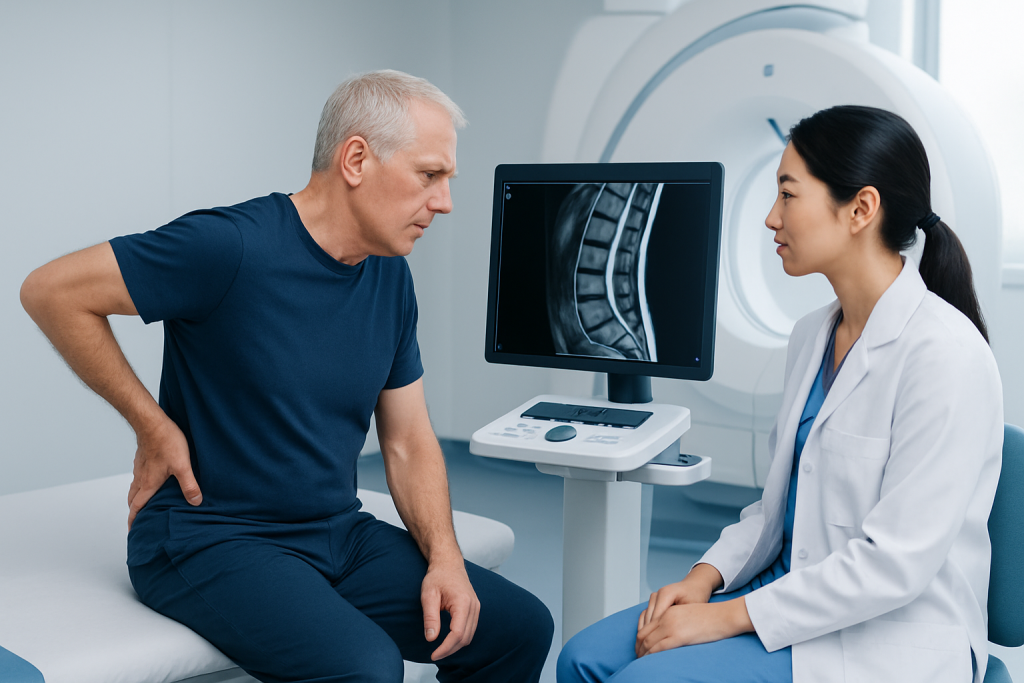
Back pain can feel dull, sharp, burning, tight, or deep and aching. Some people notice stiffness when getting out of bed, while others feel pain only after bending, sitting too long, or lifting. The discomfort may stay in one area or spread toward the buttocks, hips, or down one leg.
The body often provides clues about where the problem may be. Muscle strain tends to cause soreness and spasm, while nerve irritation may create shooting pain, tingling, numbness, or weakness. Pain linked to the spine may worsen with certain movements, whereas pain coming from another source can be less tied to posture and activity.
- Localized pain in the lower, middle, or upper back
- Stiffness or reduced range of motion
- Pain that travels into the leg or buttock
- Tingling, numbness, or weakness
- Pain that changes with movement, coughing, or prolonged sitting
Back pain that is mild and short-lived is often mechanical. However, symptoms that steadily worsen, interrupt sleep, or appear together with systemic complaints deserve a closer look rather than repeated self-treatment.
Causes & Risk Factors
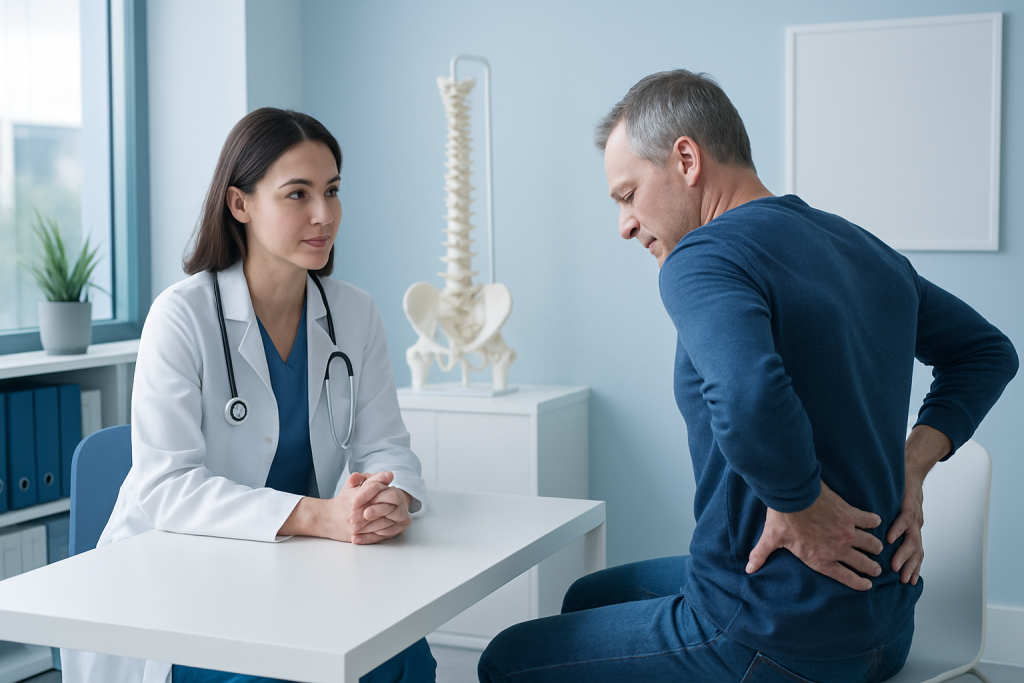
Many everyday factors can overload the back. Lifting with poor technique, sudden twisting, repetitive bending, long hours at a desk, carrying heavy bags, and weak core or hip muscles are common contributors. Stress can also make muscles tense, which may amplify discomfort.
Spine-related causes include disc irritation, arthritis in the small joints of the spine, spinal stenosis, scoliosis in some patients, and nerve compression such as sciatica. Less commonly, back pain may be linked to infection, inflammatory disease, fracture, or pain referred from organs such as the kidneys or digestive tract.
Certain factors raise the chance of back pain or make it more persistent:
- Older age and natural wear in the spine
- Previous back injury or repeated strain
- Extra body weight
- Poor posture or prolonged sitting
- Smoking, which can affect disc health and healing
- Jobs or sports that involve heavy lifting, vibration, or twisting
Back pain is often multi-factorial. In practice, that means the treatment plan may need to address both the irritated tissue and the habits or movement patterns that keep putting stress on it.
Diagnosis
Diagnosis begins with a detailed conversation about when the pain started, what it feels like, what makes it better or worse, and whether there are symptoms in the legs or elsewhere. A doctor may also ask about recent falls, travel, fever, weight loss, prior surgery, cancer history, or bladder and bowel changes, because these details shape the evaluation.
A physical examination usually looks at posture, walking, flexibility, reflexes, muscle strength, and areas of tenderness. In many cases, this is enough to guide initial treatment without immediate imaging. Scans are usually reserved for cases where symptoms suggest nerve involvement, serious injury, infection, fracture, or another condition that needs confirmation.
Possible tests may include X-rays, MRI, CT, or blood work, depending on the suspected cause. For a patient arriving from another country, bringing prior reports, images, medication lists, and a short timeline of symptoms can save time and help the team avoid repeating unnecessary tests.
Treatment Options
Treatment depends on the cause, severity, and duration of the pain. For many people, the first goal is to calm the flare-up while preserving gentle movement. Resting completely for long periods is usually not helpful; instead, doctors often recommend staying as active as tolerated and avoiding only the movements that clearly trigger the pain.
Conservative treatment may include supervised physical therapy, heat or cold application, posture adjustments, and medication selected by a doctor to reduce pain and inflammation. When nerve irritation is present, treatment may focus on relieving pressure and restoring function through rehabilitation and, in some cases, injections or other procedures.
If the pain is caused by a structural problem that does not improve, or if there is significant nerve compression, a specialist may discuss procedural or surgical options. The decision is usually based on symptoms, exam findings, imaging, and how much the condition affects walking, sleep, work, and daily life.
For patients traveling for treatment, it helps to ask early about the expected recovery period, whether follow-up imaging or therapy will be needed, and how care will continue after returning home. Acibadem Health Point’s multidisciplinary specialists and JCI-accredited hospitals can diagnose and treat back conditions for international patients within a coordinated care pathway.
Prevention & Self-care
Not every episode of back pain can be prevented, but many flares become less frequent when the back is supported by good daily habits. The aim is not perfection; it is reducing repeated strain and helping the spine move well under ordinary demands.
Useful steps often include regular walking or gentle exercise, strengthening the core and hip muscles, maintaining a comfortable sitting setup, and learning safer lifting techniques. A supportive mattress, sensible luggage choices, and scheduled movement breaks during long flights or car rides may also help international travelers avoid setbacks.
- Change positions often during the day
- Use hip and knee bending when lifting rather than the back alone
- Keep mobile with low-impact activity if symptoms allow
- Maintain a healthy body weight when appropriate
- Stop smoking, if relevant, as part of broader spine care
During a flare-up, simple self-care can include short walks, heat or cold, and temporary reduction of strenuous activities. If symptoms do not begin to ease or keep returning, it is better to reassess the cause than to keep cycling through the same routine.
When to See a Doctor
Medical review is important when back pain follows a fall, accident, or other injury, or when it is severe enough to limit standing, walking, or sleep. It is also wise to seek assessment if the pain lasts longer than expected, returns often, or is not improving with basic self-care.
Some symptoms should prompt prompt medical attention because they may signal nerve compression, infection, or another condition that needs timely treatment. These include weakness in the legs, numbness around the groin or inner thighs, loss of bladder or bowel control, fever, unexplained weight loss, or pain that is very different from a usual strain.
A doctor should also be consulted if back pain is paired with a history of cancer, osteoporosis, immune suppression, or long-term steroid use. In those situations, the threshold for evaluation is lower, because the cause may not be a simple mechanical strain.
Living With Back Pain During Travel and Recovery
Back pain can be difficult to manage when a person is far from home and trying to keep a trip on schedule. A practical recovery plan may include pacing activities, arranging transport that minimizes long sitting, and avoiding heavy bags until symptoms settle. Keeping copies of test results and discharge instructions is especially useful when follow-up will happen in another country.
Rehabilitation often matters as much as the first treatment. Whether the pain was caused by a strain, a disc problem, or surgery, gradual return to movement usually supports better long-term function than trying to “push through” too quickly. Patients should clarify which exercises are safe, how soon they can resume work or travel, and what changes would justify another check-up.
When care is coordinated well, back pain becomes a manageable medical issue rather than a constant disruption. Clear guidance, realistic expectations, and the right specialist input can make the path back to routine life much more straightforward.
Frequently asked questions
Is back pain usually serious?
Most back pain is not caused by a dangerous condition and improves with time, movement, and basic care. Still, the cause should be assessed if the pain is severe, persistent, or linked to warning signs such as weakness or bladder changes.
Should a person rest in bed for back pain?
Short periods of rest may help during a very painful flare, but long bed rest is usually not recommended. Gentle activity as tolerated often supports recovery better than staying still for too long.
When is imaging needed for back pain?
Imaging is not always required right away. It is more likely to be ordered when there are signs of nerve problems, a significant injury, infection, fracture, or pain that does not improve as expected.
Can posture alone cause back pain?
Posture can contribute, especially when combined with long sitting, weak muscles, or repetitive strain. It is rarely the only factor, so treatment often works best when it addresses both posture and overall movement habits.
What helps lower back pain at home?
Many people find relief with gentle walking, heat or cold, avoiding heavy lifting, and changing positions often. If the pain keeps returning or limits daily life, a medical evaluation is a better next step than relying only on home care.
Can someone travel with back pain?
Travel may be possible if symptoms are mild and stable, but long sitting, luggage, and unfamiliar sleeping arrangements can make pain worse. It helps to plan movement breaks, pack lightly, and know where to seek care if symptoms change.
References
- World Health Organization
- National Institute of Neurological Disorders and Stroke
- American Academy of Orthopaedic Surgeons
- Mayo Clinic
This article is for general information only and is not a substitute for professional medical advice. Please consult a qualified doctor about your individual situation.
Joint and spine care in Turkey — expert assessment & treatment
JCI-accredited · board-certified surgeons · reply within 24h
Add us as a Preferred Source to see more of our trusted health content across Google Search, AI Overviews and Discover.
More from the Health Library



Related Specialists

Prof. Dr. Ahmet Alanay
Orthopedic Surgery & Traumatology
Dr. Sinan Aksu
Orthopedic Surgery & Traumatology
Dr. Sirri Baştürk
Orthopedic Surgery & Traumatology
Prof. Dr. Korhan Özkan
Orthopedic Surgery & Traumatology