

Anterior Placenta: Causes, Risks and Treatment

Key Takeaways
- An anterior placenta describes where the placenta sits, not a disease or complication by itself.
- It may make baby movements feel later or more softly, especially early in pregnancy.
- Most people with an anterior placenta need no special treatment, only routine pregnancy care.
- If movements decrease, bleeding starts, or pain becomes severe, medical advice should be sought promptly.
- Ultrasound is the usual way placental position is identified and monitored.
Medically reviewed by the Acıbadem clinical team — August 19, 2026
An anterior placenta means the placenta is attached to the front wall of the uterus. In most pregnancies, this is a normal variation and does not harm the baby, though it can affect how soon movements are felt and how the placenta is seen on ultrasound.
Overview
During pregnancy, the placenta acts as the baby’s support system, delivering oxygen and nutrients while helping remove waste. When it attaches to the front wall of the uterus, it is called an anterior placenta. This is a placement description, not a diagnosis and not a sign that something is wrong.
For many pregnant people, the finding is simply noted on an ultrasound report and then followed as part of routine prenatal care. The pregnancy can progress normally, and most day-to-day decisions do not change because of the placenta’s location. What may change, however, is how early fetal movements are perceived and sometimes how strongly they are felt.
Because the placenta sits between the baby and the abdominal wall, it can act like a cushion. That cushion effect is usually harmless, but it can make movement detection less obvious in the early months or in the first pregnancy, when the sensation itself is still unfamiliar.
Symptoms and What an Ultrasound Report May Show
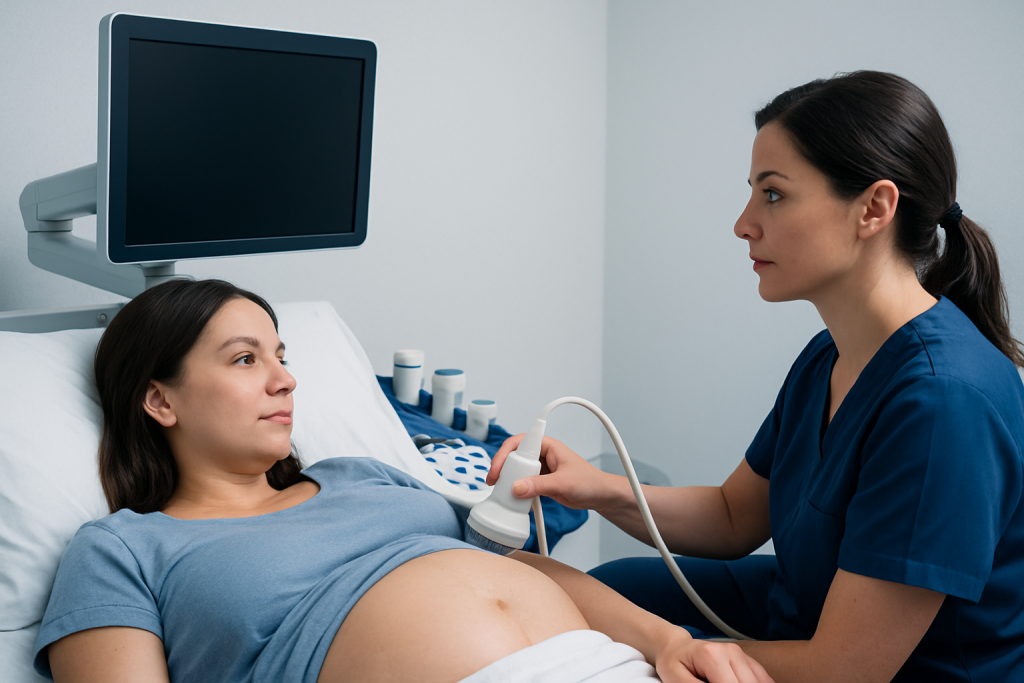
An anterior placenta usually does not cause symptoms on its own. Many people only learn about it after a routine scan, often when reviewing the anatomy ultrasound or an early pregnancy image with their clinician. The ultrasound report may simply state that the placenta is anterior, low-lying, fundal, or posterior depending on its position in the uterus.
The most common everyday effect is a change in how fetal movement is perceived. Kicks may feel gentler, later, or more like rolling and shifting rather than sharp taps. This can be especially noticeable in people with a higher body mass index, an anterior placenta, or a first pregnancy, since all three can make movement recognition more subtle.
Occasionally, the location can influence how the belly is palpated during prenatal visits. That does not mean the baby is in danger. It simply means the placenta’s position can slightly alter what is felt from the outside during routine examination.
Causes and Risk Factors

The placenta chooses its location as the pregnancy develops, and in most cases there is no clear cause for an anterior placement. It is one of several normal attachment patterns and often appears by chance rather than because of a specific behavior, diet, or activity.
Some factors may make placental location more likely to be noted on a scan, including prior uterine surgery, previous cesarean birth, fibroids, or variation in the shape of the uterus. These factors do not automatically mean a problem will occur; they simply shape how the pregnancy is followed.
What matters more than the placental position itself is whether it is low-lying, covers the cervix, or is associated with bleeding or other pregnancy concerns. An anterior placenta that is well away from the cervix is commonly considered an ordinary finding.
Diagnosis and Monitoring
Ultrasound is the standard way to identify placental position. It may be reported during the first-trimester scan or, more commonly, at the mid-pregnancy anatomy scan. The report helps the care team understand where the placenta is attached and whether it sits near the cervix.
If the placenta is low in early pregnancy, a follow-up scan may be recommended because placental position can appear to change as the uterus grows. This is often reassuring, since many low-lying placentas move upward relative to the cervix later in pregnancy. An anterior placenta by itself usually does not require extra tests.
In some situations, a clinician may also review fetal growth, blood counts, or other pregnancy details if there are separate concerns such as bleeding or reduced fetal movement. The placenta’s location is one piece of the larger prenatal picture, not the only measure of pregnancy well-being.
Treatment Options
There is no treatment needed for an anterior placenta in an uncomplicated pregnancy because it is not a condition that must be corrected. Care usually focuses on standard prenatal visits, routine scans, and attention to the baby’s growth and movements as pregnancy advances.
If the placenta is low-lying or placenta previa is present, the plan may change. In those cases, clinicians may advise avoiding certain activities, monitor for bleeding, and discuss delivery planning if the placenta does not move away from the cervix later in pregnancy. This is different from an isolated anterior placenta, which is often managed expectantly.
When planning care from another country, Myomectomy Recovery for International Patients: The Usual Travel Timeline" class="ahp-ilk">international patients may find it helpful to carry ultrasound reports, blood test results, and medication lists to each visit. Clear records make it easier for a new team to confirm placental position and continue care without repeating unnecessary steps.
Prevention and Self-care
An anterior placenta cannot usually be prevented, and it does not reflect anything a pregnant person did or did not do. Self-care therefore centers on healthy pregnancy habits rather than on changing the placenta’s location.
Useful steps include attending scheduled prenatal appointments, eating a balanced diet, staying hydrated, and following the advice of the obstetric team about exercise and travel. If movements have become more familiar later in pregnancy, many clinicians recommend paying attention to the baby’s usual pattern and noting any meaningful change.
For people traveling for prenatal care or a second opinion, it helps to keep a simple timeline of symptoms, scan dates, and questions. That record can be especially useful when discussing fetal movement, bleeding, or placental position with a specialist in a different country or care system.
- Bring copies of ultrasound images and reports.
- Track any episodes of bleeding, cramping, or reduced movement.
- Ask whether placental position needs follow-up imaging.
- Seek advice before long trips if there are pregnancy complications.
When to See a Doctor
An anterior placenta alone is not usually a reason for urgent care. Still, pregnancy symptoms should never be ignored if they feel unusual or concerning. It is sensible to contact a doctor or maternity unit if fetal movements seem clearly reduced once movement patterns are established, or if there is any vaginal bleeding.
Severe abdominal pain, fluid leakage, persistent contractions, dizziness, or fever also deserve prompt medical attention. These symptoms are not specific to placental position, but they can signal a pregnancy issue that needs evaluation. If the placenta is low-lying, any bleeding should be assessed without delay.
Women who are unsure whether what they feel is normal are encouraged to ask. A brief assessment is often enough to clarify whether reassurance is appropriate or whether a scan or examination is needed. Acibadem Health Point’s multidisciplinary specialists and JCI-accredited hospitals can diagnose and treat pregnancy-related conditions for international patients, while coordinating care across visits and travel plans.
Living With the Finding Through Pregnancy and Birth
For most people, an anterior placenta becomes one more detail in the pregnancy record rather than a daily concern. The main adjustment is learning that kicks may be felt differently and that the placenta’s front-wall location can slightly influence scan interpretation and abdominal examination.
Birth planning usually depends more on the baby’s position, maternal health, and whether there are any separate placental concerns such as previa or bleeding. An anterior placenta by itself does not automatically mean cesarean delivery or any special delivery method. The care plan should be based on the full obstetric picture.
When the pregnancy spans multiple countries or healthcare systems, consistent follow-up matters. Keeping a shared folder of reports and asking the care team to explain placental findings in plain language can make the experience calmer and more coordinated.
Frequently asked questions
What does an anterior placenta mean?
It means the placenta is attached to the front wall of the uterus. This is a common placement and, by itself, is usually not a problem for the pregnancy.
Can an anterior placenta affect baby movements?
Yes, it can make movements feel softer or be noticed a little later because the placenta acts as a cushion. The baby is still moving, but the sensations may be less direct at first.
Does an anterior placenta mean a cesarean section is needed?
No, not on its own. Delivery planning depends on the overall pregnancy situation, including whether the placenta is low-lying or there are other obstetric concerns.
Is an anterior placenta dangerous?
In most cases, no. It is usually a normal variation in placental position, and routine prenatal care is enough unless another issue is present.
How is an anterior placenta diagnosed?
It is usually identified on ultrasound. The report describes where the placenta is located in the uterus and whether it is near the cervix.
When should someone call a doctor about placental concerns?
They should seek medical advice if there is vaginal bleeding, strong abdominal pain, fluid leakage, or clearly reduced fetal movement later in pregnancy. These symptoms need prompt assessment even if the placenta is simply anterior.
References
- American College of Obstetricians and Gynecologists
- Royal College of Obstetricians and Gynaecologists
- NHS
- Mayo Clinic
- World Health Organization
This article is for general information only and is not a substitute for professional medical advice. Please consult a qualified doctor about your individual situation.
Explore treatments in Turkey — costs, top hospitals & a free quote
JCI-accredited · board-certified surgeons · reply within 24h
Add us as a Preferred Source to see more of our trusted health content across Google Search, AI Overviews and Discover.
More from the Health Library



Related Specialists

Dr. Gamze Karababa
Gynecology & Obstetrics
Dr. Onur Özdenoğlu
Gynecology & Obstetrics
Dr. Selcen Bahadır
Gynecology & Obstetrics
Prof. Dr. A. Taner Usta
Gynecology & Obstetrics