

ACL Tear or Meniscus Tear: How Orthopedic Surgeons Tell Which One Matters More

Key Takeaways
- ACL tears often cause instability or a feeling that the knee may give way, while meniscus tears more often cause joint-line pain, catching, or locking.
- The way the injury happened helps guide diagnosis, but symptoms alone are not enough to confirm the problem.
- A careful physical exam and, in many cases, MRI are used to distinguish ligament injury from cartilage injury.
- Some meniscus tears can improve without surgery, while complete ACL tears in active patients may need reconstruction or structured rehabilitation.
- Early evaluation matters if the knee swells quickly, cannot bear weight, or locks and will not straighten.
Medically reviewed by the Acıbadem clinical team — June 13, 2026
ACL tears and meniscus tears can both follow a twist, pivot, or Knee Pain Relief: Causes and Treatment" class="ahp-ilk">Pain Relief" class="ahp-ilk">sports injury, but they affect different parts of the knee and often feel different in daily life. An orthopedic surgeon uses the story of the injury, the physical exam, and imaging when needed to decide which problem matters more and how best to treat it.
Overview
A knee injury does not always announce itself clearly. A person may feel a pop while turning, then face swelling, stiffness, or a sense that the knee is no longer trustworthy. In that moment, the question is often not simply whether the knee is injured, but what was injured: the ACL, the meniscus, or both.
The anterior cruciate ligament, usually called the ACL, is a strong band inside the knee that helps control forward movement and rotational stability. The meniscus is a crescent-shaped piece of cartilage that acts as a shock absorber between the thigh bone and shin bone. Because they perform different jobs, problems with each structure tend to create different patterns of pain, swelling, and instability.
Orthopedic surgeons look beyond the label of “knee pain” and try to understand which injury is driving the patient’s limitations. That distinction matters because treatment can range from rest and rehabilitation to surgical repair or reconstruction, especially for people who need to return to sports, work, or travel with confidence in the knee.
Symptoms
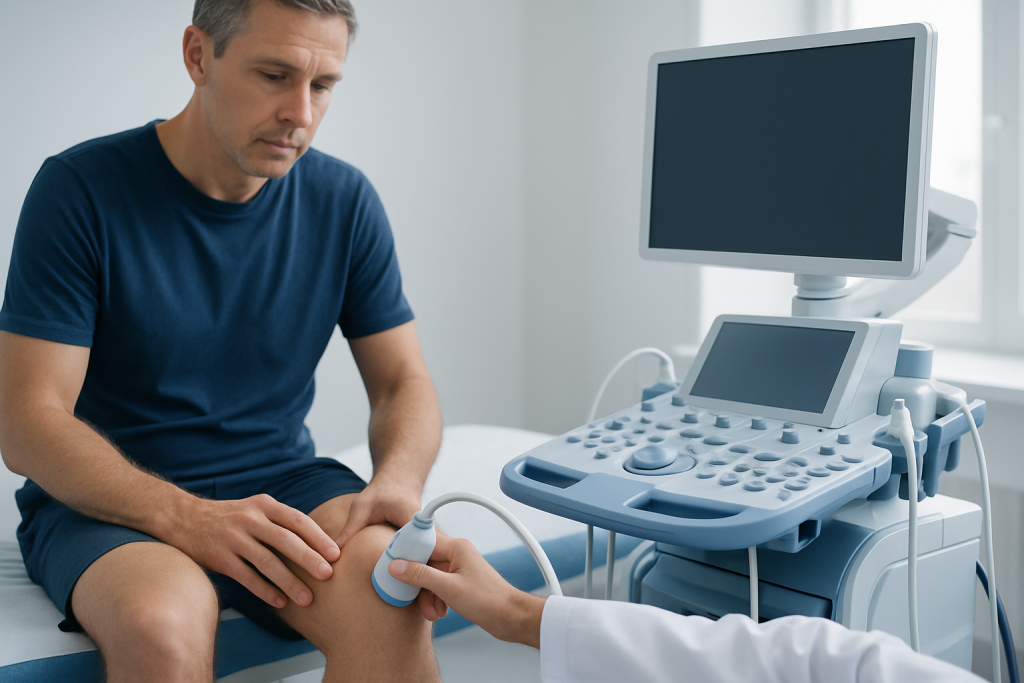
ACL tears often begin with a sudden event: a pivot, awkward landing, rapid stop, or contact injury. Many people describe hearing or feeling a pop, followed by swelling that develops fairly quickly. The knee may feel unstable, especially when turning, descending stairs, or changing direction.
Meniscus tears can also follow a twist, but the symptoms may be different. Pain is often felt along the inside or outside joint line, and the knee may hurt more with squatting, kneeling, or twisting. Some people notice clicking, catching, or a true locking sensation if a torn fragment interferes with motion.
- More suggestive of ACL injury: immediate instability, rapid swelling, difficulty trusting the knee during pivoting
- More suggestive of meniscus injury: joint-line pain, catching, locking, pain with deep bending
- Can occur with either: swelling, reduced range of motion, trouble walking normally
Symptoms overlap, and that overlap is exactly why a structured orthopedic assessment is so useful. A person may have both injuries at once, especially after a twisting sports injury, so one symptom alone should not be used to self-diagnose.
Causes & Risk Factors
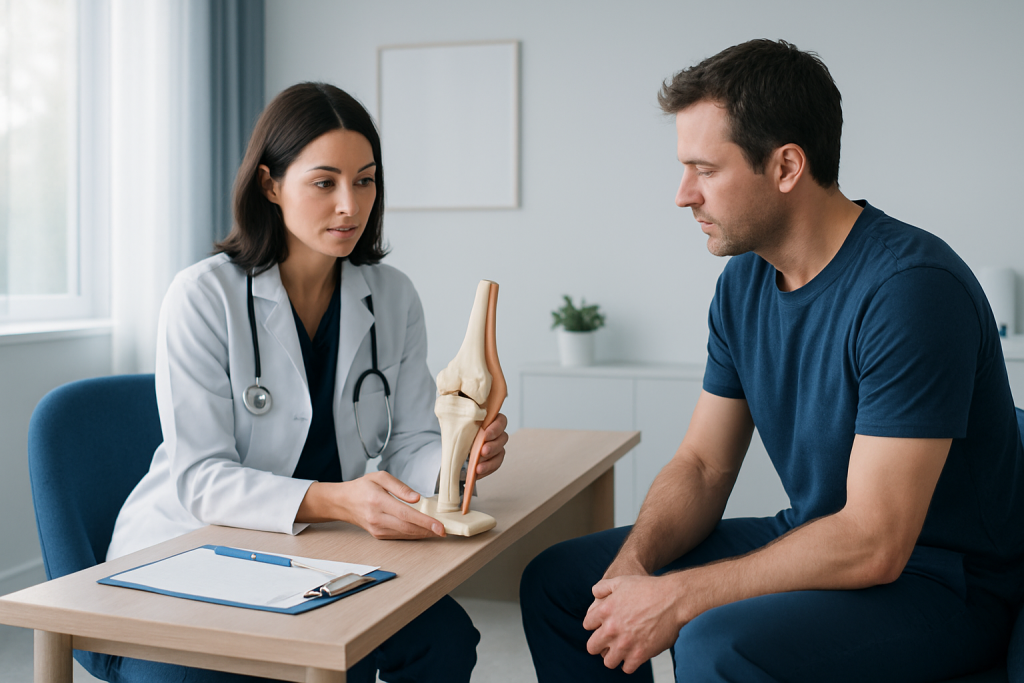
ACL tears are commonly caused by non-contact rotational injuries, such as a sudden cut in soccer, a fast change of direction in basketball, or an awkward landing from a jump. They can also occur during direct impact, but many happen in moments when the knee rotates while the foot stays planted.
Meniscus tears may happen in the same types of movements, particularly when the knee twists under load. Degenerative tears can also develop gradually over time, especially in older adults or people with wear-and-tear changes in the knee. In those situations, the meniscus may tear with a relatively minor movement that would not injure a younger knee.
Risk can be influenced by several factors:
- Participation in pivoting or contact sports
- Previous knee injury or surgery
- Muscle weakness, especially in the thigh and hip
- Loss of balance or poor landing mechanics
- Age-related cartilage changes
For international patients planning care from abroad, understanding how the injury occurred is especially helpful. Surgeons often use that story, along with imaging and exam findings, to decide whether treatment should focus on stability, on pain relief, or on both.
Diagnosis
Diagnosis begins with a careful conversation. The surgeon will usually ask when the injury happened, whether there was a pop, how quickly swelling appeared, and whether the knee has felt unstable, locked, or simply painful. These details often point toward either a ligament injury, a meniscus injury, or a combination.
The physical examination adds important clues. Specific maneuvers can test ACL stability or reproduce meniscus-related pain and catching. These tests are useful, but swelling, muscle guarding, and pain can make them less precise in the first hours or days after injury, which is why the exam is interpreted as part of the larger picture.
Imaging is commonly used when the diagnosis is uncertain or when treatment planning depends on knowing the exact structure involved. MRI is the main tool for seeing the ACL, meniscus, and surrounding soft tissues. X-rays do not show these structures directly, but they can rule out fracture or show alignment and arthritis-related changes that influence care.
In some cases, the surgeon may recommend an initial period of rest, swelling control, and reassessment before finalizing the plan. That approach is not a delay for its own sake; it can make the exam more reliable and help distinguish a painful tear from a knee that is truly unstable or mechanically blocked.
Treatment Options
Not every ACL tear and not every meniscus tear is treated the same way. The plan depends on the size and location of the tear, the patient’s age and activity level, whether the knee is stable, and whether there are symptoms such as locking or giving way.
For many meniscus tears, especially small or degenerative ones, non-surgical care may be the first step. This can include activity modification, anti-inflammatory measures if appropriate, physical therapy, and gradual strengthening. Some tears in well-perfused areas may be repaired surgically if the tear pattern and patient factors make healing more likely.
ACL tears are different because the ACL has limited ability to heal on its own in many complete ruptures. Active patients with instability often consider ACL reconstruction, which replaces the torn ligament with a graft. Others may choose structured rehabilitation if their knee remains stable enough for daily life and their goals do not require high-demand pivoting activity.
Treatment choices may also include:
- Physical therapy: to restore motion, control swelling, and rebuild strength
- Bracing: sometimes used for comfort or support, depending on the injury
- Arthroscopic surgery: used for selected meniscus repairs or ACL reconstruction
- Rehabilitation planning: important for safe return to walking, exercise, work, and travel
When care is being arranged from another country, the recovery timeline matters as much as the operation itself. Follow-up appointments, physiotherapy access, and travel readiness should be discussed before treatment begins so the patient can recover without guesswork.
Prevention & Self-care
Not every knee injury can be prevented, but the knee can be made more resilient. Strength in the quadriceps, hamstrings, glutes, and calf muscles helps support the joint during cutting, landing, and climbing. Balance training and movement technique are also important, especially for athletes and physically active adults.
After an injury, early self-care focuses on protecting the knee without forcing it. Gentle rest, compression, elevation, and a measured return to motion are often used in the early phase, depending on the advice of the treating clinician. Pushing through pain, deep twisting, or repeated pivoting can worsen symptoms, especially if the knee is unstable or the meniscus is mechanically trapped.
Useful habits for day-to-day recovery include:
- Avoiding sudden direction changes until cleared by a clinician
- Using crutches or a brace only if recommended
- Keeping follow-up appointments even if pain improves
- Completing prescribed exercises consistently
- Returning to sport or heavy activity only when strength and control have returned
Patients recovering far from home should also think about logistics: local physiotherapy access, safe walking distance, stairs, and whether additional support will be needed during flights or long transfers. A practical recovery plan can be just as important as the initial diagnosis.
When to See a Doctor
A knee injury should be evaluated promptly if the person cannot bear weight, the knee swells quickly, or the joint feels unstable enough to buckle during normal walking. These signs can indicate a significant ACL injury, a displaced meniscus tear, or another injury that needs timely attention.
Medical assessment is especially important if the knee locks and will not straighten, if pain remains substantial after a few days, or if symptoms keep returning when activity resumes. Even when the injury seems minor at first, persistent instability or repeated catching should not be ignored.
It is also wise to seek orthopedic guidance before making a long trip home or resuming sports. A surgeon can help clarify whether the knee is safe for travel, whether a brace or assistive device is needed, and what follow-up should happen after arrival. For international patients, Acibadem Health Point’s multidisciplinary specialists and JCI-accredited hospitals can diagnose and treat ACL and meniscus injuries with coordinated care planning.
If there is severe swelling, obvious deformity, fever, or numbness in the leg or foot, urgent medical care is needed. Those features may point to problems beyond a simple sports injury and should be assessed without delay.
Recovery and Returning to Activity
Recovery is not only about pain settling down; it is about restoring trust in the knee. For an ACL injury, that often means rebuilding stability, power, and coordination over several stages. For a meniscus tear, recovery may focus more on regaining motion, easing joint-line pain, and avoiding movements that provoke catching or locking.
Return to activity should be gradual and criteria-based rather than calendar-based. A person may feel better long before the knee is actually ready for running, jumping, or pivoting. Surgeons and therapists often look for strength, balance, motion, and confidence before clearing a patient for more demanding activity.
In real life, recovery also includes ordinary tasks: getting off a plane, carrying luggage, using stairs, or resuming work schedules in another country. A good plan accounts for those details so the patient can move safely through each step, whether the path leads to rehabilitation alone or to surgery plus structured rehabilitation.
Frequently asked questions
How can a surgeon tell an ACL tear from a meniscus tear?
The surgeon combines the injury story, a physical examination, and imaging when needed. An ACL tear more often causes instability and rapid swelling, while a meniscus tear more often causes joint-line pain, catching, or locking. Because symptoms overlap, the diagnosis usually depends on the full picture rather than one single sign.
Can an ACL tear and meniscus tear happen together?
Yes, they can occur in the same injury, especially after a twisting or pivoting event. In that situation, the knee may feel unstable and also have mechanical symptoms such as catching or locking. Treating both issues correctly is important for recovery.
Does every meniscus tear need surgery?
No, many meniscus tears can be managed without surgery, especially if symptoms are mild and the knee remains stable. Treatment may include physical therapy, activity changes, and time. Surgery is more often considered when the tear causes locking, persistent pain, or failed non-surgical care.
Does every ACL tear need reconstruction?
Not necessarily. The decision depends on the type of tear, the patient’s age, activity level, and whether the knee feels unstable in daily life. People who do not do pivoting sports and whose knees remain stable may sometimes do well with rehabilitation alone.
Is MRI always needed?
MRI is very helpful, but it is not always required in every case. A skilled orthopedic examination may identify the likely injury, and imaging is often used when the diagnosis is uncertain or surgery is being considered. X-rays may also be ordered to check for fracture or other bony problems.
How soon should someone be seen after a knee injury?
Prompt evaluation is a good idea if swelling is rapid, the knee cannot bear weight, or it keeps giving way. A locked knee, severe pain, or repeated falls because of instability should also be assessed soon. Early diagnosis can make treatment more effective and recovery easier to organize.
References
- American Academy of Orthopaedic Surgeons
- National Institute of Arthritis and Musculoskeletal and Skin Diseases
- Mayo Clinic
- Cleveland Clinic
- Arthroscopy Association of North America
This article is for general information only and is not a substitute for professional medical advice. Please consult a qualified doctor about your individual situation.
More from the Health Library



Related Specialists

Prof. Dr. Ahmet Alanay
Orthopedic Surgery & Traumatology
Dr. Sinan Aksu
Orthopedic Surgery & Traumatology
Dr. Sirri Baştürk
Orthopedic Surgery & Traumatology
Prof. Dr. Korhan Özkan
Orthopedic Surgery & Traumatology