What Do Bed Bug Bites Look Like

Key Takeaways
- Bed bug bites commonly show up as itchy red bumps, often in lines or clusters.
- Not everyone reacts the same way; some people have few or no visible marks.
- The appearance alone is not enough to confirm bed bugs, so environmental clues matter.
- Simple skin care can reduce discomfort, while infestation control is needed to stop new bites.
- A doctor can help if the rash is severe, infected, or not clearly explained.
Bed bug bites often appear as itchy, red bumps in clusters or lines, usually on exposed skin after sleeping. Because reactions vary and many skin conditions look similar, identifying the pattern and checking the environment are both important.
Overview
Bed bug bites are usually noticed first in the morning, when a person wakes up with new itchy bumps that were not there the night before. They often appear on skin that was exposed during sleep, such as the face, neck, arms, hands, or lower legs.
The bite pattern can be a useful clue, but it is not a perfect one. Some people develop obvious red welts, while others have only faint marks or no reaction at all. In practice, the diagnosis often depends on both the skin findings and signs of bed bugs in the sleeping area, such as tiny dark spots on sheets, shed skins, or live insects in mattress seams and nearby furniture.
For someone deciding whether to seek care at home or while traveling, the key point is this: bed bug bites are uncomfortable, but they are usually not dangerous. What matters most is relieving the skin symptoms and identifying the source early enough to prevent repeated exposure.
Symptoms and Appearance
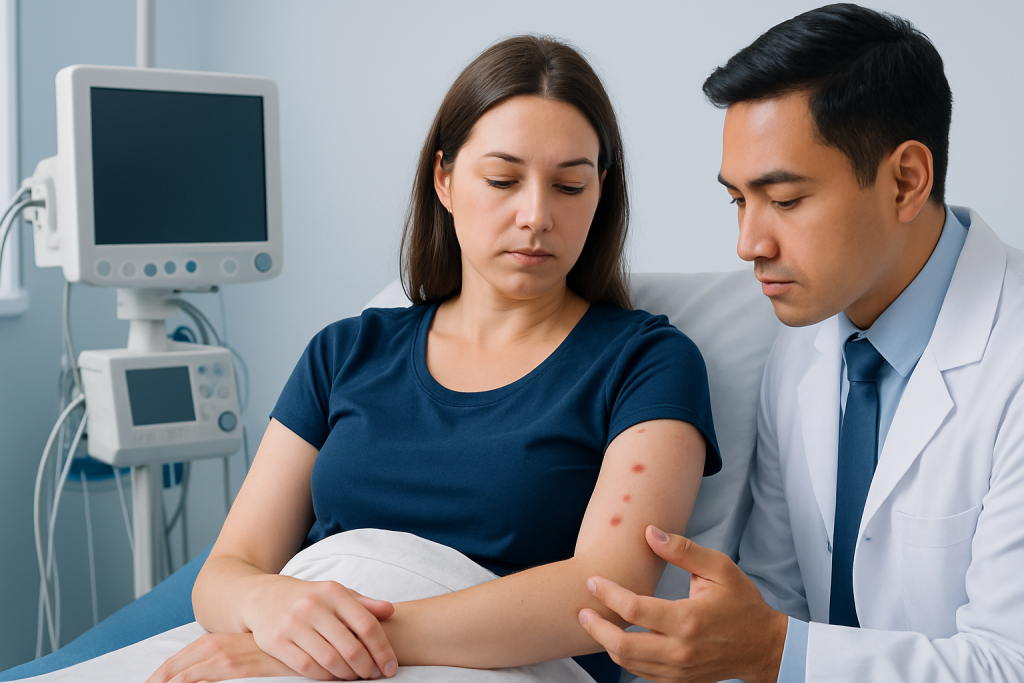
Bed bug bites commonly look like small red or pink bumps, sometimes with a darker center. They may be flat or raised, and they often itch more than they hurt. In some people, the skin around the bite becomes swollen, warm, or mildly tender.
A classic clue is the arrangement. Bites may appear in a line, a zigzag, or a small cluster, especially on areas that were left uncovered during sleep. That said, the pattern is not always neat or textbook-like, particularly if a person scratched the area or if several bites developed at different times.
Common features can include:
- Itchy bumps on exposed skin
- Grouped or linear marks
- Redness that lasts for days
- Occasional small blisters or hives-like swelling
- Scratches from repeated rubbing or scratching
Symptoms can range from barely noticeable to quite bothersome. In some people, especially those with sensitive skin, the reaction may look more dramatic than the actual bite would suggest.
Causes & Risk Factors
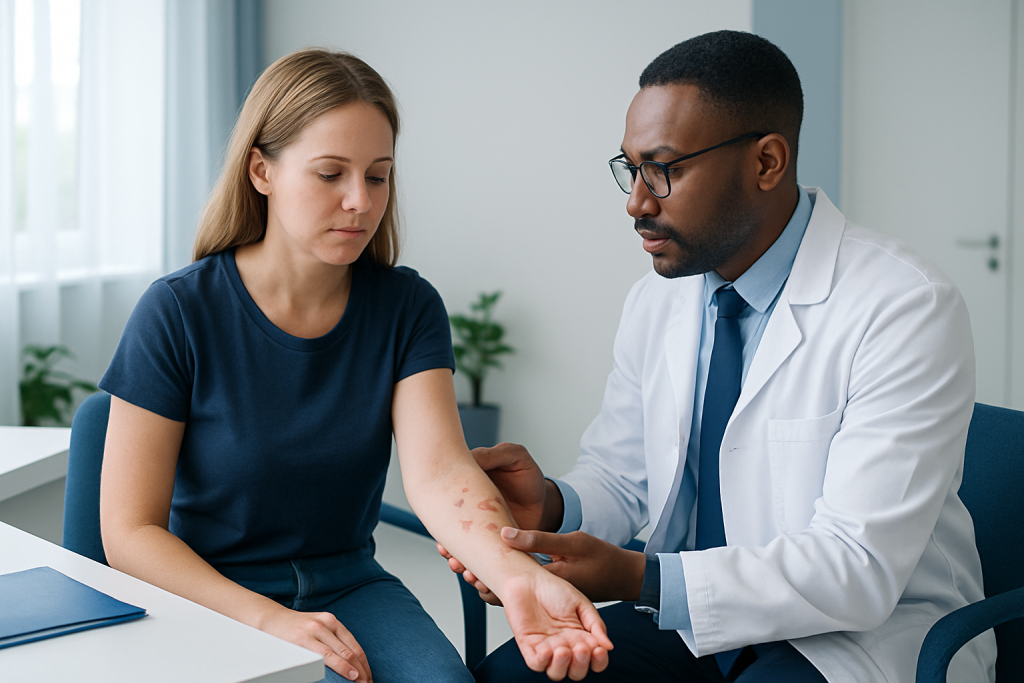
Bed bugs are small insects that feed on blood, usually at night. They hide in cracks and seams during the day and come out when a sleeping person is still. Bites are not a sign of poor hygiene; they can happen in clean homes, hotels, apartments, dormitories, cruise cabins, and other shared or recently occupied spaces.
Travel can increase exposure because bed bugs are easily carried in luggage, clothing, or personal items. People who stay in shared accommodation, move frequently, or sleep in places with heavy guest turnover may be more likely to encounter them. Repeated exposure can also happen when the insects are in upholstered furniture or behind wall trim, not just in the bed itself.
Risk of visible skin reactions varies from person to person. Some people are very sensitive and develop obvious welts, while others barely react. Children and people with eczema or other skin conditions may notice irritation more quickly, though bed bugs can affect anyone.
Diagnosis
There is no single skin test that confirms a bed bug bite by appearance alone. A clinician usually looks at the pattern of the rash, where it appears, how quickly it developed, and whether the person has recently slept in a place where bed bugs may be present.
Because many rashes can look similar, the environment is often as important as the skin. Evidence such as small rust-colored spots on bedding, black specks along mattress seams, shed exoskeletons, or live insects can support the diagnosis. Photos of the rash taken over a few days may also help if the marks change or fade before an appointment.
If the rash seems unusual, widespread, blistering, or associated with fever or swelling beyond the bite area, a doctor may consider other causes such as allergic reactions, eczema, scabies, flea bites, or contact dermatitis. That broader view is especially useful for international travelers who may be comparing symptoms across different climates, hotels, and laundry routines.
Treatment Options
Treatment focuses on easing itch and calming the skin. Gentle washing with soap and water can help, and a cool compress may reduce the urge to scratch. Over-the-counter anti-itch products may be suggested by a pharmacist or doctor, but the best choice depends on the person’s age, medical history, and the severity of the reaction.
Scratching should be avoided as much as possible because broken skin can become infected. If the bite area becomes increasingly red, painful, warm, or develops pus, medical evaluation is a good idea. A clinician may recommend a prescription cream or another treatment if the reaction is strong or if there is secondary infection.
Just as important as skin care is stopping new bites. Washing bedding, vacuuming the sleeping area, checking luggage after travel, and arranging professional pest control are often necessary. If a person is recovering away from home, practical follow-up matters too: untreated exposure can keep the rash going even when the skin itself is responding well.
Prevention & Self-care
Preventing bed bug bites starts with reducing contact with the insects and making sleeping areas less inviting for them. When staying in hotels or shared housing, travelers can inspect mattress seams, headboards, and nearby furniture for signs of bed bugs before unpacking. Keeping luggage off the bed and storing belongings in sealed bags can also help.
At home, a careful cleaning routine can make a meaningful difference. Bedding and clothing that may have been exposed should be handled according to care labels, and vacuuming around beds, baseboards, and upholstered furniture can remove hidden insects and eggs. In many cases, professional pest control is the most reliable way to fully address an infestation.
To ease discomfort from the bites themselves, people can try to keep nails short, avoid hot showers that worsen itching, and wear loose clothing over irritated skin. If the person is traveling for treatment or following up with a doctor from another country, taking photos of the rash and the sleeping area can help the care team understand the pattern more clearly.
When to See a Doctor
Medical advice is helpful when the rash is very itchy, keeps spreading, or is not clearly improving after the possible exposure has ended. A doctor can also help if the bite-like marks are occurring repeatedly and the source has not been identified.
Prompt evaluation is especially important if there are signs of infection, such as increasing redness, warmth, swelling, pus, or fever. Any swelling of the lips, tongue, or face, trouble breathing, or a rapidly worsening rash should be treated as urgent, because those symptoms may indicate a more serious allergic reaction or another condition entirely.
For people seeking care while abroad, a dermatology or general medicine visit can be a practical first step. Acibadem Health Point’s multidisciplinary specialists and JCI-accredited hospitals diagnose and treat skin conditions for international patients, with care plans that can support both local treatment and follow-up after travel.
Living With the Rash While the Cause Is Being Confirmed
When a person is not sure whether the marks are from bed bugs, it helps to think in two tracks at once: soothe the skin and investigate the sleeping environment. That approach reduces discomfort without assuming the diagnosis too quickly. It also prevents delays if another skin condition is actually responsible.
Keeping a simple record can be useful. Notes about when the bumps first appeared, where they are located, recent travel, new laundry detergents, pets, and whether anyone else in the household is itchy can help a clinician narrow the possibilities. This is particularly helpful for international patients who may have had several overnight stays before the rash began.
The good news is that most bed bug bite reactions settle with time once exposure stops. Clear information, careful skin care, and timely pest control usually make the situation manageable.
Frequently asked questions
What do bed bug bites usually look like on skin?
They often appear as small red or pink itchy bumps, sometimes with a darker center. A line, cluster, or zigzag pattern can be a clue, but the appearance varies from person to person.
Do bed bug bites always itch?
No. Many people itch a lot, but some have little or no itching and only mild marks. The skin reaction depends on individual sensitivity.
How can someone tell bed bug bites from mosquito bites?
Bed bug bites are often noticed after sleeping and may appear in groups or lines on exposed skin. Mosquito bites are more likely to be isolated and can happen at any time outdoors or indoors.
Can bed bug bites spread from person to person?
No, the bites themselves do not spread from one person to another. What can spread are the insects in luggage, clothing, bedding, or furniture.
What is the best first step after noticing possible bed bug bites?
Wash the area gently, try not to scratch, and check the sleeping environment for signs of bed bugs. If the rash is severe or the cause is unclear, a doctor can help sort it out.
When should a person seek urgent care for a bite-like rash?
Urgent care is needed if there is trouble breathing, swelling of the face or tongue, or a rapidly worsening rash. Medical attention is also wise if the skin looks infected or the person develops fever.
References
- Centers for Disease Control and Prevention
- American Academy of Dermatology
- National Health Service
- Mayo Clinic
- World Health Organization
This article is for general information only and is not a substitute for professional medical advice. Please consult a qualified doctor about your individual situation.