Poison Ivy Rash Pictures

Key Takeaways
- Poison ivy rash is usually an allergic contact dermatitis caused by urushiol oil from the plant.
- Photos can be helpful for pattern recognition, but a clinician may still need to rule out other rashes or skin infections.
- Most cases improve with simple measures such as washing the skin, cool compresses, and itch relief.
- More widespread rashes, swelling near the eyes or face, or signs of infection deserve medical evaluation.
- Prevention focuses on learning to identify the plant, avoiding exposure, and cleaning skin, clothing, and tools promptly.
Poison ivy rash pictures can help people recognize the telltale pattern of an itchy, red, blistering contact rash after outdoor exposure. This guide explains how the rash looks, why it happens, how it is diagnosed, and what supportive care can help it heal safely.
Overview
When people search for poison ivy rash pictures, they are usually trying to answer a practical question: “Does this look like the rash I have after being outdoors?” The answer often lies not only in the red, itchy bumps, but in the pattern. Poison ivy, poison oak, and poison sumac can leave a similar reaction because they contain an oil called urushiol, which triggers allergic contact dermatitis in many people.
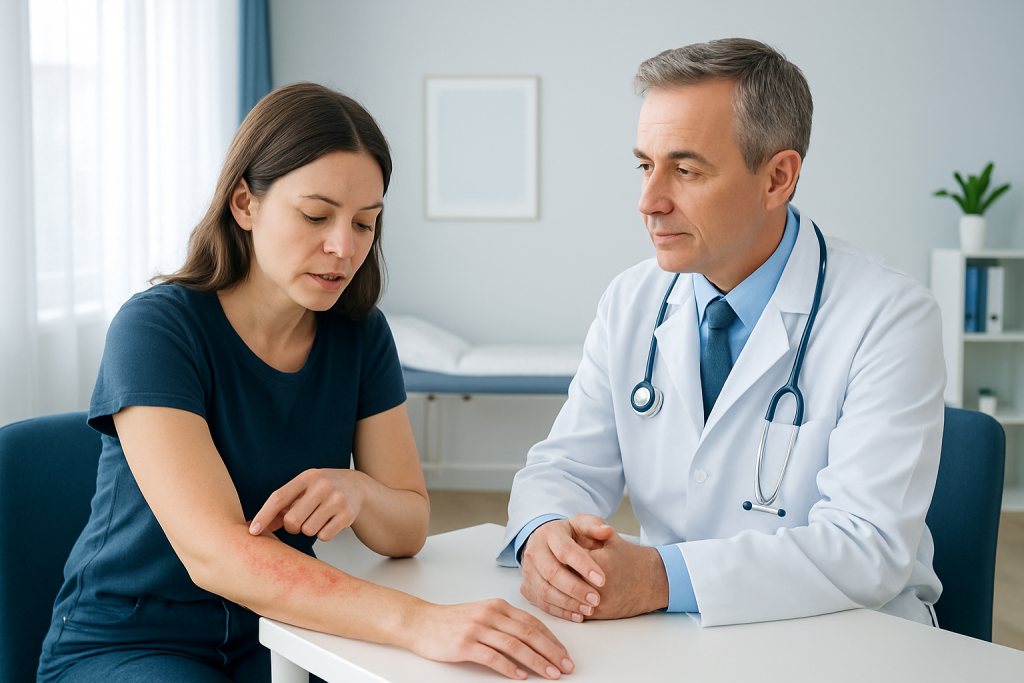
In photos, the rash often appears as streaks, patches, or clusters of redness with swelling and small blisters. The shape may reflect where the plant brushed the skin, such as along a forearm, ankle, or calf. For travelers, hikers, gardeners, and families spending time in wooded or brushy areas, recognizing those clues early can help them respond before the rash becomes more uncomfortable.
It helps to remember that pictures are only one part of the picture, so to speak. A rash that seems similar in an image may come from another cause, including insect bites, eczema, heat rash, or another skin allergy. If the rash is severe, spreading, or uncertain, a qualified clinician can examine it and guide the next step.
Symptoms

Poison ivy rash does not usually appear the instant the plant is touched. After urushiol contacts the skin, the immune system may react hours to days later. The skin then becomes itchy, red, and inflamed, and small fluid-filled blisters may develop. The rash can feel more intense than it looks, especially when it is on thin or sensitive skin.
Typical features seen in poison ivy rash pictures include linear streaks from plant contact, scattered bumps or blisters, and areas that look swollen or weepy. Scratching can break the skin and make the area look crusted or irritated. The rash itself is not “spread” by the fluid in the blisters; rather, new areas usually appear because more urushiol was transferred from the skin, clothing, pets, tools, or contaminated surfaces.
Common symptoms can include:
- Intense itching
- Redness and swelling
- Small blisters or larger fluid-filled blisters
- Tender, irritated, or burning skin
- Streaks or patches in the area of exposure
Some people notice that the rash appears worse in places where the skin is thinner, such as the face or genitals, or in areas that were heavily exposed. The severity can vary from a few spots to a more widespread eruption, depending on how much urushiol contacted the skin and how sensitive the person is to it.
Causes & Risk Factors
The cause of poison ivy rash is an allergic reaction to urushiol, a sticky plant oil found in poison ivy, poison oak, and poison sumac. The oil can cling to skin, clothing, gloves, shoes, pet fur, garden tools, and outdoor gear. Even a small amount can be enough to trigger a reaction in someone who is sensitive.
Risk is higher for people who spend time outdoors in brush, forests, parks, or overgrown yards. Gardeners, hikers, campers, landscapers, and children playing outside may be exposed without realizing it. In international travel, unfamiliar plants and unfamiliar terrain can make identification harder, so it is sensible to be cautious around unknown vines, shrubs, and leaf clusters.
Some factors that may increase the chance of a reaction or make it seem more troublesome include repeated exposure, delayed washing after contact, touching contaminated items, and scratching the rash. A person may also develop a stronger reaction with subsequent exposures, although reactions vary from one episode to another.
Diagnosis
In many cases, a clinician can diagnose poison ivy rash by listening carefully to the history and looking at the skin. The shape of the rash, the timing after outdoor exposure, and the presence of linear streaks or blistering often point toward allergic contact dermatitis from urushiol. Poison ivy rash pictures can be useful to compare with the skin changes a person is noticing at home, but they do not replace a medical exam when the diagnosis is unclear.
Because other conditions can look similar, a clinician may ask about recent gardening, hiking, yard work, pet contact, new products, or exposure to unusual plants. The clinician may also consider insect bites, impetigo, eczema, scabies, fungal infections, or other causes of dermatitis. If the rash has a different appearance, lasts longer than expected, or keeps returning, further evaluation may be needed.
Testing is not usually required for straightforward cases. However, if a person has repeated unexplained rashes or a pattern that does not fit poison ivy, a dermatologist may recommend patch testing to identify other contact allergens. This can be especially helpful for people whose work or travel routinely brings them into contact with plants, chemicals, or protective gear.
Treatment Options
Most poison ivy rashes improve with supportive care and time once the skin is no longer being exposed to urushiol. Early washing of the skin with soap and water may help remove remaining oil if done soon after contact. Once the rash is present, treatment focuses on calming the itch, protecting the skin, and preventing infection from scratching.
Common home measures include cool compresses, colloidal oatmeal baths, and calamine or other soothing lotions. Over-the-counter anti-itch products may help some people, though they should be used as directed and not on broken skin unless a clinician advises otherwise. Keeping fingernails short can reduce skin damage from scratching, and loose clothing may lessen friction over affected areas.
Medical treatment may be recommended for more extensive or uncomfortable rashes. A clinician may prescribe a corticosteroid cream or, in more significant cases, an oral corticosteroid course. If there is a concern for infection, additional treatment may be needed. Blister fluid itself does not mean the rash is contagious, but open skin should still be kept clean and monitored.
When symptoms are severe enough to disrupt sleep, work, or travel plans, a medical visit is worthwhile rather than trying to “wait it out.” For international patients, coordinated care can be helpful when time is limited and follow-up needs to fit around onward travel.
Prevention & Self-care
Prevention starts with learning how poison ivy and related plants look in the environments a person visits most often. The classic “leaves of three” warning is useful, but plant shapes can vary, so caution matters more than a single rule. When in doubt, it is safer not to touch an unfamiliar plant at all.
After possible exposure, washing the skin promptly with soap and cool or lukewarm water is one of the most practical steps a person can take. Clothing, gloves, shoes, backpacks, tools, and pet fur should also be cleaned because urushiol can remain on surfaces and be transferred later. For travelers, this is particularly important after hikes, picnic outings, or outdoor excursions before touching hotel linens or luggage.
Self-care can also reduce the chance of worsening the rash:
- Avoid scratching, even when the itch is intense
- Use cool compresses to calm irritated areas
- Change and wash clothing after outdoor exposure
- Clean under fingernails and shower after suspected contact
- Wear long sleeves, long pants, and gloves in brushy areas when appropriate
People who frequently work outdoors may benefit from discussing protective habits with a clinician, especially if they have had strong reactions before. Practical prevention is often easier than treating a widespread rash later.
When to See a Doctor
Medical attention is sensible when the rash covers a large area, involves the face or eyes, or is causing marked swelling. It is also important to seek care if the skin becomes very painful, develops honey-colored crusting, drains pus, or shows other signs of infection. A clinician can confirm the diagnosis and determine whether prescription treatment is needed.
Care is especially important if breathing trouble occurs, although this is uncommon in ordinary poison ivy rash. A person should also be evaluated if the rash is not improving after several days of self-care, if it keeps spreading despite avoiding exposure, or if it is unclear whether the rash is poison ivy or something else. In a travel setting, getting checked sooner can prevent a small skin problem from becoming a disrupted itinerary.
Acibadem Health Point’s multidisciplinary specialists and JCI-accredited hospitals diagnose and treat skin conditions such as poison ivy rash for international patients, with attention to clear communication and coordinated follow-up. For anyone comparing poison ivy rash pictures with their own symptoms, a professional exam can provide reassurance and a safer plan.
Living With the Rash During Recovery
During recovery, the main goal is to protect the skin while it heals. The rash may change in appearance over several days, with blisters drying and the redness gradually fading. This can look dramatic in photos, but the course is usually self-limited when exposure has stopped and the skin is not repeatedly irritated.
People recovering away from home may want to keep treatment simple and portable: gentle cleanser, clean clothing, a cool compress option, and any clinician-recommended creams or medicines. If the rash interferes with sleep, hiking, work, or family activities, the discomfort itself is reason enough to ask for help. A calm, stepwise approach is usually the most effective one.
Patience matters here. The skin often needs time to settle, and the safest path is to avoid new exposures while supporting comfort and watching for warning signs that the rash is behaving differently than expected.
Frequently asked questions
What do poison ivy rash pictures usually show?
They often show red, itchy streaks or patches, sometimes with small blisters or swelling. The linear pattern can reflect where the plant brushed the skin. Because other rashes can look similar, the image is only a guide, not a diagnosis.
How soon after exposure does poison ivy rash appear?
Symptoms often begin hours to a few days after contact with urushiol. The delay can make it hard to connect the rash with the outdoor exposure. That is why the recent history is so important during evaluation.
Is poison ivy rash contagious?
The rash itself is not contagious from the fluid in the blisters. However, urushiol on clothing, pets, tools, or skin can cause new reactions if it is transferred to someone else or to another area of the same person. Washing exposed items is an important part of care.
Can a poison ivy rash be treated at home?
Mild cases often improve with washing, cool compresses, and itch-relief measures. Avoiding scratching helps the skin heal and lowers the chance of infection. If the rash is extensive or very uncomfortable, medical advice is a good idea.
When should someone get medical help for poison ivy rash?
Care is recommended if the rash is on the face or eyes, covers a large area, looks infected, or causes significant swelling. It is also sensible to seek help if symptoms are not improving or the diagnosis is uncertain. A clinician can confirm the cause and choose the most appropriate treatment.
Can poison ivy rash leave scars?
Most poison ivy rashes heal without permanent scarring if the skin is protected and not heavily scratched or infected. Deep scratching or secondary infection can increase the chance of leftover marks. Gentle care during recovery helps the skin heal more smoothly.
References
- American Academy of Dermatology
- Mayo Clinic
- Cleveland Clinic
- National Eczema Association
- Merck Manual Consumer Version
This article is for general information only and is not a substitute for professional medical advice. Please consult a qualified doctor about your individual situation.