EEG: Uses, Limits and Interpretation
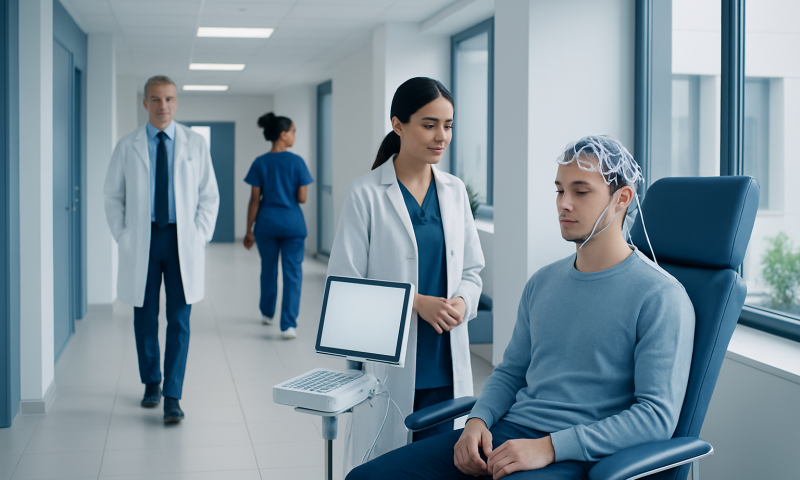
Key Takeaways
- An EEG records brain electrical activity and may help support an epilepsy diagnosis.
- A normal EEG does not rule out epilepsy or future seizures.
- EEG results must be interpreted together with the seizure description, medical history, and imaging when needed.
- Different EEG types may be used, including routine, sleep-deprived, ambulatory, or video EEG.
- Treatment decisions are based on the full clinical picture, not EEG results alone.
Medically reviewed by the Acıbadem clinical team — June 13, 2026
An EEG can provide valuable clues before epilepsy treatment, but it does not give the whole picture by itself. It is one part of a careful neurologic evaluation that includes the seizure history, exam, and often brain imaging.
Overview
An EEG, or electroencephalogram, is one of the most familiar tests used when epilepsy is being considered. It measures the brain’s electrical activity through small sensors placed on the scalp, creating a record that a neurologist can study for patterns that may fit with seizures.
Still, the EEG is not a single-answer test. It can strengthen the case for epilepsy, suggest the type of seizure, and help guide treatment planning, but it does not “prove” epilepsy on its own. For many people, the most useful answer comes from combining the EEG with a careful description of what happened before, during, and after the event.
That balanced approach matters before treatment begins, especially for people traveling from another country for specialist care. A good epilepsy workup should help clarify whether symptoms were caused by seizures, fainting, sleep-related events, migraine, or another condition that can look similar at first glance.
Symptoms and why EEG is ordered
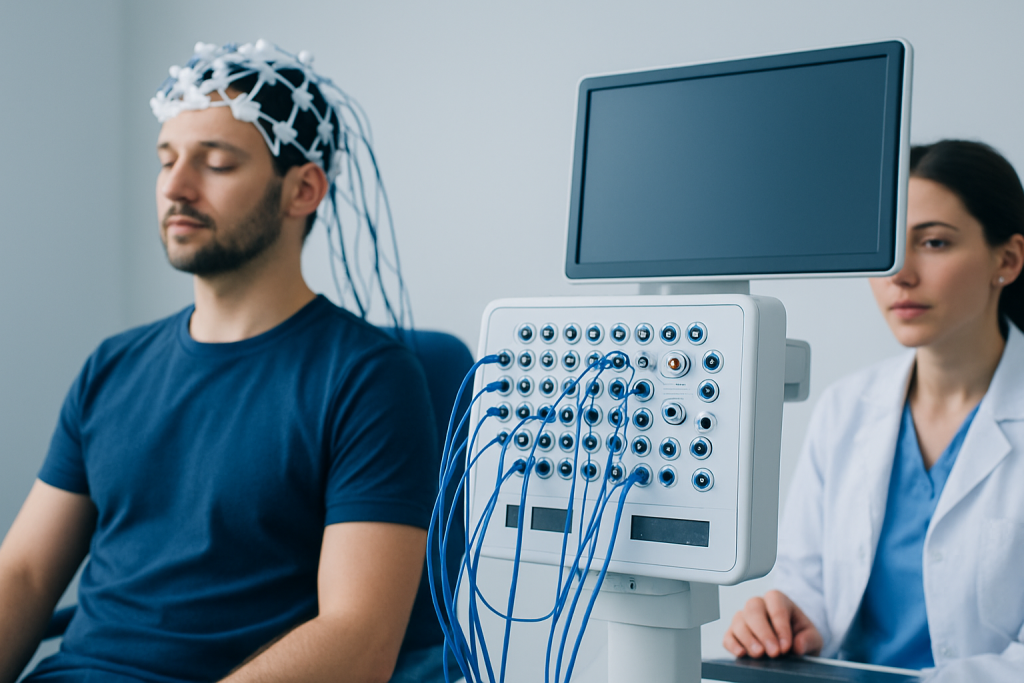
EEG testing is usually requested after a person has had episodes that may have been seizures. These episodes may include staring spells, rhythmic jerking, loss of awareness, sudden falls, unusual sensations, or confusion afterward. In some cases, the person remembers the event; in others, the first clue comes from a witness.
Doctors may also order an EEG after a first seizure, when seizures are suspected during sleep, or when there is concern about recurrent unexplained spells. The test can help identify whether the brain shows epileptiform activity, which means a tendency toward abnormal electrical discharges. That finding can support a diagnosis, but its absence does not automatically close the case.
For treatment planning, the EEG may help answer practical questions: Is there evidence of a generalized seizure pattern or a focal one? Does the brain show irritability in one area? Is a sleep recording needed to uncover activity that was not seen while awake? These details can influence the next steps, including whether medication is appropriate and what type may be considered.
Causes and risk factors that influence EEG findings

EEG findings are shaped by the underlying reason for the events, but also by timing and context. A person may have epilepsy and still have a normal routine EEG, especially if seizures are infrequent or the abnormal activity was not present during the short recording window. Conversely, brief abnormal patterns may appear in someone who has not had a clear seizure, so the result always needs clinical interpretation.
Several factors can increase the likelihood that an EEG will show useful information. These include a recent seizure, sleep deprivation, sleep during the test, repeated episodes, a known brain injury, stroke, infection, tumor, or a family history that raises suspicion for epilepsy. Age, medications, and the type of seizure suspected can also affect the result.
- Recent seizure activity may make abnormalities easier to capture.
- Sleep and sleep deprivation can reveal patterns missed while awake.
- Some seizure types are more likely than others to leave EEG clues.
- Medication use can sometimes reduce visible abnormal activity.
For international patients, it is helpful to bring any prior brain scans, emergency room notes, witness descriptions, and videos of spells if available. Those details often add more diagnostic value than the EEG tracing alone.
Diagnosis: what an EEG can and cannot tell you
An EEG can show whether the brain’s electrical activity includes patterns that support epilepsy, and it may help localize where seizures start. It can also assist in distinguishing epileptic seizures from other conditions such as fainting, psychogenic non-epileptic seizures, sleep disorders, or movement disorders. In the right setting, that information can shorten the path to the correct diagnosis.
What it cannot do is replace a thoughtful history. A person may have epilepsy with a normal EEG, because abnormal discharges do not always occur during the test. The EEG also cannot predict every future seizure, measure how severe epilepsy will be, or determine treatment success by itself.
Another common misunderstanding is that any EEG abnormality automatically means epilepsy. Some EEG changes can be nonspecific, temporary, or related to another brain issue. That is why neurologists review the tracing together with the patient’s symptoms, exam findings, and often MRI results before making treatment decisions.
Treatment options before and after EEG results
Treatment decisions are usually based on the whole clinical picture rather than the EEG alone. If the event history strongly suggests epilepsy, a neurologist may recommend an anti-seizure medication even if the routine EEG is normal. If the picture is unclear, the doctor may first arrange more testing, such as a sleep-deprived EEG, ambulatory EEG, video EEG monitoring, or brain MRI.
When the EEG shows a seizure pattern, it can help the doctor choose a treatment approach and explain the likely seizure type. That may improve medication selection and counseling about safety, driving, work, and travel. If surgery or device-based therapy is ever considered, EEG and video EEG data can be part of the broader evaluation to identify seizure onset more precisely.
For some people, the result simply helps narrow uncertainty. A normal EEG may be reassuring in one context, yet it should not delay care when the clinical story is convincing. A cautious, stepwise plan usually works best, especially when the person is balancing treatment decisions with travel, insurance, or follow-up in another country.
Prevention and self-care while waiting for answers
While EEG testing and diagnosis are underway, practical self-care can reduce risk and make symptom tracking more useful. Keeping a seizure diary helps document timing, triggers, duration, recovery, and any warning signs. If possible, a family member or travel companion should note what they saw, because witness accounts often clarify events that the patient cannot remember.
Sleep regularity, avoiding alcohol excess, staying hydrated, and taking prescribed medicines consistently can all matter. People should not stop or start antiseizure medication without medical guidance, because sudden changes can worsen seizures or create new problems. If the doctor advises an EEG with sleep deprivation, the instructions should be followed carefully because the goal is to improve diagnostic yield, not to create unnecessary strain.
- Record episodes with date, time, triggers, and recovery details.
- Ask a witness to describe movements, speech, color change, and responsiveness.
- Bring prior scans, reports, and medication lists to each appointment.
- Use the same pharmacy or a verified plan when medication continuity matters during travel.
For patients arranging care abroad, it is also wise to plan follow-up before leaving. EEG results are most useful when they are discussed in context and, if needed, matched with ongoing monitoring once the person returns home.
When to see a doctor
Anyone with a first seizure, repeated unexplained spells, or episodes of confusion, staring, or loss of awareness should see a doctor promptly. The same is true if a seizure happens during illness, after a head injury, or for the first time later in life. An EEG may be part of the evaluation, but urgent assessment is especially important when events are new, severe, or changing.
Medical review should not wait if a person has trouble breathing after an event, a seizure lasts longer than expected, repeated seizures occur without full recovery, or there is injury. Sudden weakness, persistent confusion, severe headache, or fever can point to another problem that needs immediate attention. In these situations, emergency care is more appropriate than waiting for scheduled testing.
People already diagnosed with epilepsy should also contact their doctor if spells increase, side effects become troublesome, or the pattern of events changes. A neurologist may recommend a different EEG approach or additional imaging to update the diagnosis and guide treatment. Acibadem Health Point’s multidisciplinary specialists and JCI-accredited hospitals can help international patients with epilepsy evaluation and treatment planning in a coordinated setting.
What happens during an EEG appointment
Many patients find the test easier than expected. The scalp is measured, small electrodes are placed with a special paste or adhesive, and the person rests quietly while the device records brain activity. The test may include breathing exercises or flashing lights, depending on what the doctor wants to evaluate.
The recording can last from a short routine session to many hours if extended monitoring is needed. In some cases, the patient may be asked to sleep or nap during the test because sleep can reveal changes that are not visible while awake. If video EEG is used, the camera helps match body movements and behavior with the brain tracing.
After the test, the scalp may feel sticky, but there is usually no recovery time required. The EEG report does not always give an immediate answer, and that is normal. The neurologist needs time to interpret the tracing in context and explain what it means for diagnosis and treatment.
Frequently asked questions
Can an EEG confirm epilepsy by itself?
An EEG can support the diagnosis, but it does not confirm epilepsy on its own. Doctors use the result together with the seizure story, examination, and sometimes MRI or video EEG monitoring. That combined approach is more reliable than any single test.
Can I have epilepsy if my EEG is normal?
Yes. Some people with epilepsy have a normal routine EEG, especially if abnormal activity was not captured during the recording. A neurologist may recommend a different type of EEG or additional testing if the history still suggests seizures.
Why would my doctor order sleep-deprived or ambulatory EEG instead of a routine EEG?
These tests can increase the chance of catching abnormal electrical activity. Sleep deprivation may bring out changes that a short awake study misses, while ambulatory EEG records brain activity over a longer period during everyday life.
Does an abnormal EEG always mean I need epilepsy treatment?
Not necessarily. Some EEG findings are nonspecific or need more explanation, and treatment decisions depend on symptoms and overall risk. A doctor may recommend observation, more testing, or treatment depending on the full picture.
Should I take my usual medications before an EEG?
Patients should follow the instructions given by the ordering doctor or EEG lab. Some medicines are continued as usual, while others may be adjusted only if a specialist specifically advises it. It is best not to change medication on one’s own.
What should I bring to help the neurologist interpret the EEG?
A list of current medicines, prior test results, imaging reports, and a seizure diary can be very helpful. If possible, a witness account or video of the episode may provide clues that an EEG alone cannot show.
References
- Epilepsy Foundation
- National Institute of Neurological Disorders and Stroke
- American Academy of Neurology
- International League Against Epilepsy
- Mayo Clinic
This article is for general information only and is not a substitute for professional medical advice. Please consult a qualified doctor about your individual situation.