Vertigo: Symptoms, Causes and Treatment

Key Takeaways
- Vertigo is a symptom, not a diagnosis, and it often points to an inner ear or balance problem.
- Common signs include spinning sensations, nausea, unsteady walking, and worsening symptoms with head movement.
- Some causes are short-lived and benign, while others need a medical evaluation to rule out neurological or ear-related conditions.
- Diagnosis usually relies on a careful history, ear and balance exam, and sometimes hearing or imaging tests.
- Treatment depends on the cause and may include repositioning maneuvers, medication, vestibular therapy, and practical safety measures.
Medically reviewed by the Acıbadem clinical team — August 19, 2026
Vertigo can feel like the room is spinning, tilting, or moving when it is not. Understanding the symptoms, common causes, and when to seek medical care can help people find the right treatment and stay safe.
Overview
Vertigo is best described as a false sense of movement. Many people say the room is spinning, the floor feels unsteady, or their own body seems to sway when they are standing still. That sensation can be intense, but vertigo itself is not a disease; it is a clue that the balance system is being disturbed.
The balance system depends on the inner ear, the eyes, the muscles and joints, and the brain working together. When one part of that network sends mixed signals, dizziness can follow. In medical practice, vertigo is one of the more specific forms of dizziness because it usually involves a spinning or turning sensation rather than simple lightheadedness.
For international patients, vertigo can become especially disruptive during travel, long flights, jet lag, or unfamiliar environments. Even a brief episode can make walking, reading, or navigating a new city difficult, so understanding the symptom pattern is an important first step toward getting the right care.
Symptoms
The hallmark of vertigo is a feeling that either the person or the surroundings are moving when they are not. This can happen suddenly or build gradually, and it may last seconds, minutes, hours, or longer depending on the cause.
Vertigo often comes with other symptoms that reflect how the body reacts to the imbalance signal. Nausea, vomiting, sweating, trouble standing, and a strong need to hold onto something are common. Some people also notice their eyes jerking rapidly, a symptom known as nystagmus, which can be seen during an episode.
Symptoms may worsen with specific head movements such as looking up, rolling over in bed, bending down, or turning quickly. Hearing changes, ear fullness, ringing in the ears, headache, double vision, weakness, or slurred speech are not typical of simple positional vertigo and should be taken seriously by a clinician.
- Spinning or swaying sensation
- Loss of balance or unsteady walking
- Nausea or vomiting
- Symptoms triggered by head movement
- Possible ringing, fullness, or hearing changes in some causes
Causes & Risk Factors

Many cases of vertigo begin in the inner ear, where tiny structures sense head position and motion. One of the most common causes is benign paroxysmal positional vertigo, often called BPPV, in which small calcium particles move into the wrong part of the inner ear and confuse the balance signal. This often causes brief episodes triggered by changing position.
Other ear-related causes include vestibular neuritis, labyrinthitis, Ménière disease, and sometimes migraine-associated vertigo. Less commonly, vertigo can arise from problems in the brain or nervous system, including stroke, multiple sclerosis, or other neurological conditions. Because the causes vary widely, a careful medical history matters more than the word “dizzy” alone.
Risk factors can include older age, prior head injury, recent viral illness, migraine history, certain ear conditions, and previous episodes of vertigo. Travel fatigue, dehydration, and stress may not directly cause vertigo, but they can make balance symptoms feel more noticeable or harder to tolerate.
Diagnosis
Diagnosis usually starts with a detailed conversation about what the patient feels, when it happens, how long it lasts, and what makes it better or worse. Clinicians often ask whether the sensation is true spinning, faintness, or general unsteadiness, because each pattern points to different causes.
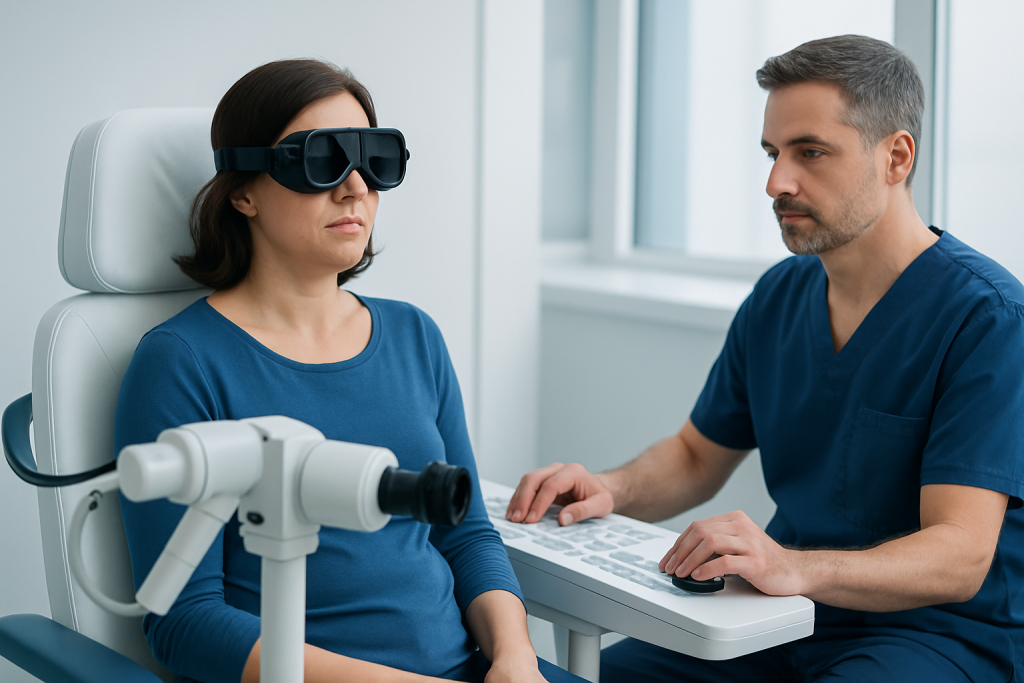
The physical exam may include checking eye movements, balance, walking, hearing, and the ears. In some cases, a clinician may perform bedside maneuvers that help identify BPPV or observe nystagmus. These simple tests can be very informative and may even guide treatment during the same visit.
If symptoms suggest a different cause, additional testing may be needed. Depending on the situation, that can include hearing tests, blood tests, vestibular testing, or imaging such as MRI or CT. The goal is not to test everyone in the same way, but to match the evaluation to the symptom pattern and the risk profile.
Treatment Options
Treatment depends on the underlying cause, which is why identifying the reason for vertigo is so important. For BPPV, repositioning maneuvers performed by a trained clinician can often move the displaced particles back into place and reduce symptoms. These maneuvers are typically brief and non-surgical.
When vertigo is linked to inflammation, infection, migraine, or another medical condition, treatment focuses on the specific diagnosis. Some people may be prescribed medication to ease nausea or to support short-term symptom control, while others benefit from vestibular rehabilitation, a form of therapy that helps the brain adapt to balance changes.
Surgery is not common, but it may be considered for selected conditions when symptoms are persistent or when another structural problem is identified. For international patients, treatment planning also includes practical coordination such as follow-up timing, mobility during recovery, and what to do if symptoms return after travel.
- Repositioning maneuvers for BPPV
- Vestibular rehabilitation exercises
- Condition-specific medical treatment
- Short-term symptom relief when appropriate
- Rarely, procedural or surgical care for selected cases
Prevention & Self-care
Not every episode of vertigo can be prevented, but some steps can make symptoms less disruptive. Moving slowly when getting out of bed, avoiding sudden head turns during recovery, and keeping pathways clear at home can reduce the chance of falls. Good hydration and regular meals may also help people who feel worse when they are run down.
During an active episode, it is sensible to sit or lie down right away and focus on a fixed point if possible. Driving, climbing stairs alone, and operating machinery should be avoided until balance is stable. If travel is planned, carrying a small list of symptoms, medications, and prior diagnoses can be helpful for medical visits away from home.
Some people find vestibular exercises useful, but they should be guided by a clinician or therapist, especially if symptoms are severe or new. Home strategies are supportive, not a substitute for medical evaluation when the cause is unclear or when vertigo is recurring.
When to See a Doctor
A medical evaluation is important if vertigo is new, recurrent, lasting longer than expected, or interfering with daily activities. People should also seek care if they have hearing loss, persistent ear symptoms, or repeated episodes that seem to follow no clear pattern. Even when the cause is likely benign, a proper diagnosis can prevent unnecessary worry and guide faster recovery.
Urgent assessment is recommended if vertigo comes with weakness, numbness, severe headache, fainting, chest pain, double vision, trouble speaking, confusion, or difficulty walking. These symptoms may point to a neurological or cardiovascular problem rather than a simple inner ear issue.
Anyone traveling internationally for evaluation or treatment should plan ahead when possible, especially if symptoms make it hard to move safely or if follow-up will be needed after returning home. Acibadem Health Point’s multidisciplinary specialists and JCI-accredited hospitals diagnose and treat vertigo for international patients with coordinated care pathways that support both evaluation and recovery.
Living With Vertigo
Living with vertigo often means learning the pattern behind the symptom. Some people have brief attacks triggered by turning in bed, while others notice longer episodes linked to migraine or ear disease. Once the cause is known, the plan becomes much more predictable and the uncertainty usually eases.
It also helps to think beyond the spinning itself. Fear of another episode can make people avoid movement, which may increase stiffness and unsteadiness. A balanced approach—staying cautious, but not overly restricted—often supports recovery better than complete inactivity.
With the right diagnosis, many forms of vertigo are treatable and manageable. Patients should feel comfortable asking their doctor what to expect, whether symptoms may recur, and which warning signs should prompt a second evaluation.
Frequently asked questions
Is vertigo the same as dizziness?
Not exactly. Vertigo is a specific type of dizziness that feels like spinning, tilting, or movement. Simple dizziness can also mean lightheadedness, unsteadiness, or feeling faint.
What is the most common cause of vertigo?
A common cause is benign paroxysmal positional vertigo, or BPPV. It often causes brief spinning spells when the head changes position, such as rolling over in bed or looking up.
Can vertigo go away on its own?
Some episodes improve on their own, especially if they are mild or short-lived. Still, recurring vertigo should be evaluated so the underlying cause can be identified and treated appropriately.
Should someone avoid moving when they have vertigo?
During a strong episode, it is usually safest to sit or lie down until the spinning settles. After that, gentle movement or guided exercises may be part of recovery, depending on the cause and the doctor’s advice.
When is vertigo an emergency?
Vertigo needs urgent evaluation if it happens with weakness, numbness, severe headache, double vision, trouble speaking, confusion, fainting, or trouble walking. Those symptoms may suggest a more serious neurological or medical problem.
Can flying make vertigo worse?
Travel fatigue, dehydration, and pressure changes can make some people feel more symptomatic, even if they are not the root cause. Anyone with active vertigo who plans to fly should discuss travel safety and follow-up care with a clinician.
References
- American Academy of Otolaryngology–Head and Neck Surgery
- National Institute on Deafness and Other Communication Disorders
- Mayo Clinic
- World Health Organization
- Merck Manual Professional Edition
This article is for general information only and is not a substitute for professional medical advice. Please consult a qualified doctor about your individual situation.
Persistent digestive symptoms? Get evaluated in Turkey
JCI-accredited · board-certified surgeons · reply within 24h
Add us as a Preferred Source to see more of our trusted health content across Google Search, AI Overviews and Discover.