

Tibia And Fibula

Key Takeaways
- The tibia carries most of the body’s weight, while the fibula helps with stability and ankle support.
- Pain, swelling, deformity, and difficulty bearing weight are common signs of lower leg injury.
- X-rays are often the first test, but CT or MRI may be needed for complex or hidden injuries.
- Treatment may range from rest and immobilization to surgery, depending on the fracture pattern and soft-tissue damage.
- Rehabilitation is an important part of recovery and helps restore strength, range of motion, and safe walking.
The tibia and fibula are the two long bones of the lower leg, each with a different role in standing, walking, and balance. Understanding how they work, how injuries happen, and when specialist care is needed can make recovery easier and more predictable.
Overview
The tibia and fibula form the framework of the lower leg, stretching from the knee to the ankle. The tibia, often called the shinbone, is the larger and stronger of the two and carries most of the body’s weight. The fibula is slimmer and sits on the outer side of the leg, where it contributes to balance, muscle attachment, and ankle stability.
These bones work as a pair, but they do not do the same job. That difference matters when injury happens. A blow to the lower leg, a twisting fall, a sports collision, or a high-energy accident can affect one bone or both, and the pattern of injury often guides treatment. For international patients planning care abroad, it is helpful to know that the first assessment usually focuses on pain control, circulation, nerve function, and the exact location of the injury before any treatment decisions are made.
Not every tibia or fibula problem is a fracture. Stress reactions, tendon strain around the ankle or knee, and growth-related issues in children can all cause pain in the same area. Because symptoms can overlap, a careful examination by an orthopedic specialist is the most reliable way to understand what is actually happening.
Symptoms
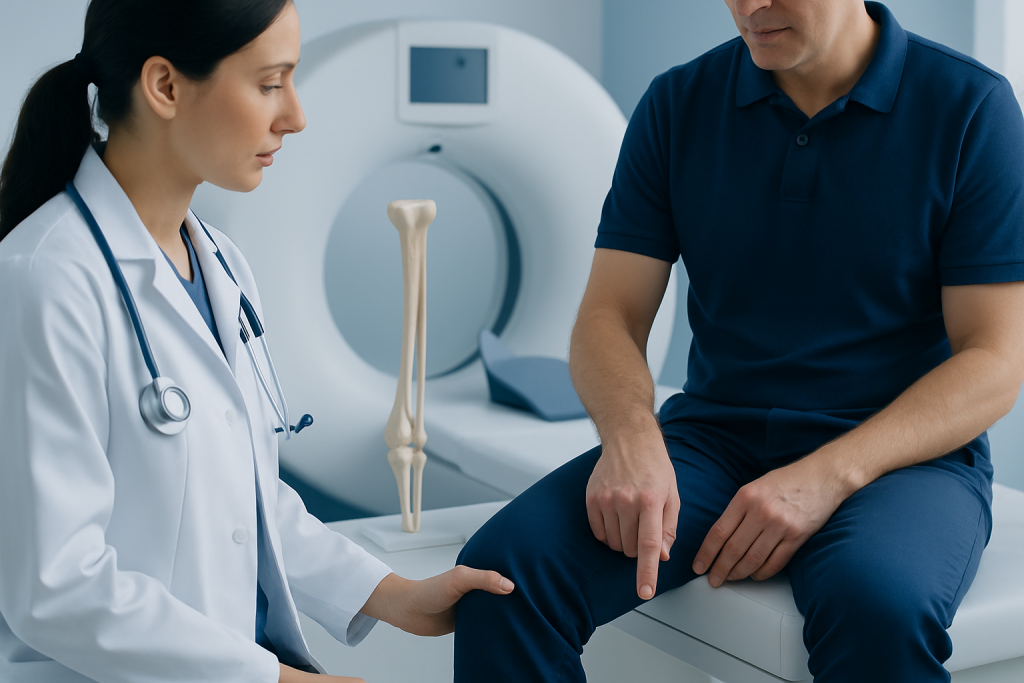
The most noticeable sign of a tibia or fibula injury is pain in the lower leg, especially when trying to stand or walk. Swelling, tenderness, bruising, and a feeling that the leg is unstable are also common. In some cases, the leg may look crooked, shortened, or rotated if a fracture has shifted out of place.
Symptoms can vary depending on which bone is involved and how severe the injury is. A tibia fracture often causes more intense pain because the tibia bears most of the load and is closer to the skin. A fibula injury may still be serious, particularly if it happens near the ankle or with an associated ligament injury, even if the pain seems less dramatic at first.
People should seek prompt medical attention if there is numbness, tingling, a pale or cold foot, severe swelling, an open wound over the injury, or inability to put weight on the leg. These findings can suggest a more complex injury pattern that needs urgent orthopedic review.
Causes & Risk Factors
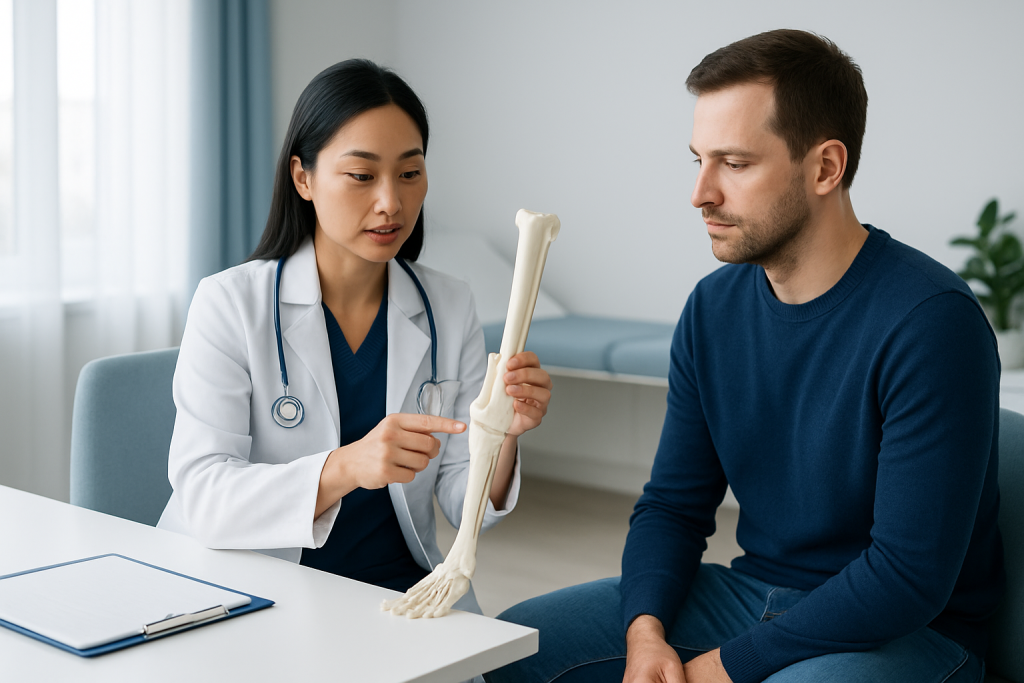
Many tibia and fibula injuries happen because of direct force. Common examples include falls, road traffic accidents, sports trauma, and collisions during running or contact sports. Twisting injuries can also fracture the lower leg, especially when the foot is planted and the body turns forcefully.
Some fractures develop more gradually. Repeated impact from distance running, jumping, military training, or a sudden increase in activity can lead to stress fractures, particularly in the tibia. Bone health also plays a role; osteoporosis, vitamin D deficiency, certain medications, and previous fractures can make bones more vulnerable to injury.
Children and older adults have distinct risks. In children, the bones are still growing and may fracture in patterns that differ from adults. In older adults, balance changes, weaker bones, and slower healing can make even a simple fall more consequential. For patients arranging treatment from another country, sharing prior imaging, medication history, and any bone-health information can help the orthopedic team make faster, safer decisions.
Diagnosis
Diagnosis usually begins with a detailed history and a physical examination. The clinician will ask how the injury happened, where the pain is strongest, whether weight-bearing is possible, and whether there are symptoms such as numbness or ankle instability. The leg, knee, and ankle are often examined together because injuries in one area can influence the others.
X-rays are commonly the first imaging test because they can show fractures, alignment changes, and joint involvement. If the fracture is complex, if the injury extends into the knee or ankle joint, or if surgery is being considered, a CT scan may provide more detail. MRI can be useful when a stress fracture or soft-tissue injury is suspected but not clearly visible on X-ray.
In some cases, the doctor may also check blood flow and nerve function in the foot. This is especially important after major trauma or when swelling is significant. The goal is not only to name the injury, but to understand whether the surrounding soft tissues, vessels, or nerves also need attention.
Treatment Options
Treatment depends on the type of injury, how far the bones have moved, whether the skin is broken, and whether the ankle or knee joint is involved. Stable, non-displaced fractures may heal with immobilization in a cast, brace, or walking boot, along with rest and careful follow-up imaging. Knee Pain Relief: Causes and Treatment" class="ahp-ilk">Pain relief and activity modification are usually part of this plan.
More unstable fractures may need reduction, which means the bone is aligned back into place, and in many cases surgery. Surgical treatment may involve plates, screws, rods, or external fixation to keep the bones aligned while they heal. Fractures with open wounds, multiple fragments, or significant soft-tissue injury are more likely to need an operative approach. The exact method depends on the patient’s age, overall health, and the injury pattern.
Rehabilitation is not an afterthought. Physical therapy helps restore ankle and knee motion, rebuild strength, reduce stiffness, and improve walking mechanics. Recovery time can vary widely, and follow-up appointments are important to confirm that the bone is healing in the correct position. Patients traveling internationally for treatment should also plan for post-procedure visits or coordinated follow-up near home, since healing continues long after the first hospital stay.
Prevention & Self-care
Not every lower-leg injury can be prevented, but some risks can be reduced. Wearing appropriate footwear, using proper technique in sports, and increasing training intensity gradually may lower the chance of stress fractures. For people with osteoporosis or other bone-health concerns, medical evaluation and treatment of the underlying condition can be an important part of prevention.
After a tibia or fibula injury, self-care should follow the treating clinician’s instructions closely. Elevating the leg, using ice when recommended, protecting the limb from unnecessary strain, and attending all follow-up visits can support recovery. If a cast, brace, or walking aid has been prescribed, it should be used as directed even when pain begins to improve.
General bone health also matters. Adequate nutrition, regular weight-bearing activity when safe, smoking cessation, and addressing vitamin or mineral deficiencies can support stronger bones over time. A rehabilitation team may also guide safe return to work, sports, or long-distance travel once the bone has healed enough for those activities.
When to See a Doctor
Medical evaluation is appropriate any time lower-leg pain is severe, persistent, or follows an injury that affects walking. It is especially important to seek prompt care if the leg looks deformed, there is an open wound, swelling is rapidly increasing, or the foot becomes numb, cold, or discolored.
People should not assume that being able to move the ankle or take a few steps means the injury is minor. Some fractures, stress injuries, and joint-related problems can still allow movement but worsen if ignored. Early assessment can reduce the risk of long-term stiffness, malalignment, or delayed healing.
For international patients, timely orthopedic assessment is particularly valuable because it can help clarify whether treatment can be managed conservatively, whether surgery is needed, and what follow-up will be required after travel. Acibadem Health Point’s multidisciplinary specialists and JCI-accredited hospitals diagnose and treat tibia and fibula conditions for international patients in a coordinated way.
Recovery and Long-Term Outlook
Most tibia and fibula injuries improve with the right treatment plan, but healing takes patience. The timeline depends on the location of the fracture, whether one or both bones are involved, the quality of bone health, and whether surgery was required. Pain usually improves before full strength and confidence return, so gradual progression is important.
Follow-up imaging may be used to confirm that the bones are healing and staying aligned. Some patients need gait retraining, balance work, or targeted strengthening before returning to high-impact activity. Others may need more extended rehabilitation if the injury affected the joint, the soft tissues, or overall mobility.
With appropriate care and consistent rehabilitation, many people regain excellent function. The most useful approach is often a coordinated one: accurate imaging, a treatment plan matched to the injury, and clear guidance on what activity is safe at each stage of recovery.
Frequently asked questions
What is the difference between the tibia and fibula?
The tibia is the larger shinbone and carries most of the body’s weight. The fibula is thinner and sits on the outer side of the lower leg, helping with stability and muscle attachment. Both bones work together to support walking and ankle movement.
Can a fibula fracture be serious if it is a small bone?
Yes. Even though the fibula is smaller, an injury can affect ankle stability, surrounding ligaments, or the nearby joint. Some fibula fractures are treated conservatively, while others need closer orthopedic attention depending on the pattern and associated injuries.
How is a tibia fracture usually diagnosed?
Doctors typically start with a physical examination and X-rays. If the fracture is complex, involves a joint, or is not clearly seen on X-ray, CT or MRI may be used for a more detailed view.
Do all tibia and fibula fractures require surgery?
No. Many stable fractures heal well with a cast, boot, or brace and careful follow-up. Surgery is considered when the bone is displaced, unstable, open, or associated with joint injury or significant soft-tissue damage.
How long does recovery take?
Recovery time varies widely and depends on the type of injury, the treatment used, and the person’s overall health. Bone healing takes time, and rehabilitation is often needed to restore strength and normal walking before full return to activity.
When should someone seek urgent care for lower-leg pain?
Urgent care is important if the leg is deformed, there is an open wound, pain is severe, or the foot becomes numb, cold, or pale. Inability to bear weight after an injury also deserves prompt medical assessment.
References
- American Academy of Orthopaedic Surgeons
- Mayo Clinic
- Cleveland Clinic
- NHS
- Merck Manual Professional Edition
This article is for general information only and is not a substitute for professional medical advice. Please consult a qualified doctor about your individual situation.
More from the Health Library



Related Specialists

Prof. Dr. Ahmet Alanay
Orthopedic Surgery & Traumatology
Dr. Sinan Aksu
Orthopedic Surgery & Traumatology
Dr. Sirri Baştürk
Orthopedic Surgery & Traumatology
Prof. Dr. Korhan Özkan
Orthopedic Surgery & Traumatology