Testing ECG: How It Works and What to Expect

Key Takeaways
- An ECG records the heart’s electrical signals and can reveal rhythm or conduction problems.
- The test is painless, brief, and often used alongside other examinations rather than on its own.
- ECG results help doctors investigate symptoms, monitor known heart conditions, and assess treatment response.
- A normal ECG does not always rule out heart disease, especially if symptoms come and go.
- Good preparation is usually simple, but patients should follow any instructions about skin products, clothing, or medicines.
Medically reviewed by the Acıbadem clinical team — August 19, 2026
ECG testing is a quick, noninvasive way to record the heart’s electrical activity and help doctors evaluate symptoms such as chest discomfort, palpitations, dizziness, or shortness of breath. It can also support routine assessment before procedures or ongoing heart follow-up.
Overview
ECG testing, also called an electrocardiogram, is one of the most familiar tools in heart care because it is simple, fast, and informative. It records the heart’s electrical signals through small sensors placed on the skin, creating a trace that doctors can read for clues about rhythm, rate, and the way the heart is conducting electricity.
For many patients, an ECG is part of the first step in figuring out a symptom. Someone may arrive with palpitations after a long flight, chest tightness during exercise, fainting, or an irregular pulse noticed during a routine check-up. In other cases, the test is done before surgery, during a hospital admission, or as part of follow-up care for a known heart condition.
Although the word “test” can sound intimidating, an ECG is generally straightforward and comfortable. It does not use radiation, needles, or injections, and most people can return to normal activities right away. The value of the test lies in how it helps clinicians interpret what the heart is doing in the moment and decide whether more evaluation is needed.
Symptoms and What an ECG Can Help Investigate
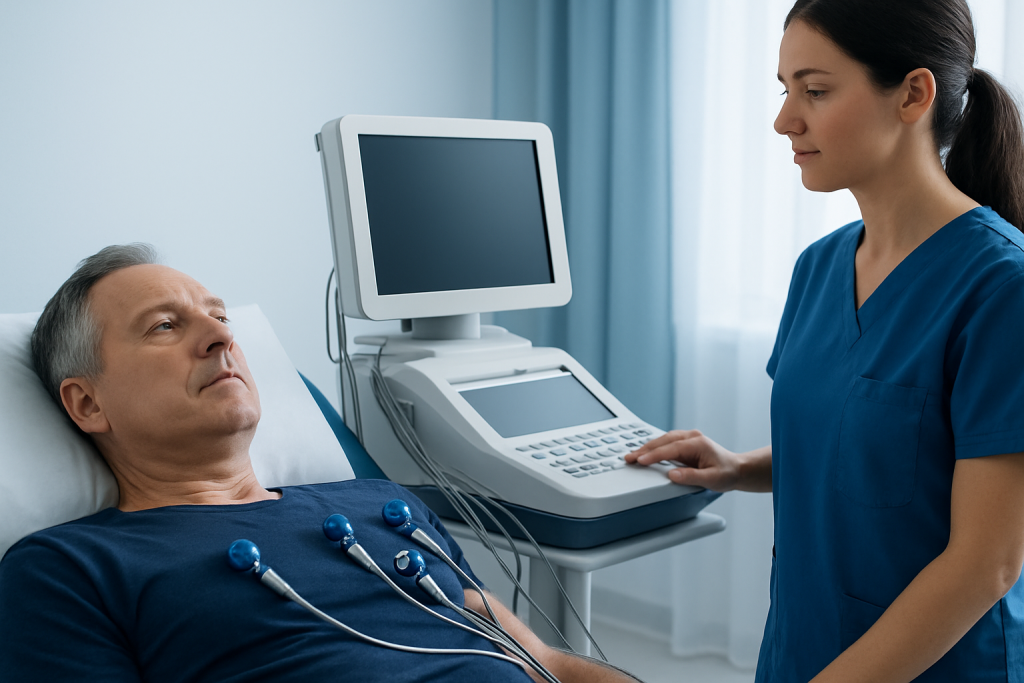
Doctors may order an ECG when symptoms suggest the heart may not be beating in its usual pattern. The test can help evaluate palpitations, skipped beats, racing heart, chest pain, shortness of breath, lightheadedness, unexplained fatigue, and episodes of fainting or near-fainting. It may also be used when a physical exam finds a very fast, very slow, or irregular pulse.
An ECG can sometimes show evidence of a recent or previous heart attack, strain on the heart, enlargement of certain chambers, or disturbances in the electrical pathways that coordinate each heartbeat. It may also reveal electrolyte-related changes or effects from certain medicines. However, an ECG is only one piece of the picture, and a normal tracing does not always mean that everything is entirely normal if symptoms continue.
Patients who live abroad or are traveling for care may find an ECG especially useful because it offers quick information that can guide the next step in assessment. If a symptom occurs intermittently, doctors may suggest repeating the test or using longer monitoring so that the heart’s rhythm can be captured during the actual episode.
Causes and Risk Factors
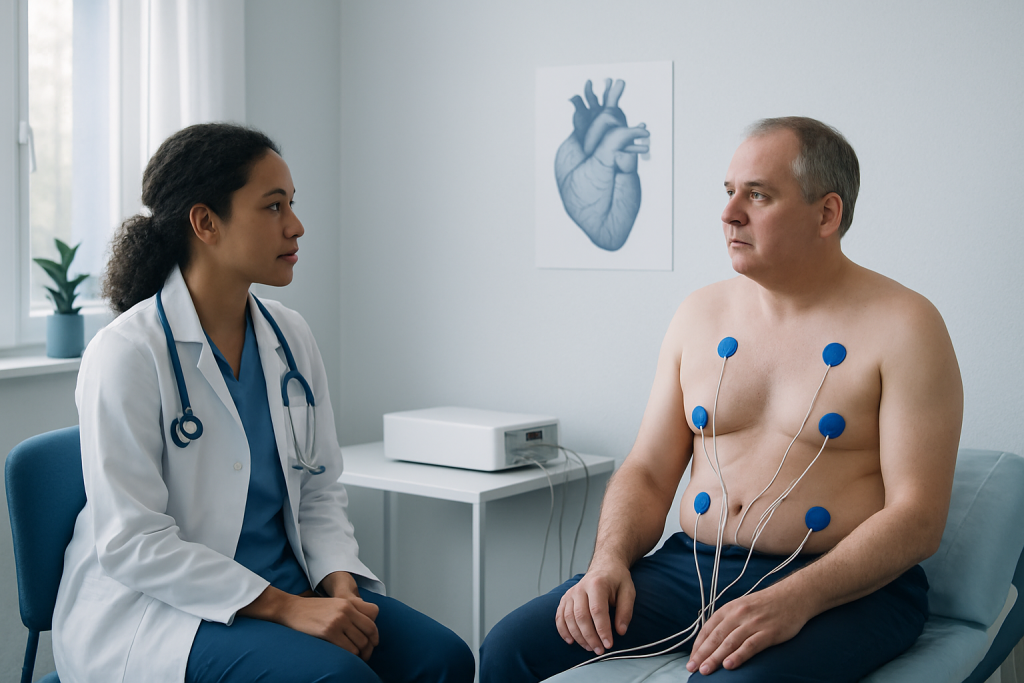
ECG testing is not a treatment for a condition; it is a diagnostic tool used because certain factors make heart evaluation more important. Age, high blood pressure, diabetes, smoking, high cholesterol, obesity, a family history of heart disease, and a prior heart problem can all increase the chance that symptoms need prompt cardiac review.
Some non-cardiac issues can also affect ECG findings or mimic heart symptoms. These include anxiety, thyroid disorders, fever, dehydration, anemia, stimulant use, and side effects from medications that influence heart rate or rhythm. Even intense exercise, poor sleep, or pain can temporarily change how the heart behaves.
For international patients, another practical factor is continuity of care. When records are scattered across different countries or health systems, an ECG can provide a clear baseline that helps doctors compare findings over time. This makes it easier to track whether a rhythm issue is new, stable, or responding to treatment.
Diagnosis and How the Test Is Performed
During a standard ECG, the patient lies comfortably while a technician places several small sticky electrodes on the chest, arms, and legs. These electrodes are connected to a machine that records the heart’s electrical activity for a short period, usually just a few minutes. The process is painless, and the patient is typically asked to remain still and breathe normally.
Preparation is usually minimal. Clean, dry skin helps the electrodes attach well, so creams or oils may need to be avoided beforehand. Clothing that is easy to remove from the upper body is often helpful, and patients may be asked about medications, symptoms, and recent activities such as exercise or caffeine intake.
Doctors interpret ECG findings alongside the person’s history, exam, and sometimes blood tests, echocardiography, Cardiology Stress Testing: Purpose, Procedure and Risks" class="ahp-ilk">stress testing, or longer rhythm monitoring. This broader approach matters because an ECG reflects only the time when it was recorded. If symptoms come and go, a single snapshot may miss the problem, which is why follow-up testing is sometimes recommended.
Treatment Options When an ECG Shows an Abnormality
An abnormal ECG does not automatically mean a serious condition, and the next step depends on what the tracing shows. Some findings are harmless or related to temporary influences, while others need closer evaluation or treatment. Doctors may repeat the ECG, order additional tests, or refer the patient to a cardiologist for a more detailed review.
If the ECG suggests a rhythm disorder, treatment may include medicine to control rate or rhythm, device-based monitoring, or procedures such as cardioversion or ablation in selected cases. If it points toward ischemia, structural heart disease, or effects of another medical problem, treatment focuses on the underlying cause. The plan is tailored to the individual rather than the tracing alone.
For patients continuing care after traveling internationally, written results and digital copies can be very helpful during follow-up visits at home. Clear communication about what was found, what was ruled out, and what still needs monitoring supports safer and more coordinated care.
Prevention and Self-care
People cannot always prevent the need for an ECG, but they can support heart health and improve the usefulness of the test. Taking prescribed medicines as directed, staying hydrated, getting enough rest, and avoiding excess caffeine, tobacco, or recreational stimulants can all help reduce avoidable strain on the heart.
Keeping a symptom diary is often valuable, especially when palpitations or dizziness occur only sometimes. Notes about the time of day, activity, meals, stress, medication use, and how long the symptom lasted can help doctors decide whether a standard ECG is enough or whether longer monitoring would be more informative.
- Bring a list of current medicines and supplements to the appointment.
- Tell the care team if symptoms happen during exercise, at rest, or after stress.
- Ask whether you should avoid lotion, powder, or heavy jewelry before the test.
- Keep copies of prior ECGs if you have them, especially when traveling between countries.
When to See a Doctor
Medical advice is important when chest pain, persistent palpitations, unexplained shortness of breath, fainting, or new swelling occurs, even if symptoms settle on their own. These signs do not always mean a dangerous heart problem, but they do deserve assessment rather than guesswork.
People with known heart disease should also seek review if their usual symptoms change, become more frequent, or occur with reduced exercise tolerance. An ECG may be part of the evaluation, but it should be viewed as one component of a wider clinical picture. If symptoms are severe, prolonged, or associated with weakness, confusion, or collapse, urgent care is appropriate.
International patients often benefit from choosing a center that can coordinate testing, interpretation, and follow-up in a single pathway. Acibadem Health Point’s multidisciplinary specialists and JCI-accredited hospitals diagnose and treat heart conditions for international patients with coordinated care that supports both the visit and the return home.
Living With the Results
Many patients leave an ECG appointment with more clarity than they had before. Sometimes the result is reassuring, confirming that symptoms are unlikely to be caused by an immediate rhythm problem. In other cases, the test points toward a condition that can be treated or monitored in a structured way.
What matters most is using the result as a guide, not a label. If the ECG is normal but symptoms continue, doctors may still investigate further. If it is abnormal, the finding should be understood in context, with attention to overall risk, current symptoms, and other test results.
For patients moving between countries, keeping a personal file of ECG reports, discharge summaries, and medication changes can make future care smoother. A well-organized record helps new clinicians understand what has already been checked and what should happen next.
Frequently asked questions
What does an ECG actually measure?
An ECG measures the heart’s electrical activity as it beats. The tracing helps doctors see the rate, rhythm, and timing of electrical signals through the heart. It does not measure blood pressure or directly show how strongly the heart pumps.
Is an ECG painful?
No, a standard ECG is usually painless. Patients may feel the coolness of the electrodes or mild skin stickiness from the pads, but there are no needles or shocks involved. Most people find it very easy to tolerate.
Can an ECG detect every heart problem?
No single ECG can detect every heart condition. It is very useful for certain rhythm and conduction problems, but some issues only appear during symptoms or need other tests to be confirmed. That is why doctors often combine ECG findings with a history, physical exam, and additional investigations when needed.
Do I need to prepare in a special way before the test?
Preparation is usually simple. Clean skin helps the electrodes stick, so creams or oils may be avoided, and comfortable clothing is useful. Patients should follow any instructions given by the clinic, especially if they are having other heart tests on the same day.
What if my ECG is normal but I still have symptoms?
A normal ECG is reassuring, but it does not always explain symptoms that happen only occasionally. Doctors may recommend longer monitoring, blood tests, or other studies depending on the situation. Ongoing or worsening symptoms should still be discussed with a clinician.
Can stress or anxiety change the ECG?
Stress and anxiety can affect heart rate and sometimes influence symptoms such as palpitations. They may also contribute to changes that prompt further review, although they do not replace a proper cardiac evaluation. A doctor can help distinguish temporary effects from a true heart rhythm problem.
References
- American Heart Association
- Mayo Clinic
- National Heart, Lung, and Blood Institute
- European Society of Cardiology
This article is for general information only and is not a substitute for professional medical advice. Please consult a qualified doctor about your individual situation.
Explore treatments in Turkey — costs, top hospitals & a free quote
JCI-accredited · board-certified surgeons · reply within 24h
Add us as a Preferred Source to see more of our trusted health content across Google Search, AI Overviews and Discover.