Reverse Crunches: Benefits and How To Do Them

Key Takeaways
- Reverse crunches target the abdominal wall, especially the lower portion of the core.
- Good form is more important than speed, range, or how many repetitions are completed.
- People with back, neck, hip, or pelvic-floor concerns may need modified core exercises.
- Breathing, control, and pelvic positioning help reduce strain and improve effectiveness.
- Persistent pain, bulging, or dizziness during exercise should be discussed with a clinician or physiotherapist.
Medically reviewed by the Acıbadem clinical team — August 19, 2026
Reverse crunches are a core exercise that emphasizes the lower abdominal muscles while reducing some of the strain that traditional sit-ups can place on the neck and spine. With careful form and the right progressions, they can fit into a safe, balanced home or gym routine.
Overview
Reverse crunches are a floor-based abdominal exercise in which the pelvis lifts toward the chest rather than the torso curling upward. That detail changes the way the core works: the movement asks the abdominal muscles to stabilize and shorten the trunk from below, which many people find easier to control than a fast sit-up.
For patients exploring exercise after time away from activity, or while recovering from a minor strain with professional guidance, reverse crunches are often discussed as one building block in a broader core program. They are not a cure for back pain or a shortcut to visible abdominal definition, but they can help improve strength, coordination, and body awareness when used appropriately.
The exercise is usually performed without equipment, making it practical for home routines, hotel rooms, or rehabilitation settings. Still, the simplicity can be misleading: the benefit comes from a small, deliberate motion, not from swinging the legs or forcing the spine to do more work than it should.
How Reverse Crunches Work
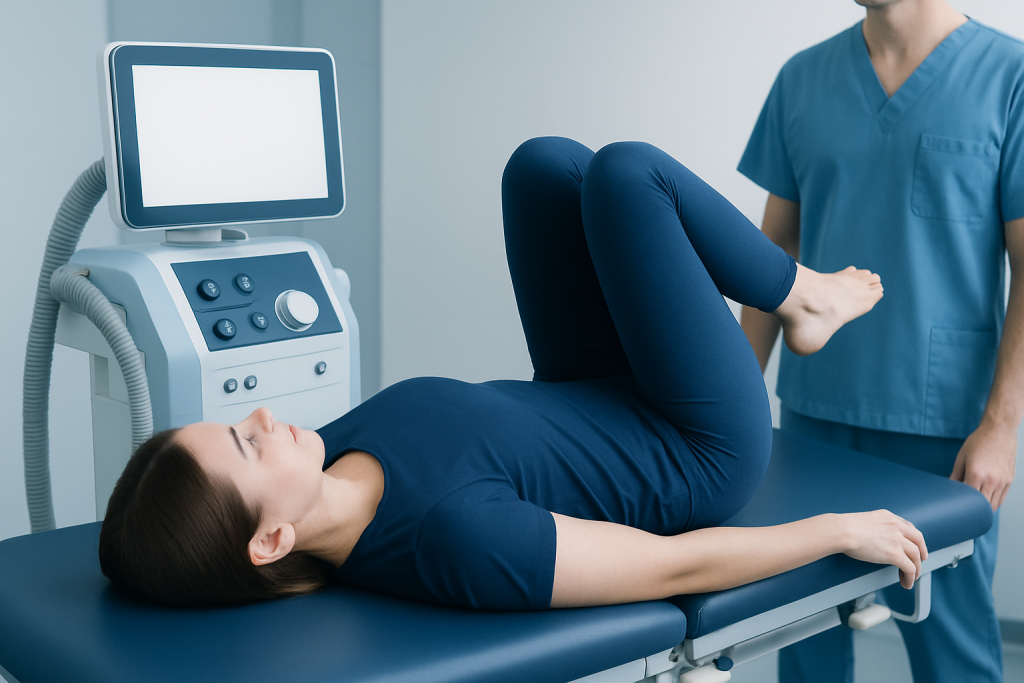
The main action in a reverse crunch is a controlled posterior tilt of the pelvis. In plain terms, the lower abdomen helps tuck the pelvis upward while the ribs stay relatively quiet. This engages the rectus abdominis and the deeper stabilizing muscles of the trunk, including the transverse abdominis, while asking the hip flexors to stay in the background rather than dominate the movement.
That distinction matters because many people perform traditional abdominal exercises by pulling the neck, gripping the hips, or arching the lower back. Reverse crunches can reduce some of those compensations when done well, which is one reason clinicians and trainers may use them during early core-conditioning phases. The goal is not to “crush” the abs into a big curl; the goal is controlled pelvic movement with steady breathing.
A useful mental image is to slide the tailbone slightly upward off the floor rather than trying to throw the legs overhead. When the motion is small and deliberate, the exercise becomes more about precision than force.
Benefits and Common Uses
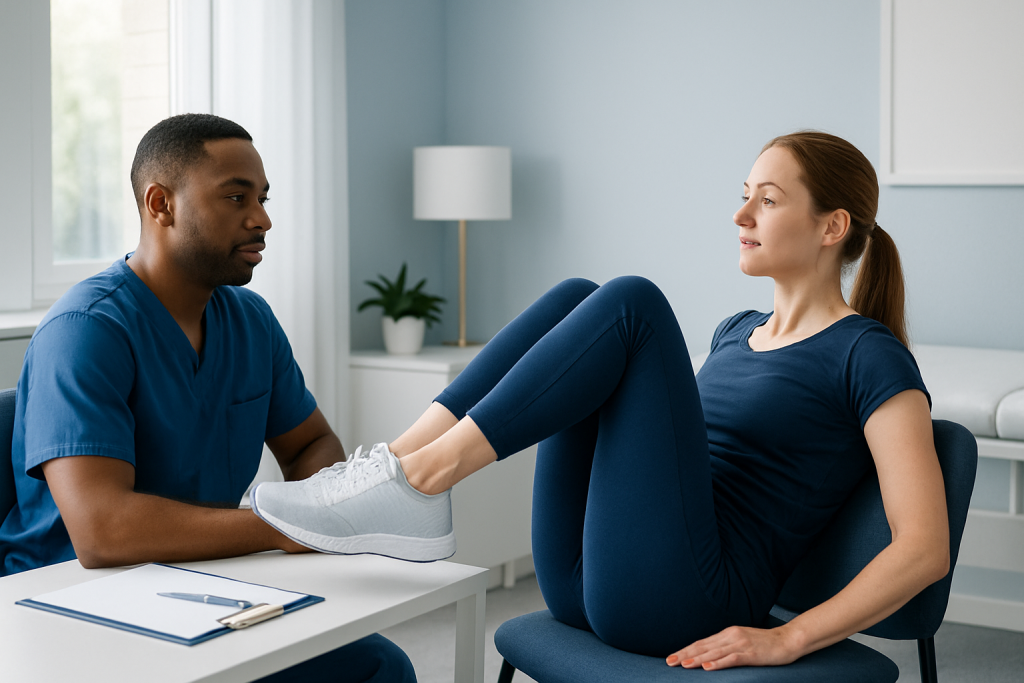
Reverse crunches are often included in programs that aim to improve core endurance and trunk control. They can be helpful for people who want a bodyweight exercise that does not require much space or equipment, especially when they are rebuilding a routine after travel, desk work, or a period of inactivity.
In rehabilitation-minded exercise plans, a clinician or physiotherapist may choose reverse crunches because they can be scaled gradually. The exercise can start with a small pelvic lift and progress only if the person keeps the lower back comfortable and the motion smooth. That makes it useful in settings where the body needs careful reconditioning rather than an aggressive workout.
- Core strengthening for general fitness
- Better awareness of pelvic control
- Support for balanced abdominal training
- Low-equipment option for home exercise
They may also complement, but should not replace, exercises that train the back, hips, and deep stabilizers. A strong core usually depends on several muscle groups working together, not on one exercise performed repeatedly.
Technique and Form
A controlled setup is the best way to make the exercise effective and comfortable. The person lies on the back with knees bent and shins roughly parallel to the floor, then gently braces the abdomen while keeping the neck relaxed and the shoulders resting down.
From there, the pelvis lifts just enough for the lower back to gently move or lightly unweight from the floor, depending on the variation and comfort level. The return should be slow and quiet, with no dropping of the legs and no jerking through the spine. If the movement is done correctly, the abs should feel engaged, but the neck and lower back should not feel strained.
Helpful technique cues include:
- Exhale as the pelvis lifts, then inhale as it lowers.
- Keep the movement small and controlled.
- Let the abs do the work rather than swinging the legs.
- Stop before the lower back arches uncomfortably.
If someone cannot maintain control, reducing the range of motion or shortening the set is usually wiser than pushing through with poor form.
Common Mistakes and When They Matter
The most common error is turning the exercise into momentum. When the legs are thrown upward or the hips jerk off the floor, the abdominal muscles are no longer guiding the motion well, and the lower back may absorb extra stress. Another frequent issue is holding the breath, which can increase unnecessary tension in the abdomen and neck.
Some people also flare the ribs or arch the lower spine to make the exercise feel larger. That usually means the trunk is losing control. For others, the hip flexors take over, especially if the core is not yet ready for the load; in that case, the front of the hips may fatigue before the abdominals do.
These errors are not just technical details. They matter more for anyone who already has a history of low back pain, hip irritation, abdominal surgery, or pelvic-floor symptoms. In those situations, a safer modification or different exercise may be a better fit than insisting on a standard reverse crunch.
Causes & Risk Factors for Poor Tolerance
Reverse crunches are not inherently risky, but certain body conditions make them harder to tolerate. Limited spinal mobility, weak deep-core control, tight hip flexors, or reduced coordination after an injury can all make the movement feel awkward or uncomfortable.
People who are recovering from childbirth, abdominal surgery, or a hernia repair may need individualized guidance before doing this exercise. Likewise, anyone with neck pain, disc-related back pain, or pelvic-floor symptoms should be assessed before adding repeated abdominal work, because the wrong movement pattern can aggravate symptoms even when the exercise looks simple.
Risk factors for difficulty can include:
- Previous low back or neck pain
- Hip flexor tightness or overuse
- Weak or poorly coordinated deep core muscles
- Recent abdominal surgery or pregnancy-related changes
- Breath-holding during effort
For international patients arranging care from abroad, this is one area where a sports-medicine physician or physiotherapist can help identify whether the exercise is appropriate before travel ends and the home program begins.
Safer Progressions, Modifications, and Related Exercises
People do not need to start with a full reverse crunch to train the same pattern. Smaller versions can teach control first. One common option is to practice a posterior pelvic tilt with the feet on the floor, then add the leg lift only when the lower back remains comfortable and the abdomen stays engaged.
Other exercises often used alongside or before reverse crunches include dead bugs, bent-knee marches, heel slides, and plank variations. These can build core endurance with less spinal motion, which may suit people who are easing back into exercise after a long flight, a sedentary period, or medical treatment.
Depending on a person’s needs, a physiotherapist may suggest one of the following adjustments:
- Smaller range of motion
- One-leg version instead of both legs together
- Hands placed for gentle support, not pulling
- Feet touching down between repetitions
The best progression is the one that improves control without provoking pain or compensation. A well-chosen modification is a sign of good training, not a sign of failure.
Prevention & Self-care
Good core exercise habits begin with pacing. Reverse crunches are usually more useful when they are performed with quality repetitions rather than long, exhausting sets. A short, focused session is often enough for general conditioning, particularly when it is combined with walking, mobility work, and exercises for the back and hips.
Self-care also includes attention to everyday posture and breathing. Long hours sitting, shallow breathing, and repeated slumping can make abdominal exercises feel harder than they should. Gentle movement breaks, hip mobility work, and relaxed diaphragmatic breathing can help the trunk work more efficiently.
Practical habits that support safer practice include:
- Warm up lightly before abdominal training
- Choose a firm, comfortable surface
- Stop if sharp pain, dizziness, or pulling occurs
- Balance abdominal work with glute and back exercises
- Progress slowly rather than chasing high repetition counts
For people exercising while traveling or after receiving treatment abroad, keeping a written home program can make it easier to continue the same safe routine once they return home and need local follow-up.
When to See a Doctor
Reverse crunches should not cause sharp pain, numbness, tingling, or a sense of instability. If any of those symptoms appear, the exercise should be stopped and a qualified clinician should be consulted. Ongoing abdominal bulging, worsening back pain, or pain that changes with coughing or straining also deserves medical attention.
A doctor or physiotherapist can help determine whether the issue is simple exercise intolerance, a muscle strain, a hernia, a spinal problem, or another condition that needs a different approach. This is especially important after surgery, during postpartum recovery, or when a person is returning to exercise after a long period of reduced activity.
Acibadem Health Point’s multidisciplinary specialists and JCI-accredited hospitals can diagnose and treat related musculoskeletal concerns for international patients, with care plans designed to support both treatment and follow-up. Even so, the right first step is always an individualized assessment, since exercise guidance depends on the person’s overall health and symptoms.
Frequently asked questions
Are reverse crunches better than sit-ups?
They are not automatically better for everyone, but they can be easier to control and may place less strain on the neck for some people. The best choice depends on the person’s goals, back comfort, and movement quality.
Do reverse crunches really work the lower abs?
They strongly involve the rectus abdominis and the deeper core muscles, especially when the pelvis moves in a controlled way. No single exercise isolates one small part of the abdomen completely, but reverse crunches can be a useful lower-abdominal emphasis exercise.
How many reverse crunches should someone do?
There is no universal number that fits everyone. A smaller set performed with good form is usually more useful than many repetitions done with momentum or poor control.
Can reverse crunches hurt the lower back?
They can if the movement is forced, rushed, or done with an arched lower spine. People with a history of back pain should start with gentle variations and seek professional advice if discomfort appears.
Are reverse crunches safe after pregnancy or abdominal surgery?
Not always, and timing matters. A doctor or physiotherapist should confirm when abdominal exercise is appropriate, because healing tissues and pelvic-floor changes need individualized guidance.
What if the hip flexors feel more tired than the abs?
That often means the body is compensating and the core is not yet controlling the motion well. Reducing the range of motion, slowing down, or choosing a simpler exercise may help.
References
- American College of Sports Medicine
- National Health Service
- Mayo Clinic
- Cleveland Clinic
- World Health Organization
This article is for general information only and is not a substitute for professional medical advice. Please consult a qualified doctor about your individual situation.
Joint and spine care in Turkey — expert assessment & treatment
JCI-accredited · board-certified surgeons · reply within 24h
Add us as a Preferred Source to see more of our trusted health content across Google Search, AI Overviews and Discover.
More from the Health Library



Related Specialists

Fzt. Elif Tokgöz Nizam
Physical Medicine & Rehabilitation
Fzt. Gizem Aydın
Physical Medicine & Rehabilitation
Dr. Safiye Sayilir
Physical Medicine & Rehabilitation
Dr. Özgün Barış Çolak
Physical Medicine & Rehabilitation