Random Breath Test: What It Is and How It Works

Key Takeaways
- A random breath test measures alcohol in exhaled breath as a quick screening method.
- Results can be influenced by timing, recent alcohol intake, and some non-alcohol factors.
- A positive screening result may lead to confirmation with another test, depending on the setting.
- Breath testing is not the same as diagnosing alcohol use disorder or long-term drinking patterns.
- If alcohol use is affecting health, work, or safety, a qualified clinician can help with next steps.
Medically reviewed by the Acıbadem clinical team — August 19, 2026
A random breath test is a quick screening tool used to check for alcohol in the breath, often for safety, workplace, or legal reasons. Understanding how it works can help people prepare calmly and know what the result may mean.
Overview
A random breath test is a screening test that checks the amount of alcohol in a person’s exhaled breath. It is commonly used when a quick, noninvasive answer is needed in settings such as road safety enforcement, workplace testing, or clinical assessment.
Unlike many medical tests, a random breath test is often done without advance notice. That surprise element is part of its purpose: it aims to reflect a person’s current level of alcohol exposure rather than a planned, pre-arranged sample. The test is usually brief, and the person being tested typically breathes into a handheld device or a machine connected to a mouthpiece.
For patients and international travelers, it can be helpful to know that a breath alcohol test is a screening tool, not a full picture of health. It does not tell the whole story about drinking habits, liver health, or whether a person has a dependency problem. In most cases, if there is concern beyond the screening result, a clinician will consider the wider context and may recommend further evaluation.
What the Test Measures
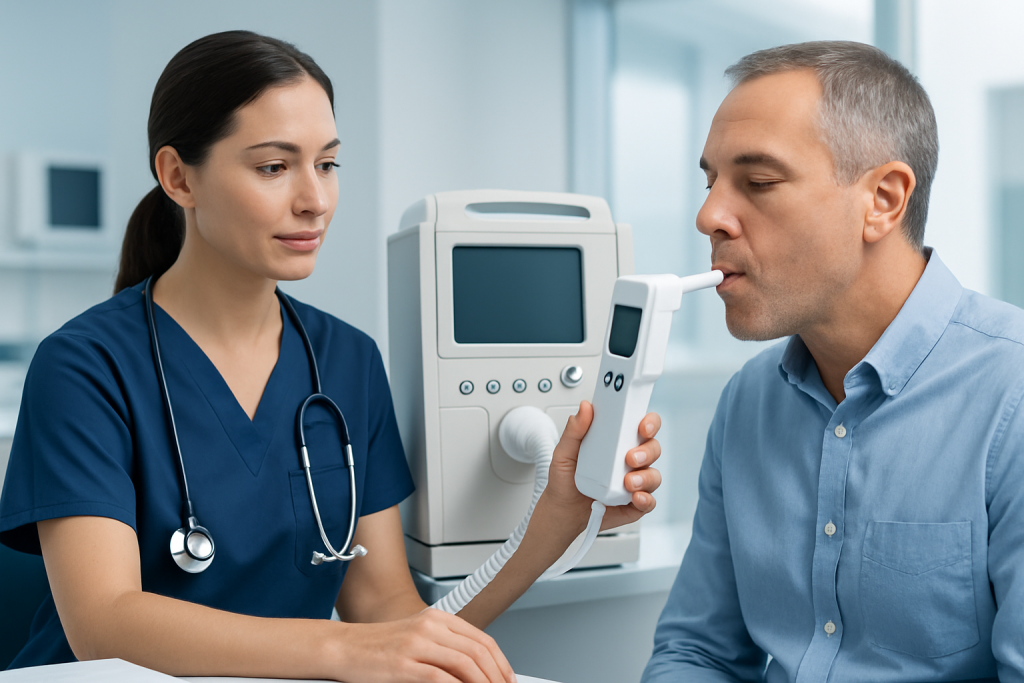
When alcohol is in the bloodstream, a small amount passes into the air spaces of the lungs and leaves the body when a person exhales. A breath test estimates blood alcohol concentration by measuring that alcohol in expired breath. Because the lungs and blood are closely linked in this way, the test can give a rapid snapshot of recent alcohol exposure.
The device itself may be a portable handheld unit or a larger analyzer used in formal testing settings. Some systems provide a numerical result, while others are used as an initial pass/fail screen. The exact process can vary by country, institution, and reason for testing, but the underlying principle is the same.
People sometimes assume a breath test is exact in every circumstance. In reality, it is a practical screening method with known limitations. The result can be affected by timing, device quality, technique, and certain substances or medical situations, which is why confirmatory testing may be used when the result has legal or occupational consequences.
When It Is Used
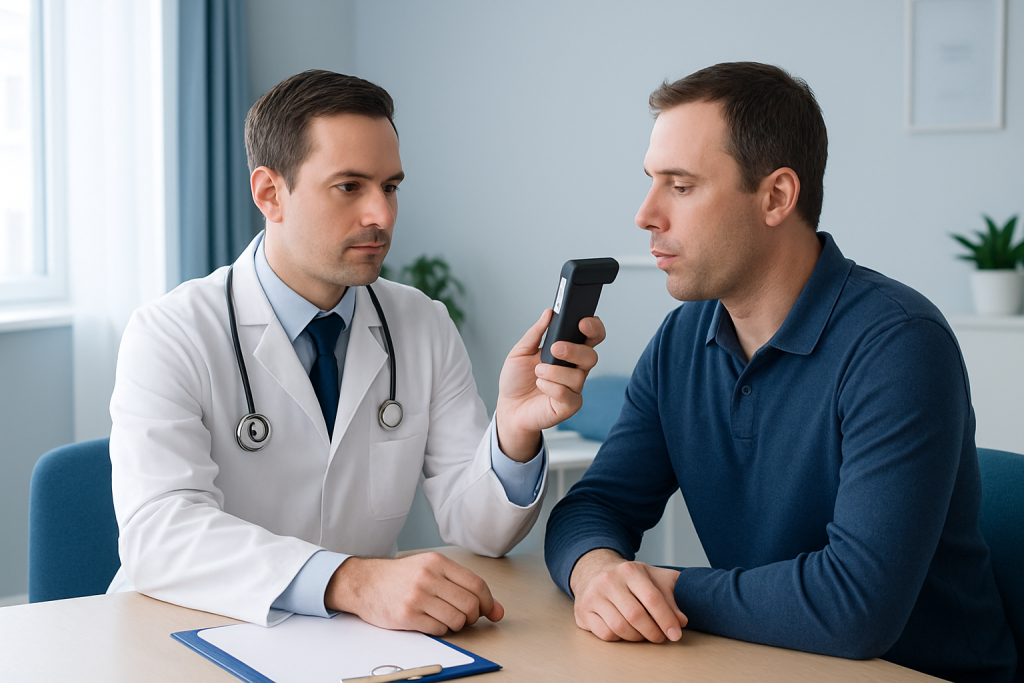
Random breath testing is often associated with driving safety, but it may also appear in workplaces, treatment programs, and some clinical or legal situations. The shared goal is usually straightforward: to identify recent alcohol use quickly enough to make an immediate decision about safety or policy.
Common settings include:
- Roadside or traffic safety checks
- Workplace safety programs, especially in high-risk jobs
- Monitoring within treatment or rehabilitation programs
- Assessment in emergency or acute care situations when alcohol use may affect decisions
For international patients, the context matters. A test requested by an employer is not the same as one used in a hospital, and a legal roadside screening is not the same as a diagnostic medical evaluation. Understanding why the test is being done helps people interpret the result more realistically and respond appropriately.
Causes and Factors That Can Affect Results
The most direct cause of a positive result is recent alcohol consumption. However, people can sometimes be surprised by a result they did not expect, especially if they drank earlier than they thought, consumed several beverages over a longer period, or are tested soon after finishing a drink.
Several non-alcohol factors may also influence a breath test. These may include the type of device, whether the person used the mouthpiece correctly, recent use of certain mouth products, exposure to substances containing alcohol, or medical issues affecting breath or gas exchange. In some cases, a delayed gastric emptying or reflux-related situation can complicate interpretation, though this does not automatically mean the test is wrong.
Important factors to keep in mind include:
- Time since the last drink
- Amount and type of alcohol consumed
- Technique and calibration of the device
- Recent use of alcohol-containing products such as some mouthwashes
- Health conditions that may affect how the result is interpreted
Because no screening test is perfect, professionals often interpret breath results together with the person’s history, symptoms, and the purpose of testing.
How the Test Is Done
A random breath test is usually simple. The person is asked to blow steadily into the device through a mouthpiece for a short period. The machine then analyzes the sample and displays the result, or it may generate a record for official review.
In many settings, the person is asked not to eat, drink, smoke, or place anything in the mouth just before the test, because these actions can interfere with interpretation. Instructions vary, and the tester should explain what is needed at that moment. If the test is part of a legal or workplace process, there may be rules about supervision, repeat sampling, and documentation.
From a patient’s point of view, the test is typically quick and physically easy. The main challenge is often not the procedure itself, but the uncertainty around what the result means and what happens next. Clear communication from the testing professional is important, especially when a person is far from home and unfamiliar with local procedures.
What Results May Mean
A result below the cut-off used in that setting usually means no actionable alcohol level was detected at the time of testing. A result above the cut-off suggests recent alcohol exposure, but it does not automatically describe a person’s drinking pattern, level of impairment in every context, or overall health.
If a result is unexpected, a repeat test or a more specific confirmatory test may be requested. This is especially important when the result may affect legal status, driving privileges, employment, or treatment decisions. A single screening result should be interpreted carefully and in context.
It is also worth noting that breath testing does not diagnose alcohol use disorder. That diagnosis, if suspected, depends on a broader assessment of symptoms, behavior, health effects, and sometimes laboratory studies. A thoughtful evaluation can distinguish a one-time screening issue from a longer-term concern.
Prevention and Self-care
There is no way to “prepare” for a random breath test if the expectation is to avoid recent alcohol exposure being detected. The safest approach is simple honesty about recent drinking and understanding local rules if testing is linked to driving, work, or treatment.
For people who are trying to reduce alcohol use, the test can sometimes serve as a useful checkpoint. It may prompt reflection on routines, social drinking patterns, or situations where alcohol use is becoming hard to control. If someone notices repeated surprises around alcohol-related testing, that is a good moment to speak with a healthcare professional rather than trying to manage it alone.
Helpful self-care steps may include:
- Allowing enough time after drinking before driving or operating machinery, according to local guidance
- Avoiding mixing alcohol with sedating medicines unless a doctor says it is safe
- Using reputable healthcare advice if alcohol use feels difficult to control
- Keeping track of testing rules for work, travel, or treatment programs
For international patients receiving care away from home, it can be useful to ask for clear written instructions and, if needed, an interpreter. That reduces confusion and supports safer decisions after the test.
When to See a Doctor
A doctor’s input is helpful if a breath test result is unexpected, if alcohol use is linked to injury or risky behavior, or if there are concerns about repeated heavy drinking. Medical review is also appropriate when someone feels unable to cut down, experiences withdrawal symptoms, or notices that alcohol is affecting sleep, mood, blood pressure, family life, or work.
Urgent medical attention is important if alcohol use is associated with confusion, repeated vomiting, breathing trouble, seizures, fainting, or possible poisoning. These situations are not about the test itself; they are about the person’s immediate safety and need for assessment.
For patients travelling internationally for care, questions about alcohol testing can be discussed alongside broader medical concerns. A multidisciplinary team can help interpret results, review medications, and decide whether further assessment is needed. Acibadem Health Point’s multidisciplinary specialists and JCI-accredited hospitals diagnose and treat this condition for international patients.
How Clinicians Put the Test in Context
Professionals rarely rely on a breath test alone when the stakes are high. They look at the reason for testing, the timing of any alcohol exposure, the person’s symptoms, and any other relevant medical or legal information. That broader view helps prevent overreading a single number.
If needed, clinicians may recommend other forms of assessment, such as blood testing or a more detailed clinical review. They may also ask about medications, recent mouthwash use, reflux symptoms, or conditions that could influence interpretation. In practical terms, the question is not only “What did the device say?” but also “Does this match the whole clinical picture?”
This approach is especially valuable for people receiving care across borders, where local rules and testing methods may differ. A careful explanation can reduce worry and help the person know what to do next.
Frequently asked questions
What is a random breath test used for?
It is used to quickly check for recent alcohol use in settings where safety or policy matters. Common examples include roadside screening, workplace testing, and some medical or treatment settings. The test gives a snapshot of current exposure rather than a full assessment of drinking habits.
Can a breath test be wrong?
Yes, like any screening tool, it can be influenced by timing, technique, device calibration, and some non-alcohol factors. That is why a surprising result may be repeated or confirmed with another test. A clinician or testing officer can explain how the result should be interpreted in that specific setting.
Does a positive result mean someone has an alcohol problem?
Not necessarily. A positive breath test usually means alcohol was recently present, but it does not diagnose alcohol use disorder. Diagnosing a longer-term problem requires a broader medical and behavioral assessment.
Can mouthwash or other products affect the result?
Some alcohol-containing products may briefly affect screening results, especially if used just before testing. The effect depends on the product, timing, and testing method. If this is a concern, the person should tell the tester or clinician what was used.
How soon after drinking can a breath test detect alcohol?
That depends on how much was consumed, how quickly it was absorbed, and how much time has passed. Testing very soon after a drink can sometimes reflect alcohol still in the mouth, while later testing reflects alcohol in the bloodstream and breath. Local rules and the testing context determine how the result is used.
When should someone speak to a doctor about alcohol use?
A doctor should be consulted if alcohol use is causing concern, affecting safety, or becoming hard to control. It is also wise to seek help if there are withdrawal symptoms, injuries, mood changes, or repeated unexpected test results. Early support can make next steps clearer and safer.
References
- World Health Organization
- Centers for Disease Control and Prevention
- National Institute on Alcohol Abuse and Alcoholism
- Mayo Clinic
- National Highway Traffic Safety Administration
This article is for general information only and is not a substitute for professional medical advice. Please consult a qualified doctor about your individual situation.
Explore treatments in Turkey — costs, top hospitals & a free quote
JCI-accredited · board-certified surgeons · reply within 24h
Add us as a Preferred Source to see more of our trusted health content across Google Search, AI Overviews and Discover.