Pimple And Zit Popping

Key Takeaways
- Popping pimples can push inflammation deeper and increase the chance of scarring.
- Hands, nails, and unclean tools can introduce infection to already irritated skin.
- Gentle cleansing, non-comedogenic products, and evidence-based acne treatments are usually safer than squeezing.
- Deep, painful, or recurring acne should be assessed by a dermatologist.
- If acne is affecting confidence or daily life, treatment can be tailored to skin type and severity.
Pimple and zit popping may feel satisfying in the moment, but it can irritate skin, spread bacteria, and leave lasting marks. A calmer approach to acne care often protects the skin barrier and supports clearer healing.
Overview
Pimple and zit popping is one of the most common skin habits people try to manage on their own. It may seem like a quick fix, especially when a blemish appears before an important event, but the skin often responds better to restraint than force. A squeezed spot can become more inflamed, heal more slowly, and leave behind a mark that lasts far longer than the original blemish.
From a skin-health perspective, acne is not simply dirt trapped under the surface. It usually develops when pores become clogged with oil, dead skin cells, and bacteria, often alongside hormonal shifts or increased oil production. That means the better approach is usually to calm the underlying acne process rather than trying to remove every visible bump by hand.
For international patients planning dermatology care, acne treatment can be especially helpful when skin has already been irritated by repeated popping or by attempts to self-treat with harsh products. A dermatologist can look at the pattern of breakouts, skin sensitivity, and any scarring to build a plan that is realistic across travel, follow-up, and home care.
Symptoms
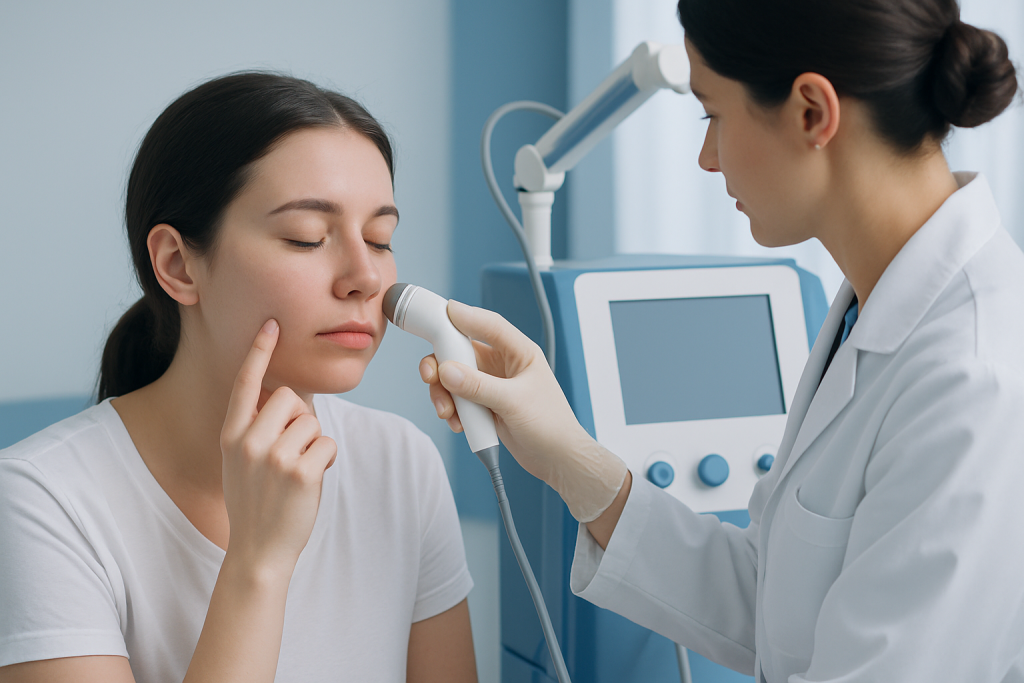
The signs that often lead someone to consider popping are usually easy to recognize: a raised whitehead, a tender red bump, or a spot that feels full and ready to burst. Some people also notice deeper, sore nodules under the skin that do not come to a head. These are the types of lesions that are most likely to be squeezed unsuccessfully, because the material may sit deeper than it appears.
After popping, the skin may look flatter for a short time, but it can quickly become redder, swollen, or crusted. If the spot bleeds repeatedly, becomes increasingly painful, or develops yellow drainage, the area may have been irritated or infected. Scabbing, dark marks, and pitted scars can also appear later, even if the blemish seemed small at first.
Some people experience acne in clusters rather than as isolated spots, especially around the face, jawline, chest, or back. In these cases, repeated picking tends to create a cycle of new inflammation over old healing skin. That can make the condition feel more stubborn than it actually is and may delay improvement.
Causes & Risk Factors

Pimples form when pores become blocked and the skin’s natural oil, called sebum, builds up. Hormonal changes, genetics, sweat, friction from helmets or masks, heavy cosmetics, and some medications can all contribute. When a pore becomes inflamed, it may turn into a whitehead, blackhead, papule, pustule, or deeper cyst-like lesion.
Popping becomes tempting when a blemish looks “ready,” but the visible tip is only part of the story. Pressing on the area can rupture the pore wall below the skin surface, spreading contents into surrounding tissue and increasing the inflammatory response. That is one reason a small pimple can turn into a larger, angrier one after squeezing.
Certain habits raise the chance of complications. These include using fingernails, acne tools that are not cleaned properly, touching the face frequently, or trying to extract spots that are deep, painful, or not fully mature. People with darker skin tones may also be more prone to post-inflammatory hyperpigmentation, where a healed blemish leaves a dark patch.
- Oilier skin types and hormonal fluctuations
- Family history of acne
- Occlusive makeup or skincare products
- Stress, sleep disruption, and routine changes
- Repeated picking or squeezing
Diagnosis
Most acne is diagnosed by a clinical skin examination, which means a doctor looks at the pattern, type, and severity of breakouts. A specialist may ask how long the acne has been present, what products are being used, whether lesions are painful or deep, and whether previous attempts at popping have caused scars or infections. This history helps distinguish ordinary acne from other skin conditions that can look similar.
For many people, no test is needed. When acne is severe, unusual, or not responding as expected, a dermatologist may consider other causes such as hormonal imbalance, medication-related acne, folliculitis, or rosacea. In some international care settings, patients appreciate a clear diagnosis before traveling so that the treatment plan and follow-up schedule can be organized in advance.
Diagnosis also includes assessing the skin’s current condition after picking. A doctor may check for signs of bacterial infection, skin breakdown, or early scarring. This is important because the right treatment can differ depending on whether the main issue is active acne, healing irritation, or both.
Treatment Options
When acne is the main concern, treatment usually focuses on reducing clogged pores, inflammation, and new breakouts. Over-the-counter options may include gentle cleansers and acne-fighting ingredients such as benzoyl peroxide or salicylic acid, chosen carefully to avoid over-drying the skin. For more persistent acne, a dermatologist may recommend prescription topical therapies or oral medication based on the severity and skin type.
Professional extraction, when appropriate, is different from squeezing at home. It is performed in a controlled setting and may be used only for certain types of lesions. Deep nodules, cysts, and inflamed spots are usually not good candidates for home popping, and forcing them can worsen swelling or scarring.
Treatment may also address the aftermath of picking. If there are lingering dark marks, the skin may benefit from a plan that supports gradual fading and protects against sun-related darkening. If scarring has already developed, a dermatologist can discuss procedures that may help improve texture, such as resurfacing options or other office-based treatments, depending on the person’s skin and goals.
In international treatment journeys, a practical plan matters as much as the procedure itself. Patients often need instructions that are easy to follow after they return home, along with a clear timeline for skincare, healing, and remote follow-up if needed. Acibadem Health Point’s multidisciplinary specialists and JCI-accredited hospitals diagnose and treat this condition for international patients in that coordinated way.
Prevention & Self-care
The safest habit is usually the simplest one: leave pimples alone whenever possible. If a spot is sore or visibly raised, a warm compress may help it settle without the trauma of squeezing. Gentle cleansing twice a day, along with non-comedogenic moisturizers and sunscreen, can support the skin barrier and reduce irritation during healing.
People who break out frequently often do better with a steady acne routine than with occasional aggressive “spot treatments.” It can help to avoid scrubbing, picking with nails, and using too many products at once. Choosing makeup and skincare labeled non-comedogenic may reduce pore clogging, and washing after sweating can also help.
Simple practical steps can make a difference:
- Keep hands away from the face as much as possible
- Do not share towels, razors, or acne tools
- Use clean pillowcases and hats or helmets with breathable linings
- Introduce new acne products one at a time
- Protect healing skin from the sun to reduce dark marks
For people traveling for work or care, a compact routine is often easier to maintain. A dermatologist can suggest a regimen that fits airport security, climate changes, and the patient’s home environment so the skin stays consistent before and after treatment.
When to See a Doctor
Medical advice is worth seeking when acne is painful, widespread, leaving scars, or not improving with gentle self-care. Deep lesions under the skin, repeated breakouts in the same area, or spots that keep returning after being popped are common reasons to consult a dermatologist. Acne that begins suddenly in adulthood or is paired with other symptoms such as irregular periods or excess facial hair should also be assessed.
A doctor should review any area that looks infected, especially if redness is spreading, the skin feels hot, or the drainage has a strong odor. Persistent bleeding, rapidly worsening swelling, or fever are not typical for ordinary acne and need prompt evaluation. Even when symptoms are mild, treatment may be recommended if the breakouts are affecting confidence, social plans, or emotional well-being.
For many people, the best time to get help is before a breakout becomes a cycle of popping and healing. Early care can reduce the chance of long-term marks and usually makes the overall journey easier to manage, whether treatment happens locally or during a planned trip abroad.
Frequently asked questions
Is it ever safe to pop a pimple at home?
In general, home popping is not recommended because it can push inflammation deeper and increase the chance of scarring or infection. A blemish that looks ready may still be sitting too deep to remove safely. A dermatologist is better placed to decide whether any extraction is appropriate.
Why does a pimple get bigger after squeezing?
Squeezing can rupture the pore wall under the skin and spread inflammatory material into nearby tissue. That can make the area redder, more swollen, and more painful. It may also lengthen healing time.
What should someone do after accidentally popping a pimple?
Wash the area gently with a mild cleanser and water, then avoid further picking. A plain moisturizer or protective spot dressing may help protect the skin while it heals. If the area becomes increasingly red, painful, or filled with drainage, medical advice is a good idea.
Can pimple popping cause scars?
Yes. Repeated pressure and picking can damage the skin’s deeper layers and leave pitted or raised scars. It can also leave dark marks, especially in skin that tends to hyperpigment after inflammation.
What is a better way to treat stubborn acne?
A consistent acne routine is usually more effective than squeezing individual spots. Gentle cleansing, non-comedogenic skincare, and evidence-based acne treatments can help reduce breakouts over time. A dermatologist can tailor the plan to the person’s skin and acne type.
When should acne be checked by a specialist?
Acne should be evaluated when it is painful, deep, scarring, or not improving with basic care. It is also sensible to seek help if breakouts affect confidence or if they seem linked to hormonal changes or medications. Early treatment often prevents longer-term skin changes.
References
- American Academy of Dermatology
- Mayo Clinic
- NHS
- National Institute of Arthritis and Musculoskeletal and Skin Diseases
This article is for general information only and is not a substitute for professional medical advice. Please consult a qualified doctor about your individual situation.