How To Remove Skin Tags

Key Takeaways
- Skin tags are usually benign, soft growths that often appear where skin rubs against skin or clothing.
- Home cutting, tying, or burning methods can lead to bleeding, infection, or a misdiagnosis.
- A clinician can remove skin tags in a simple office visit using safe procedures such as snipping, freezing, or cautery.
- Not every skin bump is a skin tag, so a proper diagnosis matters before treatment.
- People with diabetes, darker skin tones, or frequent friction in skin folds should be especially careful with self-treatment.
Skin tags are common, harmless growths that many people choose to remove for comfort or appearance. Safe removal is best done by a qualified clinician, especially when a bump is uncertain or irritated.
Overview
Skin tags are small, soft pieces of hanging skin that often appear on the neck, under the arms, on the eyelids, under the breasts, or in the groin area. They are usually harmless and painless, which is why removal is almost always a choice rather than a medical necessity.
Many people look for ways to remove skin tags because of irritation from jewelry, shaving, clothing, or repeated skin-on-skin rubbing. Others want them removed simply because they dislike how they look. In either case, the safest path is to confirm that the bump is truly a skin tag before any treatment is done.
That distinction matters. Several other skin growths can look similar at first glance, and a clinician can usually tell the difference by examining the area carefully. For people planning care while traveling, this initial assessment can also help decide whether removal can be done in a short outpatient visit or should wait until a fuller dermatology review.
Symptoms
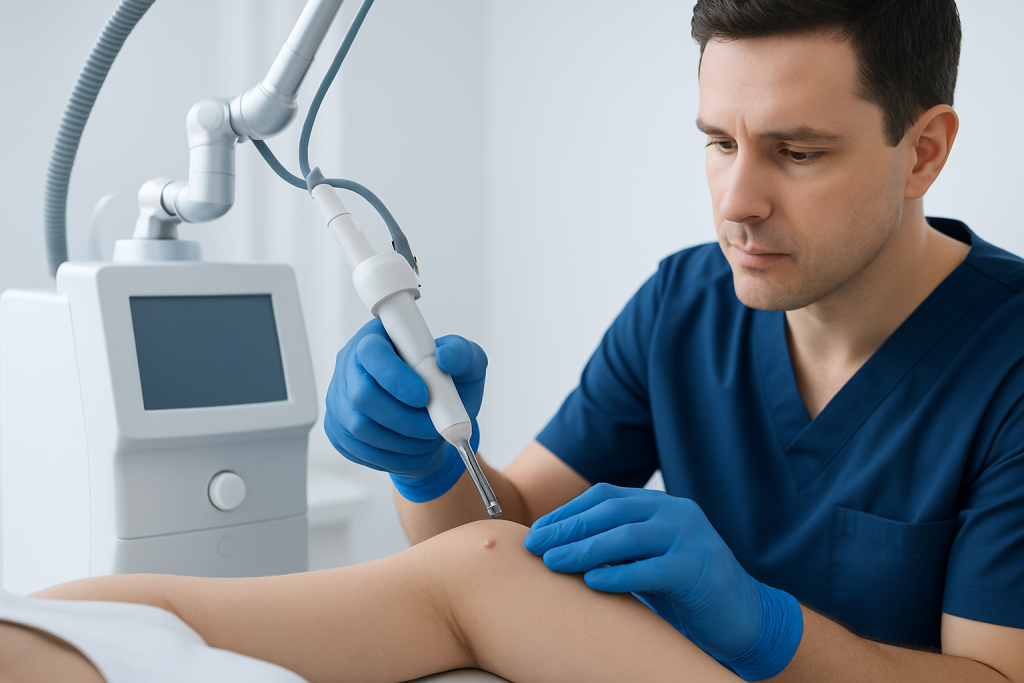
Skin tags are usually easy to recognize once seen up close. They tend to be soft, flesh-colored or slightly darker than the surrounding skin, and they often attach to the skin by a narrow stalk. Some remain tiny, while others gradually become more noticeable over time.
Most skin tags do not hurt. Trouble starts when they rub, twist, or catch on clothing or jewelry. In those cases, a skin tag may become red, sore, itchy, or lightly bleed after friction or shaving.
Any change in appearance deserves attention, especially if the bump grows quickly, changes color, becomes firm, develops crusting, or starts bleeding without a clear reason. Those features do not automatically mean something serious, but they do mean the lesion should be examined before removal is considered.
Causes & Risk Factors

The exact reason skin tags form is not fully understood, but friction seems to play a role. They are more common in areas where skin folds or rubs repeatedly, which may explain why they often appear in the neck, armpits, eyelids, or groin.
Several factors are associated with a higher chance of developing skin tags. These include excess body weight, pregnancy, insulin resistance, type 2 diabetes, and a family history of skin tags. Age may also be relevant, since they become more common in adulthood.
It is useful to remember that skin tags are not caused by poor hygiene and are not contagious. For international patients arranging care away from home, it can be reassuring to know that the goal is usually straightforward: confirm the diagnosis, choose the simplest safe removal method, and plan a short recovery with clear aftercare instructions.
- Repeated friction or rubbing
- Family history of skin tags
- Overweight or obesity
- Pregnancy-related skin changes
- Insulin resistance or diabetes
Diagnosis
Diagnosis usually begins with a visual examination. A dermatologist or other qualified clinician can often identify a skin tag by its shape, softness, and typical location. In many cases, no test is needed.
If a bump has unusual features, the clinician may recommend closer evaluation before removal. This is especially important when the lesion is darkly pigmented, irregular, firm, painful, rapidly changing, or not clearly attached by a stalk. When there is any doubt, the safer choice is to assess first and remove later.
People seeking treatment while abroad may benefit from bringing previous photos or medical notes, especially if the spot has changed over time. A clear history helps the clinician decide whether office-based removal is appropriate and whether the tissue should be sent for pathology after removal.
Treatment Options
The safest answer to how to remove skin tags is usually simple: have them removed by a trained medical professional. In a clinic setting, the procedure is commonly quick and may involve numbing the area, then snipping the tag off, freezing it, or using heat or cautery to remove it and control minor bleeding.
Which method is used depends on the size, location, number of skin tags, and the person’s skin type and medical history. For example, eyelid lesions or tags in delicate areas may need extra care. The clinician will also consider scarring risk and whether the person is taking blood-thinning medicine or has conditions that affect healing.
Home removal methods such as cutting with scissors, tying off with thread or dental floss, or using over-the-counter freezing products are not ideal. These approaches can cause infection, significant pain, bleeding, scarring, or removal of the wrong lesion. They also do not allow a professional to confirm the diagnosis first.
After removal, the area is usually kept clean and protected while it heals. If tissue is collected, it may be checked in a laboratory to confirm the diagnosis, which adds another layer of safety when the lesion does not look completely typical.
- Snip excision: the tag is removed with a sterile instrument, often after local numbing
- Cryotherapy: the growth is frozen so it falls off during healing
- Cautery or electrosurgery: controlled heat removes the lesion and helps limit bleeding
- Pathology review: may be done when the lesion needs confirmation
Prevention & Self-care
Not every skin tag can be prevented, especially when family history or body chemistry plays a role. Still, reducing friction may help lower the chances of new ones forming or existing ones becoming irritated.
Practical steps include wearing clothing that does not rub tightly against skin folds, choosing gentle shaving practices, and keeping areas prone to friction dry when possible. If skin tags are being scraped by necklaces, bra straps, or underwear seams, adjusting those triggers can make a noticeable difference in comfort.
Self-care after removal is usually uncomplicated. Clean the area gently, follow the clinician’s wound-care instructions, and watch for increasing redness, swelling, warmth, discharge, or persistent pain. These are not expected in routine healing and should be checked if they appear.
People with diabetes or circulation problems may need closer follow-up, because small skin wounds can take longer to heal. For patients traveling home after treatment, it is wise to leave the appointment with written aftercare guidance and a clear plan for who to contact if healing does not progress as expected.
When To See a Doctor
A clinician should examine any bump that is changing, bleeding, painful, or uncertain in appearance before removal is attempted. This is especially important if the lesion is not clearly a skin tag or if it has features that do not fit the usual pattern.
Medical advice is also appropriate if the skin tag is in a sensitive area, such as the eyelid, genitals, or a place where repeated bleeding is likely. Removal in these locations may require special technique and a more careful discussion of healing and scarring.
People who want a skin tag removed for comfort or cosmetic reasons can usually schedule an outpatient visit rather than waiting for an urgent problem. Acibadem Health Point’s multidisciplinary specialists and JCI-accredited hospitals diagnose and treat this condition for international patients, which can be helpful when care needs to fit within a travel plan and follow-up schedule.
If there is any doubt, asking a qualified doctor is the safest step. A brief examination can confirm whether the lesion is a skin tag and help choose the most appropriate removal method.
Frequently asked questions
Can skin tags be removed at home?
Home removal is generally not recommended. Cutting, tying, or freezing a skin tag without medical guidance can lead to bleeding, infection, and scarring, and it may be unsafe if the bump is not truly a skin tag.
Is skin tag removal painful?
Most in-clinic removals are brief and are usually done with local numbing if needed. People may feel mild stinging or pressure, but significant pain is not typical when the procedure is performed properly.
Do skin tags grow back after removal?
A removed skin tag does not usually return in the exact same spot. However, new skin tags can develop elsewhere over time, especially if a person has ongoing risk factors such as friction or a family tendency.
Should every skin tag be sent to pathology?
Not always. Many typical skin tags can be removed without laboratory testing, but a clinician may send tissue for review if the growth looks unusual or if confirmation would be helpful.
Can weight loss prevent new skin tags?
Weight management may reduce skin folds and friction for some people, which can help lower irritation and possibly reduce new skin tag formation. It is not a guarantee, because genetics and other factors also play a role.
When is a skin bump not a skin tag?
A bump that is firm, irregular, rapidly changing, painful, or unusually pigmented may be something other than a skin tag. Because several skin conditions can look similar, a professional exam is the safest way to tell the difference.
References
- American Academy of Dermatology
- Mayo Clinic
- NHS
- Cleveland Clinic
This article is for general information only and is not a substitute for professional medical advice. Please consult a qualified doctor about your individual situation.