

Pimple Popping

Key Takeaways
- Picking at a pimple can push inflammation deeper and delay healing.
- Squeezing may spread bacteria and increase the chance of post-inflammatory marks or scars.
- Many breakouts respond better to gentle cleansing, spot treatments, and consistent acne care than to popping.
- Large, painful, or recurring lesions may need a dermatologist’s assessment.
- Hands-off habits and targeted treatment are especially helpful for people who travel for care and need a simple follow-up routine.
Pimple popping may feel satisfying in the moment, but it can slow healing, increase irritation, and make acne marks or scars more likely. Understanding what happens to the skin during squeezing helps a person choose safer ways to treat breakouts and protect skin health.
Overview
Pimple popping is common because a visible blemish can feel urgent and easy to “fix.” In reality, a pimple is usually a small pocket of inflammation in the skin, and pressing on it can disturb a process that the body is already trying to complete. The result is often more redness, more swelling, and a longer path to healing.
Acne is not caused by poor hygiene alone. It usually develops when oil, dead skin cells, and bacteria become trapped in a pore, leading to inflammation. Some lesions are superficial and fade on their own; others sit deeper in the skin and do not respond well to squeezing. For those deeper breakouts, trying to pop them can be more harmful than helpful.
For people planning care from another country, it is useful to think of acne treatment as a routine rather than a single procedure. A good skin plan can often be started before travel, continued during the trip, and adjusted during follow-up, which is usually safer and more effective than reacting to each new pimple one by one.
What Happens When a Pimple Is Popped
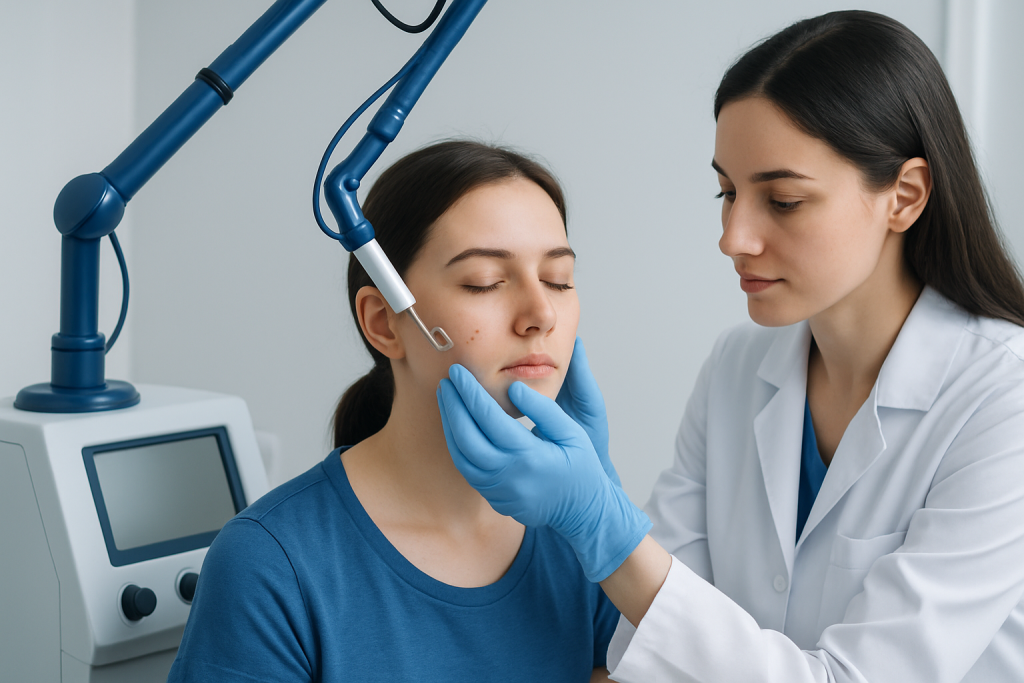
When a pimple is squeezed, the pressure may rupture the wall of the pore. If the contents move upward and out cleanly, the skin may look flatter for a short time. But if the material is pushed sideways or deeper, the surrounding tissue becomes more irritated and inflamed.
This is one reason pimple popping can backfire. The skin barrier is already under stress during acne flare-ups, and extra trauma can invite more swelling, crusting, and tenderness. It can also leave a wound-like opening that heals more slowly than the original blemish would have.
Skin tone, acne type, and picking habits all matter. Some people are more prone to dark marks after inflammation, while others develop raised or indented scars more easily. Because of these differences, the same squeeze that seems harmless for one person may leave another with a visible mark for weeks or months.
Symptoms and Signs That a Pimple Should Not Be Popped
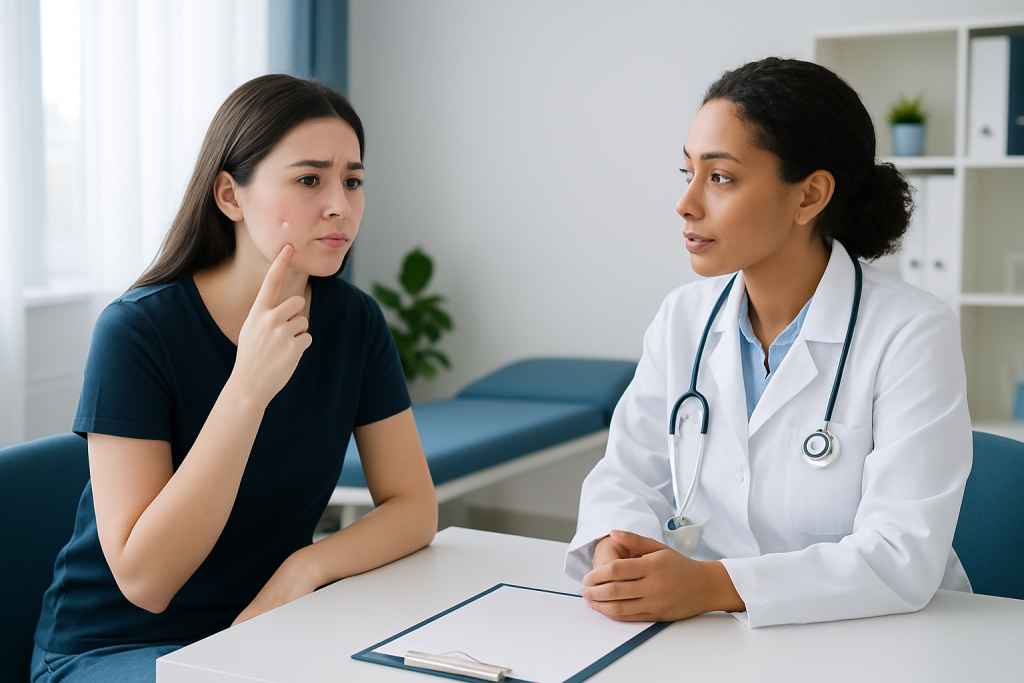
Not every bump on the skin should be treated the same way. Whiteheads near the surface are different from deep, sore nodules that feel firm and tender under the skin. Deep lesions are especially poor candidates for popping because they usually do not empty cleanly.
A pimple is generally best left alone if it is painful, large, hard, not close to the surface, or surrounded by a wide red area. Lesions near the nose and upper lip also deserve caution because the skin there is sensitive and easy to irritate. If there is a lot of pus, repeated recurrence in the same area, or sudden worsening, a clinician should evaluate it rather than a person trying to drain it at home.
Warning signs that suggest more than ordinary acne include fever, rapidly spreading redness, severe swelling, or a boil-like lump that feels warm and increasingly painful. These findings do not mean the situation is usually dangerous, but they do mean professional assessment is a safer choice than self-treatment.
Causes and Risk Factors
Acne develops when several factors overlap: increased oil production, clogged pores, bacteria on the skin, and inflammation. Hormonal changes, stress, friction from masks or helmets, certain cosmetics, and some medications can also contribute. Because acne is multifactorial, popping a pimple does not address the underlying cause.
Risk factors for damage from popping include frequent touching of the face, previous acne scarring, picking habits, and using unclean fingers or tools. People with darker skin tones may also be more prone to post-inflammatory hyperpigmentation, which means even a minor injury can leave a lingering dark spot.
For international patients, it can help to think about travel-related triggers too. Changes in climate, sleep, routine, diet, stress, and skincare products can all affect breakouts. A practical plan before travel often reduces the urge to squeeze by making the skin less reactive in the first place.
Diagnosis
Most pimples are diagnosed by a healthcare professional through a simple skin examination. The clinician looks at the type of lesion, how widespread the acne is, and whether there are signs of infection, scarring, or another skin condition that can resemble acne.
In some cases, the question is not only “what is this?” but “why is it happening repeatedly?” A dermatologist may ask about menstrual changes, new medications, skincare habits, stress, and family history. If acne is severe, persistent, or unusually inflamed, additional evaluation may be needed to identify a contributing factor.
For patients traveling for care, diagnosis may begin with photos or a telehealth review before an in-person visit. That can help the specialist plan treatment efficiently and decide whether a simple regimen, a procedure, or a longer follow-up schedule is the best fit.
Treatment Options
The safest treatment for most pimples is usually not manual popping. Instead, clinicians often recommend acne therapies that calm inflammation, clear clogged pores, and reduce bacteria over time. These may include gentle cleansers, topical acne medicines, and, when appropriate, oral treatments prescribed by a doctor.
For certain lesions, a dermatologist may perform a controlled extraction or a small procedure under sterile conditions. This is different from squeezing at home because the skin is prepared properly, the lesion is selected carefully, and the risk of trauma is lower. A professional approach is especially helpful for painful cystic acne, recurrent clogged pores, or blemishes that are causing emotional distress.
Treatment plans are individualized. Some people need a short course of therapy for a flare, while others do best with a maintenance routine that prevents new lesions. The key is consistency, since acne generally improves more reliably with steady care than with repeated attempts to empty each pimple as it appears.
- Use non-comedogenic skincare products.
- Wash the face gently, not aggressively.
- Follow the prescribed acne treatment consistently.
- Avoid combining multiple harsh products at once.
- Seek medical extraction only when recommended.
Prevention and Self-Care
Skin that is less irritated is usually less tempting to pick at. Gentle cleansing twice daily, light moisturization if needed, and regular use of acne-directed products recommended by a clinician can help reduce flare-ups. It is also wise to avoid scrubs, alcohol-heavy toners, and frequent “spot checking” in the mirror, which can turn a small blemish into a bigger problem.
Hands-off habits matter. Keeping nails short, using clean pillowcases, and resisting the urge to touch the face can all lower the chance of extra irritation. If a pimple feels very noticeable, a cool compress may ease discomfort without injuring the skin.
Travel can make routines harder, so simplicity helps. A compact skincare plan, packed medication, and a clear follow-up schedule can make acne care easier to maintain across time zones and hotel bathrooms. If a patient is preparing for treatment abroad, a dermatologist can often suggest a routine that is practical to continue after returning home.
When to See a Doctor
A clinician should assess acne when breakouts are painful, frequent, leaving marks, or not improving with over-the-counter care. Medical review is also sensible when a pimple seems unusually large, the skin around it is increasingly red, or the same area keeps becoming inflamed. These situations often respond better to guided treatment than to repeated popping.
People should seek prompt care if they notice fever, rapidly spreading redness, drainage with significant swelling, or a lesion near the eye. Sudden, severe acne in an adult who has not had it before can also warrant evaluation. A dermatologist can distinguish routine acne from a boil, cyst, or another condition that needs a different approach.
For international patients, it can be reassuring to choose a center that can coordinate diagnosis, treatment, and follow-up in one plan. Acibadem Health Point’s multidisciplinary specialists and JCI-accredited hospitals can diagnose and treat acne-related skin concerns for international patients, with attention to continuity of care before and after travel.
Frequently asked questions
Is it ever okay to pop a pimple at home?
In general, it is safer not to pop pimples at home. Squeezing can push inflammation deeper, spread bacteria, and increase the chance of scarring or dark marks. A dermatologist can advise when, if ever, a controlled extraction is appropriate.
Why does a pimple look flatter after squeezing but come back worse later?
The bump may look smaller because some fluid leaves the pore, but the skin can also be injured in the process. If the contents are pushed deeper or the pore wall tears, the area often becomes more inflamed afterward. That can make the lesion last longer than it would have on its own.
Can pimple popping cause scars?
Yes, it can. Repeated trauma to the skin raises the risk of both indented scars and dark marks after inflammation, especially in people who are already prone to scarring. Early acne treatment usually lowers that risk.
What is a better way to deal with a visible whitehead?
A gentle acne treatment plan is usually better than squeezing. Depending on the skin type and acne pattern, a doctor may suggest topical treatments, gentle cleansing, and targeted care for flare-ups. If the spot is large or painful, medical assessment is wiser than trying to drain it.
How can someone stop picking at their face?
It helps to reduce triggers: keep nails short, avoid checking the skin too often, and use a simple daily skincare routine. Some people find it easier to stop picking when the skin is less irritated and breakouts are being treated consistently.
When should a pimple be checked by a doctor?
A pimple should be checked if it is very painful, keeps returning, is spreading redness, or is leaving scars or dark marks. A doctor should also review lesions with fever, swelling near the eye, or sudden severe acne. These signs often call for a professional diagnosis rather than home care.
References
- American Academy of Dermatology
- National Institute of Arthritis and Musculoskeletal and Skin Diseases
- Mayo Clinic
- NHS
This article is for general information only and is not a substitute for professional medical advice. Please consult a qualified doctor about your individual situation.
More from the Health Library


Related Specialists

Dr. Lütfi Koçyiğit
Check-Up and Wellness
Dr. Nezail Demirciler
Plastic, Reconstructive and Aesthetic Surgery
Prof. Dr. Yaman Sarpel
Orthopedic Surgery & Traumatology
Prof. Dr. Zeynep Güven
Physical Medicine & Rehabilitation