Pericoronitis: Symptoms, Causes and Treatment

Key Takeaways
- Pericoronitis often develops around a partially erupted wisdom tooth, where food and bacteria can collect under the gum flap.
- Common symptoms include gum swelling, tenderness, bad taste, pain when chewing, and difficulty opening the mouth.
- Treatment may involve cleaning the area, easing inflammation, treating infection when needed, and sometimes removing the wisdom tooth.
- Good oral hygiene and early dental review can reduce the chance of repeated flare-ups.
- Persistent swelling, fever, spreading pain, or difficulty swallowing should be assessed by a dentist or doctor without delay.
Medically reviewed by the Acıbadem clinical team — August 19, 2026
Pericoronitis is inflammation and sometimes infection of the gum tissue around a tooth that has only partly come through, most often a wisdom tooth. It can cause pain, swelling, and trouble opening the mouth, and it is usually manageable with prompt dental care.
Overview
Pericoronitis is the name given to inflammation of the soft tissue that surrounds a tooth, most often a lower wisdom tooth, that has not fully erupted. A small flap of gum can partly cover the tooth, creating a sheltered space where food debris and bacteria settle more easily than in the rest of the mouth.
For many people, the first episode arrives at an inconvenient moment: during travel, before an important event, or while the final stages of a wisdom tooth eruption are still uncertain. The problem may begin as mild soreness, then progress to swelling, unpleasant taste, and pain when chewing or swallowing. Because the area can change quickly, timely assessment helps prevent the discomfort from becoming more difficult to manage.
Although pericoronitis is common in young adults, it is not limited to one age group. Some cases settle with local care and improved cleaning, while others return repeatedly until the tooth is removed or the gum tissue is addressed. The best approach depends on how the tooth is positioned, whether infection is present, and how severe the symptoms are.
Symptoms
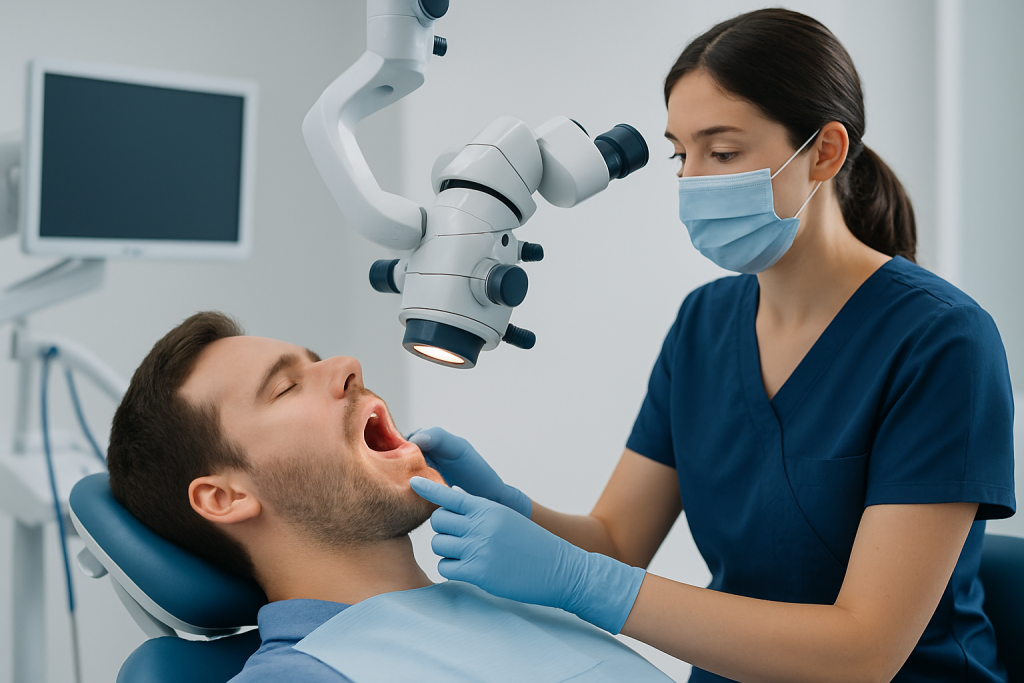
The early signs are often subtle. A person may notice tenderness around the back of the jaw, mild gum swelling, or discomfort when biting down on that side. A bad taste, foul breath, or the sensation that something is trapped behind the last molar can also be clues.
As inflammation increases, symptoms may become more noticeable and may include:
- Red, swollen gum tissue around a partly erupted tooth
- Pain that spreads to the ear, jaw, or throat
- Difficulty opening the mouth fully
- Pain while chewing or brushing near the area
- Pus or a bad taste if infection is present
- Swollen lymph nodes under the jaw
In some people, the pain is localised; in others, it feels broader and can interfere with sleep, eating, or speaking. If swelling starts to spread beyond the gum or if general symptoms such as fever appear, the condition deserves prompt dental review.
Causes & Risk Factors

Pericoronitis develops when bacteria and trapped material accumulate beneath the gum flap that sits over a partially erupted tooth. Wisdom teeth are especially vulnerable because they are the last permanent teeth to appear, and there may be limited room for them to emerge cleanly and fully.
Several factors can increase the chance of a flare-up. A tooth that is tilted, erupting slowly, or stuck against the tooth in front may create a deeper pocket for debris. Difficulty reaching the area with a toothbrush, a history of repeated irritation, and reduced access to dental care can also make the problem more likely to continue.
Risk can rise when a person is tired, unwell, or travelling and brushing routines are disrupted. In international-patient situations, delayed follow-up after the first signs of trouble can allow a mild irritation to become a more established infection. The underlying issue is usually mechanical as well as inflammatory: the gum flap and the tooth’s position together create a space that is hard to keep clean.
Diagnosis
Diagnosis usually begins with a dental examination and a discussion of symptoms, how long they have been present, and whether similar episodes have happened before. The dentist will look for redness, swelling, trapped food, pus, and signs that the tooth is only partly erupted.
X-rays are often useful because they help show the position of the wisdom tooth, the amount of space available, and whether the tooth is affecting nearby structures. Imaging also helps the dental team decide whether a simple local treatment is likely to be enough or whether extraction may be the better long-term option.
When symptoms are severe, the clinician may also check for spreading infection and assess whether urgent care is needed. In most cases, the diagnosis is clinical and straightforward, but careful examination matters because other dental problems, such as gum disease or a decayed tooth, can sometimes cause similar pain.
Treatment Options
Treatment depends on whether the main issue is local inflammation, an active infection, or repeated episodes linked to the tooth’s position. The first step is usually gentle cleaning of the area to remove trapped debris and reduce the bacterial load under the gum flap.
To ease symptoms, a dentist may recommend rinsing, improved oral hygiene around the area, and measures that reduce irritation while the tissue settles. If infection is present or the swelling is more pronounced, the dentist may consider medical treatment alongside local care. The exact plan is individual and should always be guided by a qualified professional.
When pericoronitis keeps returning, or when the wisdom tooth is unlikely to erupt into a healthy position, removal of the tooth is often discussed. In some situations, treatment of the gum flap may be considered, but extraction is frequently the more definitive solution. For patients travelling for care, the full plan should include clear instructions for aftercare, pain control, and any follow-up that may be needed after returning home.
Supportive measures may include:
- Careful cleaning around the tooth
- Salt-water or antiseptic rinses if advised by a dentist
- Pain relief recommended by a professional
- Treatment of infection when clinically indicated
- Wisdom tooth extraction if the problem is recurrent or structurally likely to return
Prevention & Self-care
Prevention focuses on keeping the area as clean as possible and reducing the chance that food will lodge beneath the gum flap. A soft-bristled toothbrush, patient cleaning around the back teeth, and regular dental checks can make a meaningful difference.
When a wisdom tooth is erupting, it helps to pay attention to early warning signs rather than waiting for the pain to settle on its own. Small changes in the back of the mouth can worsen quickly if brushing becomes difficult or if the person avoids chewing on that side for several days. Gentle hygiene is usually preferable to vigorous scrubbing, which can irritate the tissue further.
People who are preparing to travel for dental treatment may find it useful to arrange a clear plan in advance, including how to clean the area, what symptoms should trigger a call to the clinic, and when to schedule follow-up after returning home. Simple self-care steps can support healing, but they do not replace an examination when symptoms are active or recurring.
When to See a Doctor
A dentist should be contacted if pain around a wisdom tooth lasts more than a day or two, keeps returning, or makes eating and cleaning difficult. Early assessment is especially important when there is visible swelling, a bad taste, or the mouth does not open normally.
Urgent care is advisable if symptoms are spreading or if a person develops fever, facial swelling, trouble swallowing, or difficulty breathing. These signs suggest that the infection or inflammation may be extending beyond the immediate gum area and should be checked promptly.
For patients who are considering treatment abroad, a clear diagnosis and treatment plan before travel can reduce uncertainty and make recovery easier. Acibadem Health Point’s multidisciplinary specialists and JCI-accredited hospitals diagnose and treat pericoronitis for international patients, with attention to both the immediate problem and the follow-up that comes after travel.
What Recovery Usually Involves
Recovery depends on the treatment chosen. After local cleaning or gum treatment, symptoms often ease over several days, provided the area is kept clean and irritation is reduced. If a wisdom tooth is removed, healing may take longer and the dental team will explain what to expect, how to protect the site, and which signs should prompt a review.
Good recovery usually means gradually improving pain, less swelling, and a return to comfortable chewing. It also means keeping follow-up appointments when recommended, especially if the patient is travelling and needs confirmation that healing is progressing well before returning to routine care at home.
People should not be discouraged if the area feels sensitive for a short time after treatment. The aim is steady improvement, not immediate perfection, and a professional can advise if the course of healing seems different from expected.
Frequently asked questions
What is the main cause of pericoronitis?
Pericoronitis usually happens when bacteria and food debris collect around a partially erupted tooth, most often a wisdom tooth. The gum flap over the tooth creates a pocket that is difficult to clean well.
Can pericoronitis go away on its own?
Mild irritation may settle for a time, but the underlying cause often remains if the tooth is still partly covered by gum. Recurrent symptoms are a sign that dental assessment is needed.
Is pericoronitis the same as a wisdom tooth infection?
It is often described that way because the problem commonly affects wisdom teeth and may involve infection. However, pericoronitis specifically refers to inflammation of the gum tissue around a partly erupted tooth.
Does pericoronitis always mean the tooth must be removed?
Not always. Some cases improve with cleaning and local treatment, but extraction is often considered if the tooth keeps causing problems or is unlikely to erupt normally.
What can make pericoronitis worse?
Poor access for cleaning, food trapping, delayed treatment, and a tooth that is angled or partly stuck can all make symptoms worse. Smoking and general oral hygiene challenges may also contribute to ongoing irritation.
How can a person manage pain before seeing a dentist?
Gentle cleaning, avoiding hard or irritating foods, and using dentist-recommended pain relief can help temporarily. It is still important to arrange an examination, especially if swelling or difficulty opening the mouth is present.
References
- American Dental Association
- NHS
- Merck Manual Professional Edition
- Mayo Clinic
- American Association of Oral and Maxillofacial Surgeons
This article is for general information only and is not a substitute for professional medical advice. Please consult a qualified doctor about your individual situation.
Explore treatments in Turkey — costs, top hospitals & a free quote
JCI-accredited · board-certified surgeons · reply within 24h
Add us as a Preferred Source to see more of our trusted health content across Google Search, AI Overviews and Discover.