Parkinson’s Disease: Symptoms, Causes and Treatment

Key Takeaways
- Parkinson's disease symptoms usually develop slowly and can affect movement, balance, sleep, mood, and daily routines.
- A resting tremor is well known, but stiffness, slowness, and reduced arm swing may appear earlier in some people.
- Not every tremor or movement change means Parkinson's disease; a neurologic assessment helps clarify the cause.
- Symptoms often evolve over time, so ongoing follow-up is important for adjusting treatment and support.
- Medication, rehabilitation, and practical daily strategies can help many people manage symptoms more comfortably.
Medically reviewed by the Acıbadem clinical team — August 19, 2026
Parkinson's disease symptoms often begin gradually and may be easy to overlook at first. Recognizing the pattern of movement and non-movement changes can help a person seek timely evaluation and support.
Overview
Parkinson’s disease is a progressive neurological condition that affects the way the brain controls movement. Its symptoms usually emerge gradually, which means a person may notice small changes long before the diagnosis is considered.
Although Parkinson’s disease is often associated with tremor, that is only one part of the picture. Many people first notice stiffness, slower movement, smaller handwriting, a changed facial expression, or a sense that everyday tasks now take more effort than before.
For international patients, these changes can become especially noticeable when travel, work, or family responsibilities require more stamina and coordination. A careful specialist evaluation can help separate Parkinson’s disease from other conditions that may cause similar symptoms and guide the next steps with clarity.
Common Symptoms
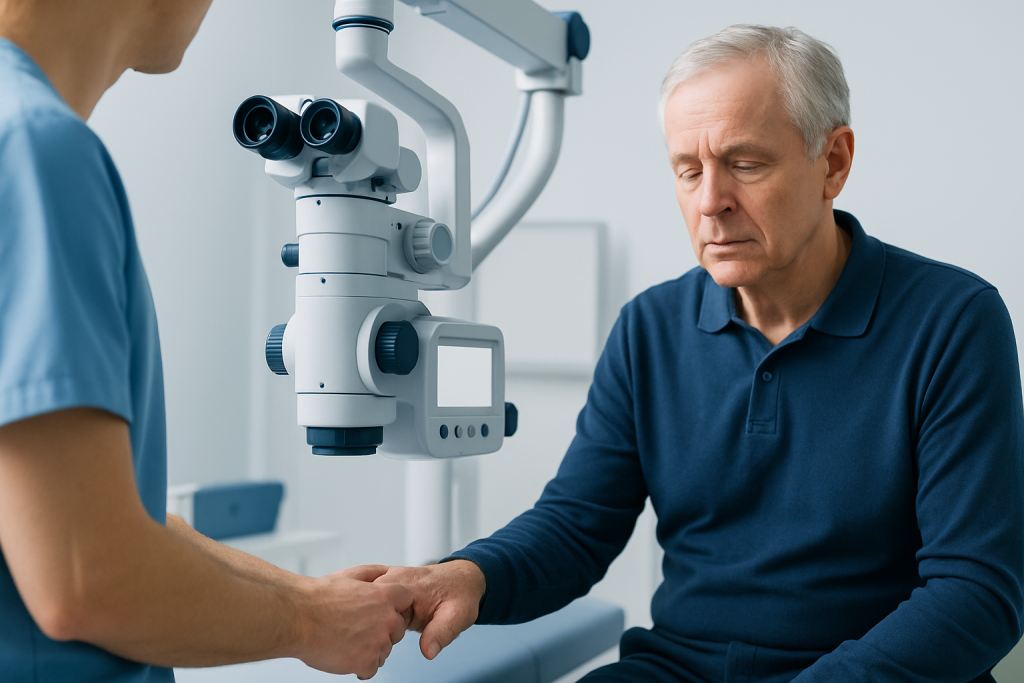
The most familiar movement symptom is tremor, often described as a resting tremor because it tends to appear when the hand or arm is relaxed. It may lessen during purposeful movement and become more noticeable when the person is tired, stressed, or sitting still.
Slowness of movement, called bradykinesia, is another hallmark symptom. It may show up as trouble starting to walk, a shorter stride, reduced arm swing, difficulty turning in bed, or a delay when beginning routine actions such as buttoning a shirt or opening a jar.
Stiffness, or rigidity, can create aching, tightness, or a feeling that the body is not moving fluidly. Some people also notice balance changes, a stooped posture, softer speech, reduced facial expression, or handwriting that becomes smaller and more crowded.
- Resting tremor, often starting on one side
- Slowed movements and reduced spontaneity
- Muscle stiffness or tightness
- Shuffling steps or shorter walking pattern
- Smaller handwriting or soft, less expressive speech
- Reduced facial expression or blinking
Symptoms Beyond Movement

Parkinson’s disease is not limited to movement. Many people experience symptoms that are less visible but still very meaningful in daily life, such as sleep disruption, constipation, fatigue, anxiety, depression, or changes in smell.
Some people notice that they feel mentally slower, have trouble multitasking, or find it harder to plan and organize. Others may develop lightheadedness when standing, drooling, urinary urgency, or a quieter, flatter voice. These symptoms can affect comfort, confidence, and independence even when the movement changes seem mild.
Because these non-motor symptoms are sometimes present early, they can influence how and when someone seeks care. A person who feels “not quite right” but cannot point to a single movement problem should still mention the pattern to a clinician, especially if several symptoms are appearing together.
Causes & Risk Factors
Parkinson’s disease develops when nerve cells in a part of the brain involved in movement begin to function less effectively and are lost over time. The exact cause is not fully understood, and in many cases there is no single identifiable trigger.
Age is the strongest known risk factor, but Parkinson’s disease can occur before older age. Family history may increase risk in some people, and certain inherited gene changes are linked to the condition, though most cases are not directly inherited.
Researchers also study environmental exposures and the interaction between genetics and lifestyle factors. Even so, having a risk factor does not mean a person will develop Parkinson’s disease, and many people with the condition have no obvious risk factor at all.
How Doctors Diagnose It
There is no single blood test or scan that confirms Parkinson’s disease on its own. Diagnosis is usually based on a neurologic history and physical examination, with attention to the pattern of symptoms, movement findings, and how the symptoms have changed over time.
A doctor may ask when the first symptom began, whether it affects one side more than the other, and whether walking, balance, handwriting, facial expression, or sleep have changed. The clinician may also review medicines, because some drugs can cause Parkinson-like symptoms.
In some situations, imaging or additional tests are used to rule out other causes of tremor or movement changes. For international patients coordinating care across countries, bringing previous reports, medication lists, and any videos of symptoms can make specialist review more efficient and more accurate.
Treatment Options
Treatment is tailored to the person, the symptoms, and how much daily function is affected. Medicines that support dopamine signaling are often used to improve movement symptoms, while other medications may be considered for specific problems such as tremor or fluctuations in response.
Rehabilitation is a central part of care. Physiotherapy can support gait, posture, strength, and balance; occupational therapy can suggest practical ways to manage dressing, writing, cooking, and travel routines; and speech therapy may help with voice volume, swallowing, or communication.
Some people benefit from more advanced therapies when symptoms are harder to control. A neurologist may discuss additional options if medications are not providing stable relief. The best plan usually combines medical treatment with movement practice, nutrition guidance, and symptom monitoring over time.
Because Parkinson’s disease evolves gradually, treatment often needs periodic adjustment. A person traveling for care may find it helpful to arrange follow-up before leaving, so the next steps are clear once they return home.
Prevention & Self-care
Parkinson’s disease cannot currently be prevented with certainty, but healthy routines can support overall brain and body health. Regular physical activity, adequate sleep, good hydration, and attention to constipation or swallowing concerns can make day-to-day symptoms easier to manage.
Keeping a symptom journal can be very useful. Notes about tremor, stiffness, sleep, falls, mood, medication timing, and activities that are becoming harder can help a specialist understand the pattern and fine-tune treatment.
Practical self-care often includes safe home setup, good lighting, stable footwear, and time-saving routines for dressing or meal preparation. For people arranging international treatment, planning ahead for mobility needs, medication schedules, and recovery support during travel can reduce stress and make the experience smoother.
- Stay active with doctor-approved exercise
- Follow a regular sleep and meal pattern
- Use fall-prevention strategies at home
- Track symptom changes and medication effects
- Seek support for mood, speech, or swallowing concerns
When to See a Doctor
Medical evaluation is a good idea when tremor, stiffness, slowness, or balance changes are persistent, worsening, or affecting work, driving, or self-care. It is especially important to seek assessment if symptoms begin on one side of the body or if daily tasks are taking noticeably longer than before.
A doctor should also be consulted if there are repeated falls, swallowing difficulty, severe constipation, confusion, fainting, or significant changes in mood or sleep. These issues do not automatically mean Parkinson’s disease, but they deserve attention and may need treatment in their own right.
For people considering care abroad, a neurologist-led evaluation can help confirm the diagnosis, explain symptom patterns, and create a realistic treatment plan. Acibadem Health Point’s multidisciplinary specialists and JCI-accredited hospitals diagnose and treat Parkinson’s disease for international patients with coordinated, patient-centered care.
Frequently asked questions
What is the first sign of Parkinson's disease?
There is no single first sign that appears in every person. Some people notice a resting tremor first, while others first develop slowness, stiffness, or a change in walking, handwriting, or facial expression.
Does Parkinson's disease always cause tremor?
No. Tremor is common, but some people mainly experience slowness and stiffness with little or no tremor. A neurologic assessment is helpful when movement changes are present even without shaking.
Can Parkinson's disease symptoms be different from person to person?
Yes, symptom patterns vary widely. One person may have more tremor, while another has more balance problems, sleep changes, or non-motor symptoms such as constipation or anxiety.
Are non-motor symptoms important in Parkinson's disease?
They are very important because they can affect quality of life and may appear early. Sleep, mood, digestion, smell, and thinking changes should be discussed with a doctor along with movement symptoms.
How is Parkinson's disease diagnosed if there is no single test?
Doctors usually diagnose it by reviewing symptoms, doing a neurological examination, and ruling out other causes. In some cases, imaging or medication review helps clarify the picture.
Can treatment help with Parkinson's disease symptoms?
Yes. Medicines, rehabilitation, and practical self-care strategies can often improve comfort and function. Because symptoms can change over time, treatment usually works best when it is reviewed regularly.
References
- National Institute of Neurological Disorders and Stroke
- Parkinson's Foundation
- World Health Organization
- Mayo Clinic
- American Academy of Neurology
This article is for general information only and is not a substitute for professional medical advice. Please consult a qualified doctor about your individual situation.
Explore treatments in Turkey — costs, top hospitals & a free quote
JCI-accredited · board-certified surgeons · reply within 24h
Add us as a Preferred Source to see more of our trusted health content across Google Search, AI Overviews and Discover.