Pinched Nerve In Neck: Symptoms, Causes and Treatment

Key Takeaways
- A pinched nerve in the neck often causes neck pain plus arm symptoms such as tingling, numbness, or weakness.
- The most common causes include disc changes, age-related wear, and less often injury or narrowing around the nerve.
- Many cases improve with rest, activity changes, medication, and physical therapy, while some need injections or surgery.
- Doctors usually diagnose the problem with a medical history, examination, and imaging when needed.
- Urgent assessment is important if weakness is worsening, walking becomes difficult, or bladder or bowel control changes.
Medically reviewed by the Acıbadem clinical team — August 19, 2026
A pinched nerve in the neck happens when a nerve root in the cervical spine becomes irritated or compressed, often causing pain that may travel into the shoulder, arm, or hand. Understanding the pattern of symptoms and getting the right evaluation can help guide safe, effective treatment.
Overview
A pinched nerve in the neck, also called cervical radiculopathy, begins when one of the nerve roots leaving the cervical spine is pressed on or inflamed. The result is often more than ordinary neck stiffness. People may notice pain that seems to travel from the neck into the shoulder blade, arm, forearm, or fingers, depending on which nerve is affected.
This condition can feel unsettling because the discomfort may be sharp, burning, aching, or electric in quality, and it may change with certain head positions. For international patients deciding whether to travel for care, the key question is usually not just whether the pain is present, but whether it is accompanied by numbness, weakness, or persistent symptoms that do not settle with simple measures.
Many pinched nerves improve over time with conservative treatment. Even so, a careful diagnosis matters because similar symptoms can come from the shoulder, upper back, or other nerve problems, and those conditions may need different treatment plans.
Symptoms
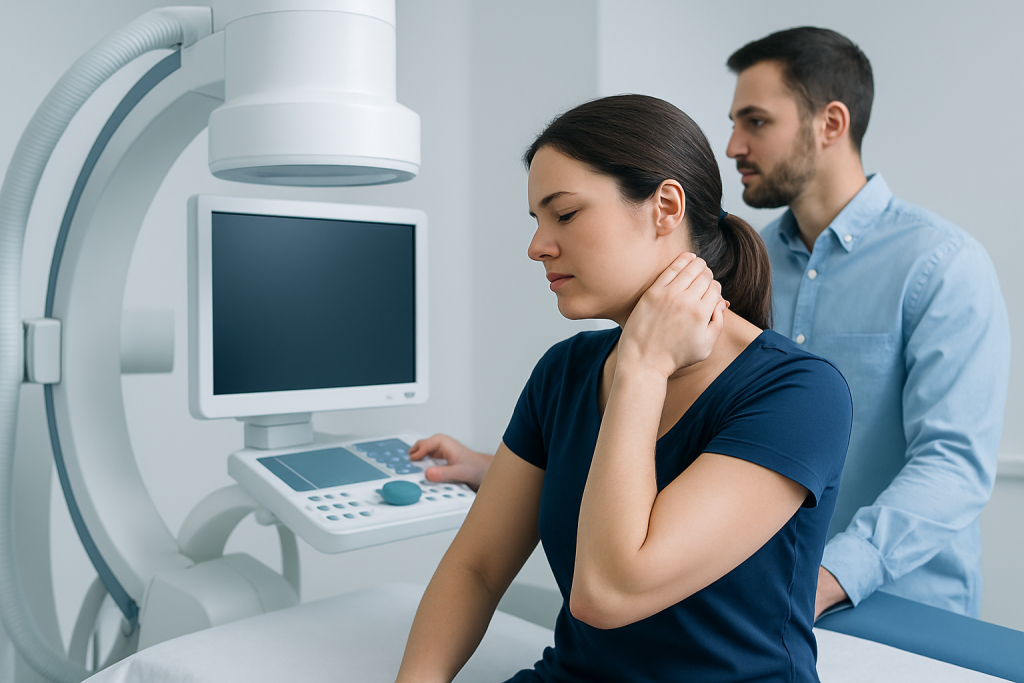
The symptom pattern often gives the first clue. Neck pain may be the main complaint, but arm symptoms are especially suggestive of nerve involvement. Pain may spread on one side, and turning the head, looking up, or holding the neck in one position may make it worse.
Common symptoms include:
- Pain in the neck, shoulder, or arm
- Tingling or “pins and needles” in the hand or fingers
- Numbness in a specific part of the arm or hand
- Muscle weakness, such as trouble gripping objects or lifting the arm
- Pain that increases with coughing, sneezing, or certain neck movements
Some people describe only mild discomfort at first, while others notice sudden, intense pain after sleeping awkwardly or after a strain. Symptoms can stay in one area or radiate in a line, which reflects the path of the irritated nerve root.
If weakness is becoming more noticeable, fine motor tasks are affected, or symptoms are waking the person from sleep repeatedly, the condition deserves medical attention rather than simple watchful waiting.
Causes & Risk Factors

A pinched nerve in the neck usually develops when nearby structures crowd the space around a nerve root. The most common reason is age-related change in the cervical spine. Discs may flatten or bulge, and joints may form bone spurs that narrow the openings where the nerves exit.
Other possible causes include a herniated disc, arthritis in the neck, injury such as whiplash, poor posture maintained over long periods, or repetitive overhead activity. Less commonly, swelling from inflammation or a growth in the spinal area may contribute.
Risk can be higher in people who:
- Have jobs or hobbies with repeated neck strain
- Spend long hours looking down at screens
- Have a history of neck injury
- Live with arthritis or other degenerative spine changes
- Smoke, since smoking can affect disc health and healing
It helps to think of the problem as mechanical irritation of a nerve, not as a single disease with one cause. That is why treatment is often tailored to the exact source of pressure and the person’s daily needs, including work, travel, and recovery plans.
Diagnosis
Diagnosis usually starts with a detailed discussion of symptoms, followed by a physical examination. A clinician may check neck movement, reflexes, sensation, and muscle strength to see whether the pattern matches a particular nerve root.
If the diagnosis is not clear, or if symptoms are severe, persistent, or include weakness, imaging may be recommended. Magnetic resonance imaging, or MRI, is often the most useful test because it shows discs, nerves, and soft tissues clearly. In some situations, X-rays or CT scans help assess bony narrowing, especially when planning treatment.
Occasionally, nerve tests such as electromyography or nerve conduction studies are used to confirm whether a nerve is affected and to rule out other problems. For people seeking care from another country, a good diagnostic plan can also help organize records for follow-up after returning home, which makes ongoing treatment easier to continue locally.
Treatment Options
Treatment depends on how severe the symptoms are and whether weakness or nerve damage is present. Many cases improve without surgery. The first goal is often to reduce inflammation and pressure on the nerve while keeping the person safely active rather than completely immobilized.
Conservative treatment may include rest from aggravating activities, posture changes, physical therapy, and medicines recommended by a doctor to ease pain or inflammation. A therapist may teach neck and shoulder exercises that improve mobility and support the spine. Some people also benefit from a short period of using a soft collar, but this is not usually a long-term solution.
If symptoms do not improve, doctors may consider a cervical steroid injection to reduce inflammation around the affected nerve. Surgery is usually reserved for selected cases, such as ongoing severe pain, progressive weakness, or structural compression that is unlikely to settle with conservative care. Common procedures aim to remove the pressure on the nerve and stabilize the neck when needed.
Choices about treatment should reflect the person’s daily life, work demands, and travel plans. For an international patient, that may include deciding whether a short treatment trip is enough or whether rehabilitation and imaging follow-up are better arranged in stages.
Prevention & Self-care
Not every pinched nerve can be prevented, especially when age-related spine changes are involved. Still, several habits may reduce irritation and help recovery. The main idea is to keep the neck moving in comfortable ways and avoid repeated strain.
Useful self-care steps include:
- Adjusting screen height so the head does not lean forward for long periods
- Using a supportive pillow and avoiding awkward sleeping positions
- Taking regular breaks during desk work or long drives
- Practicing gentle stretching or exercises recommended by a clinician
- Using good lifting technique and avoiding sudden heavy loads
Heat or cold may provide temporary relief for some people, depending on what feels better. It is usually wise to avoid forceful neck manipulation unless it is specifically advised by a qualified medical professional. If symptoms flare after travel, long flights, or carrying heavy luggage, simple adjustments such as lighter bags, frequent movement, and better seat support can be helpful.
When to See a Doctor
Medical evaluation is important if neck pain lasts more than a short period, keeps coming back, or is accompanied by arm numbness, tingling, or weakness. A doctor can determine whether the problem is a pinched nerve, a muscle strain, or a different condition that needs separate care.
Prompt assessment is especially important if the person notices worsening weakness, difficulty using the hand, balance problems, trouble walking, or changes in bladder or bowel control. These symptoms suggest more urgent nerve or spinal cord involvement and should not be ignored.
It is also sensible to seek advice if pain is severe enough to interfere with sleep, work, or travel plans, or if symptoms do not improve after conservative care. In such cases, a multidisciplinary team can help with diagnosis, treatment planning, rehabilitation, and follow-up. At Acibadem Health Point, multidisciplinary specialists and JCI-accredited hospitals diagnose and treat this condition for international patients in a coordinated way.
Frequently asked questions
Is a pinched nerve in the neck the same as a pulled muscle?
No. A pulled muscle usually causes localized soreness and stiffness, while a pinched nerve more often causes pain that travels into the shoulder, arm, or hand. Tingling, numbness, or weakness also point more toward nerve involvement.
Can a pinched nerve in the neck heal on its own?
Many cases improve with time and conservative care, especially when symptoms are mild and there is no major weakness. A doctor can help decide whether watchful waiting is reasonable or whether further treatment is needed.
What kind of doctor treats a pinched nerve in the neck?
Depending on the case, a neurologist, orthopedic spine specialist, neurosurgeon, physiatrist, or physical therapist may be involved. The most suitable specialist depends on symptom severity, test results, and whether surgery is being considered.
Does a pinched nerve always require surgery?
No. Surgery is usually considered only when symptoms are persistent, severe, or associated with progressive weakness or significant structural compression. Many people improve without an operation.
Can poor posture cause a pinched nerve in the neck?
Poor posture can contribute by increasing strain on the neck and narrowing space around nerves over time. It is usually one factor among several, rather than the only cause.
Should someone travel for treatment if they have a pinched nerve in the neck?
That depends on how severe the symptoms are and what care is needed. Travel may make sense for advanced imaging, specialist evaluation, or procedures, but a doctor should first confirm that the condition is stable enough for travel and plan follow-up care.
References
- Mayo Clinic
- National Institute of Neurological Disorders and Stroke
- American Association of Neurological Surgeons
- Cleveland Clinic
- National Health Service
This article is for general information only and is not a substitute for professional medical advice. Please consult a qualified doctor about your individual situation.
Joint and spine care in Turkey — expert assessment & treatment
JCI-accredited · board-certified surgeons · reply within 24h
Add us as a Preferred Source to see more of our trusted health content across Google Search, AI Overviews and Discover.