Ovulation Pain
Key Takeaways
- Ovulation pain often happens midway through the menstrual cycle when an egg is released.
- The discomfort may be one-sided, mild to moderate, and last from minutes to a couple of days.
- Similar symptoms can also come from conditions such as ovarian cysts, endometriosis, or infection.
- A clinician may use the menstrual history, a pelvic exam, and imaging if needed to clarify the cause.
- Self-care can help, but new, severe, or recurring pain should not be ignored.
Ovulation pain is a common mid-cycle pelvic discomfort that many women notice around the time an egg is released. It is usually harmless, but persistent, severe, or unusual pain deserves medical evaluation to rule out other causes.
Overview
Ovulation pain is a brief pelvic discomfort that can appear around the middle of the menstrual cycle, when an ovary releases an egg. Many people describe it as a twinge, cramp, or dull ache on one side of the lower abdomen. In medical language, it is often called mittelschmerz, a term that simply means “middle pain.”
For some women, the sensation is barely noticeable. For others, it is enough to interrupt work, travel, or exercise plans for a day. Even though it can be uncomfortable, ovulation pain is often a normal part of the menstrual pattern and does not by itself mean that something is wrong.
That said, not every mid-cycle pelvic pain is ovulation pain. When the timing is uncertain, the pain is intense, or other symptoms are present, a doctor may look for another cause. This is especially important for women who are trying to conceive, managing chronic pelvic symptoms, or coordinating care while traveling from another country.
Symptoms
Ovulation pain usually shows up in the lower abdomen or pelvis, often on only one side. The side may change from month to month depending on which ovary is releasing an egg. Some women feel the pain as a sharp stab; others notice pressure, a pulling sensation, or a vague ache.
It may begin a little before ovulation, peak during the day of ovulation, or continue for several hours afterward. The discomfort can be accompanied by light spotting, a small increase in vaginal discharge, or a feeling of bloating. A person may also notice that the pain appears in a predictable pattern each cycle.
- One-sided lower abdominal or pelvic pain
- Mild cramping or aching
- Spotting or slight bleeding
- Increased clear vaginal discharge
- Bloating or pelvic fullness
If the pain is severe, lasts more than a couple of days, or comes with fever, vomiting, fainting, or heavy bleeding, it is less likely to be simple ovulation pain and should be assessed promptly.
Causes & Risk Factors
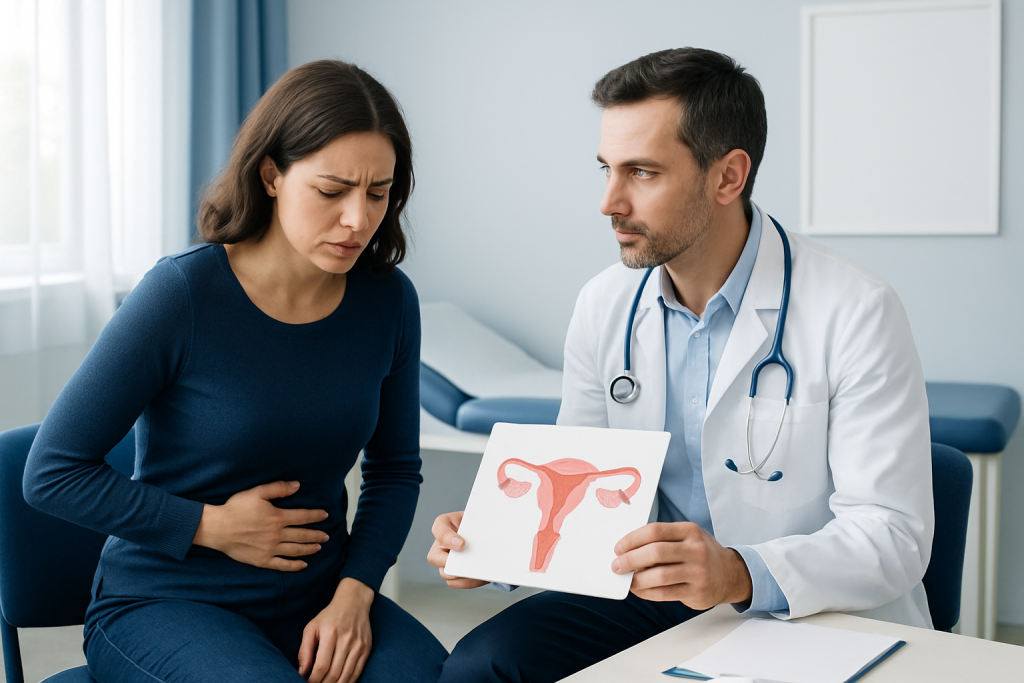
Ovulation pain is thought to happen when the ovarian follicle stretches and then releases an egg, which may briefly irritate the lining of the abdomen. A small amount of fluid or blood from the ovary can also contribute to the discomfort. These changes are usually temporary and self-limited.
Certain factors may make the pain more noticeable. Some women seem to be more sensitive to normal cycle changes, while others only notice ovulation pain after they begin tracking their menstrual cycle closely. Pain may also feel stronger in people who already have pelvic conditions that make the area more sensitive.
Not every mid-cycle pain has the same explanation. Conditions such as ovarian cysts, endometriosis, pelvic inflammatory disease, constipation, urinary tract problems, or even appendicitis can mimic the timing or location of ovulation pain. For this reason, the broader menstrual and medical history matters as much as the pain itself.
- Normal follicle rupture during ovulation
- Hormonal cycle changes
- Prior pelvic conditions
- History of ovarian cysts or endometriosis
- Recent infection or abdominal illness that can confuse the picture
Diagnosis
Doctors usually begin by asking when the pain starts, how long it lasts, where it is felt, and whether it follows a regular pattern. A menstrual calendar or app can be useful because it helps show whether symptoms line up with ovulation. Details about bleeding, discharge, bowel habits, urinary symptoms, and sexual pain can also guide the evaluation.
If the pattern is typical and the symptoms are mild, a clinician may diagnose ovulation pain based on history alone. If the story is not clear, a pelvic exam or ultrasound may be recommended to check for ovarian cysts or other causes of pelvic pain. Additional tests may be used if infection, pregnancy-related problems, or digestive or urinary conditions are being considered.
For Myomectomy Recovery for International Patients: The Usual Travel Timeline" class="ahp-ilk">international patients, this process can be organized efficiently, especially when appointment time in the destination country is limited. Bringing previous ultrasound reports, hormone test results, or a cycle diary can make a consultation more productive and help the doctor decide whether follow-up care is needed after returning home.
Treatment Options
Ovulation pain often improves on its own, so treatment is usually focused on comfort. Warm compresses, rest, and gentle movement may help ease the discomfort. Many women find that understanding the pattern itself is reassuring, because predictable pain is easier to plan around than unexplained pain.
When symptoms are bothersome, a doctor may suggest general pain-relief options that are appropriate for the person’s health profile. In some cases, hormonal contraception may be discussed if ovulation pain is frequent and disruptive, since preventing ovulation can reduce the symptom. The best choice depends on whether pregnancy is being planned, the person’s medical history, and any other pelvic conditions that may be present.
If the pain is caused by another condition, treatment should target that underlying issue rather than the ovulation itself. For example, cysts, endometriosis, or infection may need specific medical follow-up. That is why repeated or worsening pain should not be assumed to be “just ovulation” without evaluation.
- Heat therapy and rest
- General pain relief recommended by a clinician
- Cycle tracking to identify the timing
- Hormonal options for frequent, disruptive symptoms
- Treatment of any underlying pelvic condition
Prevention & Self-care
There is no guaranteed way to prevent ovulation pain, but practical habits can make it easier to manage. Tracking cycles helps identify when pain is likely to appear, which allows for planning around travel, sports, work meetings, or fertility appointments. Knowing the timing can also reduce anxiety, because the symptom becomes more predictable.
Supportive self-care may include using a heating pad, staying hydrated, and choosing lighter activity if movement makes the pain worse. Some women prefer to rest briefly until the discomfort passes, while others find that slow walking or stretching feels better. It can help to note whether bowel changes, stress, or lack of sleep seem to make the pain more noticeable.
For women who are trying to conceive, ovulation pain can sometimes coincide with the fertile window, so it may be useful as one of several clues rather than the only sign. A doctor can help interpret symptoms alongside cycle data, ovulation tests, and ultrasound findings when needed.
When to See a Doctor
Medical advice is important when pelvic pain is new, severe, recurrent, or different from a person’s usual cycle pattern. It is also wise to seek care if the pain lasts longer than expected, interferes with daily life, or appears with symptoms that suggest infection or another urgent problem. A careful check is especially useful when the person is traveling, because pelvic symptoms can be difficult to assess without a clear diagnosis.
Prompt evaluation is recommended if ovulation pain is accompanied by fever, vomiting, fainting, shoulder pain, heavy bleeding, painful urination, unusual discharge, or a positive pregnancy test. These features may point to conditions that need medical treatment rather than simple symptom relief. Even if the pain is not an emergency, recurring symptoms deserve attention if they are becoming more intense over time.
For women who need coordinated care across borders, a multidisciplinary team can help connect the diagnosis, treatment plan, and follow-up. At Acibadem Health Point, multidisciplinary specialists and JCI-accredited hospitals diagnose and treat gynecologic conditions for international patients, with attention to clear communication and continuity of care.
Living With Mid-Cycle Pain
Knowing that ovulation pain can be normal does not make it pleasant, but it can make it less worrying. Many women manage it best when they recognize the pattern early, keep a simple symptom record, and discuss it with a clinician if the pain changes. A calm, informed approach is often enough for mild, predictable cases.
Still, pelvic pain should always be taken seriously when it does not behave like a familiar cycle symptom. The goal is not to dismiss ovulation pain, but to understand it well enough to tell the difference between a normal monthly signal and a problem that needs attention. That distinction is what helps women make confident decisions about care, whether they are at home or arranging evaluation during a medical trip.
Frequently asked questions
What does ovulation pain feel like?
It is often described as a mild cramp, twinge, or ache in the lower abdomen, usually on one side. Some women also notice bloating or light spotting. The discomfort is typically short-lived and tied to the middle of the menstrual cycle.
How long does ovulation pain last?
It may last only a few minutes, but it can continue for several hours and sometimes up to a day or two. If pain lasts longer than that, becomes severe, or changes in pattern, another cause should be considered.
Can ovulation pain happen every month?
Yes, some women notice it in most or even all cycles, while others feel it only occasionally. A regular pattern can be normal, but if it becomes disruptive, a clinician may discuss ways to reduce it.
Does ovulation pain mean a woman is fertile?
It can happen around the time ovulation occurs, so it may suggest that the fertile window is near. However, it should not be used alone to confirm fertility or ovulation. Cycle tracking and medical tests can give a clearer picture when needed.
How is ovulation pain different from ovarian cyst pain?
Ovulation pain is usually brief and linked to the middle of the cycle, while cyst pain may be more persistent, intense, or unrelated to cycle timing. An ultrasound is sometimes needed to tell the difference. A doctor can help decide whether imaging is appropriate.
What can a woman do at home for ovulation pain?
Rest, warmth, and gentle self-care measures often help. Tracking the timing can also make the pain easier to recognize and plan for. If the discomfort is frequent or troubling, a doctor can suggest further options.
References
- American College of Obstetricians and Gynecologists
- National Health Service
- Mayo Clinic
- Cleveland Clinic
This article is for general information only and is not a substitute for professional medical advice. Please consult a qualified doctor about your individual situation.
More from the Health Library



Related Specialists

Prof. Dr. A. Taner Usta
Gynecology & Obstetrics
Prof. Dr. Ahmet Tayyar
Gynecology & Obstetrics
Prof. Dr. Ahmet Cem Batukan
Gynecology & Obstetrics
Dr. Sevgi Selen
Gynecology & Obstetrics