Nearsightedness (Myopia)

Key Takeaways
- Myopia makes far-away objects look unclear, but near vision often remains easier to see.
- It commonly develops in childhood or the teen years, but it can also appear or progress in adulthood.
- An eye examination can confirm the diagnosis and help rule out other causes of blurred vision.
- Glasses, contact lenses, and refractive surgery are the main ways to correct myopia.
- Regular follow-up matters because higher degrees of myopia can be linked with other eye problems.
Medically reviewed by the Acıbadem clinical team — August 19, 2026
Nearsightedness, also called myopia, is a common vision condition in which distant objects appear blurry while close-up vision may stay clear. With the right eye exam and treatment plan, most people can manage symptoms and protect long-term eye health.
Overview
Nearsighted myopic vision, more commonly called myopia, happens when the eye focuses light in front of the retina instead of directly on it. The result is simple to notice in daily life: street signs soften in the distance, a classroom board looks fuzzy, or a face across the room seems less distinct.
For many people, the condition first becomes apparent when they start squinting, moving closer to screens, or asking others to read signs for them. It can feel frustrating, but it is also one of the most familiar and manageable eye conditions in modern care.
Myopia is not just a matter of convenience. When it is stronger or continues to progress, it can increase the need for careful eye monitoring. That is why diagnosis and follow-up are important, especially for children, teenagers, and adults whose prescriptions keep changing.
Symptoms
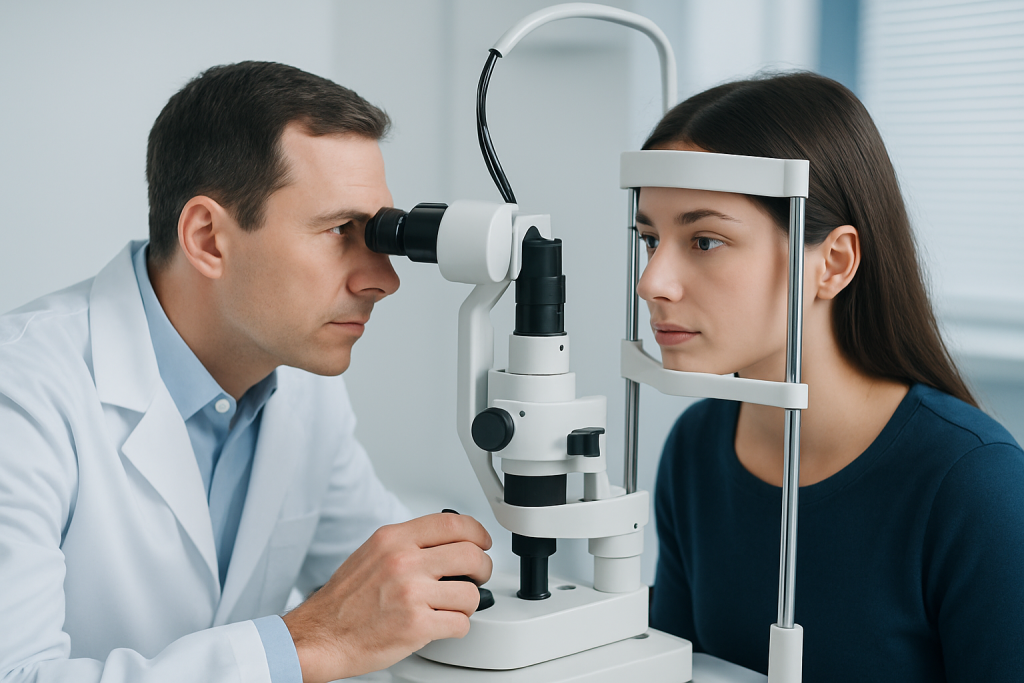
The most typical sign is blurred distance vision. A person with myopia may see close objects clearly, while anything farther away becomes less sharp. This difference often becomes more obvious in school, driving, or when watching sports or presentations.
Other common symptoms may include squinting, eye strain, headaches after visual tasks, or a tendency to sit very close to the television or computer. Some people notice that they blink more often or narrow their eyes to improve focus, even if only temporarily.
Children may not always describe blurry vision directly. Instead, they may lose interest in board work, hold books unusually close, or avoid activities that require clear distance vision. Because these signs can be subtle, routine eye checks are especially helpful in younger patients.
- Blurred distance vision
- Squinting to see clearly
- Headaches or eye strain
- Difficulty seeing while driving, especially at night
- Sitting close to screens or the front of a room
Causes & Risk Factors
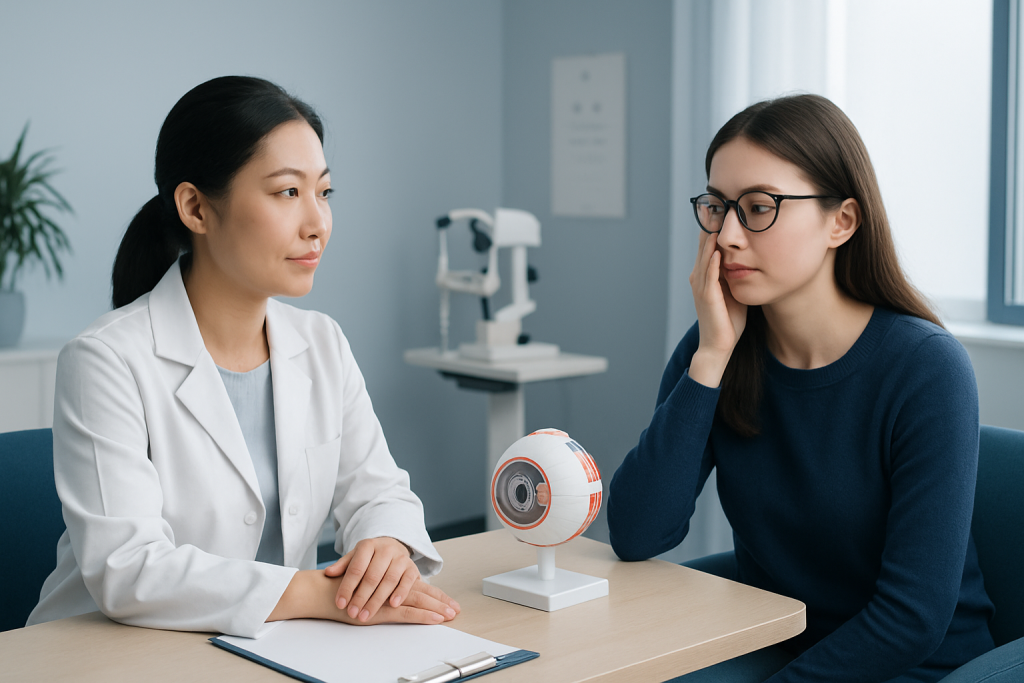
Myopia develops when the eyeball is slightly too long, the cornea is too curved, or both. These changes cause light rays to focus in front of the retina rather than on it, which leads to blurred distance vision. In many people, the condition begins gradually and progresses during the growing years.
Family history plays a meaningful role. If one or both parents are nearsighted, the chance of developing myopia is higher. Age also matters, since childhood and adolescence are the most common periods for onset and progression.
Modern visual habits may contribute as well. Long hours of close work, heavy screen use, and limited outdoor time have been associated with a greater risk of myopia in children. These factors do not explain every case, but they are useful to discuss when planning prevention and monitoring.
Risk factors may include:
- Having a parent with myopia
- Childhood or teenage years
- Extensive near work such as reading or screen use
- Less time spent outdoors
- Existing eye focusing differences or certain eye conditions
Diagnosis
Diagnosis usually begins with a standard eye examination. The eye care professional checks visual sharpness, asks about symptoms, and measures how light focuses through the eyes. This may include a refraction test, which helps determine the prescription needed for clearer vision.
In some cases, especially in children, eye drops are used to temporarily relax the focusing muscles. This can make the exam more accurate and help distinguish myopia from focusing spasm or other vision issues. The process is quick, routine, and designed to give a clearer picture of how the eyes are working.
A full evaluation is important because not all blurred distance vision is caused by myopia. Other conditions, such as astigmatism, dry eye, or eye disease, can overlap with similar symptoms. A proper diagnosis helps guide the safest and most effective next step.
Treatment Options
Myopia is typically corrected rather than cured. The goal is to bring focus back onto the retina so the person can see more clearly in daily life. For most patients, glasses are the simplest and most predictable option, especially during childhood when prescriptions may change over time.
Contact lenses offer another form of correction and may suit people who prefer a wider field of view or play certain sports. Good lens hygiene is important, because contact lenses can raise the risk of eye infection if they are not cleaned and handled properly.
Some adults may consider refractive surgery, such as laser procedures, if their prescription is stable and their eyes are suitable. These procedures reshape the cornea to improve focus. A surgeon will evaluate corneal thickness, eye health, lifestyle, and expectations before recommending any operation.
In selected children and young adults, doctors may also discuss myopia-control strategies aimed at slowing progression. These plans are individualized and may include specific lens designs, contact lenses, or other clinician-guided options. Because needs vary, treatment should always be tailored to the person rather than chosen from a one-size-fits-all approach.
- Prescription eyeglasses
- Contact lenses with proper hygiene
- Refractive surgery for suitable adults
- Myopia-control strategies for progression management
Prevention & Self-care
Not every case of myopia can be prevented, especially when family history is a factor. Even so, everyday habits can support healthier visual development and reduce strain. Small changes are often more realistic than dramatic ones, particularly for families managing school, work, and screen time across time zones.
Children may benefit from regular outdoor activity, balanced near work, and scheduled breaks during reading or digital tasks. Adults who spend long hours on computers can also support comfort by adjusting lighting, taking brief visual breaks, and making sure their corrective prescription is current.
Practical self-care steps include:
- Encouraging outdoor play and daylight exposure for children
- Taking regular breaks from close-up work
- Keeping screens at a comfortable distance
- Using the correct prescription consistently
- Following the eye doctor’s advice for contact lens care
For international patients, planning follow-up matters just as much as the initial visit. If care begins while traveling, it is helpful to leave with a clear copy of the prescription, a treatment summary, and instructions for the next eye exam at home.
When to See a Doctor
An eye examination is a good idea whenever distance vision becomes blurry, squinting becomes frequent, or school, work, or driving starts to feel harder than before. Children should also be checked if they sit close to the television, lose their place when reading distant text, or seem to struggle with the board at school.
Prompt medical attention is especially important if blurred vision appears suddenly, comes with flashes of light, a curtain-like shadow, eye pain, or a sudden increase in floaters. These symptoms are not typical of ordinary myopia and deserve urgent evaluation.
People with known myopia should keep regular follow-up appointments, even when their glasses seem to be working well. Monitoring helps track prescription changes and protects long-term eye health, particularly in stronger prescriptions or when the eyes are changing quickly.
For patients who travel for care, a coordinated plan can make the process smoother. Acibadem Health Point’s multidisciplinary specialists and JCI-accredited hospitals diagnose and treat eye conditions for international patients with careful pre-visit planning and follow-up support.
Living Well With Myopia
Myopia is common, and for most people it is manageable with the right correction and regular eye care. The main goal is not only clearer sight, but also comfort, safety, and confidence in everyday activities such as reading, commuting, studying, and using digital devices.
Children and adults often do best when vision care is treated as a routine part of overall health, not a one-time fix. A stable prescription, healthy visual habits, and timely review by an eye professional can make a meaningful difference over time.
If vision seems to be changing, or if glasses no longer feel accurate, an updated eye exam is the right next step. Clearer distance vision usually starts with a straightforward assessment and a treatment plan that fits the person’s age, needs, and lifestyle.
Frequently asked questions
What does nearsighted myopic mean?
It refers to myopia, a condition where near objects are seen more clearly than distant ones. The eye focuses light incorrectly, which makes far-away details look blurry.
Can myopia get worse over time?
Yes, especially during childhood and the teenage years. Regular eye exams help track changes and adjust treatment when needed.
Is myopia the same as astigmatism?
No, although they can occur together. Myopia blurs distance vision because of how the eye focuses light, while astigmatism is caused by an irregular cornea or lens shape.
Do glasses make myopia worse?
No, glasses do not cause myopia to worsen. They simply correct the focus so vision becomes clearer.
Can myopia be cured permanently?
Glasses, contact lenses, and some surgeries can correct vision, but they do not always remove the underlying tendency for myopia. A doctor can explain which option is most suitable and whether the prescription is likely to stay stable.
When should a child with possible myopia be checked?
A child should be examined if they squint, sit very close to screens, or struggle to see the board at school. Routine eye exams are also important even when symptoms are mild.
References
- World Health Organization
- American Academy of Ophthalmology
- National Eye Institute
- Mayo Clinic
This article is for general information only and is not a substitute for professional medical advice. Please consult a qualified doctor about your individual situation.
Explore treatments in Turkey — costs, top hospitals & a free quote
JCI-accredited · board-certified surgeons · reply within 24h
Add us as a Preferred Source to see more of our trusted health content across Google Search, AI Overviews and Discover.