Nasal DNS: Causes, Symptoms and Treatment

Key Takeaways
- Nasal DNS describes a septum that is shifted away from the middle, narrowing one or both nasal passages.
- Symptoms can include blocked breathing, snoring, recurrent sinus issues, nosebleeds, and facial pressure.
- Diagnosis is usually made by an ENT specialist through history, examination, and sometimes nasal endoscopy or imaging.
- Treatment depends on symptom severity and may include medicines for congestion or allergy, with septoplasty considered when anatomy is the main issue.
- Many people manage well with conservative care, while surgery is reserved for persistent symptoms that affect daily life.
Medically reviewed by the Acıbadem clinical team — August 19, 2026
Nasal DNS, also called a deviated nasal septum, means the wall between the nostrils is off-center. It can affect breathing, sleep, and sinus comfort, although some people have no symptoms at all.
Overview
Nasal DNS stands for a deviated nasal septum, a condition in which the thin wall between the left and right sides of the nose is not centered. The septum is made of cartilage and bone, and even a mild bend can change how air moves through the nose.
For some people, the finding is incidental and causes little trouble. For others, it becomes noticeable during exercise, sleep, colds, or allergy season, when a smaller nasal passage can feel even more restricted. The important point is that a deviated septum is common and usually manageable, especially when the right treatment is matched to the person’s symptoms rather than to the anatomy alone.
In international care settings, patients often seek help after months or years of adapting to mouth breathing, poor sleep, or repeated congestion. An ENT evaluation can clarify whether the main issue is the septum itself, swollen nasal tissues, allergies, sinus disease, or a combination of factors.
Symptoms
The most familiar symptom of nasal DNS is one-sided or alternating nasal blockage. Some people notice that one nostril feels narrow all the time, while others feel congested on different sides depending on the time of day or sleeping position.
Breathing discomfort is only part of the picture. A deviated septum may also contribute to snoring, dry mouth from mouth breathing, reduced sense of airflow during exercise, and a feeling of pressure inside the nose or face. Nosebleeds can happen when airflow dries the lining of the nose, and some people report more frequent sinus discomfort when drainage is not moving freely.
Symptoms are not always caused by the septum alone. Allergy-related swelling, enlarged turbinates, nasal polyps, and chronic sinus inflammation can create similar complaints, which is why a careful assessment matters before choosing treatment.
Causes & Risk Factors

Nasal DNS may be present from birth or develop later. Some people are born with a septum that is naturally off-center, while others develop deviation after an injury, a sports accident, a fall, or a blow to the face. Small injuries from earlier life can also go unnoticed until symptoms become more obvious.
Growth patterns during childhood and adolescence may also influence septal shape. In some cases, the septum shifts as the nose and face develop, even without a clear injury history. That is why a patient may not remember any single event that explains the problem.
Several factors can make symptoms feel worse even if the deviation itself is unchanged:
- Seasonal or year-round allergies
- Frequent colds or upper respiratory infections
- Enlarged nasal tissues, including turbinates
- Smoking or exposure to irritants
- Previous nasal surgery or trauma
The severity of symptoms does not always match the degree of deviation seen on examination. A modest shift in a narrow nasal passage can be more troublesome than a dramatic-looking curve that causes little blockage.
Diagnosis
Diagnosis usually begins with a conversation about breathing, sleep, sinus symptoms, injuries, and any prior treatment. An ENT specialist will want to know whether congestion is constant, whether one side is worse, and whether symptoms change with allergies, colds, or body position.
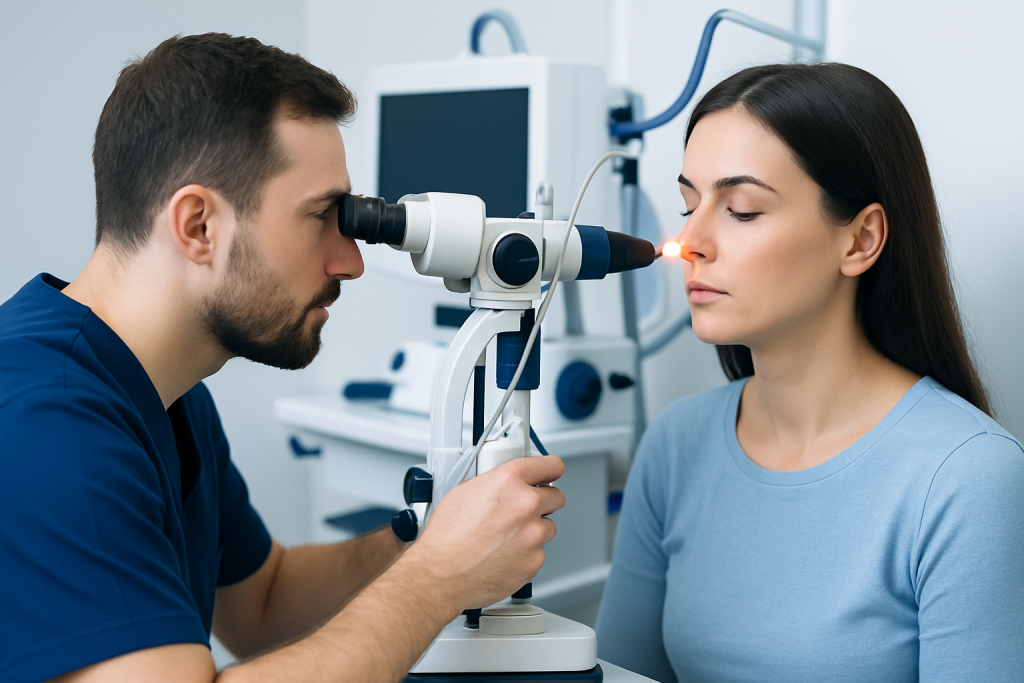
A physical examination of the nose often provides the main answer. The clinician may look inside the nostrils with a light or nasal speculum and may use nasal endoscopy to view deeper areas, especially when symptoms suggest more than a septal deviation. This helps identify whether swollen turbinates, polyps, or other structural concerns are also present.
Imaging is not always needed, but in selected cases a CT scan may be helpful when sinus disease, complex anatomy, or surgical planning is being considered. For patients traveling from another country, sharing prior records, medication lists, allergy history, and any imaging can make the consultation more efficient and help the team build a practical care plan.
Treatment Options
Treatment depends on what is actually driving the symptoms. If allergy or inflammation plays a major role, medicines such as saline rinses, nasal steroid sprays, or other doctor-recommended therapies may reduce swelling and improve airflow, even though they do not straighten the septum itself.
When the septum is the main source of obstruction and symptoms remain bothersome despite conservative care, surgery may be discussed. The standard operation is septoplasty, which repositions or reshapes the septum to open the nasal airway. In some patients, the surgeon may also address enlarged turbinates at the same time to improve overall airflow.
Septoplasty is usually considered when symptoms affect quality of life, sleep, exercise, or recurrent sinus comfort. A good surgical discussion should cover expected benefits, recovery steps, and the fact that surgery aims to improve breathing and function rather than create a perfect-looking septum. As with any procedure, the final choice should be made after a detailed review of the person’s anatomy, health history, and goals.
Prevention & Self-care
Not every case of nasal DNS can be prevented, especially when it is present from birth or related to growth. Still, protecting the nose from avoidable injury is sensible, particularly during contact sports, travel, or activities with higher impact risk.
For people already living with a deviated septum, day-to-day self-care can reduce symptom burden. Saline irrigation may help keep the nasal lining moist and clear of irritants, while managing allergies can lower swelling that worsens obstruction. Humidified air, adequate hydration, and avoiding smoke exposure may also make breathing feel easier.
Practical steps that often help include:
- Using prescribed or recommended nasal medications consistently
- Treating allergies rather than repeatedly relying only on decongestants
- Sleeping with the head slightly elevated if congestion is worse at night
- Following safe nasal hygiene without aggressive picking or frequent trauma
For patients arranging care from abroad, it helps to plan recovery time realistically. If surgery is part of the plan, arranging follow-up before travel home can make aftercare smoother and reduce the chance of confusion about healing instructions.
When to See a Doctor
An ENT evaluation is worthwhile when nasal blockage is persistent, affects sleep, or interferes with exercise and daily comfort. It is also sensible to seek advice when one-sided congestion is long-lasting, because symptoms that seem like simple stuffiness may have several possible causes.
Medical review is especially important if nasal symptoms come with frequent nosebleeds, repeated sinus infections, facial pain, loud snoring with daytime sleepiness, or breathing trouble that is getting worse. These features do not automatically mean something serious, but they deserve a proper assessment rather than repeated trial-and-error treatment.
Patients should seek prompt medical attention after a facial injury if the nose becomes obstructed, painful, visibly changed, or difficult to breathe through. In complex or persistent cases, Acibadem Health Point’s multidisciplinary specialists and JCI-accredited hospitals can diagnose and treat nasal DNS for international patients with coordinated ENT care and follow-up.
Recovery and Outlook
The outlook for nasal DNS is generally good. Many people feel better once inflammation is treated and they learn which triggers make the blockage worse. When surgery is needed, the aim is a more open airway and improved day-to-day breathing, especially during sleep and activity.
Recovery after septoplasty varies from person to person, but most patients are given detailed instructions on rest, nasal care, activity limits, and follow-up visits. Short-term swelling or congestion is common during healing, so the benefit of surgery is often more noticeable as recovery progresses rather than immediately on day one.
For people traveling internationally, continuity matters: clear discharge instructions, medication planning, and a scheduled follow-up review help ensure that healing stays on track after returning home. A well-planned treatment pathway can make the experience less stressful and more predictable.
Frequently asked questions
What does nasal DNS mean?
Nasal DNS is short for deviated nasal septum. It means the wall between the nostrils is not centered and may partially block airflow on one or both sides.
Can a deviated septum cause sinus problems?
It can contribute to a feeling of sinus pressure or to drainage issues in some people, especially if swelling or allergies are also present. However, not every sinus symptom is caused by the septum itself, so an ENT evaluation is useful.
Does every nasal DNS need surgery?
No, many people do not need surgery. Treatment may focus on reducing swelling, controlling allergies, and improving comfort, with septoplasty considered when symptoms remain significant.
How is nasal DNS diagnosed?
An ENT specialist usually diagnoses it with a medical history and a physical examination of the nose. Nasal endoscopy or imaging may be used if more detail is needed.
What is the recovery like after septoplasty?
Recovery usually involves temporary congestion, rest, and careful nasal care while the inside of the nose heals. Follow-up visits are important so the doctor can monitor progress and answer questions.
Can a deviated septum get worse over time?
The septum itself does not always change quickly, but symptoms can feel worse if allergies, nasal swelling, or new injury are added. A reassessment is sensible if breathing becomes noticeably more difficult.
References
- American Academy of Otolaryngology–Head and Neck Surgery
- Merck Manual Consumer Version
- Cleveland Clinic
- Mayo Clinic
- National Health Service
This article is for general information only and is not a substitute for professional medical advice. Please consult a qualified doctor about your individual situation.
Explore treatments in Turkey — costs, top hospitals & a free quote
JCI-accredited · board-certified surgeons · reply within 24h
Add us as a Preferred Source to see more of our trusted health content across Google Search, AI Overviews and Discover.