List Several Activities During Which The Near Point Is Important

Key Takeaways
- The near point helps explain how the eyes focus on close objects and why near tasks may feel effortless or strained.
- Reading, writing, using phones, sewing, and other detail-heavy tasks all depend on strong near vision.
- Age, fatigue, uncorrected refractive errors, and certain eye conditions can make near focusing harder.
- Good lighting, regular breaks, and proper eyewear can reduce strain during close work.
- A doctor should evaluate persistent blur, headaches, or difficulty with near tasks, especially if symptoms are new or worsening.
The near point is the closest distance at which the eyes can keep an object clear and comfortable to see. It matters in many everyday tasks, especially those that require sustained close focusing, fine detail, or prolonged screen use.
Overview
The near point is the closest distance at which a person can still see an object clearly without it becoming blurred. It is a simple idea, but it affects many parts of everyday life because so much of modern work and home activity happens at close range.
When the eyes shift from looking far away to focusing on something nearby, they use a process called accommodation. The lens changes shape so the image stays sharp on the retina. If this focusing system is working well, close tasks feel smooth. If it is working less efficiently, near work may become tiring, slow, or frustrating.
For people who read, use digital devices, sew, assemble small parts, or review printed documents for long periods, near vision is not just a clinical term. It is part of how comfortably they can learn, work, travel, and manage daily routines. Understanding the near point can help explain why some activities feel easy at one stage of life and more demanding at another.
Symptoms
When the near point is reduced or near focusing is strained, the signs often show up during close tasks rather than in everyday distance vision. A person may notice that print looks fuzzy unless it is held farther away, or that reading takes more effort than it used to.
Other common clues include eye fatigue, headaches after close work, trouble maintaining attention on a page, or the urge to pause often when using a phone or computer. Some people unconsciously move objects farther away to make them clearer, while others lean closer and still feel that the image is not stable.
- Blurred near vision
- Needing to hold reading material farther away
- Headaches after reading or screen use
- Eye strain or tired eyes
- Difficulty with small print or detailed work
These symptoms do not always mean a serious eye problem, but they are worth noticing. In many cases, they reflect a common need for updated glasses, more rest during close work, or an eye examination to check for age-related focusing changes.
Causes & Risk Factors

Several factors can make the near point less comfortable or less useful. A very common reason is age-related change. As people get older, the lens becomes less flexible, and the eyes need more help to focus on near objects. This is why many adults eventually notice that menus, labels, or books are harder to read at the same distance they once used.
Uncorrected farsightedness, astigmatism, and other refractive errors can also make close work tiring. Eye fatigue from prolonged concentration, poor lighting, long periods without breaks, and dry eyes can add to the problem. For some people, the issue appears more strongly after illness, surgery, medication changes, or long hours of digital device use.
Risk may be higher when near work is frequent and sustained, such as in students, office workers, designers, and people who spend time on detailed hand tasks. A family history of vision problems and certain medical conditions can also influence how easily the eyes focus at close range.
Diagnosis
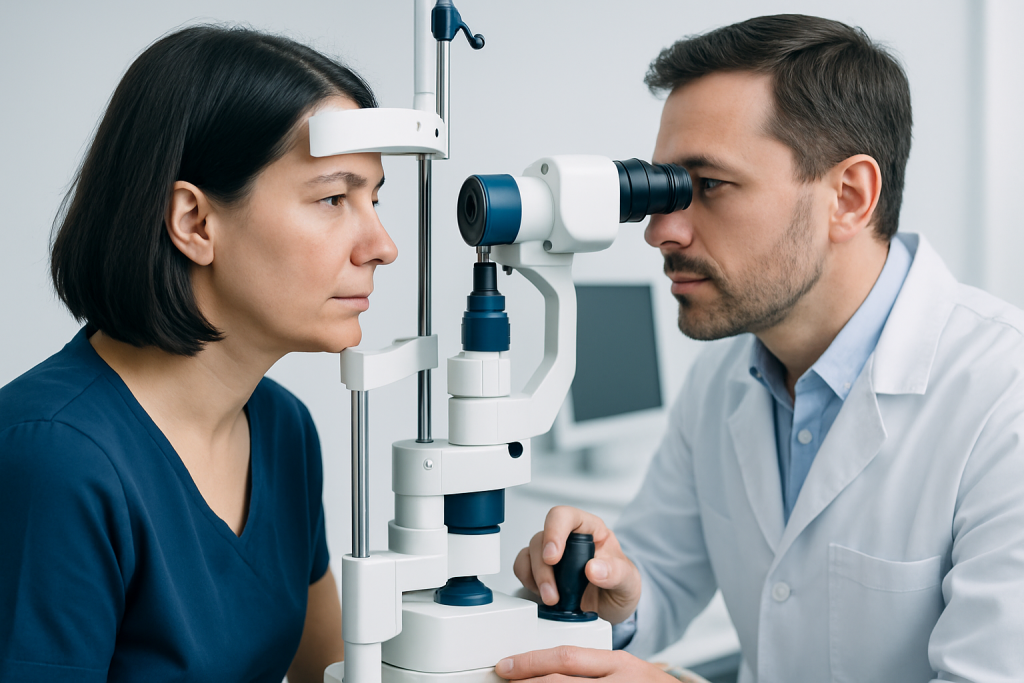
Assessing the near point is usually part of a standard eye examination. An eye care professional may ask a person to read a near chart, hold text at different distances, or describe when blur begins. The goal is to understand both the clarity of near vision and how much effort it takes to maintain it.
Testing often includes a refraction to check whether glasses or contact lenses are needed for distance, near, or both. The eyes may also be examined for dryness, focusing imbalance, or other conditions that could contribute to discomfort. If symptoms are new, a fuller evaluation can help rule out more specific eye or health concerns.
For international patients, this step is often a practical starting point before travel decisions are made. A clear diagnosis can help determine whether treatment is as simple as updating eyewear or whether a more detailed eye-care plan is needed.
Treatment Options
Treatment depends on the reason near vision is difficult. Many people improve with prescription glasses for reading, bifocals, progressive lenses, or contact lenses tailored to their visual needs. When the issue comes from age-related loss of near focusing, reading correction can often make close tasks much easier.
Other measures may be used alongside eyewear. Lubricating drops can help if dry eyes are making near work uncomfortable. Vision therapy or focused exercises may be suggested in some cases when eye coordination or focusing endurance is part of the problem. If an underlying condition is present, treatment is directed to that specific issue.
Some people ask about surgery or device-based options. These may be appropriate in selected situations, but the choice depends on eye health, visual goals, lifestyle, and whether the person primarily needs help for reading, computer use, or a mix of tasks. A qualified eye specialist can explain the most suitable path after examination.
Prevention & Self-care
Not every change in the near point can be prevented, especially when it is tied to normal aging. Even so, several habits can reduce strain and keep close work more comfortable. Good lighting is one of the simplest supports, because the eyes do not have to work as hard when the page or task is well illuminated.
Regular breaks are also useful. Many people benefit from pausing close work at intervals, looking up across the room, and blinking fully to refresh the eyes. This is especially helpful during screen-heavy days, when reduced blinking and fixed focus can make near work feel more tiring than it should.
- Use bright, even lighting for reading and detail work
- Hold reading material at a comfortable distance
- Take short breaks during prolonged screen use
- Blink often and consider lubricating drops if advised
- Keep regular eye exams, especially if close vision is changing
For travelers managing eye concerns abroad, it can help to bring current glasses, past prescriptions, and a list of symptoms. This makes consultation more efficient and helps the clinician understand how near vision affects daily life, work, and recovery plans.
When to See a Doctor
A doctor or eye care professional should be seen when near vision changes interfere with everyday tasks, such as reading, working on a computer, sewing, or handling medications. An examination is also important if blur appears suddenly, if one eye is affected more than the other, or if close work causes frequent headaches or eye pain.
It is wise to seek assessment if a person is constantly moving objects farther away, struggling with print that was previously clear, or noticing that vision changes are affecting work performance or safety. New symptoms after an injury, illness, or medication change deserve attention as well.
For people considering treatment while traveling, a consultation before and after care can be useful. Acibadem Health Point’s multidisciplinary specialists and JCI-accredited hospitals diagnose and treat eye conditions for international patients, helping them plan care with confidence and continuity.
Frequently asked questions
What is the near point in simple terms?
The near point is the closest distance at which the eyes can keep something clear without blur. It reflects how well the eyes can focus on close objects such as text, a phone screen, or small details.
Which activities rely most on the near point?
Reading, writing, computer work, smartphone use, sewing, drawing, and any precision task with small parts all depend on near vision. Even routine activities like checking labels, medicine instructions, or travel documents may require good close focus.
Why does near vision often get worse with age?
As people age, the eye lens becomes less flexible and has a harder time changing shape for close work. This common change is why many adults eventually need reading glasses or another near-vision correction.
Can screens make near vision problems feel worse?
Screens can increase strain because they encourage long periods of close focusing and often reduce blinking. Frequent breaks and good screen habits may help, but ongoing blur or discomfort should still be checked by a doctor.
Is difficulty with near work always a sign of eye disease?
No. Many cases are due to common refractive changes or normal aging rather than a disease. Still, a professional evaluation is important if the problem is new, worsening, or affecting daily life.
What can a person do before seeing an eye doctor?
It helps to note when symptoms happen, what activities are difficult, and whether the problem improves with more light or by holding things farther away. Bringing current glasses and any previous prescriptions can also make the visit more useful.
References
- American Academy of Ophthalmology
- National Eye Institute
- World Health Organization
- Mayo Clinic
This article is for general information only and is not a substitute for professional medical advice. Please consult a qualified doctor about your individual situation.