Lesions: Symptoms, Causes and Treatment

Key Takeaways
- A lesion is a broad medical term for any area of abnormal tissue change or damage.
- Lesions may be harmless, inflamed, infectious, traumatic, precancerous, or cancerous depending on the cause.
- Doctors usually evaluate lesions with a history, physical examination, and, when needed, imaging, blood tests, or a biopsy.
- Treatment depends on the location and cause and may include monitoring, medicines, procedures, or surgery.
- New, changing, painful, bleeding, or persistent lesions deserve medical assessment, especially if they do not improve.
- Traveling for care may require planning for testing, treatment timing, and follow-up after returning home.
Medically reviewed by the Acıbadem clinical team — August 19, 2026
Lesions are areas of tissue that have changed in a way that looks, feels, or functions differently from surrounding tissue. They can appear on the skin, inside the mouth, in organs, or in the brain, and the right next step depends on where they are and what may be causing them.
Overview
The word lesion does not describe one single disease. It is a general medical term for an area of tissue that has been injured, inflamed, infected, structurally altered, or otherwise changed from normal. That change may be visible on the skin, found in the mouth, seen on an X-ray or MRI, or discovered during an examination of an internal organ.
Because the term is so broad, the same word can point to very different situations. A small skin lesion may be a harmless mole, while a lesion in the brain or liver may need more detailed testing. For that reason, the most important question is not simply whether a lesion exists, but what type it is, where it is located, and whether it is stable or changing.
People planning care across borders often first hear the term after an imaging study or specialist visit in their home country. In those settings, a clear explanation of the lesion’s location, appearance, and likely cause helps guide whether observation is enough or whether further evaluation is needed before making travel and treatment plans.
Symptoms
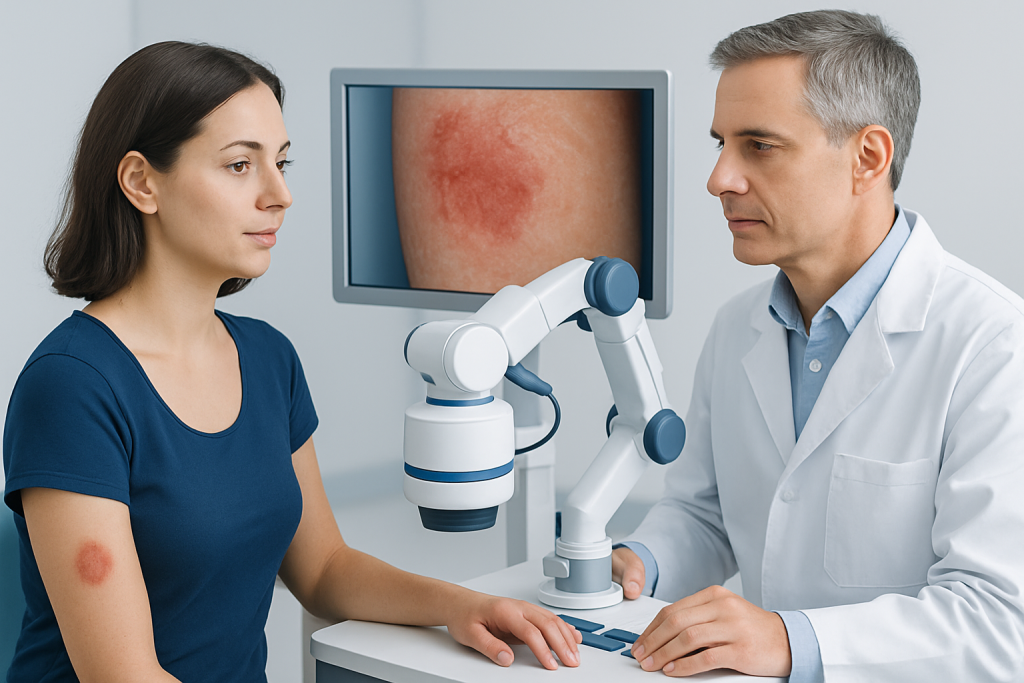
Symptoms vary widely because lesions can affect almost any tissue in the body. Some lesions cause no symptoms at all and are found accidentally during routine screening or imaging. Others lead to pain, swelling, itching, bleeding, numbness, weakness, cough, digestive changes, or a visible lump or patch.
On the skin, a lesion may look like a spot, bump, blister, ulcer, plaque, or discolored area. In the mouth, it may appear as a sore, white patch, red patch, or thickened area that does not heal. Inside the body, symptoms are usually related to the organ involved rather than the word “lesion” itself.
Signs that deserve attention include a lesion that grows, changes color or shape, becomes painful, bleeds easily, forms a crust, drains fluid, or does not heal within a reasonable time. Neurological lesions can present differently, sometimes with headaches, vision changes, speech difficulty, balance problems, or weakness depending on location.
- Visible change in size, color, or texture
- Pain, tenderness, itch, or burning
- Bleeding, drainage, or repeated crusting
- Loss of function in the affected area
Causes & Risk Factors

Lesions can develop for many reasons. Some are temporary and related to minor injury, friction, burns, or pressure. Others are caused by infections such as viruses, bacteria, fungi, or parasites. Inflammatory conditions, autoimmune disease, poor blood flow, or chronic irritation can also lead to tissue changes that are described as lesions.
In some cases, a lesion is a benign growth, such as a cyst, lipoma, or mole. In other cases, it may be premalignant or malignant. That is why a lesion should not be assumed to be harmless or serious based only on appearance. Context matters, including the person’s age, medical history, immune status, exposure history, and whether the lesion is new or longstanding.
Risk factors depend on the body system involved. Sun exposure increases the chance of many skin lesions, while smoking raises concern for lesions in the mouth, throat, lungs, and other organs. Prior cancer, chronic inflammation, weakened immunity, family history, and certain infections can also increase the need for careful follow-up.
Diagnosis
Diagnosis begins with an accurate description of the lesion. A clinician usually asks when it appeared, whether it has changed, whether it hurts or bleeds, and whether there has been injury, infection, travel exposure, or previous treatment. Location, size, color, border shape, and associated symptoms all help narrow the possibilities.
Depending on the case, the evaluation may include a physical examination, dermatoscopy for skin lesions, laboratory tests, imaging studies such as ultrasound, CT, or MRI, or a biopsy. A biopsy is often the most direct way to determine the nature of a suspicious lesion because it allows tissue to be examined under a microscope.
For international patients, diagnostics are often organized in stages so that test results are reviewed before major decisions are made. This can be especially helpful when a lesion needs coordinated input from more than one specialist, such as dermatology, radiology, oncology, neurology, or surgery.
- History and examination
- Imaging when internal organs are involved
- Biopsy if tissue diagnosis is needed
- Specialist review for complex or uncertain findings
Treatment Options
Treatment depends entirely on the cause, location, and behavior of the lesion. Some lesions only require observation with scheduled follow-up, especially if they are clearly benign and not changing. Others respond to medication, such as topical or oral treatments for infection, inflammation, or autoimmune-related disease.
Procedural treatment may be recommended when a lesion is painful, grows, causes symptoms, or raises concern for cancer. Options can include drainage, freezing, cauterization, laser therapy, excision, or more advanced surgery depending on the tissue involved. If a lesion is malignant or precancerous, treatment is planned according to the type and extent of disease.
The safest approach is individualized rather than automatic. A lesion that seems small may still need prompt assessment if it is in a sensitive location, while a larger lesion may be safely monitored if it is stable and clearly benign. Before traveling for treatment, patients are often advised to understand whether one visit is enough or whether follow-up appointments and test review will be needed later.
Prevention & Self-care
Not every lesion can be prevented, but some measures lower risk or help detect problems earlier. Skin protection is one of the most useful habits: regular sunscreen use, protective clothing, and avoiding excessive UV exposure can reduce the risk of sun-related lesions. Good oral hygiene and avoiding tobacco also support early detection and prevention of mouth and throat lesions.
Self-care should never replace medical assessment for a changing or unexplained lesion, but it can help reduce irritation. People are often advised not to pick, squeeze, or repeatedly scratch the area, since that can delay healing and make the appearance harder to interpret. Keeping the lesion clean and protected, when appropriate, may also reduce secondary irritation.
For patients coordinating care from another country, taking clear photos over time, writing down symptom changes, and saving reports or imaging results can make consultation easier. This is especially helpful when a lesion has already been evaluated once and the next step is a second opinion, a procedure, or a treatment plan that must continue after returning home.
When to See a Doctor
Medical evaluation is sensible when a lesion is new, unexplained, persistent, or changing in a noticeable way. It is also important to seek care if a lesion bleeds easily, becomes painful, spreads, interferes with function, or appears after an injury that is not healing as expected. The earlier a lesion is assessed, the easier it is to identify whether simple monitoring or more active treatment is appropriate.
Prompt review is especially important for lesions in the skin, mouth, breast, testicles, or neurological system when there are warning signs such as weakness, numbness, severe headache, confusion, vision changes, difficulty swallowing, or rapidly worsening symptoms. These signs do not automatically mean something serious, but they do mean the situation should not be ignored.
Acibadem Health Point’s multidisciplinary specialists and JCI-accredited hospitals support international patients who need diagnosis and treatment for lesions, with coordinated input when more than one specialty is involved. A qualified doctor can help determine whether a lesion should be observed, tested, or treated, and can plan safe follow-up after travel if needed.
Frequently asked questions
What does the medical term lesion mean?
A lesion is a broad term for an area of tissue that is damaged, abnormal, or different from surrounding tissue. It can refer to a skin change, a sore in the mouth, or an internal finding on imaging or examination. The term itself does not say whether the lesion is benign, infectious, inflammatory, or cancerous.
Are all lesions cancerous?
No. Many lesions are benign or related to minor injury, infection, or inflammation. Some lesions are precancerous or cancerous, which is why changes in size, color, shape, or symptoms should be evaluated by a doctor.
Can a lesion go away on its own?
Some lesions do improve without specific treatment, especially those caused by minor irritation or temporary inflammation. Others need medication or a procedure, and some should be monitored closely to make sure they do not change over time.
How do doctors know whether a lesion is serious?
Doctors look at the lesion’s location, appearance, growth pattern, and associated symptoms, along with the person’s medical history. Imaging or a biopsy may be recommended if the cause is unclear or if there is concern about a more significant condition.
Should a lesion be biopsied right away?
Not always. Some lesions can be safely observed, while others need tissue testing to make a diagnosis. A clinician decides based on the level of suspicion, the lesion’s behavior, and the risks and benefits of the procedure.
What should someone do before traveling for lesion treatment?
It helps to collect prior reports, imaging, pathology results, and a list of current medicines or allergies. Patients should also ask whether follow-up care will be needed after returning home so the treatment plan remains clear and safe.
References
This article is for general information only and is not a substitute for professional medical advice. Please consult a qualified doctor about your individual situation.
Explore treatments in Turkey — costs, top hospitals & a free quote
JCI-accredited · board-certified surgeons · reply within 24h
Add us as a Preferred Source to see more of our trusted health content across Google Search, AI Overviews and Discover.