Jp Drain

Key Takeaways
- A JP drain helps remove blood and fluid from a healing surgical site.
- The bulb should be emptied and measured as instructed by the care team.
- Keeping the drain clean and secured lowers the risk of irritation or infection.
- Changes in drainage amount, color, odor, or pain should be reported promptly.
- People recovering away from home may need clear follow-up planning before travel.
A JP drain, also called a Jackson-Pratt drain, is a small tube used after certain surgeries to remove fluid that can collect in the surgical area. With simple daily care and clear guidance from the care team, most people can manage it safely at home while healing continues.
Overview
A JP drain is a small, soft tube connected to a squeeze bulb that collects fluid from a surgical area. It is often placed after operations where fluid buildup could slow healing, increase pressure, or interfere with the result of surgery. The drain gives the body a way to clear that fluid gradually while tissues recover.
The term “JP” comes from Jackson-Pratt, the original device name. People may have one or more drains after procedures involving the breast, abdomen, soft tissue, or reconstructive surgery. Although the equipment looks simple, it plays an important role in the early recovery period, especially when a patient is managing care outside the hospital or preparing to travel home after treatment.
For many patients, the first concern is whether living with a drain is difficult. In practice, the process becomes routine with instruction. The care team typically explains how to empty the bulb, record output, keep the site clean, and secure the tubing during movement or sleep.
A JP drain is temporary. It is usually removed once drainage has decreased enough for the surgeon to feel comfortable that the area is healing well without extra fluid collection.
Symptoms
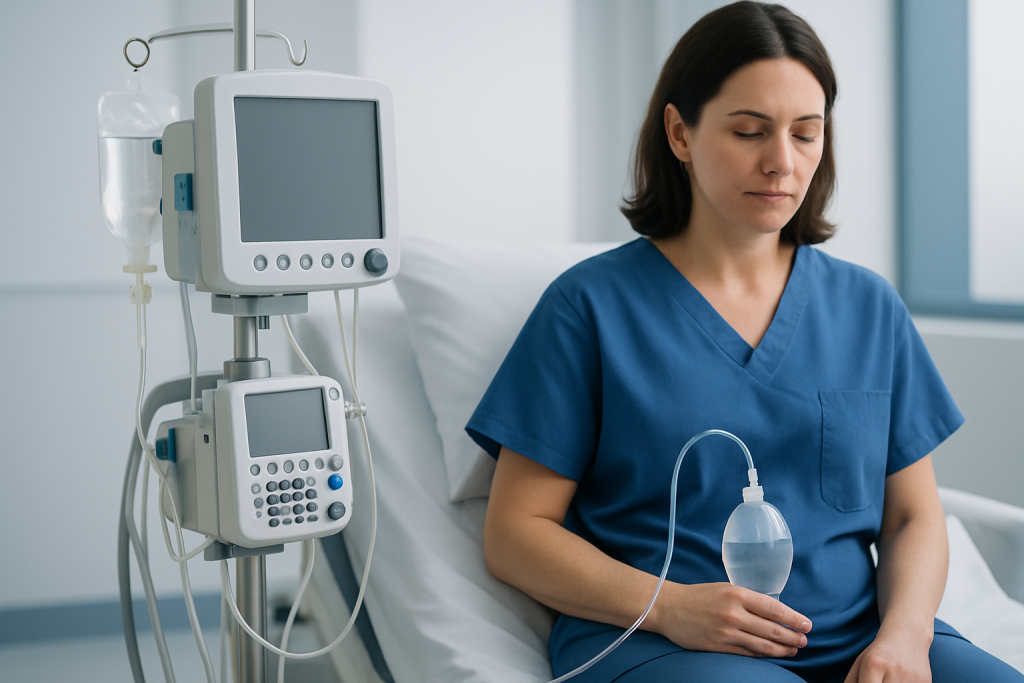
The JP drain itself is not usually painful once the initial postoperative tenderness begins to settle, but it can cause awareness, pulling, or mild irritation at the exit site. Some people notice a tugging sensation when the tubing shifts, or a feeling of fullness that improves after the bulb is emptied.
Normal drainage often starts as blood-tinged fluid and gradually becomes lighter in color. The amount usually decreases over time, though the exact pattern depends on the operation and the person’s healing response. A sudden increase in fluid, a major color change, or drainage that becomes cloudy or foul-smelling should be brought to the attention of the surgical team.
Other signs deserve attention as well:
- Redness spreading around the insertion site
- Warmth, swelling, or worsening tenderness
- Fever or chills
- The drain slipping out, leaking, or losing suction
- New bleeding that soaks the dressing or clothing
Some mild skin sensitivity around tape or dressings can also happen, especially if the drain remains in place for several days. Gentle skin care and proper securement can help reduce this discomfort.
Causes & Risk Factors

A JP drain is not placed because something has gone wrong; it is commonly used as a preventive step after surgery. When tissue is cut, separated, or rearranged, the body naturally produces fluid as part of the healing response. If too much fluid remains in the area, it can slow recovery, increase discomfort, or create a pocket where bacteria may grow.
Surgeons may recommend a JP drain after procedures that involve large tissue surfaces, dead space, or a higher chance of fluid accumulation. This can include some abdominal surgeries, breast surgery, lymph node surgery, body contouring, and reconstructive procedures. The decision depends on the type of operation, the extent of tissue handling, and the surgeon’s technique.
Certain factors can make postoperative fluid buildup more likely, such as:
- More extensive surgery
- Areas where tissue layers were lifted or moved
- Bleeding tendency or blood-thinning medicines, when applicable
- Prior surgery or scar tissue
- Lymphatic disruption after node removal or reconstruction
Patients traveling internationally for surgery may receive a JP drain as part of a planned recovery pathway. In that setting, understanding follow-up timing, drain removal criteria, and who to contact after returning home is especially important.
Diagnosis
A JP drain is not diagnosed in the usual medical sense, but it is assessed and monitored by the care team throughout recovery. Nurses and surgeons evaluate the insertion site, the amount and appearance of the drainage, and whether the bulb is maintaining suction properly. This monitoring helps determine whether healing is progressing as expected.
Patients are often taught to keep a simple log of daily drainage. Recording the amount at the same time each day gives the surgeon a clearer picture than a single measurement. The team may also ask whether the fluid has changed from bloody to pink, yellow, or clear, since color and consistency can be useful clues.
During follow-up, the doctor may inspect the wound, check for swelling or firmness, and decide whether the drain can be removed. If there is concern about infection, fluid collection, or a blockage, the clinician may order an exam or imaging study, depending on the situation.
The most important part of “diagnosis” in this context is communication. Small changes are often easy to manage when they are reported early, before they become larger problems.
Treatment Options
Managing a JP drain is mostly a matter of careful routine rather than medication or a complex procedure. The drain is usually kept in place for a limited period, and the main goal is to protect the surgical site while it heals. The care plan is individualized based on surgery type, drainage output, and the surgeon’s preferred removal criteria.
Typical instructions include emptying the bulb when it becomes partly full, measuring the fluid, and restoring suction after each emptying. The tubing should be secured to clothing or a dressing to prevent pulling. Many people are also asked to keep the surrounding skin clean and dry and to change dressings according to the surgical team’s directions.
Sometimes additional steps are needed if the drain is not functioning well. These may include checking for kinks, making sure the bulb is compressed, or reviewing the site with a nurse. If a drain becomes blocked, displaced, or leaks persistently, the team may need to examine it in person.
Drain removal is usually a quick outpatient step done by a clinician. It is commonly considered when the output has fallen low enough and the area appears stable. Some patients feel brief pulling or pressure during removal, followed by relief as the device is no longer needed.
Prevention & Self-care
Because a JP drain is used to support healing after surgery, the most practical “prevention” is preventing avoidable problems while it remains in place. Careful handling can reduce discomfort, lower the risk of infection, and help the drain work as intended. The instructions are usually straightforward, but consistency matters.
Useful self-care habits include:
- Wash hands before and after touching the drain
- Empty and measure drainage exactly as instructed
- Keep the bulb compressed to maintain suction
- Check the tubing for loops, clogs, or accidental pulling
- Secure the drain during walking, dressing, and sleep
- Keep the insertion site clean according to the care team’s guidance
People recovering at home, especially after surgery abroad, benefit from a written plan. That plan should include the drain log, dressing instructions, the target date for follow-up, and the name or number of the clinician to contact if concerns arise. If travel is expected soon after surgery, the surgeon should be asked whether the drain can be safely managed during the trip and whether follow-up should happen before departure.
Simple comfort measures may also help, such as wearing loose clothing, arranging the tubing so it does not tug, and pacing activity so that the surgical area is not strained. The goal is steady healing, not rushing the process.
When to See a Doctor
Most JP drains can be managed safely with clear instructions, but certain changes should be reported promptly. It is wise to contact the surgical team if the drain suddenly stops collecting fluid, falls out, loses suction repeatedly, or begins draining much more than expected.
Medical advice is also important if there is fever, increasing redness, worsening pain, pus-like drainage, a bad odor, or swelling around the wound. These findings do not always mean a serious complication, but they do need professional assessment so the team can decide whether the drain or the surgical site needs attention.
Patients should seek urgent evaluation if there is heavy bleeding, shortness of breath, severe pain, or a rapidly expanding area of swelling. In international care pathways, it is particularly helpful to know in advance which symptoms require local emergency care and which ones can wait for a planned call to the operating team.
Acibadem Health Point supports international patients with multidisciplinary specialists and JCI-accredited hospitals that diagnose and treat postoperative drain-related concerns as part of coordinated surgical care.
Frequently asked questions
What is a JP drain used for after surgery?
A JP drain removes extra fluid from the surgical area so it does not collect under the skin. This can help reduce pressure, support healing, and lower the chance of fluid buildup that may interfere with recovery.
How often should a JP drain be emptied?
The care team usually gives specific instructions based on the surgery and expected drainage. Many patients empty it at regular intervals and whenever the bulb becomes partly full, but the exact schedule should always follow the surgeon’s guidance.
Is it normal for JP drain fluid to change color?
Yes, the fluid often changes as healing progresses. It may begin as blood-tinged and then become lighter or clearer over time. Sudden cloudiness, a strong odor, or a large change in color should be reported.
Can someone shower with a JP drain?
This depends on the surgical instructions and how the site is dressed. Some patients are allowed to shower with precautions, while others need to keep the area dry. The surgeon’s instructions should be followed closely.
How is a JP drain removed?
A clinician removes it during a follow-up visit when drainage has dropped enough and the area looks stable. The process is usually quick and may cause brief pressure or pulling, but it is typically well tolerated.
What should a traveler do if the drain is still in place after leaving the hospital?
They should carry written instructions, a drainage log, and contact details for the surgical team. It is also helpful to confirm where follow-up will happen and what symptoms require local medical care during travel.
References
- Cleveland Clinic
- MedlinePlus
- Johns Hopkins Medicine
- Mayo Clinic
This article is for general information only and is not a substitute for professional medical advice. Please consult a qualified doctor about your individual situation.