Is Your Shortness of Breath Heart-Related? The Cardiology Questions That Matter

Key Takeaways
- Shortness of breath that worsens with exertion, lying flat, or at night can point toward a heart cause.
- Chest pressure, swelling, palpitations, and unusual fatigue are important clues to mention to a doctor.
- Diagnosis often starts with a history and exam, followed by tests such as an ECG, blood work, chest imaging, or an echocardiogram.
- Treatments depend on the cause and may include medication, lifestyle changes, and follow-up monitoring.
- New, severe, or rapidly worsening breathlessness should be assessed promptly, especially if it occurs with chest pain, fainting, or blue lips.
Medically reviewed by the Acıbadem clinical team — June 13, 2026
Shortness of breath can come from the lungs, heart, blood, or even anxiety and deconditioning, so the pattern matters as much as the symptom itself. This article explains the cardiology questions that help distinguish a heart-related cause and outlines what happens next in diagnosis and care.
Overview
Shortness of breath is one of the most common reasons people seek medical advice, but it is also one of the most difficult symptoms to interpret on its own. Some people notice it during a climb up stairs, others when lying down at night, and some only after an infection or a period of reduced activity. The question is not only “Can the person breathe?” but also “What pattern is this symptom following?”
When a cardiology team looks at breathlessness, it pays close attention to timing, triggers, and what else is happening at the same time. Heart-related shortness of breath often comes with clues such as swelling, chest pressure, fatigue, or palpitations. That does not mean every episode is dangerous, but it does mean the heart should be considered along with the lungs and other possible causes.
For international patients, this kind of evaluation can feel more complicated because symptoms may begin before travel, change during a flight, or continue after returning home. A clear, step-by-step assessment helps connect the symptom to the right specialty, which is why cardiology questions are so valuable early on.
Symptoms That Can Suggest a Heart Cause
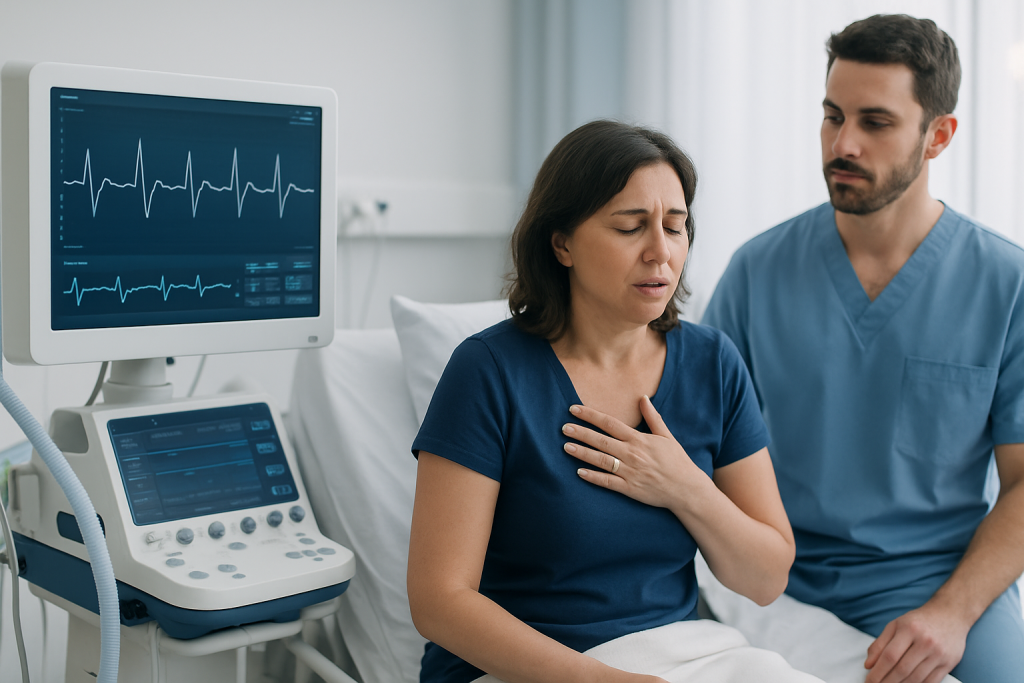
Heart-related breathlessness often appears in a specific pattern. A person may feel more short of breath when walking uphill, carrying groceries, or speaking while moving. Some notice they need extra pillows to sleep comfortably, or they wake up suddenly feeling breathless and need to sit upright.
Other symptoms can make a cardiac cause more likely. These may include swelling in the ankles or legs, rapid or irregular heartbeat, chest tightness or pressure, a sense of reduced exercise tolerance, or fatigue that seems out of proportion to activity. In some cases, the person simply feels that ordinary daily tasks have become harder than before.
Not all heart problems cause pain. Breathlessness can be the main complaint, especially in conditions that affect the heart’s pumping ability, valves, rhythm, or the blood supply to the heart muscle. The presence of one symptom does not confirm a diagnosis, but combinations of symptoms often tell a clearer story.
- Shortness of breath on exertion
- Breathlessness when lying flat
- Waking at night short of breath
- Swelling of the legs, ankles, or abdomen
- Palpitations or an irregular pulse
- Reduced stamina or unusual fatigue
Causes & Risk Factors

Several heart conditions can lead to breathlessness. Heart failure is a common one, but it is not the only possibility. Valve problems, such as narrowing or leaking valves, may force the heart to work harder and reduce its ability to meet the body’s needs. Coronary artery disease can also contribute, especially if the heart muscle is not receiving enough oxygen during activity.
Rhythm disorders deserve special attention because they can make the heart beat too fast, too slowly, or inefficiently. Even when the heart structure is otherwise healthy, an abnormal rhythm may cause exertional breathlessness, dizziness, or a fluttering sensation in the chest. Some heart muscle diseases also reduce the heart’s pumping efficiency and may present first as fatigue or shortness of breath.
Risk is shaped by age, blood pressure, diabetes, smoking history, high cholesterol, obesity, prior heart disease, family history, and a history of pregnancy-related or viral heart problems. Recent long-distance travel, immobility, or a history of blood clots may raise other concerns that also need medical review. A cardiologist considers the whole picture rather than the symptom in isolation.
Diagnosis
Diagnosis usually begins with a detailed conversation. A doctor will ask when the breathlessness began, what makes it better or worse, whether it happens at rest or only with activity, and whether there are associated symptoms such as swelling, cough, chest discomfort, fever, or palpitations. People are often encouraged to describe the exact moment they first noticed a change, because even small details can help.
The physical examination looks for clues such as fluid retention, abnormal heart sounds, a fast or irregular pulse, blood pressure changes, or signs of poor oxygen delivery. From there, tests may include an electrocardiogram (ECG), blood tests, chest X-ray, echocardiogram, or oxygen measurements. Depending on the findings, more specialized testing such as stress testing, ambulatory rhythm monitoring, or cardiac imaging may be recommended.
For patients who are traveling for care, bringing previous test results, medication lists, and any hospital discharge summaries can speed up the process. If symptoms are fluctuating, keeping a short diary of when they occur and what was happening at the time can be surprisingly helpful during the consultation.
Treatment Options
Treatment depends entirely on the cause. If heart failure is identified, care may focus on improving the heart’s pumping function, reducing fluid buildup, and easing symptoms. If the issue is a rhythm disorder, the goal may be to control the rate, restore a stable rhythm, or reduce the risk of complications. Valve disease, coronary disease, and other structural problems may require medication, procedures, or surgery.
Doctors also address contributors that can make breathlessness worse, such as high blood pressure, anemia, fluid overload, sleep problems, or poor physical conditioning after an illness. In some cases, the most effective treatment is a combination of approaches rather than one single intervention.
For international patients, treatment planning often includes practical questions: how to monitor symptoms after returning home, when follow-up should occur, and which warning signs should trigger immediate local care. A good plan is one that is medically sound and realistic once the patient is back in their own routine.
- Medications to reduce strain on the heart or control rhythm
- Procedures for blocked arteries or damaged valves when needed
- Fluid and blood pressure management
- Supervised activity and rehabilitation when appropriate
- Regular follow-up and home monitoring
Prevention & Self-care
Not every cause of shortness of breath is preventable, but many heart-related contributors can be reduced through consistent habits and early attention to risk factors. Keeping blood pressure, cholesterol, blood sugar, and weight within a healthy range lowers strain on the heart over time. Avoiding smoking is one of the most important steps a person can take for both heart and lung health.
Daily self-care is also about noticing change early. People who already have heart disease are often encouraged to track symptoms, weigh themselves if advised, and pay attention to swelling, sleep position, and exercise tolerance. A small but persistent decline in stamina can be more useful than a dramatic episode in identifying a problem early.
After travel, a person should give the body time to settle, especially if the journey involved long flights, disruption of sleep, or changes in activity. Gentle movement, hydration, and adherence to prescribed medicines can help, but new or persistent breathlessness should still be discussed with a doctor rather than assumed to be “just jet lag” or weakness.
When to See a Doctor
Breathlessness deserves medical evaluation if it is new, unexplained, recurrent, or getting worse. This is especially true if it limits ordinary activities, happens at rest, wakes the person from sleep, or appears alongside swelling, chest pressure, palpitations, fainting, or marked fatigue. Even when symptoms come and go, a pattern that is gradually changing should not be ignored.
Emergency care is appropriate if shortness of breath is severe, if the lips or face look blue or gray, if there is chest pain, confusion, collapse, or a sudden inability to speak in full sentences. These signs need urgent assessment because they can signal a serious heart or lung problem.
For less urgent but persistent symptoms, a cardiology appointment can clarify whether the heart is involved and help prevent delays in treatment. Acibadem Health Point’s multidisciplinary specialists and JCI-accredited hospitals diagnose and treat this condition for international patients, with care plans that can be coordinated across the diagnostic and recovery stages.
Frequently asked questions
How can someone tell if shortness of breath is heart-related?
No single symptom proves the cause, but breathlessness that worsens with exertion, lying flat, or waking at night can suggest a heart issue. Clues such as swelling, palpitations, chest pressure, or unusual fatigue make a cardiac evaluation more important.
Can heart problems cause shortness of breath without chest pain?
Yes. Some heart conditions, including heart failure, valve disease, and rhythm disorders, may present mainly with breathlessness or reduced stamina rather than pain. That is why symptoms should be reviewed as a whole, not one by one.
What tests are commonly used to check for a heart cause?
Doctors often begin with an ECG, blood tests, and a physical examination. Depending on the findings, an echocardiogram, chest X-ray, rhythm monitor, or stress test may be recommended.
Is shortness of breath always an emergency?
No, but sudden, severe, or rapidly worsening breathlessness should be treated urgently. It is also important to seek prompt care if it happens with chest pain, fainting, confusion, or blue lips.
Could anxiety or poor fitness be the only reason for breathlessness?
Yes, those are possible causes, but they should be considered after the heart and lungs are reviewed, especially if the symptom is new or changing. A doctor can help separate benign causes from conditions that need treatment.
What should an international patient bring to a cardiology visit?
It helps to bring previous test results, discharge summaries, medication lists, and any imaging or ECG reports if available. A short symptom timeline, including what worsens or relieves the breathlessness, can also make the consultation more efficient.
References
- American Heart Association
- European Society of Cardiology
- National Heart, Lung, and Blood Institute
- Mayo Clinic
- World Health Organization
This article is for general information only and is not a substitute for professional medical advice. Please consult a qualified doctor about your individual situation.