Saving A Tooth vs Dental Implant: How Dentists Decide

Key Takeaways
- A tooth is usually worth saving when it can function well after treatment and has a reasonable long-term outlook.
- Implants are typically considered when a tooth cannot be restored safely, predictably, or comfortably.
- The decision depends on the tooth itself, the surrounding gums and bone, and the patient’s medical and travel circumstances.
- Modern dentistry often uses imaging, testing, and shared planning to compare preservation with replacement.
- For international patients, timing, healing, and follow-up access matter as much as the procedure itself.
Medically reviewed by the Acıbadem clinical team — June 13, 2026
When a tooth is badly damaged, dentists do not jump straight to extraction or replacement. They weigh the tooth’s structure, gum and bone support, long-term prognosis, and the patient’s overall health and goals before recommending the most predictable option.
Overview
When a dentist says a tooth is “savable,” that does not always mean it is simple to repair. The real question is whether the tooth can be treated in a way that is stable, comfortable, and likely to last. If the answer is yes, keeping the natural tooth is often the first choice because it preserves the patient’s own biting sensation, anatomy, and surrounding bone.
But saving a tooth is not always the best path. A tooth with extensive decay, a deep fracture, advanced infection, or weak support from the gums and jaw may have a limited future even after treatment. In those situations, replacing the tooth with an implant can offer a more dependable long-term solution.
The decision is rarely made from a single X-ray image or a quick exam. Dentists usually compare several factors at once: how much healthy tooth remains, whether the root is intact, how the bone and gums are holding up, and whether the patient can complete treatment and follow-up. For someone traveling from another country, that last point matters a great deal because healing and checkups are part of the plan, not an afterthought.
Symptoms and warning signs that prompt evaluation
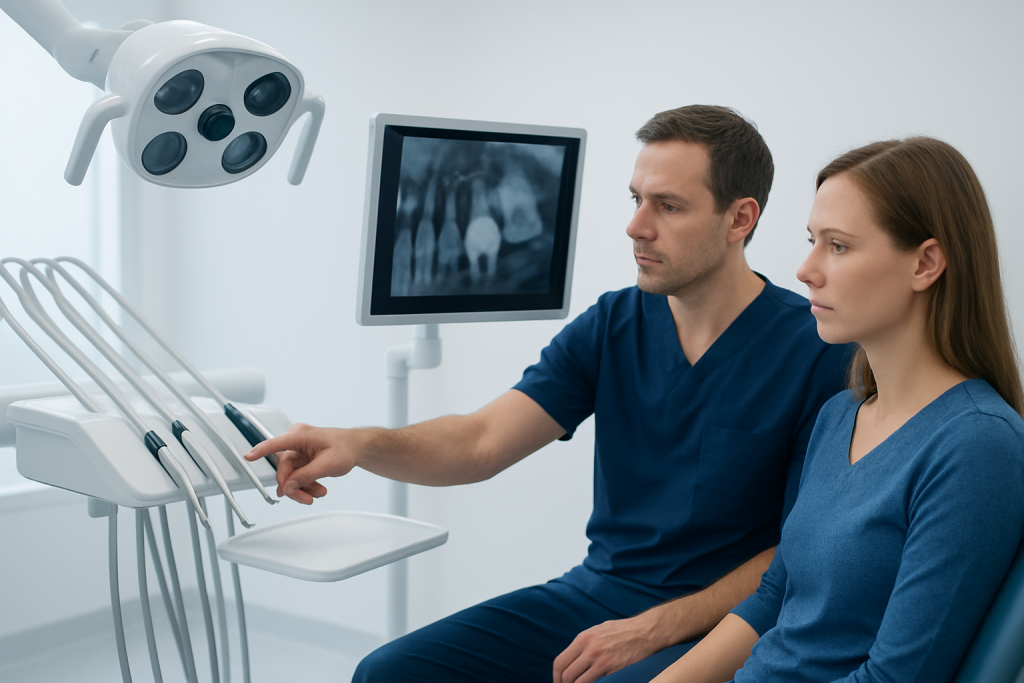
People often seek help because a tooth hurts, feels loose, or has become sensitive to chewing, heat, or cold. Sometimes the tooth is not painful at all, but it has a large cavity, a cracked filling, or a visible fracture that makes the future uncertain. Swelling, gum tenderness, bad taste, or repeated abscesses can also signal that a tooth needs a closer look.
Some warning signs suggest that the tooth may be difficult to save. These include a crack that extends below the gumline, major loss of tooth structure, severe bone loss around the root, or a tooth that has already been treated several times without lasting success. A dentist may also worry when a tooth becomes too short or fragile to support a crown or other restoration.
It helps to remember that symptoms do not always match severity. A tooth can seem mild on the outside while the root or supporting bone is seriously compromised. That is why dentists combine the patient’s description with a careful exam and imaging before giving advice.
- Persistent pain when biting or releasing pressure
- Swelling or drainage near the tooth
- Recurrent infections in the same area
- Visible cracks, chips, or large restorations
- Loose teeth in adults without recent injury
Causes and risk factors

Several conditions can push a dentist toward extraction and implant planning rather than tooth preservation. Deep decay is one of the most common. If decay reaches the nerve and extends far below the gumline, there may not be enough healthy structure left to rebuild the tooth predictably.
Trauma is another major factor. A tooth that has fractured vertically or split into pieces often cannot be restored in a durable way. Gum disease can also change the decision, especially when it has weakened the bone that anchors the tooth. Even a tooth with a treated root canal may not be a good candidate if the surrounding support is poor or the crown-to-root balance is unfavorable.
Patient-specific factors matter too. Conditions that affect healing, such as uncontrolled diabetes, smoking, dry mouth, or certain immune-related problems, can influence both tooth-saving treatment and implant success. Dentists also consider the patient’s age, general health, bite forces, and whether they are likely to return for staged care or follow-up from abroad.
How dentists make the decision
The choice between saving a tooth and replacing it with an implant is usually based on prognosis, not emotion. A dentist asks: Can this tooth be restored with a reasonable chance of lasting? Will the repair require repeated retreatment? Will the result function well without creating new problems for nearby teeth or the bite?
To answer those questions, the dentist reviews the amount of remaining healthy tooth, the condition of the root, the status of the pulp and nerve, the health of the gums, and the amount of bone around the tooth. If the tooth can be repaired with a filling, crown, root canal, post, or periodontal treatment and still has a stable outlook, saving it is often preferred. If the structure is too compromised, extraction followed by implant planning may be more predictable.
Shared decision-making is important. Some patients value keeping their natural tooth above all else, while others prefer a more definitive plan with fewer future surprises. A thoughtful consultation explains the trade-offs clearly so the patient can choose with realistic expectations, especially if travel, schedule, or access to follow-up care will influence the treatment sequence.
- Can the tooth be restored without compromising long-term durability?
- Is the tooth cracked, fractured, or too decayed to rebuild?
- Do the gums and bone provide enough support?
- Will treatment require repeated retreatment or complex maintenance?
- Would an implant be more predictable for the patient’s circumstances?
Diagnosis and treatment planning
Dental decision-making begins with a detailed examination. The dentist checks the tooth, the surrounding gums, the bite, and nearby teeth. X-rays are commonly used, and in more complex cases a 3D scan may be recommended to assess root shape, bone volume, hidden infection, or fracture patterns that are not visible on standard images.
Tests may include tapping the tooth, checking cold response, probing the gums, and evaluating how much of the tooth remains above and below the gumline. If the tooth has had previous treatment, the dentist may look for signs that the root canal, crown, or restoration is failing. For implant planning, bone quality and spacing are assessed carefully because the site must support the implant securely.
For international patients, planning often includes more than the mouth alone. The team may consider how many visits are needed, whether healing time can be completed locally or abroad, and how to coordinate follow-up if the patient returns home. That planning can make the difference between a convenient treatment pathway and one that becomes difficult to finish.
Treatment options: saving the tooth or replacing it
If the tooth is still worth preserving, treatment may involve removing decay, rebuilding the structure, performing a root canal, or covering the tooth with a crown. In gum-related cases, periodontal therapy may help improve support. The goal is not simply to keep the tooth in place, but to restore a tooth that can still participate safely in chewing and daily function.
If the tooth cannot be saved, extraction may be followed by several replacement options. A dental implant is a common choice because it replaces the root with a titanium post and supports a crown. In some cases, a bridge or removable prosthesis may be more appropriate, depending on bone availability, neighboring teeth, and the patient’s broader oral condition.
Implant treatment is not always immediate. Some sites need time to heal after extraction, and some patients need bone grafting before an implant can be placed. The timing depends on local anatomy and healing needs, which is why an individualized plan matters more than a one-size-fits-all timeline.
- Tooth-saving care: filling, crown, root canal treatment, periodontal therapy, splinting, or repair of minor fractures
- Replacement care: extraction, implant placement, possible bone grafting, and later crown restoration
- Alternative options: bridge or removable prosthesis when implants are not the best fit
Prevention and self-care
The best way to avoid the save-or-replace dilemma is to catch problems early. Routine dental visits help identify decay, gum disease, cracks, and worn restorations before they become major structural issues. Patients who have had root canals, large fillings, or gum treatment benefit from regular monitoring because these teeth may need closer attention over time.
Daily habits matter as much as office treatment. Careful brushing with fluoride toothpaste, cleaning between teeth, and limiting frequent sugar exposure all help protect tooth structure. If a patient grinds or clenches, a night guard may reduce the risk of fracture or recurrent damage. Smokers and people with dry mouth may need extra guidance because both conditions can make healing and gum health more difficult.
For patients preparing for treatment abroad, practical self-care also includes organization. Bringing previous dental records, imaging if available, medication lists, and a clear travel schedule can help the team decide whether a tooth can be repaired during the planned stay or whether replacement is the safer route.
When to see a dentist
A prompt dental evaluation is wise if a tooth hurts when chewing, feels loose, has swelling around it, or has repeated infections. The same advice applies when a tooth has a large fracture, a darkened crown after trauma, or a filling that keeps failing. These are all situations where the window for simple repair may be narrowing.
Urgent care is especially important if facial swelling is spreading, fever is present, or swallowing becomes uncomfortable. Those signs may indicate a more serious infection that should not wait for a routine visit. Even when symptoms are mild, a tooth that looks questionable on an X-ray should be discussed before deciding to postpone care.
For patients exploring treatment outside their home country, it is reasonable to ask how many visits are needed, what healing time is expected, and how complications would be handled after returning home. Acibadem Health Point’s multidisciplinary specialists and JCI-accredited hospitals can diagnose and treat this condition for international patients as part of a coordinated care plan.
Frequently asked questions
Is it always better to save a natural tooth?
Not always. Keeping the natural tooth is usually preferred when the tooth can be restored predictably and maintained over time. If the tooth is too fractured, decayed, or unstable, replacement may be the safer and more durable option.
How do dentists know if a tooth can be saved?
They look at the amount of healthy tooth left, the condition of the root, the gums and bone, and whether the tooth can support a reliable restoration. X-rays and sometimes 3D imaging help show problems that cannot be seen during a visual exam.
When is an implant considered instead of repair?
An implant is often considered when the tooth cannot be restored with a reasonable long-term outlook or when repeated treatment is unlikely to succeed. It may also be chosen when the tooth is split, severely decayed, or has lost too much support from the surrounding bone.
Does a tooth need to be removed immediately if it has a bad cavity or infection?
Not necessarily. Some teeth with deep decay or infection can still be saved with procedures such as a root canal and crown. A dentist will decide based on the exact location and severity of the damage.
Are implants always placed right after extraction?
No. Some patients are good candidates for immediate placement, while others need time to heal or may need bone grafting first. The timing depends on bone quality, infection, and the condition of the extraction site.
What should international patients ask before starting treatment?
They should ask how many visits are needed, how long healing will take, what follow-up is required, and whether the treatment can be completed safely within their travel plan. This helps avoid rushed decisions and supports a smoother recovery.
References
- American Dental Association
- American Association of Endodontists
- American Academy of Periodontology
- International Team for Implantology
- Mayo Clinic
This article is for general information only and is not a substitute for professional medical advice. Please consult a qualified doctor about your individual situation.