

Hip Flexor Stretch: How To Do It Safely

Key Takeaways
- Hip flexor stretches are most useful when tightness comes from prolonged sitting, exercise, or mild muscle overuse.
- A good stretch should feel like steady tension, not sharp pain or pinching in the front of the hip.
- Breathing, posture, and pelvic position matter as much as the stretch itself.
- People with hip, back, groin, or surgery-related symptoms should seek individualized advice before stretching deeply.
- Consistent mobility work, strengthening, and regular movement breaks often work better than stretching alone.
Medically reviewed by the Acıbadem clinical team — August 19, 2026
Hip flexor stretches can help reduce stiffness, improve movement, and support comfortable walking, sitting, and exercise. The best approach is gentle, consistent stretching paired with good technique and attention to any pain or injury warning signs.
Overview
The hip flexors are a group of muscles that help lift the thigh and bend the hip. They are used in walking, climbing stairs, running, sitting down, getting up from a chair, and many everyday movements. When these muscles feel tight, people may notice a shortened stride, stiffness after sitting, or discomfort at the front of the hip.
A hip flexor stretch is a simple mobility exercise designed to lengthen these muscles and reduce the feeling of restriction. It is commonly used in fitness routines, physical rehabilitation, and daily self-care. For many people, the goal is not to force a deep stretch, but to restore comfortable movement and help the hip work more smoothly during normal activity.
Because hip tightness can have several causes, the right stretch is only one part of the picture. Posture, strength, workload, and past injury all influence how the front of the hip feels. A careful, gradual approach usually works better than aggressive stretching, especially when someone is returning to exercise, recovering from travel-related stiffness, or rebuilding mobility after time away from routine movement.
Symptoms
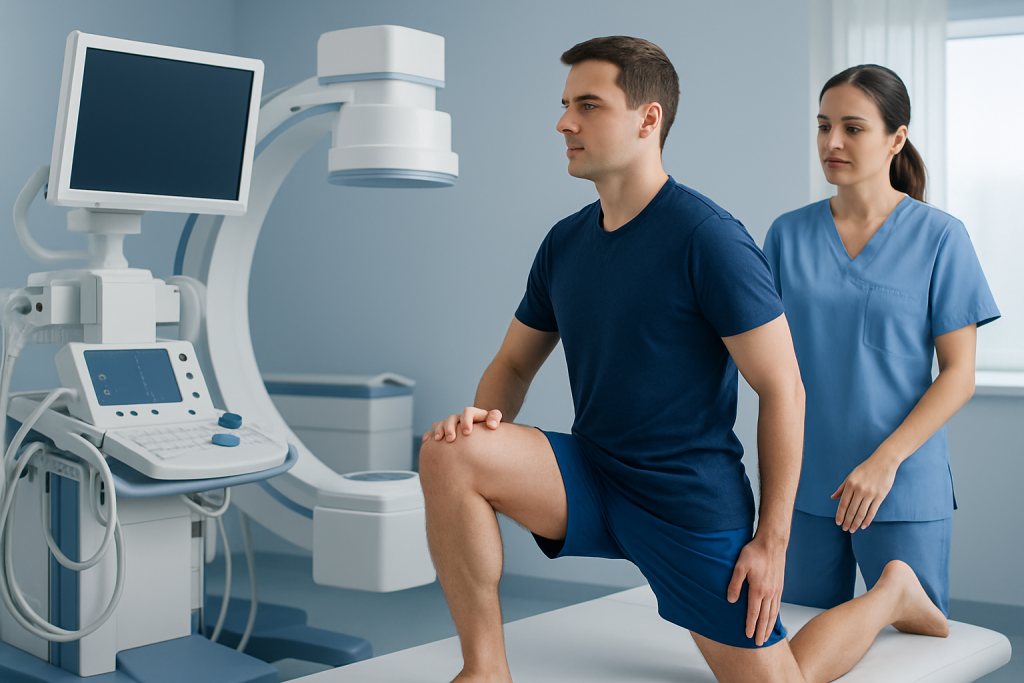
People who may benefit from a hip flexor stretch often describe a pulling sensation at the front of the hip or upper thigh. The area may feel stiff after long periods of sitting, after a workout, or first thing in the morning. Some people notice that standing tall or taking a longer step feels easier after the muscles warm up.
Hip flexor tightness can also show up indirectly. A person may feel the lower back working harder than usual, notice reduced hip extension when walking, or feel that running or lunging motions are less comfortable. In some cases, the issue is not true muscle tightness alone, but irritation around the hip joint, tendon strain, or weakness in nearby muscles.
It is important to distinguish a helpful stretch from a warning sign. A safe stretch produces mild to moderate tension that eases with time and breathing. Sharp pain, pinching in the groin, numbness, catching, or pain that worsens with movement suggests that the exercise should be stopped and reviewed by a clinician.
Causes & Risk Factors
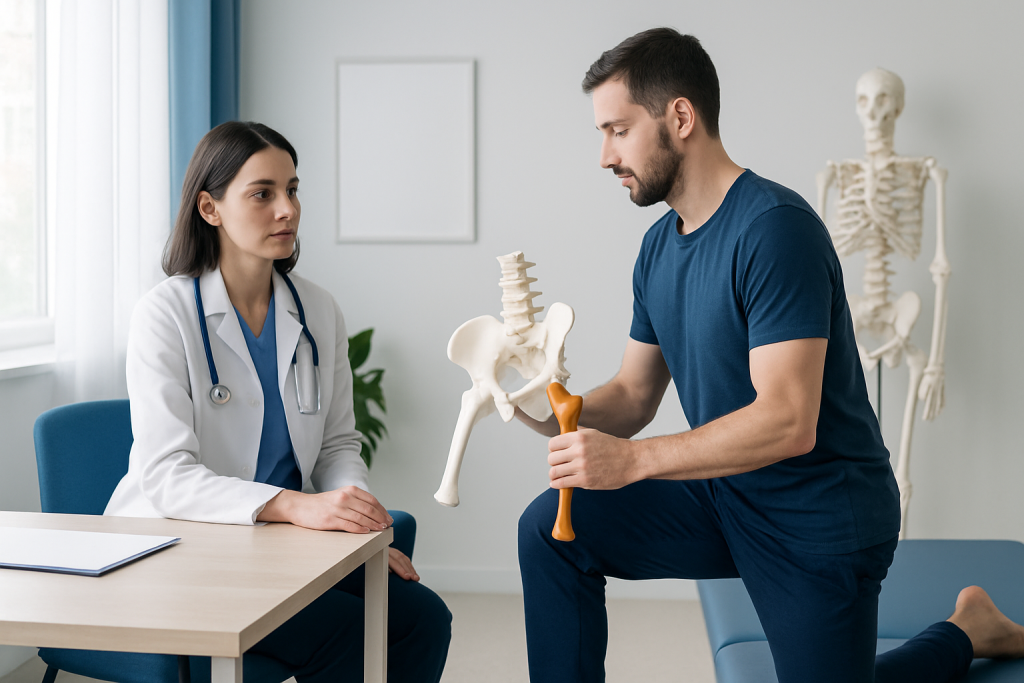
Hip flexors often become tight when the hips spend too much time in a shortened position. Long commutes, desk work, extended screen time, and prolonged sitting can all encourage stiffness. The body adapts to what it does most often, so a low-movement day can leave the front of the hips feeling cramped.
Sports and exercise can also contribute. Runners, cyclists, dancers, field athletes, and people who do repeated lunges or stairs may place frequent demand on the hip flexors. Without enough recovery, warm-up, or balancing strength work for the glutes and core, the muscles at the front of the hip may feel overworked.
Other factors may include:
- Sudden increases in training volume or intensity
- Weakness in the gluteal and abdominal muscles
- Poor movement mechanics during walking, squatting, or lifting
- Previous hip, pelvis, or low back injury
- Recovery after surgery or a period of reduced activity
Sometimes what seems like tightness is actually a protective response. The body may limit motion to guard an irritated joint, tendon, or lower back structure. That is why ongoing or one-sided symptoms deserve a proper assessment rather than stretching alone.
Diagnosis
There is no single test for “tight hip flexors.” Instead, a clinician usually starts with a conversation about symptoms, daily habits, exercise routine, and any recent injury. They may ask when the tightness appears, what movements make it better or worse, and whether pain is located in the front of the hip, groin, back, or thigh.
A physical examination can help identify whether the issue is mainly flexibility, strength, posture, or joint irritation. The clinician may watch the person walk, check hip range of motion, and test related muscles. If symptoms suggest something beyond simple muscle tightness, imaging or other tests may be considered to look for joint, tendon, spine, or soft-tissue problems.
For international patients planning care away from home, this evaluation is especially useful before long-distance travel or starting an intensive rehabilitation program. A clear diagnosis helps ensure that stretching is appropriate and that the recovery plan matches the real cause of the discomfort.
Treatment Options
Most hip flexor concerns are managed conservatively, beginning with gentle stretching and activity adjustments. A common approach is the kneeling lunge stretch, performed with an upright torso and the pelvis gently tucked so the stretch is felt in the front of the trailing hip rather than in the lower back. The stretch should be held in a calm, controlled way without bouncing.
Other options may be added depending on the person’s needs. These can include standing hip flexor stretches, active mobility drills, core strengthening, glute strengthening, and movement retraining. In rehabilitation settings, a therapist may tailor exercises to improve hip extension, reduce compensation from the lower back, and restore comfort for walking, running, or returning to sport.
Treatment plans are often more successful when stretching is matched with the reason the tightness developed. For example, a cyclist may need bike-fit adjustments and strengthening work, while someone with desk-related stiffness may benefit from movement breaks and posture changes. If pain is related to inflammation, tendon irritation, or joint disease, the treatment plan may need to be modified rather than intensified.
Helpful principles often include:
- Warm up before deep stretching
- Keep movements slow and controlled
- Avoid forcing range of motion
- Combine stretching with strengthening and walking
- Progress gradually rather than trying to “fix” tightness in one session
How to Perform a Basic Hip Flexor Stretch
A simple hip flexor stretch can be done in a half-kneeling position. One knee rests on the floor while the other foot stays planted in front, creating a lunge shape. The person keeps the chest lifted, gently tightens the lower abdomen, and slightly tucks the pelvis to avoid arching the lower back.
From that position, the body shifts forward only until a stretch is felt at the front of the hip of the kneeling leg. The sensation should remain steady and manageable. Breathing slowly helps reduce unnecessary muscle guarding, and the stretch can be repeated on both sides if both hips feel tight.
It is usually better to aim for quality than intensity. Small adjustments in pelvis position, trunk alignment, and stance width often make the stretch more effective. If the front of the hip feels pinched, if the lower back is taking over, or if balance is difficult, the person can reduce the depth of the stretch or ask a physiotherapist to review technique.
Prevention & Self-care
Prevention starts with movement variety. Regular walking, standing breaks, and changes in position throughout the day can help prevent the hip flexors from staying shortened for long periods. For people who work at a desk or travel often, even brief movement breaks can make a noticeable difference in comfort.
Self-care works best when stretching is part of a broader routine. Core stability, glute strength, and good hip mechanics help take strain off the front of the hip. A balanced program may also include gentle warm-ups before exercise, cool-downs after activity, and rest days when needed.
People recovering from stiffness after travel, long sitting, or temporary inactivity should return to movement gradually. A short daily routine is often more sustainable than occasional intense stretching. If a stretch repeatedly causes pain or no improvement, the person may need a different approach rather than more force.
When to See a Doctor
Medical assessment is recommended when hip tightness is persistent, clearly one-sided, or linked to pain in the groin, pelvis, back, or knee. It is also wise to seek advice if the hip feels unstable, if walking is becoming difficult, or if the discomfort limits sleep, exercise, or daily tasks.
A doctor or physiotherapist should evaluate symptoms that follow an injury, a fall, or surgery, as well as pain accompanied by swelling, fever, redness, numbness, weakness, or a catching sensation in the joint. These features do not always signal a serious problem, but they deserve attention so the right diagnosis can be made early.
For patients considering Herniated Disc Treatment Abroad: Injection, Rehab, or Surgery?" class="ahp-ilk">treatment abroad, a guided review before travel can help determine whether stretching alone is enough or whether a more complete rehabilitation plan is needed. Acibadem Health Point’s multidisciplinary specialists and JCI-accredited hospitals diagnose and treat hip-related conditions for international patients with coordinated, individualized care.
Frequently Asked Questions
What should a hip flexor stretch feel like?
It should feel like a gentle, steady pull along the front of the hip or upper thigh. A good stretch is noticeable but controllable, and it should not create sharp pain or pinching.
How often should someone stretch the hip flexors?
Frequency depends on the person’s needs and comfort, but regular, moderate stretching is usually more helpful than occasional intense sessions. Many people do well with short daily mobility work paired with movement breaks and strengthening.
Can stretching alone fix tight hip flexors?
Sometimes stretching helps, but it is often only one part of the solution. If tightness is related to posture, muscle weakness, training load, or joint irritation, the overall plan may also need strengthening, activity changes, or clinical evaluation.
Is it normal to feel the lower back during a hip flexor stretch?
A small amount of effort in the trunk can happen, but the lower back should not be doing most of the work. If the stretch is mainly felt in the back, the position likely needs adjustment so the hip receives the intended stretch.
Should people stretch before or after exercise?
Gentle mobility work can be useful as part of a warm-up, while longer holds are often better after exercise or at another time of day. The best timing depends on the activity and the person’s symptoms, so comfort and control should guide the choice.
When is a professional assessment useful?
A professional review is helpful when the tightness is painful, persistent, or affecting movement patterns. It is also important if the person is returning to sport, recovering from injury, or unsure whether stretching is appropriate for the cause of the symptoms.
Frequently asked questions
What should a hip flexor stretch feel like?
It should feel like a gentle, steady pull along the front of the hip or upper thigh. A good stretch is noticeable but controllable, and it should not create sharp pain or pinching.
How often should someone stretch the hip flexors?
Frequency depends on the person’s needs and comfort, but regular, moderate stretching is usually more helpful than occasional intense sessions. Many people do well with short daily mobility work paired with movement breaks and strengthening.
Can stretching alone fix tight hip flexors?
Sometimes stretching helps, but it is often only one part of the solution. If tightness is related to posture, muscle weakness, training load, or joint irritation, the overall plan may also need strengthening, activity changes, or clinical evaluation.
Is it normal to feel the lower back during a hip flexor stretch?
A small amount of effort in the trunk can happen, but the lower back should not be doing most of the work. If the stretch is mainly felt in the back, the position likely needs adjustment so the hip receives the intended stretch.
Should people stretch before or after exercise?
Gentle mobility work can be useful as part of a warm-up, while longer holds are often better after exercise or at another time of day. The best timing depends on the activity and the person’s symptoms, so comfort and control should guide the choice.
When is a professional assessment useful?
A professional review is helpful when the tightness is painful, persistent, or affecting movement patterns. It is also important if the person is returning to sport, recovering from injury, or unsure whether stretching is appropriate for the cause of the symptoms.
References
- American Academy of Orthopaedic Surgeons
- National Health Service
- Mayo Clinic
- Cleveland Clinic
- World Health Organization
This article is for general information only and is not a substitute for professional medical advice. Please consult a qualified doctor about your individual situation.
Joint and spine care in Turkey — expert assessment & treatment
JCI-accredited · board-certified surgeons · reply within 24h
Add us as a Preferred Source to see more of our trusted health content across Google Search, AI Overviews and Discover.
More from the Health Library


Related Specialists

Prof. Dr. Ahmet Alanay
Orthopedic Surgery & Traumatology
Dr. Sinan Aksu
Orthopedic Surgery & Traumatology
Dr. Sirri Baştürk
Orthopedic Surgery & Traumatology
Prof. Dr. Korhan Özkan
Orthopedic Surgery & Traumatology