Hand Foot And Mouth Rash

Key Takeaways
- Hand foot and mouth rash is typically part of a viral illness spread through close contact, droplets, and contaminated surfaces.
- The rash often appears on the hands, feet, and around the mouth, but sores may also affect the inside of the mouth.
- Treatment focuses on comfort, hydration, and fever control rather than antibiotics.
- Good hand hygiene and cleaning shared surfaces can help reduce spread at home, school, or daycare.
- Medical advice is important if a child cannot drink well, seems unusually drowsy, or symptoms worsen.
- Most people recover without complications, but follow-up may be needed if the rash is severe or the diagnosis is unclear.
Hand foot and mouth rash is usually caused by a common viral infection that often affects young children, though older children and adults can also get it. The rash may look uncomfortable, but most cases improve with supportive care and time.
Overview
Hand foot and mouth rash is one of the more recognizable signs of hand foot and mouth disease, a common viral infection that often begins with fever, sore throat, and a general feeling of being unwell before the rash appears. The spots may show up on the palms, soles, fingers, toes, and sometimes the buttocks or diaper area, while painful mouth sores can make eating and drinking harder.
For many families, the diagnosis is made by examining the child and asking about recent exposure to daycare, school, siblings, or playgroups. In most cases, the illness is short-lived and managed at home, but the symptoms can still be stressful, especially when a child refuses fluids or seems uncomfortable. The reassuring part is that the condition usually settles with simple supportive care and careful observation.
Adults can develop the infection too, although it is more often seen in young children. When care is needed across borders, families may want a clear plan for what is contagious, what can wait, and what requires urgent review. That practical approach matters whether the child is at home or recovering while traveling.
Symptoms
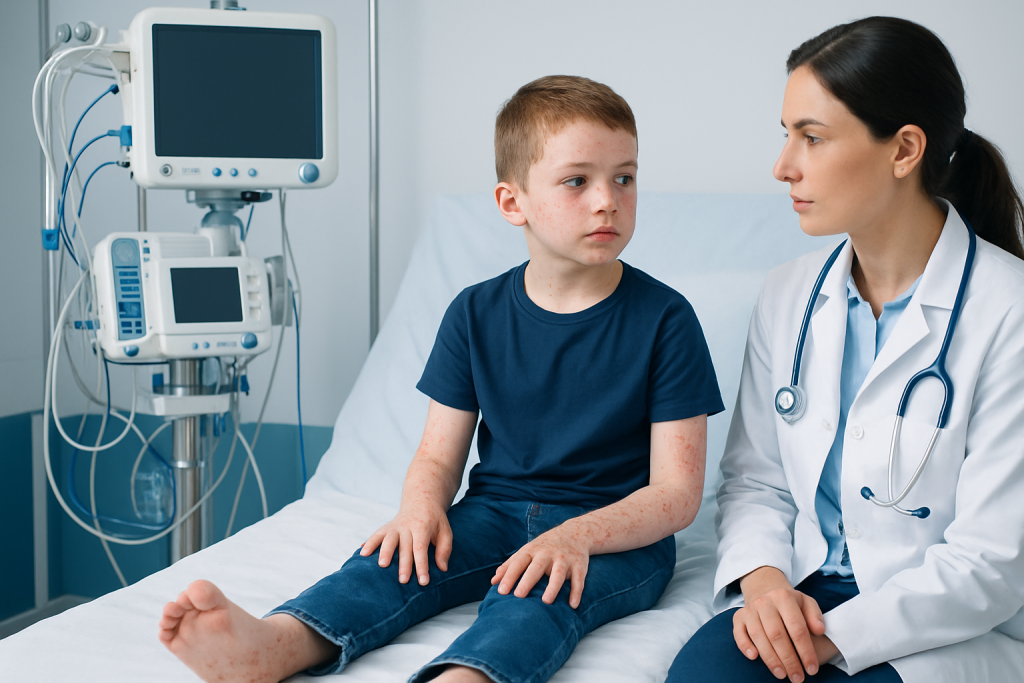
The rash is only one part of the illness. Many people notice early signs such as fever, reduced appetite, irritability, throat discomfort, and a runny nose before the skin lesions become visible. Mouth sores can appear as small red spots or blisters that may make swallowing painful, which is often the feature that causes the most distress.
The skin rash commonly starts as flat red spots that may turn into small blisters. These can appear on the hands and feet, but the pattern is not always textbook. Some children have only a few spots, while others develop a wider rash on the legs, arms, buttocks, or around the mouth.
Symptoms can vary from mild to moderately uncomfortable. A child may be fussy, want cold drinks, or avoid foods that are salty, acidic, or rough in texture. In many cases, the fever and sore throat improve first, while the rash fades more gradually over several days.
- Fever and tiredness
- Painful mouth sores
- Rash or blisters on hands and feet
- Reduced appetite or refusal to drink
- Irritability, especially in younger children
Causes & Risk Factors

Hand foot and mouth disease is caused by enteroviruses, most often coxsackievirus, and it spreads easily from person to person. The virus can be passed through saliva, nasal secretions, fluid from blisters, stool, and contaminated hands or objects. Because children touch shared surfaces frequently, outbreaks can move quickly through nurseries, preschools, and households.
Risk is higher in younger children, particularly those under five, because their immune systems are still developing and close-contact settings make spread easier. Siblings, caregivers, and classmates can also become infected, especially when handwashing is inconsistent or toys, cups, and utensils are shared. Adults with close exposure may catch it too, although they often have milder symptoms.
Seasonal patterns may occur, but the infection can appear at different times of year depending on the virus strain and local circulation. A child who has had one episode may still get another infection later, because several related viruses can cause the same syndrome. This is one reason a clear diagnosis from a clinician can be useful when symptoms are unusual or recurrent.
Diagnosis
Diagnosis is usually clinical, meaning a doctor looks at the rash, mouth sores, fever history, and exposure pattern. In many straightforward cases, no special test is needed. The appearance of the lesions and the age of the child often provide enough information to guide care.
Testing may be considered when the presentation is atypical, symptoms are severe, or another condition needs to be ruled out. A clinician may ask about rash location, whether blisters are present, how much the child is drinking, and whether anyone else in the household is ill. This broader picture helps separate hand foot and mouth disease from other viral rashes or skin conditions.
For families seeking care internationally, having photos of the rash at different stages can help if symptoms are changing during travel. If a child is seen by different doctors in different places, those images and a short symptom timeline can make follow-up more efficient and reduce unnecessary repeat testing.
Treatment Options
There is no specific cure for hand foot and mouth disease, so treatment focuses on relieving symptoms while the immune system clears the virus. Rest, fluids, and pain or fever relief recommended by a doctor are the mainstays of care. Antibiotics do not treat viral infections and are not used unless another bacterial problem is present.
Comfort measures are especially important when mouth sores make swallowing difficult. Cool fluids, soft foods, and avoiding acidic or spicy items can make eating easier. Some children prefer cold yogurt, chilled purées, or ice pops, while others do better with small frequent sips rather than large drinks.
In more troublesome cases, a doctor may suggest additional measures to help with pain or dehydration risk. If a child is unable to keep fluids down, becomes sleepy, or shows signs of not urinating enough, medical assessment should not be delayed. For international patients, treatment planning may also include guidance on whether it is safe to fly, when to return to school, and what symptoms should prompt reassessment after arrival home.
- Encourage frequent sips of water or oral rehydration fluids
- Offer soft, cool, easy-to-swallow foods
- Use fever and discomfort relief only as advised by a clinician
- Avoid irritating mouthwashes or harsh topical products unless prescribed
Prevention & Self-care
Prevention relies on simple but consistent hygiene. Regular handwashing with soap and water is one of the most effective ways to reduce spread, especially after diaper changes, bathroom use, wiping noses, and before meals. Surfaces and toys that are touched often should be cleaned routinely, particularly during an outbreak in the home or classroom.
Families can also reduce transmission by keeping cups, cutlery, towels, and pacifiers personal to each child. When a child is unwell, it is sensible to limit close contact with others until fever has settled and the child is feeling better. Because the virus can remain in stool for some time, hand hygiene remains important even after the visible rash starts to improve.
Self-care is mostly about making the child comfortable and watching hydration closely. Rest is helpful, but there is no need for complete isolation beyond practical infection-control advice from the doctor or school. A measured routine, rather than constant worry, often helps families get through the illness more calmly.
- Wash hands thoroughly and often
- Clean shared toys and high-touch surfaces
- Keep personal items separate
- Support fluid intake with small, frequent offers
- Follow local school or childcare return guidance
When to See a Doctor
Medical review is advisable if the child cannot drink enough, has signs of dehydration, or appears increasingly unwell. Dry mouth, very little urination, no tears when crying, unusual sleepiness, and persistent vomiting deserve prompt attention. A fever that lasts longer than expected or a rash that looks very different from a typical hand foot and mouth pattern should also be assessed.
Parents should seek advice sooner if the child has a weakened immune system, is very young, or has another health condition that could complicate recovery. The same applies if the rash becomes painful, spreads unusually, or is associated with breathing difficulty, confusion, or neck stiffness. While these are not common, they require urgent medical evaluation.
If a family is abroad, it is reasonable to contact a qualified doctor early rather than trying to manage uncertainty alone. Acibadem Health Point’s multidisciplinary specialists and JCI-accredited hospitals diagnose and treat conditions like hand foot and mouth disease for international patients, helping families coordinate care with clarity and continuity. Even when the illness is mild, a timely consultation can confirm the diagnosis and provide practical guidance for recovery.
Frequently asked questions
Is hand foot and mouth rash contagious?
Yes. It spreads easily through close contact, respiratory secretions, stool, and contaminated surfaces or objects. Good hand hygiene and avoiding shared items can help reduce transmission.
How long does the rash usually last?
The rash often improves over several days, though some spots may take a little longer to fade. Mouth sores and fever may improve first, with skin healing following afterward.
Can adults get hand foot and mouth disease?
Yes, adults can catch it, especially after close contact with an infected child. Symptoms are often milder, but adults can still spread the virus to others.
Does hand foot and mouth disease need antibiotics?
No, antibiotics do not treat viral infections like this one. Care usually focuses on fluids, rest, and symptom relief unless another condition is present.
What foods are easiest to give a child with mouth sores?
Cool, soft foods are often more comfortable, such as yogurt, applesauce, soup that is not hot, or chilled purées. Acidic, salty, or rough foods can sting and may be harder to tolerate.
Should a child stay home from school or daycare?
Children should generally stay home while they have fever, are not well enough to participate, or are drooling from painful mouth sores. Local school or daycare rules may also guide when it is safe to return.
References
- Centers for Disease Control and Prevention
- World Health Organization
- American Academy of Pediatrics
- Mayo Clinic
This article is for general information only and is not a substitute for professional medical advice. Please consult a qualified doctor about your individual situation.
Explore treatments in Turkey — costs, top hospitals & a free quote
JCI-accredited · board-certified surgeons · reply within 24h
Add us as a Preferred Source to see more of our trusted health content across Google Search, AI Overviews and Discover.