Hands Mouth And Foot Symptoms

Key Takeaways
- Symptoms often begin with a short feverish illness, then mouth sores and a rash appear.
- The illness is usually caused by enteroviruses and spreads easily through close contact.
- Treatment focuses on comfort, hydration, and monitoring for complications.
- Children are affected most often, but adults can develop symptoms too.
- A doctor should assess dehydration, persistent fever, or trouble swallowing.
Hand, foot and mouth disease is a common viral illness that often starts with fever, sore throat, and reduced appetite before causing mouth sores and a rash on the hands and feet. Most cases improve with supportive care, but understanding the symptoms helps families know what to watch for and when medical advice is needed.
Overview
Hand, foot and mouth disease is a common viral infection that tends to move through households, childcare settings, and schools with remarkable ease. It is most often seen in infants and young children, although older children, teenagers, and adults can also develop it. The name comes from the typical pattern of symptoms: mouth sores and a rash or small blisters on the hands and feet.
For many families, the first clue is not the rash itself but a child who suddenly seems unwell, eats less, or resists drinking. The illness is usually short-lived and improves on its own, yet the mouth pain and fever can make the early days feel more difficult than the diagnosis sounds. Knowing what the symptoms look like can help parents decide what can be managed at home and what deserves medical attention.
Hand, foot and mouth disease is different from foot-and-mouth disease in animals. It is a human viral illness and is not linked to eating certain foods or to poor hygiene alone, although regular handwashing does play an important role in limiting spread.
Symptoms

Symptoms often begin with a brief nonspecific phase. A child may have a mild fever, feel tired, complain of a sore throat, or seem less interested in food and drink. Some children also become irritable or clingy before any rash appears, which can make the early stage easy to confuse with a routine viral infection.
The mouth is frequently where discomfort becomes most noticeable. Small red spots can develop into painful sores on the tongue, gums, inner cheeks, or the roof of the mouth. Because these sores can sting when swallowing, children may drool more, refuse solid food, or drink much less than usual.
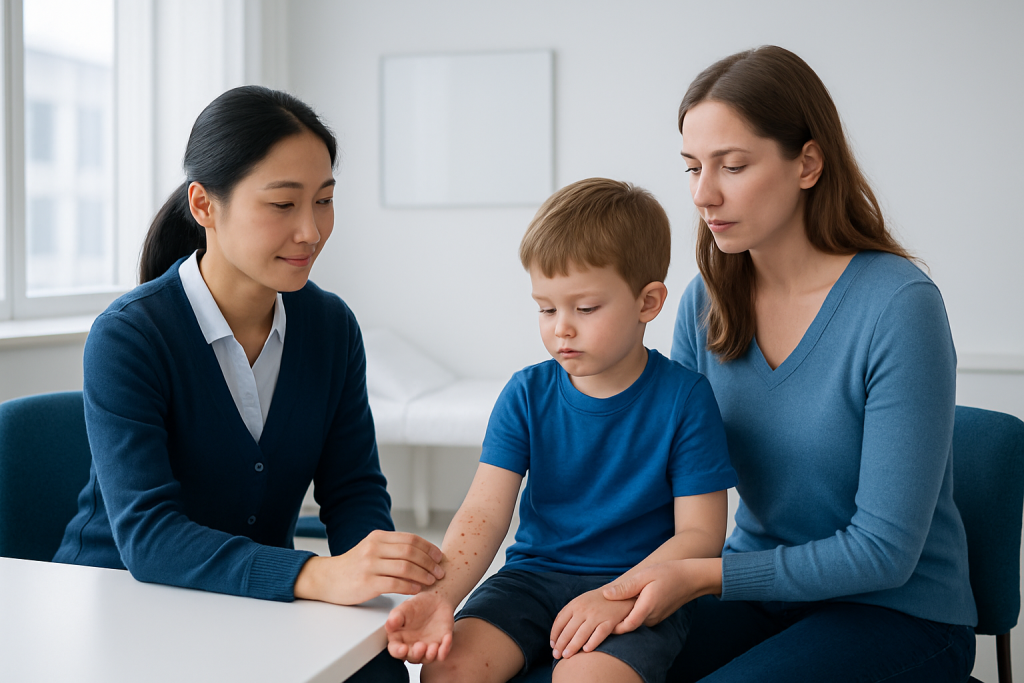
The rash usually shows up on the palms of the hands, soles of the feet, and sometimes the buttocks, legs, or around the mouth. It may look like flat red spots, small bumps, or tiny fluid-filled blisters. In some cases the rash is mild and barely bothers the child; in others, it is more noticeable but still resolves without scarring.
- Fever, often mild to moderate
- Reduced appetite or thirst
- Sore throat and mouth pain
- Blisters or red spots on hands, feet, or buttocks
- Irritability, fatigue, or poor sleep
Adults who get the infection may notice a sore throat, painful mouth lesions, and a rash, although some have very mild symptoms or none at all. Symptom intensity can vary from person to person, even within the same family.
Causes & Risk Factors
Hand, foot and mouth disease is caused by viruses in the enterovirus group, most commonly coxsackievirus. These viruses are spread through respiratory droplets, saliva, fluid from blisters, stool, and contaminated surfaces. Because young children often share toys, touch their faces frequently, and need close caregiving, the infection can spread quickly in places where children gather.
Risk is highest in children under five, but anyone without prior exposure can become infected. Outbreaks are more common in warmer months in many regions, though the virus can circulate year-round. A child with eczema, frequent hand-to-mouth habits, or close contact with an infected sibling or classmate may be more likely to catch it, but many cases occur without any obvious risk factor.
It is useful to know that the child is often most contagious early in the illness and can continue shedding virus for some time after symptoms improve. That is one reason hand hygiene, careful cleaning of shared objects, and staying home during the sick period matter so much in day-to-day prevention.
Diagnosis
Most of the time, a clinician can diagnose hand, foot and mouth disease by reviewing the symptoms and examining the mouth and skin. The combination of fever, mouth sores, and the characteristic rash is often enough to identify the illness without special testing. This is particularly true when the disease is circulating in the local community or in a childcare setting.
Testing is not always needed, but it may be considered if the presentation is unusual, symptoms are severe, or the doctor wants to rule out another condition such as chickenpox, herpes infection, impetigo, or strep throat. In rare situations, samples from the throat, stool, or blister fluid may be collected to identify the virus.
For families seeking care after traveling internationally, the conversation often includes where the child has been, when symptoms began, and whether other children in the travel group are ill. Those details can help the doctor judge whether the illness fits a routine viral pattern or whether other infections should be considered.
Treatment Options
There is no specific cure that removes the virus immediately. Treatment focuses on comfort, hydration, and watching for signs that the child is struggling to drink or is becoming dehydrated. Most people improve naturally over several days to about a week, although mouth sores can linger a little longer.
Pain and fever are usually managed with general measures recommended by a doctor, such as age-appropriate fever relief and plenty of fluids. Cool drinks, soft foods, and avoiding acidic or spicy items can make swallowing easier. Some children do better with small, frequent sips rather than trying to drink a full glass at once.
Topical oral gels or numbing products are not always helpful and may not be appropriate for young children, so they should only be used under medical guidance. Antibiotics do not treat hand, foot and mouth disease because it is viral, not bacterial. If the child is unable to keep fluids down, appears very sleepy, or has signs of dehydration, a doctor may recommend urgent assessment and, in some cases, additional support.
- Encourage frequent fluids in small amounts
- Offer soft, cool foods if the child is willing to eat
- Use doctor-approved fever and pain relief when needed
- Keep the child home until fever has settled and they feel better
- Seek medical help promptly if hydration becomes a concern
Prevention & Self-care
Because the virus spreads so easily, prevention depends on practical routines rather than perfect isolation. Handwashing with soap and water is one of the most effective steps, especially after changing diapers, using the bathroom, wiping noses, and before preparing food. Shared toys, tablet screens, high-touch surfaces, and frequently handled items should be cleaned regularly during an outbreak at home or school.
Families caring for a sick child can make recovery smoother by creating a calm, low-effort routine. Rest is helpful, but strict bed rest is usually not necessary if the child feels reasonably well. What matters more is keeping fluids going, reducing mouth pain, and watching whether the child is alert enough to drink and respond normally.
If an international patient is coordinating care from abroad, it helps to keep a simple timeline of fever, rash, oral pain, fluid intake, and any over-the-counter medicines given. That record can be useful for a local doctor, especially if symptoms do not match the usual pattern or if follow-up is needed after travel.
When to See a Doctor
Medical advice is sensible when the diagnosis is uncertain, the child is very uncomfortable, or symptoms are not following the usual improving pattern. A doctor should also assess the child if there is persistent high fever, trouble swallowing, severe mouth pain, or concern that drinking is too difficult to maintain safely.
Urgent attention is especially important when dehydration is possible. Dry mouth, very little urine, crying without tears, unusual sleepiness, dizziness, or a child who cannot keep fluids down are all reasons to seek prompt care. Although complications are uncommon, they are easier to manage when identified early.
Adults should also seek evaluation if they develop severe symptoms, have a weakened immune system, or are unsure whether the rash could be from another condition. Acibadem Health Point’s multidisciplinary specialists and JCI-accredited hospitals diagnose and treat hand, foot and mouth disease for international patients when coordinated medical review is needed.
Frequently asked questions
Is hand, foot and mouth disease the same as foot-and-mouth disease in animals?
No. Hand, foot and mouth disease is a human viral illness, while foot-and-mouth disease affects livestock. They are caused by different viruses and are not the same condition.
How long do hand, mouth and foot symptoms usually last?
Most symptoms improve within about a week, although mouth sores can make the first few days feel more difficult. Recovery is usually gradual and supportive care helps during that time.
Can adults get hand, foot and mouth disease?
Yes, adults can get it, especially if they have been exposed to the virus and have not built up immunity. Symptoms in adults may be mild or may resemble the illness seen in children.
What foods are easier to tolerate when mouth sores hurt?
Cool, soft foods are often better tolerated, such as yogurt, mashed foods, applesauce, or chilled soups if they do not sting. Acidic, salty, or spicy foods may be uncomfortable and are often best avoided for a short time.
Does a rash always mean hand, foot and mouth disease?
No, several childhood illnesses can cause a rash, and some need different treatment. If the rash appears with high fever, unusual behavior, or breathing difficulty, a doctor should evaluate it.
How can families reduce spread at home?
Regular handwashing, cleaning shared surfaces, and avoiding close contact with others while the child is feverish or unwell can help. It is also useful to wash toys and avoid sharing cups, utensils, or towels during the illness.
References
- Centers for Disease Control and Prevention
- World Health Organization
- Mayo Clinic
- NHS
This article is for general information only and is not a substitute for professional medical advice. Please consult a qualified doctor about your individual situation.