Purple Crying

Key Takeaways
- Purple crying is a normal developmental phase in many infants, not a sign of bad parenting.
- The crying often begins in the first weeks of life, becomes more intense, and may be hardest to soothe in the evening.
- A baby should still be checked by a doctor if crying is paired with fever, poor feeding, vomiting, breathing problems, or unusual sleepiness.
- Short breaks for caregivers are important; placing a baby safely in a crib and asking for help can prevent exhaustion.
- If families are traveling for care, pediatric teams can help rule out illness and provide guidance that is practical for home routines.
Purple crying describes a common developmental period when some healthy infants cry more intensely and unpredictably, often without a clear reason. Understanding the pattern can help caregivers respond calmly, use safe soothing strategies, and know when medical advice is needed.
Overview
“Purple crying” is a term used to describe a period in early infancy when a baby cries more than usual, seems difficult to console, and may have spells that arrive and leave without a clear trigger. The word “purple” is an acronym that highlights common features of this phase: crying that is Peaked, Unexpected, Resists soothing, Pain-like, Long-lasting, and tends to cluster in the Evening.
For many families, the hardest part is not the crying itself but the uncertainty around it. A baby can look uncomfortable even when nothing is medically wrong, and that can make caregivers worry that they are missing something serious. In most cases, purple crying reflects a temporary stage of infant development rather than an illness.
This topic matters because it sits right at the intersection of reassurance and safety. Parents and caregivers need to know what may be normal, what soothing methods are reasonable to try, and which warning signs should prompt a medical review. That balance is especially important for families who are far from home or navigating newborn care across countries and time zones.
What purple crying looks like
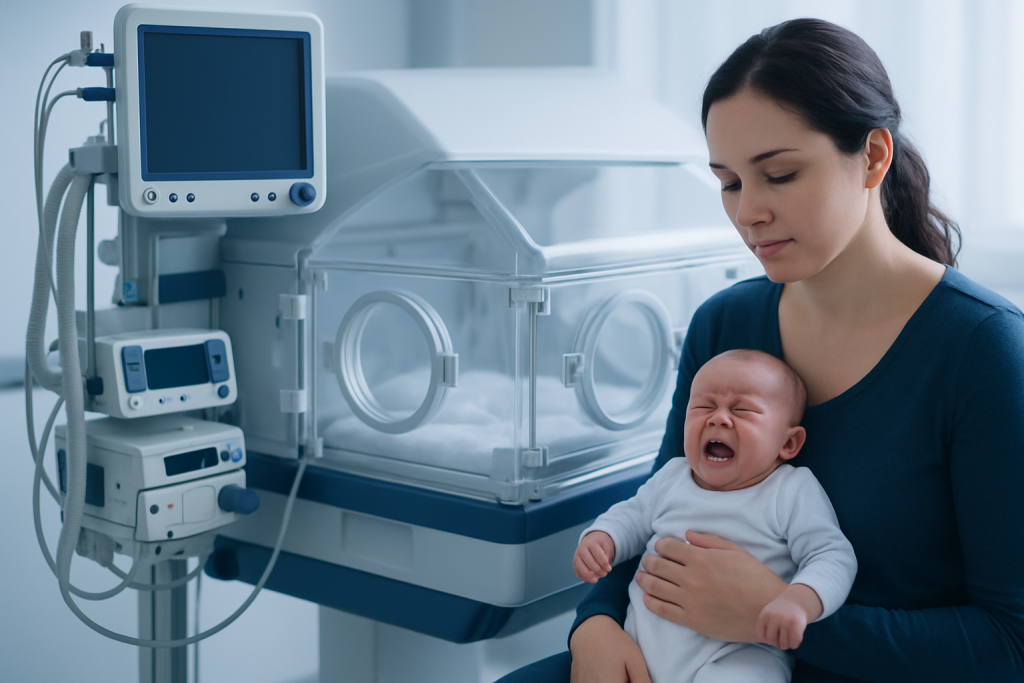
In practical terms, purple crying often appears as long stretches of crying that seem to start for no obvious reason and may not stop quickly, even when a baby is fed, changed, burped, or held. The crying can come in waves and may be more common in the late afternoon or evening. Some babies stiffen, pull their legs up, or look as if they are in pain, which can make the experience even more distressing for caregivers.
The period usually begins in the first weeks after birth, becomes more noticeable around the second month, and then improves over time. A baby may be healthy, gaining weight well, and still have these difficult crying episodes. That is one reason purple crying can be confusing: the baby may look miserable while all routine checks appear normal.
It can help to think of purple crying as a phase rather than a diagnosis. It is not the same as every baby fussing in the evening, and it is not automatically a sign of reflux, hunger, or a problem in the home. At the same time, it should never be assumed to be “just colic” without looking for warning signs that suggest something else.
Symptoms and patterns caregivers may notice
The crying pattern can vary from one infant to another, but several features are commonly described. Caregivers may notice sudden onset, longer crying spells than expected, little response to typical soothing, and a baby who seems to cry most strongly during a specific time of day. These episodes may leave families feeling that nothing works, even when they are doing everything carefully.
Other babies may show behaviors that look worrying but are still within a normal developmental range. They may arch, grimace, turn red, clench their fists, or briefly settle and then cry again. The intensity can make it hard to tell whether the baby is uncomfortable, overtired, overstimulated, or simply passing through this early-life pattern.
- Crying that begins at a predictable age in the first months of life
- Episodes that last longer than ordinary fussiness
- Difficulty calming with feeding, rocking, or holding
- More crying in the late afternoon or evening
- Periods when the baby is otherwise feeding and growing normally
If the crying happens alongside other symptoms, the picture changes. Fever, vomiting, poor feeding, breathing difficulty, diarrhea, rash, or a change in alertness are not typical features of purple crying and should be discussed with a doctor.
Causes & risk factors
There is no single proven cause of purple crying. It is widely understood as part of early infant development, when the nervous system, digestion, sleep rhythms, and ability to self-soothe are still maturing. Because babies cannot regulate discomfort or calm themselves in the same way older children can, even ordinary sensations may be expressed through intense crying.
Some factors may make the phase feel more intense, although they do not mean a parent has done anything wrong. A baby may be more sensitive to stimulation, tiredness, or changes in routine. Families under stress may also experience the crying as harder to manage, which is completely understandable and common.
It is important not to confuse purple crying with a fixed personality trait or a sign that the baby will always be difficult. Most infants outgrow this stage as they mature. What matters most is recognizing the pattern, maintaining safe care, and making sure illness or injury is not being overlooked.
Diagnosis
There is no test that confirms purple crying. Instead, a clinician looks at the baby’s age, feeding, growth, overall behavior, and the details of the crying pattern. The goal is to separate a normal developmental phase from conditions that need treatment, such as infection, reflux with complications, constipation, injury, or an allergy-related problem.
A careful history is usually the most useful part of the visit. Parents may be asked when the crying started, how long it lasts, whether it happens after feeding, whether the baby is able to sleep between episodes, and whether there are changes in stool, urine, temperature, or breathing. A physical examination helps check for abdominal tenderness, dehydration, ear infection, mouth irritation, or other clues.
If a family is seeking care while traveling, it can help to bring any available birth records, feeding notes, and a simple crying diary. This gives the doctor a fuller picture and can reduce unnecessary testing. The most appropriate evaluation is usually guided by the baby’s symptoms rather than by the crying alone.
Treatment options
Because purple crying is usually a temporary developmental phase, treatment is mainly supportive. The aim is not to “stop” a baby from crying by force, but to respond in ways that are safe, calming, and realistic. Many families find that a combination of small adjustments works better than a single perfect solution.
Common approaches include holding the baby close, gentle rocking, swaddling if appropriate and done safely, offering a pacifier, reducing noise and bright light, and trying rhythmic movement such as a stroller walk or a car ride when safe and practical. Some babies settle better when they are fed in a quieter setting or burped more often. Others simply need time and a low-stimulation environment.
Health professionals may also check whether another issue is contributing, such as feeding difficulty, formula intolerance, constipation, or reflux symptoms that need management. If there is concern about an underlying medical problem, treatment will target that specific cause rather than the crying itself. For international patients, this kind of stepwise assessment can be especially useful because it avoids unnecessary intervention while still giving a clear plan for follow-up after returning home.
It is equally important to support the caregiver. Exhaustion can make crying episodes feel overwhelming. If a parent or caregiver feels close to losing patience, placing the baby safely on the back in a crib and taking a brief break is a protective step, not a failure.
Prevention & self-care
There is no guaranteed way to prevent purple crying, but caregivers can reduce stress and improve safety by planning ahead. During the early newborn weeks, it helps to prepare for a period when crying may peak and to agree on who can step in if one person becomes tired or overwhelmed. Rest, hydration, regular meals, and realistic expectations matter more than many parents initially expect.
Some families benefit from keeping a simple diary of crying times, feeds, naps, and soothing attempts. Over a few days, patterns may emerge that reveal the baby’s preferred timing, environment, or routine. That information can be useful both at home and during a medical consultation.
Safe self-care also means avoiding harsh shaking or any response made in frustration. If a caregiver feels unable to cope, asking another adult to take over for a short period is a sensible response. When traveling, families should identify nearby pediatric care options in advance so they are not forced to make decisions while exhausted and isolated.
- Put the baby down safely and step away for a few minutes if needed
- Share nighttime or evening duties when possible
- Use a calm, low-stimulation environment
- Keep feeding and diaper routines simple and consistent
- Seek support early if stress or sadness is building
When to see a doctor
Medical review is advisable if the crying starts outside the usual age range, becomes suddenly worse, or is paired with symptoms that do not fit a normal developmental pattern. A baby should be assessed promptly if there is fever, repeated vomiting, diarrhea, blood in stool, trouble breathing, a swollen abdomen, poor feeding, fewer wet diapers, or unusual drowsiness.
Parents should also seek help if the crying feels different from the baby’s usual pattern, if there has been a fall or injury, or if the baby seems inconsolable for reasons that are worrying to the family. Trusting that instinct is appropriate; a clinician can help determine whether the episode is benign or needs treatment.
For international families, timely pediatric assessment can bring reassurance and reduce uncertainty before a return flight or cross-border follow-up. Acibadem Health Point’s multidisciplinary specialists and JCI-accredited hospitals can help diagnose and treat this condition for international patients, with care plans tailored to the baby’s current symptoms and the family’s travel situation.
Frequently asked questions
Is purple crying the same as colic?
The terms are often used in similar conversations, but purple crying is a broader description of a crying pattern rather than a formal medical diagnosis. Colic usually refers to excessive crying in an otherwise healthy infant, while purple crying emphasizes the normal developmental nature of the phase. A doctor can help distinguish between benign crying and a problem that needs evaluation.
How long does purple crying usually last?
It often starts in the first weeks of life, becomes more noticeable over the next couple of months, and then gradually improves. The exact timing varies from baby to baby. If the crying is continuing beyond the expected age range or is changing in character, a medical review is sensible.
What is the best way to soothe a baby during an episode?
There is no single method that works for every baby. Gentle holding, rocking, swaddling when appropriate, offering a pacifier, and reducing stimulation are common strategies, but some infants will still cry despite these efforts. The goal is to stay calm, keep the baby safe, and try one approach at a time rather than constantly changing tactics.
Should parents let a baby “cry it out” during purple crying?
That approach is not usually the focus in early infancy, especially when a baby is very young or the crying is intense. What matters first is safety, comfort, and checking for illness or discomfort. Parents can discuss age-appropriate sleep and soothing strategies with a pediatrician.
When is crying a warning sign instead of purple crying?
Crying is more concerning when it comes with fever, poor feeding, vomiting, breathing trouble, rash, blood in stool, a swollen belly, injury, or unusual sleepiness. A sudden change in the crying pattern can also be important. In those situations, the baby should be evaluated by a doctor.
Can travel or a change in routine make purple crying worse?
Changes in sleep, feeding times, stimulation, and caregiver availability can make an already stressful phase feel more difficult. That does not mean the baby is harmed by travel, but it does make planning and follow-up more important. Families traveling for care should have a clear feeding and soothing plan and know where to seek help if symptoms change.
References
- American Academy of Pediatrics
- National Health Service
- Mayo Clinic
- World Health Organization
This article is for general information only and is not a substitute for professional medical advice. Please consult a qualified doctor about your individual situation.