

Goblet Squat: How To Do It and Benefits

Key Takeaways
- The goblet squat is a front-loaded squat variation that can help teach posture, balance, and controlled lower-body movement.
- Good form matters more than lifting heavy, especially for beginners or people returning to exercise.
- Common technique issues include rounding the back, heels lifting, and knees collapsing inward.
- People with pain, recent injury, or mobility limitations may need professional guidance before adding squat training.
- A gradual approach, proper footwear, and warm-up can make the exercise safer and more comfortable.
Medically reviewed by the Acıbadem clinical team — August 19, 2026
The goblet squat is a simple, effective lower-body exercise often used to build strength, improve movement quality, and reinforce good squat mechanics. With the right technique and sensible progression, it can be a useful part of fitness or rehabilitation plans for many people.
Overview
The goblet squat is a squat variation in which a person holds a weight close to the chest, usually a dumbbell or kettlebell, while lowering into a squat and standing back up. The front-loaded position naturally encourages an upright torso and can make the movement easier to learn than a barbell back squat.
For many people, that combination is the appeal: the goblet squat is straightforward, scalable, and useful whether the goal is general fitness, athletic conditioning, or rebuilding confidence after a period of reduced activity. It is also a practical exercise for people who want to improve daily movements such as sitting, standing, lifting, and climbing stairs.
In rehabilitation settings, the goblet squat is often valued because it highlights movement quality. The load is held in front, so the person can feel whether the knees track well, the heels stay grounded, and the torso stays controlled. When performed carefully, it can serve as both an exercise and a movement assessment.
What the Goblet Squat Works
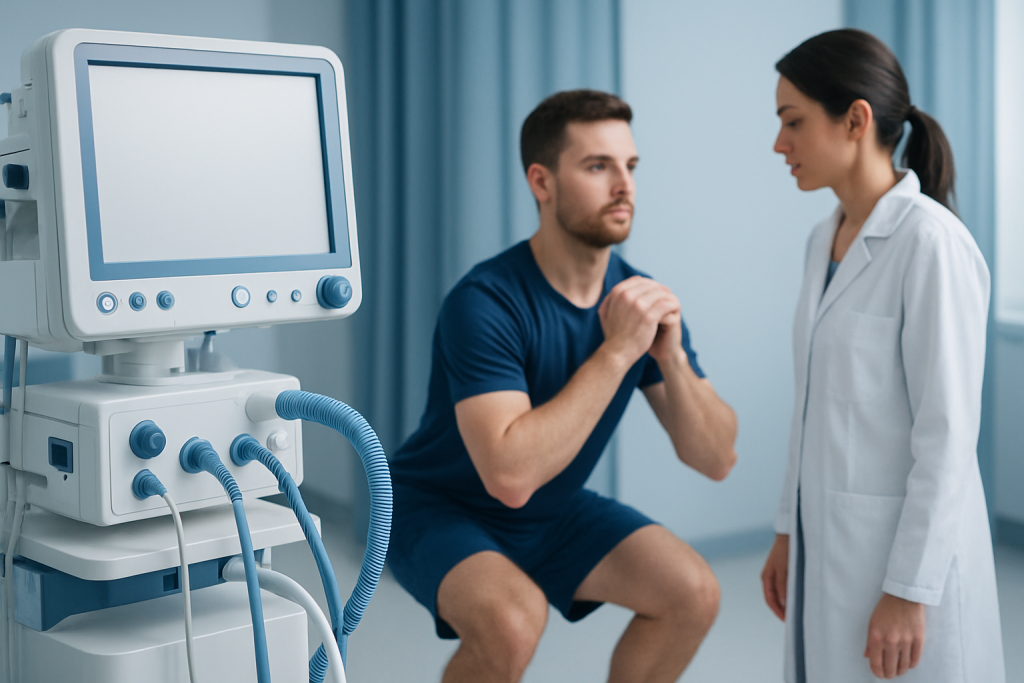
The goblet squat mainly targets the muscles of the hips, thighs, and buttocks, especially the quadriceps, gluteal muscles, and adductors. The core muscles also work to keep the trunk stable while the person lowers and rises. Because the weight is held in front, the upper back and arms contribute to posture and control as well.
This exercise is not only about strength. It also asks for coordination, ankle and hip mobility, and steady breathing. For that reason, people often find that the goblet squat reveals where their movement pattern is strong and where it needs support.
Useful benefits may include:
- Improved lower-body strength
- Better squat mechanics and body awareness
- Enhanced balance and control during everyday movements
- Support for mobility work in the hips, ankles, and thoracic spine
- A manageable entry point for progressive resistance training
How to Perform It Safely
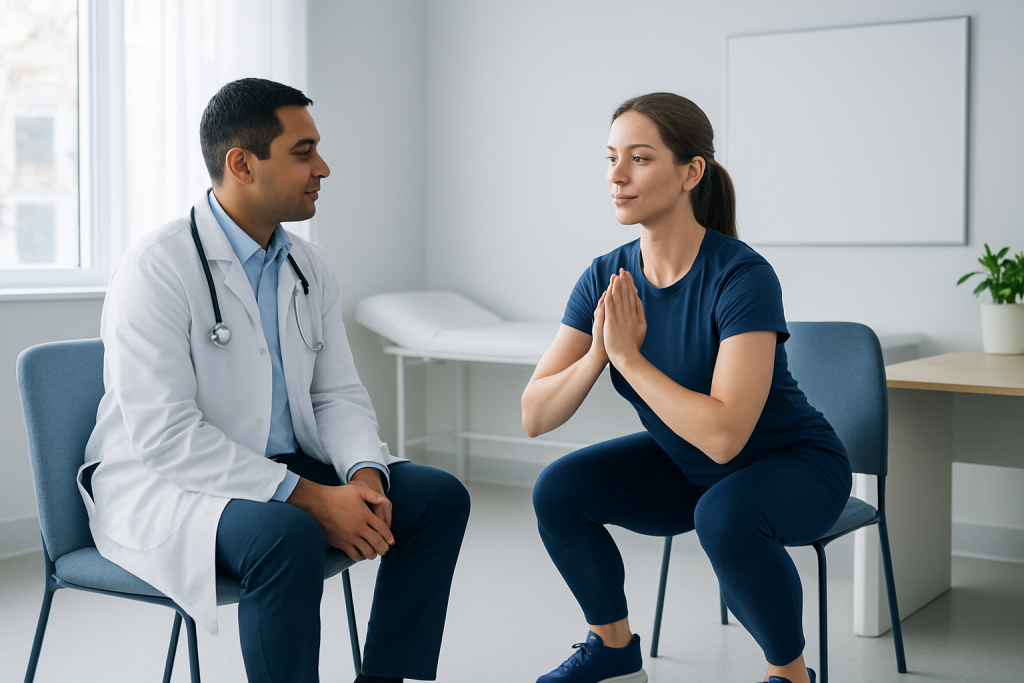
To begin, stand with feet roughly shoulder-width apart and hold a weight close to the chest with both hands. The elbows may point downward or slightly forward, and the weight should remain close enough to avoid pulling the torso forward. Before descending, take a steady breath and brace the trunk gently.
As the person lowers into the squat, the hips move back and down while the knees bend and track in line with the toes. The heels should stay in contact with the floor, and the chest should remain lifted without over-arching the back. Depth varies from person to person; the goal is a comfortable range with controlled alignment rather than forcing the deepest possible squat.
To return to standing, press through the whole foot and extend the hips and knees smoothly. A short pause at the top can help restore balance before the next repetition. People who are new to squatting often benefit from practicing the movement slowly in front of a mirror or with supervision from a qualified trainer or rehabilitation professional.
Common Mistakes and How They Affect Movement
Several small errors can change the quality of the goblet squat. One frequent issue is letting the heels lift, which may shift pressure forward and make the movement less stable. Another is allowing the knees to cave inward, which can happen when the hips and foot muscles are not fully engaged.
Some people round the lower back as they descend, often because they are trying to go lower than their current mobility allows. Others hold the weight too far from the body, making the torso lean forward and increasing strain on the upper back. These patterns are usually correctable, but they are a useful sign that the exercise may need to be simplified.
Common form corrections include:
- Reducing the weight
- Squatting to a box or bench as a target
- Widening or narrowing the stance slightly
- Slowing the descent
- Working on ankle and hip mobility outside the exercise
Causes & Risk Factors for Discomfort
Although the goblet squat is generally considered approachable, discomfort can appear when the body is not ready for the current load or range of motion. Tight ankles, limited hip mobility, weak trunk control, or poor squat mechanics may all contribute to strain. A person returning after time away from exercise may also fatigue quickly, which can make technique less consistent.
Joint pain may be more likely if a person has a history of knee, hip, ankle, or low back problems. Footwear can matter too; unstable shoes or slippery surfaces may make balance harder. In some cases, pain during squatting reflects an underlying condition rather than a technique issue alone, so repeated discomfort deserves attention.
People may need extra caution if they have recently had surgery, are recovering from a fracture or tendon injury, or have been advised to limit bending, loading, or weight-bearing. In these situations, the goblet squat may still be possible, but the timing, depth, and resistance should be guided by a clinician.
Diagnosis and Professional Assessment
The goblet squat itself does not require a medical diagnosis, but a professional may evaluate it when a person experiences pain, instability, or difficulty performing the movement. Assessment usually begins with a conversation about symptoms, exercise history, prior injuries, and daily activities that feel limited. A clinician may then watch the person squat to identify patterns such as asymmetry, stiffness, or compensations.
In rehabilitation or sports medicine settings, assessment may include testing joint mobility, muscle strength, balance, and the ability to maintain control under load. If pain suggests a more specific problem, the clinician may recommend further evaluation before the exercise is continued or progressed. The purpose is not to discourage movement, but to make it more appropriate and comfortable.
For international patients seeking care away from home, this kind of assessment is often helpful because it gives a clear starting point for exercise selection, travel planning, and follow-up. A precise movement evaluation can make it easier to continue a rehabilitation plan consistently once the person returns home.
Treatment Options and Training Progressions
When the goblet squat is part of rehabilitation or a return-to-training plan, the “treatment” is usually a structured exercise progression rather than a single fixed routine. A clinician or trainer may begin with bodyweight squats, then add a light front-held weight once the movement is stable and pain-free. The depth, tempo, and number of repetitions can also be adjusted.
People with sensitive knees or back issues may do well with partial range squats, a higher box target, or slower repetitions that reduce momentum. Others may focus on accessories such as calf work, hip strengthening, or core training to support better squat mechanics. The exercise is only one piece of the picture, and it usually works best when it fits into a broader plan.
If symptoms persist, the plan may need to be reassessed. Persistent pain, swelling, or a feeling of giving way should not be ignored in order to “push through” a workout. A rehabilitation professional can decide whether the issue is technique-related, load-related, or a sign that another approach is needed.
Prevention & Self-care
Good preparation makes the goblet squat safer and more rewarding. A brief warm-up can include walking, cycling, hip circles, ankle mobility drills, or a few bodyweight squats to wake up the movement pattern. Comfortable clothing and supportive footwear also help the person feel more stable from the first repetition.
Self-care is mostly about pacing. Increasing load too quickly often changes form before strength has caught up. It is usually wiser to progress one variable at a time, such as adding a little weight, increasing depth, or adding repetitions, rather than changing everything at once. Rest days matter too, especially when the exercise is new.
Practical habits that support progress include:
- Keeping the weight close to the chest
- Using a controlled, even tempo
- Stopping short of painful depth
- Recording form with video when appropriate
- Seeking feedback from a qualified professional if technique feels unclear
When to See a Doctor
Medical advice is sensible if the goblet squat causes sharp pain, swelling, joint locking, numbness, or repeated feelings of instability. It is also appropriate to speak with a doctor or rehabilitation specialist if discomfort lasts beyond the workout session or keeps returning each time the exercise is attempted.
A clinician should also be consulted if the person has a known musculoskeletal condition, a recent injury, or a history of surgery and is unsure whether squatting is appropriate. The same applies when a person can squat only by compensating heavily, such as twisting, collapsing inward, or leaning forward so much that the movement no longer feels controlled.
For patients traveling internationally, a coordinated review can be particularly helpful before starting or resuming a training plan. Acibadem Health Point’s multidisciplinary specialists and JCI-accredited hospitals can diagnose and treat movement-related conditions for international patients, while helping them plan safe next steps before and after travel.
Frequently asked questions
What is the main purpose of a goblet squat?
The goblet squat is used to build lower-body strength while teaching a controlled squat pattern. Because the weight is held in front of the chest, it can also help the person stay more upright and balanced.
Is the goblet squat good for beginners?
Yes, it is often a beginner-friendly squat variation because the front-held weight can make balance and posture easier to manage. Even so, beginners should start with a light load and focus on technique before adding resistance.
Should the heels stay on the floor during a goblet squat?
In most cases, yes. Keeping the heels grounded usually supports balance and helps the person use a safer squat pattern; if the heels lift, the stance, depth, or mobility may need adjustment.
Can the goblet squat hurt the knees?
It should not cause ongoing pain when performed with suitable form and an appropriate load. However, knee pain can occur if the exercise is too deep, too heavy, or poorly aligned, so recurring discomfort should be assessed.
How deep should someone go in a goblet squat?
Depth depends on mobility, comfort, and the person’s training goal. A comfortable range with good control is more important than reaching the lowest possible position.
What if the back rounds during the squat?
A rounded back often means the person is going deeper than current mobility or control allows. Reducing the load, limiting depth, or using a box target can help the movement stay cleaner and safer.
References
- American College of Sports Medicine
- National Strength and Conditioning Association
- World Health Organization
- Mayo Clinic
- National Institute of Arthritis and Musculoskeletal and Skin Diseases
This article is for general information only and is not a substitute for professional medical advice. Please consult a qualified doctor about your individual situation.
Joint and spine care in Turkey — expert assessment & treatment
JCI-accredited · board-certified surgeons · reply within 24h
Add us as a Preferred Source to see more of our trusted health content across Google Search, AI Overviews and Discover.
More from the Health Library

Related Specialists

Prof. Dr. Ahmet Alanay
Orthopedic Surgery & Traumatology
Dr. Sinan Aksu
Orthopedic Surgery & Traumatology
Dr. Sirri Baştürk
Orthopedic Surgery & Traumatology
Prof. Dr. Korhan Özkan
Orthopedic Surgery & Traumatology