Glute Bridge Exercise

Key Takeaways
- The glute bridge mainly targets the glute muscles, hamstrings, and core.
- Good technique matters more than lifting the hips as high as possible.
- The exercise can support posture, hip control, and movement in daily activities.
- People with back, hip, or knee pain should modify the movement and seek guidance if symptoms persist.
- Progressions and variations can make the exercise easier or more challenging over time.
Medically reviewed by the Acıbadem clinical team — August 19, 2026
The glute bridge is a simple floor exercise that helps activate the gluteal muscles, support hip stability, and build lower-body strength. It is often used in rehabilitation, warm-ups, and home exercise plans because it can be adapted to many fitness levels.
Overview
The glute bridge is one of the simplest ways to wake up the muscles at the back of the body. From a lying position, the person lifts the hips off the floor while keeping the feet planted, creating a short, controlled line from shoulders to knees.
Although the movement looks basic, it plays an important role in rehabilitation and conditioning. The exercise helps strengthen the gluteal muscles, which contribute to hip extension, pelvic control, and steady movement during walking, climbing stairs, standing up from a chair, and many sports activities.
For people recovering from inactivity, desk-related stiffness, or certain lower-body injuries, the glute bridge can be a practical starting point. It is also commonly used by clinicians and trainers as a bridge between early activation work and more demanding standing exercises.
What the Glute Bridge Works
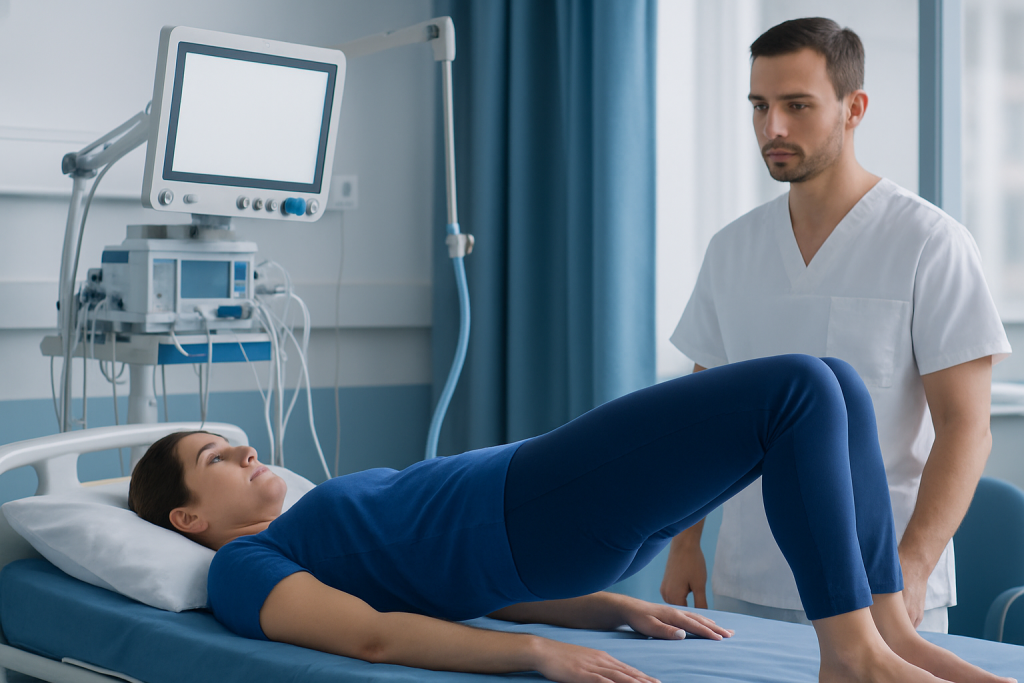
The glute bridge is named for the main muscles it is designed to engage: the gluteus maximus, gluteus medius, and surrounding hip stabilizers. The hamstrings and abdominal muscles also help during the lift, which is why the exercise often feels like a coordinated whole-body effort rather than a single-muscle drill.
When performed with control, the movement can improve awareness of the pelvis and spine. That matters because some people spend most of the day seated, which may make the glutes less active and shift more work to the lower back or thighs during movement.
In rehabilitation settings, the exercise may be used to help restore muscle firing patterns after pain, weakness, or prolonged rest. It is also useful as part of a warm-up before walking, running, or strength training, especially when the goal is to prepare the hips for more load-bearing work.
How to Perform a Glute Bridge
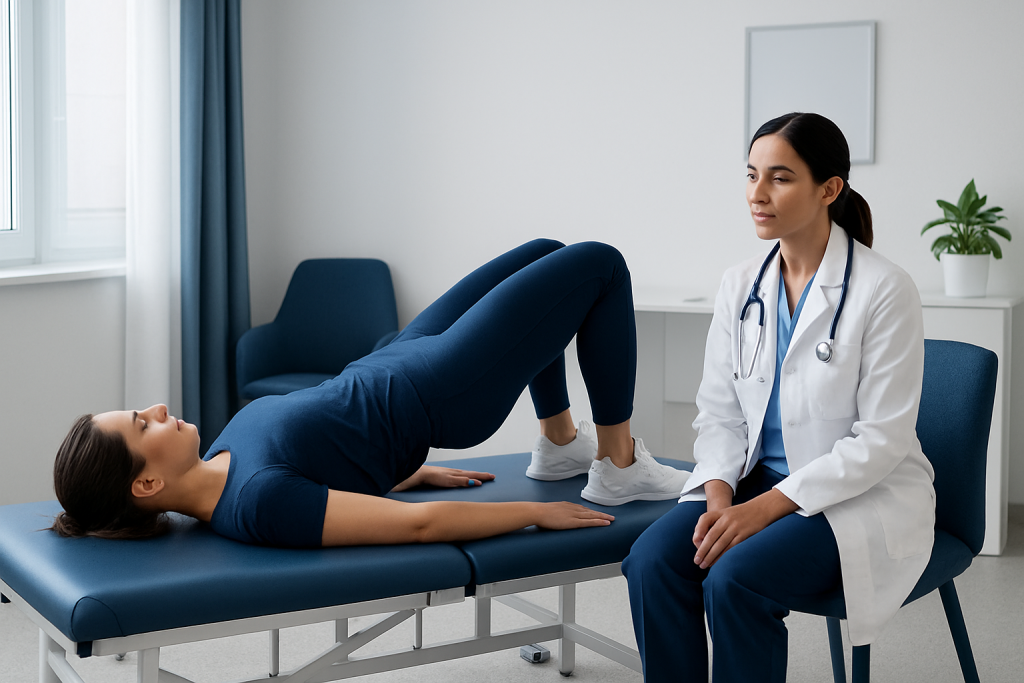
The starting position is on the back with knees bent, feet flat on the floor, and arms resting by the sides. The feet are usually placed about hip-width apart, with the heels close enough that the person can feel the heels press into the floor as the hips rise.
To begin the lift, the person tightens the abdominal muscles gently, presses through the heels, and raises the hips until the trunk and thighs form a comfortable line. The movement should feel controlled, with the ribs staying down and the lower back avoiding an exaggerated arch.
At the top, a short pause can help reinforce glute engagement before lowering the hips slowly to the floor. A smooth tempo is often more effective than speed, especially for those using the exercise for recovery or muscle retraining.
- Keep the neck relaxed and gaze upward.
- Do not force the hips higher than comfortable.
- Exhale during the lift if that feels natural.
- Stop if sharp pain, pinching, or unusual discomfort appears.
Common Mistakes and How to Avoid Them
One of the most common errors is lifting the hips too high and creating a back-dominant position. This can reduce glute work and place extra strain on the lumbar spine, especially if the person tries to “finish” the movement by arching the back.
Another frequent issue is pushing through the toes instead of the heels. When that happens, the hamstrings may take over and the glutes may not fully contribute. Uneven foot placement, knees collapsing inward, and holding the breath can also make the exercise less effective.
It may help to focus on a few cues: drive through the heels, keep the knees aligned with the feet, and lift only as far as the pelvis can stay neutral. For people who are unsure of alignment, working with a physical therapist or rehabilitation specialist can make the exercise feel safer and more purposeful.
Benefits and Clinical Uses
Because the glute bridge is low-impact and easy to scale, it has a place in many rehabilitation and wellness routines. It can help improve hip strength, which supports everyday tasks such as standing from a chair, stepping upward, or getting out of bed with less effort.
The exercise may also support better lower-body mechanics. When the glutes are stronger and more responsive, some people notice improved pelvic control during walking or exercise, which can reduce compensation by the lower back or knees. That does not mean the glute bridge is a cure for pain, but it can be one useful piece of a broader plan.
Clinicians may include it in programs for people recovering from deconditioning, mild overuse problems, or movement-control deficits. In a travel-for-care setting, it is also a practical exercise because it requires no equipment and can be continued in a hotel room or home setting once a doctor or therapist has approved the plan.
Variations and Progressions
The standard glute bridge is only the starting point. If the basic version feels too easy, a person may progress gradually by holding the top position a little longer, slowing the lowering phase, or adding gentle resistance with a band above the knees.
Some people may begin with a smaller range of motion or a pillow under the head for comfort. Others may use a single-leg bridge, but that version is much more demanding and is usually best introduced after the person can complete the basic bridge with good control and without symptoms.
It is often better to advance one element at a time rather than making several changes at once. That approach makes it easier to tell whether the body is tolerating the new load and helps prevent unnecessary irritation.
- Begin with double-leg bridges before attempting single-leg work.
- Add resistance only after the movement pattern is stable.
- Use reps and holds that feel challenging but controlled.
- Return to the previous level if form starts to break down.
Prevention, Self-care, and Safe Practice
Good results usually come from consistency and recovery as much as from the exercise itself. People who sit for long periods may benefit from standing breaks, light walking, and gentle hip mobility work alongside glute bridges.
If the exercise is part of a home program after injury or surgery, it should match the guidance of the treating clinician. Pain, swelling, numbness, or worsening stiffness are signals to slow down and reassess rather than push through.
Warm muscles tend to move better, so many people do glute bridges after a brief walk or other light activity. Breathing normally, using comfortable clothing, and exercising on a stable surface can all make the movement more effective and more pleasant.
When to See a Doctor
Medical advice is important if the glute bridge causes sharp pain in the back, hip, groin, or knee, or if discomfort lingers after the exercise is stopped. Persistent weakness, limping, numbness, or pain that limits daily activities deserves evaluation.
A doctor or physical therapist can help determine whether the issue is muscle-related, joint-related, nerve-related, or connected to another condition. They can also suggest safer alternatives if the standard bridge is not a good fit at the moment.
For international patients seeking coordinated musculoskeletal care, Acibadem Health Point offers access to multidisciplinary specialists and JCI-accredited hospitals for diagnosis and treatment planning. The right exercise plan is usually the one that matches the person’s health status, goals, and recovery stage.
Frequently asked questions
What muscles does a glute bridge target?
The glute bridge mainly targets the glute muscles, especially the gluteus maximus, and also involves the hamstrings and core muscles. The exact emphasis can vary depending on foot position, range of motion, and technique. Good form helps the glutes do more of the work.
Is the glute bridge good for lower back pain?
It may be helpful for some people, especially when weakness or poor hip control contributes to back strain. However, not every type of back pain should be treated the same way, so persistent pain should be assessed by a clinician. If the movement worsens symptoms, it should be stopped until guidance is given.
How many glute bridges should a beginner do?
There is no single right number for everyone. A beginner usually starts with a small, manageable set that can be done with good control and without pain, then progresses gradually. A physical therapist can help choose a starting point that fits the person’s condition and goals.
Should the exercise be felt in the glutes or hamstrings?
It should usually be felt mostly in the glutes, though the hamstrings naturally assist. If the hamstrings dominate, foot placement and lifting mechanics may need adjustment. Keeping the heels grounded and avoiding over-arching the back often helps.
Can the glute bridge be done every day?
Some people can perform it frequently because it is a low-load exercise, but recovery needs vary. If the muscles become sore, fatigued, or irritated, a rest day or lighter session may be better. It is best to follow the guidance of a clinician or trainer when the exercise is part of rehabilitation.
When is a single-leg bridge appropriate?
A single-leg bridge is usually best for people who can already complete the standard bridge with stable form and no symptoms. It increases the demand on the hips, core, and balance system. For rehabilitation, it should be introduced only when it is appropriate for the person’s stage of recovery.
References
- American Academy of Orthopaedic Surgeons
- National Institute of Arthritis and Musculoskeletal and Skin Diseases
- American Physical Therapy Association
- World Health Organization
This article is for general information only and is not a substitute for professional medical advice. Please consult a qualified doctor about your individual situation.
Joint and spine care in Turkey — expert assessment & treatment
JCI-accredited · board-certified surgeons · reply within 24h
Add us as a Preferred Source to see more of our trusted health content across Google Search, AI Overviews and Discover.
More from the Health Library


Related Specialists

Fzt. Elif Tokgöz Nizam
Physical Medicine & Rehabilitation
Fzt. Gizem Aydın
Physical Medicine & Rehabilitation
Dr. Safiye Sayilir
Physical Medicine & Rehabilitation
Dr. Özgün Barış Çolak
Physical Medicine & Rehabilitation