CT Scan With Low Radiation: When Dose Reduction Really Matters
Key Takeaways
- Low-radiation CT aims to keep image quality useful while reducing unnecessary exposure.
- The need for dose reduction depends on the body part being scanned, the clinical question, age, and repeat imaging history.
- Children, younger adults, and patients who need multiple scans often benefit most from careful dose planning.
- A low-dose protocol is not the same as a standard CT for every purpose; the scan must still answer the medical question clearly.
- Patients can ask whether a lower-dose protocol, alternative imaging, or prior image review could be appropriate.
Medically reviewed by the Acıbadem clinical team — June 13, 2026
A CT scan can be an important diagnostic tool, but not every scan needs the same radiation dose. Understanding when dose reduction matters helps patients and doctors choose the right balance between image quality and safety.
Overview
CT scans are valued because they can show bones, organs, blood vessels, and many forms of disease in a very short time. That speed and detail make them useful in emergency care, cancer evaluation, chest and abdominal problems, and many other situations. At the same time, CT uses ionizing radiation, so modern imaging teams pay close attention to using only the dose that is needed.
A low-radiation CT scan is not a single special machine or one universal protocol. It is a planning approach that adjusts scanning settings, body coverage, and image reconstruction techniques so the exam delivers the information the doctor needs with less exposure when it is appropriate. In practice, dose reduction matters most when the scan is likely to be repeated, when the patient is more sensitive to radiation, or when a lower-dose method can still answer the clinical question well.
For international patients arranging imaging in another country, this discussion can be especially important. Travel often means coordinating prior records, comparing hospital protocols, and deciding whether a scan should be done before arrival or after a specialist review. A thoughtful imaging plan can prevent unnecessary repeat testing and help the care team choose the right study the first time.
Why CT Dose Reduction Matters
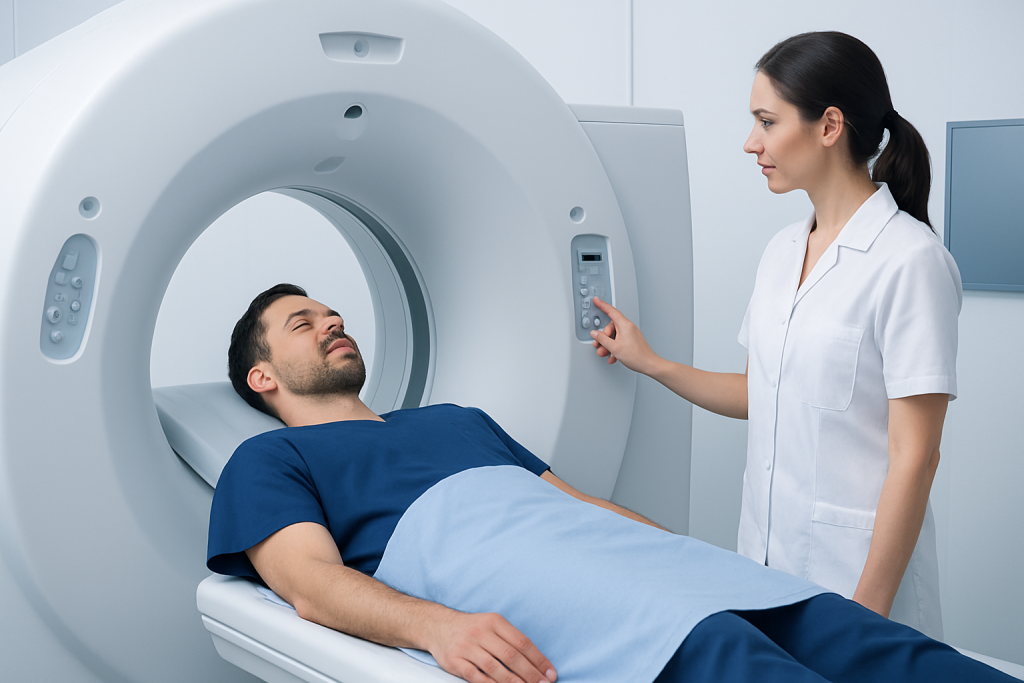
Every CT study involves a tradeoff: more radiation may improve image clarity in some situations, but it can also increase exposure. The goal of dose reduction is not to make every scan as low as possible at any cost. Instead, the goal is to keep the dose “as low as reasonably achievable” while still producing images that are diagnostically reliable.
That balance matters because the usefulness of a CT scan depends on the question being asked. A scan for a tiny kidney stone, for example, may be possible with a lower-dose technique in some settings. A scan evaluating complex trauma, certain cancers, or blood vessel problems may require more detailed imaging and therefore a different protocol. The right dose is the one that answers the question safely and clearly.
Patients often think only in terms of “high” or “low” radiation, but the more useful conversation is about appropriateness. A well-designed scan avoids both extremes: too much radiation and too little image quality. Careful protocol selection is one of the ways radiology teams protect patients without compromising diagnosis.
Who Benefits Most from Low-Radiation CT

Some patients are more likely than others to benefit from dose-conscious CT planning. Children are a key group because their bodies are smaller and they are more sensitive to ionizing radiation. Younger adults may also benefit, especially if they are expected to need imaging over many years.
Patients who undergo repeated scans for chronic disease follow-up, cancer surveillance, inflammatory bowel disease, kidney stones, or lung conditions may also be good candidates for dose reduction strategies when clinically appropriate. In these situations, the cumulative effect of multiple exams becomes part of the conversation, and the imaging plan may be adjusted to minimize repeat exposure over time.
Pregnancy requires special consideration, and imaging decisions should be individualized with the obstetric and radiology teams. In many cases, ultrasound or MRI may be preferred, depending on the clinical issue. If CT is necessary, the team will carefully weigh the need for the exam against the safest way to perform it.
- Children and adolescents
- Younger adults with expected repeat imaging
- Patients needing ongoing surveillance
- People with prior high imaging exposure
- Patients for whom a lower-dose protocol can still answer the question
How CT Dose Reduction Is Achieved
Radiology teams reduce dose in several ways, and these methods are often combined. The scanner settings may be adjusted to the patient’s size, the scan range may be limited to the area actually needed, and modern reconstruction software may help maintain image quality at lower exposure levels. Newer scanners can also use automatic exposure control, which fine-tunes the dose during the exam.
Another important strategy is choosing the right type of scan in the first place. Not every problem needs a multiphase CT study, and not every follow-up exam needs the same level of detail as the first diagnosis. Reviewing prior images, narrowing the clinical question, and avoiding unnecessary repeat scans are often just as helpful as technical dose reduction.
Contrast use is related but not identical to radiation dose. A contrast-enhanced CT may be needed for one diagnosis and not for another. The team may decide whether contrast is useful based on the organ system involved, kidney function, allergies, and the specific information needed from the scan.
When Low Dose Is Not the Right Goal
Lower radiation is important, but it cannot come at the expense of a meaningful diagnosis. Some examinations require higher image quality because the findings are subtle, motion is expected, or the anatomy is complex. In those cases, a standard-dose or tailored protocol may be the safer choice because it avoids missed information and repeat scanning.
For example, emergency scans that look for internal bleeding, major injury, or certain vascular problems may need very clear images. Lung or abdominal studies can also be technically challenging in some patients because of body habitus, breath-holding difficulty, or the presence of implants. A scan that is too limited may not be useful and could lead to more imaging later, which defeats the purpose.
This is why dose reduction should be discussed as part of diagnostic planning rather than as a one-size-fits-all request. The best protocol is the one matched to the patient, the body area, and the medical question. Patients can feel reassured that experienced radiology teams are trained to make that judgment daily.
What Patients Can Ask Before the Scan
Patients do not need technical expertise to participate in safe imaging decisions. A few simple questions can help clarify whether dose reduction is relevant and whether the planned exam is the most suitable option. This is especially useful when traveling for care, since patients may be comparing reports, protocols, or recommendations from different clinics.
Helpful questions include whether the scan can be done with a low-dose protocol, whether a previous image can be reused, and whether another imaging test such as ultrasound or MRI might answer the question. It is also reasonable to ask if the study will be limited to the smallest area needed and whether contrast is necessary.
Patients should bring prior reports, previous images if available, a list of medications, and any information about pregnancy, kidney function, or allergies. Clear communication helps the radiology team avoid redundant testing and select the safest practical approach.
- Is a low-dose protocol appropriate for this exam?
- Will this scan answer the exact question my doctor has?
- Do you need my previous imaging to avoid repeating tests?
- Could ultrasound or MRI work instead?
- Is contrast needed, and if so, why?
What to Expect During and After a Low-Radiation CT
The patient experience is usually similar to a standard CT scan. The exam is typically quick, and most people can return to normal activities immediately afterward unless sedation, contrast monitoring, or another part of care requires observation. The main difference is often invisible to the patient: the imaging team has adjusted the protocol behind the scenes.
If contrast is used, the staff may ask about kidney history, allergies, and medications before the scan. Patients may be asked to drink fluids afterward, depending on the study and their medical situation. If travel is involved, the team may also give guidance about when the report will be available and whether a follow-up consultation should be scheduled before returning home.
Results are interpreted by a radiologist and then shared with the referring doctor or specialist. For international patients, a clear written summary can be especially helpful for continuing care after returning to their home country. Good imaging is not just about taking the scan; it is also about making the findings usable for the next step in treatment.
When to See a Doctor
Patients should seek medical advice when a CT scan has been recommended and they are unsure whether it is the right exam, whether a low-dose approach is suitable, or whether another test could be used instead. That conversation is especially important if imaging has already been repeated several times or if the patient is pregnant, younger, or has a condition that requires ongoing surveillance.
After the scan, prompt medical review is appropriate if the original symptoms are worsening, if the report mentions an urgent finding, or if contrast-related symptoms develop such as rash, swelling, shortness of breath, or persistent vomiting. These reactions are uncommon, but they should be assessed quickly.
For patients arranging care abroad, it is sensible to involve a clinician who can coordinate the entire imaging pathway, from deciding on the scan to reviewing the results and planning follow-up. Acibadem Health Point’s multidisciplinary specialists and JCI-accredited hospitals diagnose and treat this condition for international patients, helping align imaging decisions with the broader treatment plan.
Frequently asked questions
What does low-radiation CT mean?
It means the CT exam has been planned to use less radiation when that can be done without losing the information needed for diagnosis. The approach may involve scanner settings, tighter scan coverage, or newer image-processing methods. It is not the same as lowering the dose in a way that makes the scan unreliable.
Is a low-dose CT always better than a standard CT?
Not always. The best dose depends on the body area, the reason for the scan, and how much detail is needed. In some situations, a standard or tailored protocol is more appropriate because it reduces the chance of missing important findings.
Who should be most careful about CT radiation exposure?
Children, younger adults, and patients who need repeated CT scans usually benefit most from careful dose planning. Pregnancy also requires special review, and imaging options are often considered individually. The doctor and radiology team can help decide what is safest and most useful.
Can CT dose be reduced without affecting the result?
Often, yes, especially when modern equipment and a well-chosen protocol are used. Radiology teams can adjust the scan to the patient and the medical question. If the exam is designed properly, the result can remain clinically useful while avoiding unnecessary exposure.
Should patients ask for a low-dose CT on their own?
Patients can absolutely ask whether a low-dose protocol is appropriate, but the final decision should be made by the doctor and radiologist. The key is not simply requesting less radiation; it is making sure the scan still answers the clinical question well. Prior reports and images can help the team decide.
What if a patient needs several CT scans over time?
Then dose planning becomes especially important. The care team may review prior imaging, limit repeat studies, or choose another modality when possible. The aim is to support long-term monitoring while keeping exposure as thoughtful as possible.
References
- Radiological Society of North America
- American College of Radiology
- World Health Organization
- International Atomic Energy Agency
- U.S. Food and Drug Administration
This article is for general information only and is not a substitute for professional medical advice. Please consult a qualified doctor about your individual situation.