

Can You Travel With Crutches or a Brace? Practical Rules After Orthopedic Care
Key Takeaways
- Travel may be possible with crutches or a brace if the orthopedic team confirms that movement, sitting time, and weight-bearing limits are acceptable.
- Early planning matters for flights, transfers, luggage, seating, and access to medication, because small adjustments can prevent avoidable strain.
- A brace or crutches can change balance and endurance, so rest breaks, assistance, and realistic schedules are important.
- Warning signs such as increased swelling, calf pain, shortness of breath, or new numbness should be treated as reasons to seek medical advice promptly.
- International patients should arrange follow-up care before departure so recovery does not depend on finding local support at the last minute.
Medically reviewed by the Acıbadem clinical team — June 13, 2026
Travel after orthopedic treatment is often possible, but it works best when mobility limits, pain control, and support needs are planned ahead. With the right preparation, a trip can be safer and less tiring whether recovery is happening at home or abroad.
Overview
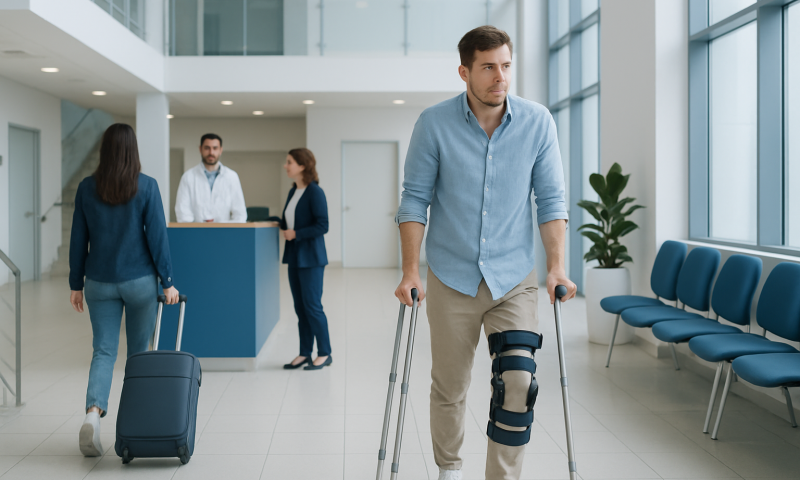
Traveling with crutches or a brace is often doable, but it is rarely something to improvise on the day of departure. Orthopedic recovery changes the way a person walks, sits, lifts luggage, and manages long periods of stillness, so a trip needs to fit the healing plan rather than compete with it.
For some people, the question is not whether travel is allowed, but how to make it comfortable and safe. A short car ride home after a clinic visit is very different from a long-haul flight, a business trip, or a return journey after surgery in another country. Each setting brings its own practical issues: stairs, airport distances, bathroom access, medication timing, and the possibility of swelling or fatigue.
The most useful approach is simple. Confirm the medical restrictions, prepare the route in detail, and build in more help and more time than would normally be needed. That mindset tends to reduce stress and helps recovery stay on track.
Symptoms and Mobility Changes to Expect
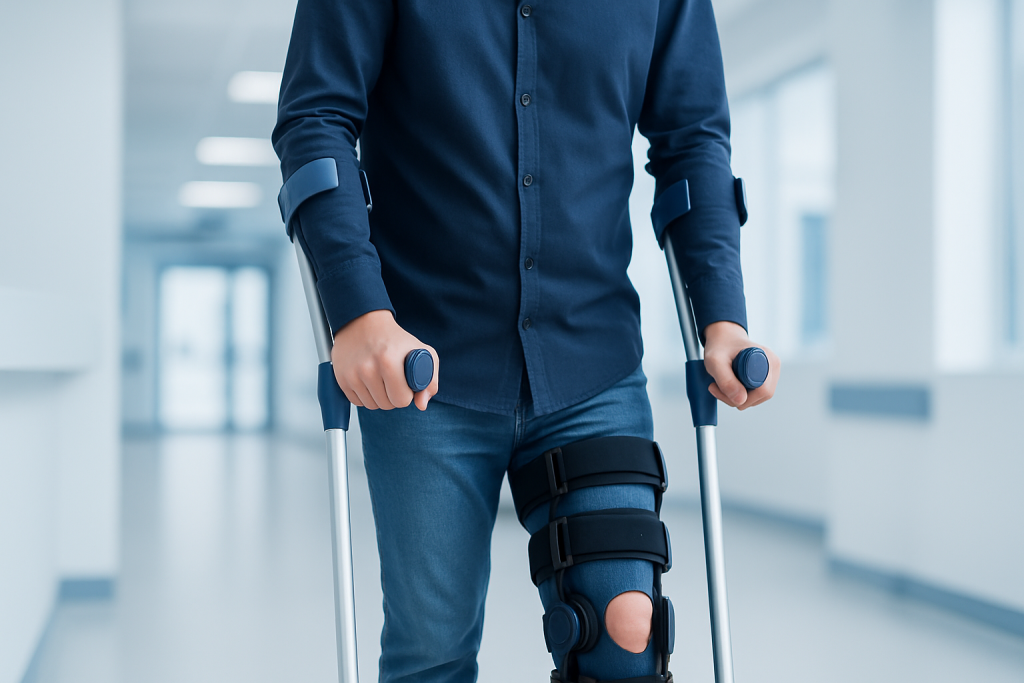
People using crutches or a brace usually notice that ordinary movements take more effort than before. Walking becomes slower and less efficient, standing for long periods may increase discomfort, and balance can feel less secure, especially on uneven ground or in crowded places.
Swelling, stiffness, and soreness are common during recovery, and travel can make them more noticeable. Long sitting periods may cause the operated leg or the braced joint to feel tight, while carrying bags or trying to move quickly can lead to strain in the arms, shoulders, back, or opposite leg.
It helps to watch for changes that go beyond everyday recovery discomfort. New numbness, rising pain, marked swelling, skin irritation from the brace, or pain that worsens with movement rather than gradually easing should be discussed with a clinician. Travel plans should always make room for the body’s current stage of healing, not the other way around.
Causes and Risk Factors That Affect Travel Readiness
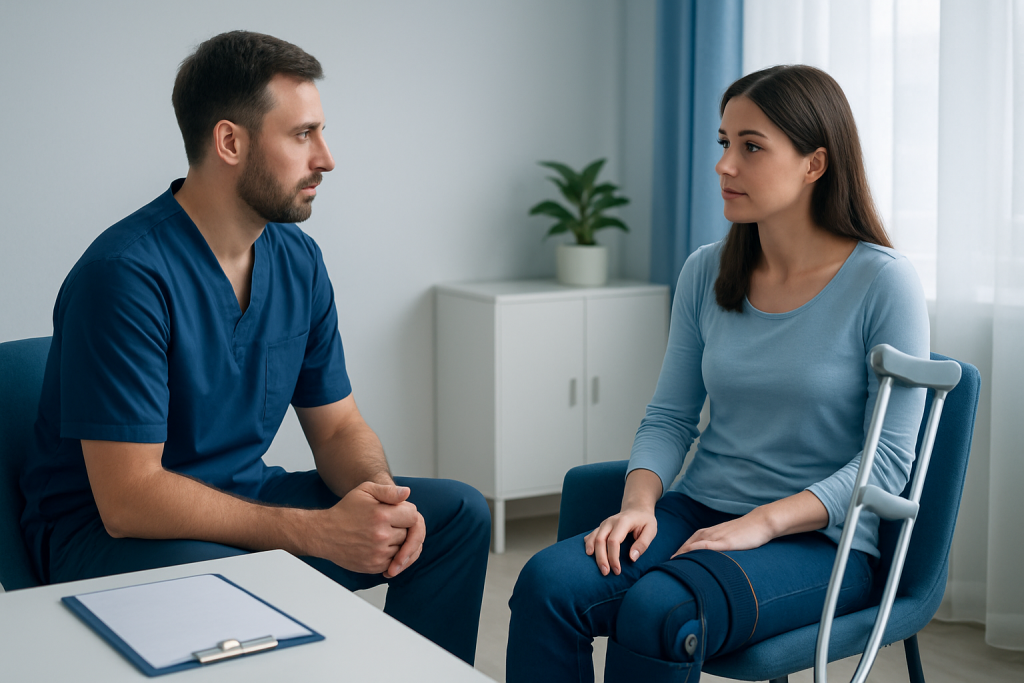
The main reason travel can be challenging is that orthopedic recovery often comes with movement limits. A person may be non-weight-bearing, partial weight-bearing, or told to avoid twisting, bending, or prolonged standing. Those instructions are not minor details; they determine whether a route is realistic and what kind of assistance is needed.
Several factors can make travel harder. Recent surgery, a fresh fracture, significant pain, a bulky cast, a new brace, poor upper-body strength for crutch use, or a history of swelling all add to the load. Longer journeys, multiple connections, steep stairs, and minimal access to seating can increase fatigue and increase the chance of a misstep.
Travel history also matters. Someone returning home after treatment abroad may have fewer opportunities for quick follow-up, making it especially important to understand what to do if the brace rubs, crutches become uncomfortable, or symptoms change during the journey. Planning should reflect both the injury and the logistics of the trip.
How Doctors Assess Whether Travel Is Safe
A doctor or rehabilitation specialist usually looks at more than the diagnosis alone. They consider the type of injury or operation, how stable the limb or joint is, whether weight-bearing is permitted, pain control, swelling, mobility, and whether the person can transfer safely from bed to chair, car, or plane seat.
For air travel, the team may also ask about the risk of blood clots, the length of the flight, and whether movement exercises or compression measures are appropriate. If a brace is involved, the fit and purpose of the brace are reviewed, because an ill-fitting device can create pressure points or interfere with circulation.
International patients often benefit from a discharge summary or travel letter that explains the diagnosis, the procedure if one was done, current restrictions, and any devices being used. This can help airport staff, airline personnel, or a local doctor understand the situation quickly if assistance is needed during transit.
Practical Travel Rules for Crutches or a Brace
The safest travel plans usually start with simplifying rather than adding. Choose the most direct route possible, leave generous time between connections, and avoid carrying heavy luggage when balance is already reduced. A rolling bag may help, but if it cannot be managed safely, asking for help is often the better option.
Seating matters. An aisle seat can make it easier to stand, stretch, and access the bathroom, while extra legroom may reduce pressure on a braced or operated limb. On car journeys, the passenger should be able to enter and exit without twisting the injured area, and the seat should support the leg or brace in a comfortable position.
A few practical habits can make a large difference:
- Keep essential items within easy reach, including identification, medication, and any medical papers.
- Wear supportive, non-slip footwear if allowed by the care team.
- Use straps, backpacks, or assistance rather than trying to carry bags on crutches.
- Take scheduled breaks to move, stretch, or change position if permitted.
- Check in advance whether the airline, hotel, or transport provider can help with stairs, wheelchairs, or baggage.
If a brace is removable, ask the orthopedic team whether it should be worn throughout travel or only at certain times. Instructions can differ based on the injury and the purpose of the brace, so personal guidance is more reliable than general advice.
Treatment and Support Options During Recovery Travel
Travel does not usually replace treatment; it needs to fit around it. Pain relief, wound care, brace adjustments, and physiotherapy exercises should continue as advised, even when the person is away from home. Missing follow-up because of travel can slow recovery or make a small problem harder to correct later.
For people crossing borders after orthopedic care, the support plan ideally includes a clear handoff. That may mean a written rehabilitation schedule, contact details for the treating team, guidance on what symptoms warrant a call, and a timeline for the next review. When plans are organized before departure, the patient is less likely to spend the trip trying to interpret instructions from memory.
Physiotherapy may also be adjusted for travel days. Gentle exercises, approved by the clinician, can help maintain circulation and mobility during long sitting periods. However, any exercise that increases pain, threatens balance, or conflicts with weight-bearing limits should be avoided until the treating team says otherwise.
Prevention and Self-care Before, During, and After the Trip
The best travel preparation is often the least dramatic. A person recovering with crutches or a brace should start by confirming whether the trip timing makes sense, then building a simple plan for transportation, luggage, medication, meals, rest, and emergency contact. If there is uncertainty, it is better to ask before departure than to solve a problem mid-journey.
Swelling control can be especially important. When approved by the clinician, elevation during rest, regular position changes, hydration, and gentle movement may help reduce discomfort. Skin under a brace should be checked as directed, because prolonged sitting or friction from travel can lead to irritation.
Self-care also includes pacing. Recovery often feels better when the day is organized around realistic limits rather than optimism. Shorter travel days, extra hotel nights, or assistance from companions can protect healing. For someone returning home from treatment abroad, this may be the difference between a manageable transfer and a difficult one.
When to See a Doctor
Medical advice should be sought promptly if pain suddenly worsens, swelling increases significantly, the brace causes skin breakdown, or the crutches no longer feel safe to use. New weakness, numbness, fever, redness, or drainage around a surgical site also deserve attention.
Emergency care is important if there is chest pain, shortness of breath, fainting, severe calf pain, or a limb that becomes cold, pale, or unusually discolored. These symptoms are not typical parts of routine recovery and should not be watched at home.
For international patients, it is especially wise to clarify how to reach the treating team after returning home. Acibadem Health Point’s multidisciplinary specialists and JCI-accredited hospitals support diagnosis, rehabilitation, and follow-up for international patients, which can make the transition from treatment to travel more organized and reassuring.
Frequently asked questions
Can a person fly while using crutches or a brace?
Often yes, but only if the orthopedic team agrees that the person is stable enough for travel. The length of the flight, the ability to move safely, and the risk of swelling or clotting all need to be considered. A travel letter can make the journey smoother.
Is it better to wear a brace during the trip?
That depends on the injury and the instructions from the treating clinician. Some braces are meant to stay on for most of the day, while others may be removed for short periods. The safest choice is the one that matches the prescribed plan.
How can someone manage luggage while using crutches?
It is usually best to keep luggage light and ask for help with heavier bags. A backpack or wheeled case may be useful if it can be managed without losing balance. The injured person should avoid carrying anything that compromises safe crutch use.
What should be arranged before traveling after orthopedic surgery?
It helps to arrange medication, follow-up appointments, mobility support, and transport that does not require rushing or climbing many stairs. Written instructions from the care team are valuable, especially if travel is international. Planning ahead reduces the chance of preventable strain.
Is long sitting during travel a problem?
It can be, because stiffness and swelling may increase when a person stays still for a long time. If permitted by the doctor, regular movement breaks, gentle exercises, and position changes can help. Any movement advice should respect the patient’s specific restrictions.
When should travel be postponed?
Travel should be reconsidered if the person cannot move safely, pain is poorly controlled, there is a fresh complication, or the doctor advises against it. A delay may be the most protective choice when recovery is still changing quickly. The decision should be based on medical guidance, not on fixed dates alone.
References
- American Academy of Orthopaedic Surgeons
- NHS
- Centers for Disease Control and Prevention
- Mayo Clinic
- World Health Organization
This article is for general information only and is not a substitute for professional medical advice. Please consult a qualified doctor about your individual situation.
More from the Health Library


Related Specialists

Dr. Safiye Sayilir
Physical Medicine & Rehabilitation
Dr. Özgün Barış Çolak
Physical Medicine & Rehabilitation
Prof. Dr. Meltem Vural
Physical Medicine & Rehabilitation
Prof. Dr. Meral Bayramoğlu
Physical Medicine & Rehabilitation