

Shoulder Pain That Keeps Coming Back: When an MRI Changes the Next Step

Key Takeaways
- Recurring shoulder pain is not always a simple strain and may involve the rotator cuff, labrum, bursae, joints, or nearby nerves.
- An MRI is often considered when pain lasts, returns after treatment, or when weakness, instability, or night pain suggests a deeper problem.
- MRI results can help clinicians choose between rest, rehabilitation, injections, or surgical evaluation.
- Rehabilitation is usually still central to recovery, even when imaging identifies a structural issue.
- New numbness, sudden weakness, major trauma, fever, or visible deformity should prompt medical assessment without delay.
Medically reviewed by the Acıbadem clinical team — June 13, 2026
Shoulder pain that keeps returning can come from several different structures, including muscles, tendons, the joint, and the neck. When symptoms do not improve as expected, an MRI may help clarify the cause and guide the next step in treatment and rehabilitation.
Overview
Shoulder pain that fades and then returns can be frustrating because it often does not behave like a single, simple injury. The shoulder is a highly mobile joint, and pain may come from the rotator cuff, the labrum, the bursa, the joint surfaces, the neck, or more than one area at once.
When symptoms keep coming back, clinicians often look beyond the initial diagnosis. That is where an MRI can become useful: it can reveal soft tissue changes that do not show clearly on an X-ray, helping the care team decide whether the next step should be rehabilitation, a different type of treatment, or a surgical opinion.
For people traveling for care, this can be especially helpful. A clear imaging result can reduce guesswork, support a more focused treatment plan, and make follow-up discussions easier when someone will continue recovery in another country or return home soon after the visit.
Symptoms
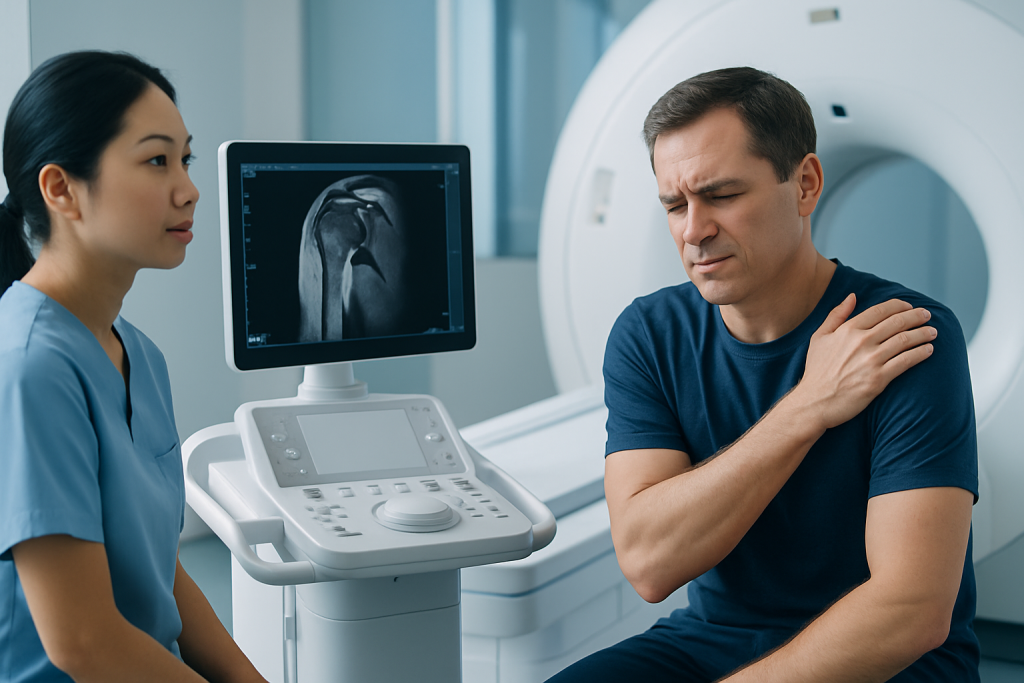
Recurrent shoulder pain does not always feel the same every time. Some people notice aching after lifting, overhead work, or sports. Others feel a sharp catch when reaching behind the back, along with stiffness that seems to improve and then return.
Common features that may suggest more than a short-lived strain include pain that wakes the person at night, weakness when lifting the arm, discomfort when dressing or washing hair, clicking or catching, or a sense that the shoulder may slip out of place. Pain may also spread into the upper arm or be mistaken for neck-related discomfort.
- Pain that keeps returning after rest or physiotherapy
- Weakness with overhead movement or lifting
- Reduced range of motion
- Clicking, catching, or instability
- Night pain or pain that disturbs sleep
Symptoms alone cannot identify the exact structure involved, which is why a careful history and physical examination matter. The pattern of pain, the movements that trigger it, and the presence of weakness or stiffness all help narrow the possibilities.
Causes & Risk Factors

Several conditions can lead to ongoing or recurrent shoulder pain. Rotator cuff tendinopathy or a partial tear may cause pain with lifting and reaching. Bursitis can make the shoulder feel inflamed and tender, especially after repeated overhead activity. Labral injuries may create clicking, catching, or instability, particularly after a fall or sports injury.
Frozen shoulder, shoulder arthritis, and tendon irritation from repetitive work can also cause symptoms that come and go. Sometimes pain begins in the neck or upper back and is felt in the shoulder, which is why the source of pain is not always obvious at first.
Risk is often linked to repetitive use, previous trauma, age-related tendon wear, sports that involve throwing or overhead motion, and jobs that strain the shoulder regularly. A history of dislocation, heavy lifting, or poor sleep posture may also contribute, though these factors do not by themselves explain every case.
Diagnosis
Diagnosis usually starts with a detailed discussion of when the pain began, what makes it worse, what improves it, and whether there was an injury. A clinician will typically examine range of motion, strength, joint stability, and areas of tenderness. These findings help determine whether the pain is more likely coming from a tendon, the joint, the neck, or surrounding soft tissue.
Imaging is selected based on the story and exam. X-rays are often helpful for fractures, arthritis, or obvious joint changes. MRI is more useful when soft tissue injury is suspected, such as a rotator cuff tear, labral injury, inflammation, or deeper structural changes that could explain persistent symptoms.
An MRI may be considered when pain does not improve after a reasonable period of treatment, when weakness or instability is present, when night pain persists, or when the exam suggests a problem that X-rays cannot show well. In some cases, ultrasound may also be useful, depending on the suspected issue and local expertise.
Treatment Options
Treatment depends on what is causing the pain rather than on the MRI alone. Many shoulder problems improve with activity modification, targeted physiotherapy, and time. Rehabilitation often focuses on restoring motion first, then rebuilding strength and control around the shoulder blade and rotator cuff.
When inflammation is contributing, clinicians may suggest short-term pain relief measures, such as rest from provoking activities or other non-surgical treatments. If the pain pattern points to a specific tendon or joint problem, an injection may sometimes be discussed as part of a broader plan. However, injections are usually considered support tools, not the full solution.
Surgery is not the first step for many people, but MRI can change the plan when it shows a full-thickness tear, significant labral injury, repeated instability, or another problem that is unlikely to settle with rehabilitation alone. In those situations, the imaging result helps the patient and clinician weigh the benefits and limits of each path more clearly.
When care is coordinated across borders, a clear imaging report and treatment summary can make follow-up smoother. Patients may continue physiotherapy at home, receive a surgical opinion while abroad, or use the MRI findings to guide a second opinion before deciding on the next step.
Prevention & Self-care
Not every shoulder problem can be prevented, but some habits can reduce repeat flare-ups. The shoulder usually responds better when painful movements are not forced repeatedly, especially during the recovery phase. Gradual return to overhead work, sport, or lifting is often safer than trying to “push through” discomfort.
Useful self-care measures may include posture changes at work, adjusting sleep position, warming up before exercise, and following a rehabilitation program consistently. Exercises should be tailored to the diagnosis, because the wrong movement can sometimes aggravate the problem instead of helping it.
- Use the arm normally within comfortable limits, but avoid repeated painful overhead activity early on
- Follow prescribed physiotherapy and home exercises regularly
- Support the neck and shoulder during sleep if certain positions trigger pain
- Break up repetitive work with short movement pauses
- Return to sport or heavy lifting gradually, not all at once
People recovering while traveling should ask for a written plan that explains what activities to avoid, when to begin exercises, and which symptoms should trigger a follow-up. That kind of practical guidance can make ongoing care far less confusing after returning home.
When to See a Doctor
A medical evaluation is wise when shoulder pain keeps returning, lasts longer than expected, or interferes with daily tasks such as dressing, driving, lifting, or sleeping. It is also important to be assessed if the pain keeps shifting in pattern, because that can signal a problem that needs a different treatment approach.
Prompt medical attention is especially important after a fall or other trauma, when there is visible deformity, sudden weakness, a feeling of instability, numbness, fever, redness, or swelling. These features do not always mean a serious problem, but they deserve timely assessment so the right tests can be arranged.
For international patients seeking a clearer answer, the combination of an experienced orthopedic or rehabilitation assessment and targeted imaging can be particularly useful. At Acibadem Health Point, multidisciplinary specialists and JCI-accredited hospitals diagnose and treat shoulder conditions for international patients, with plans designed to support both treatment and follow-up.
How MRI Can Change the Next Step
An MRI does not replace the examination; it adds detail when the picture is still uncertain. In a person with repeated shoulder pain, it may reveal a partial tear that explains ongoing weakness, inflammation around the tendons, a labral injury after instability, or changes in the joint that need a different rehabilitation approach.
That information can change several practical decisions. It may confirm that physiotherapy remains the best option, show that a different exercise strategy is needed, or support referral for a procedure or surgical consultation. In other words, the scan helps match the treatment plan to the actual problem instead of treating all shoulder pain as if it were the same condition.
For many patients, that clarity is the real benefit. When the next step is based on a more precise diagnosis, recovery planning becomes easier, expectations are more realistic, and the chances of choosing the right path the first time are better.
Frequently asked questions
Does every recurring shoulder pain need an MRI?
No, not every case does. Many shoulder problems improve with examination-based care, activity changes, and rehabilitation, especially early on. An MRI is more likely to be useful when symptoms persist, return repeatedly, or when weakness, instability, or night pain suggests a deeper structural problem.
What can an MRI show that an X-ray cannot?
X-rays are useful for bones and joint alignment, but they do not show soft tissues in detail. MRI can show tendons, muscles, ligaments, cartilage, the labrum, and signs of inflammation or tears that may explain ongoing symptoms.
Can shoulder pain come from the neck?
Yes. Nerve irritation in the neck can cause pain that is felt in the shoulder or upper arm, sometimes with tingling or numbness. A careful exam helps separate shoulder joint problems from neck-related causes.
If an MRI shows a tear, does that always mean surgery is needed?
No. Some tears are treated successfully without surgery, especially when pain and function improve with rehabilitation. The decision depends on the type of tear, the degree of weakness or instability, age, activity level, and overall goals.
Is rehabilitation still important if imaging finds a structural problem?
Yes, often very important. Rehabilitation helps restore movement, strength, and shoulder control whether treatment is non-surgical or surgical. It also lowers the chance of returning to the same movement pattern that triggered pain in the first place.
When should someone seek urgent care for shoulder pain?
Urgent assessment is sensible after a major injury, if the shoulder looks deformed, if there is sudden marked weakness, numbness, fever, or severe swelling, or if the person cannot move the arm normally. These signs need prompt evaluation rather than waiting for symptoms to settle.
References
- American Academy of Orthopaedic Surgeons
- American College of Radiology
- Mayo Clinic
- National Institute of Arthritis and Musculoskeletal and Skin Diseases
- NHS
This article is for general information only and is not a substitute for professional medical advice. Please consult a qualified doctor about your individual situation.
More from the Health Library



Related Specialists

Dr. Safiye Sayilir
Physical Medicine & Rehabilitation
Dr. Özgün Barış Çolak
Physical Medicine & Rehabilitation
Prof. Dr. Meltem Vural
Physical Medicine & Rehabilitation
Prof. Dr. Meral Bayramoğlu
Physical Medicine & Rehabilitation